HOW TO...
Write a Play
In this issue of ArtDesk, the thirty-third, we ask favorite and new contributors the simplest of questions: how to?
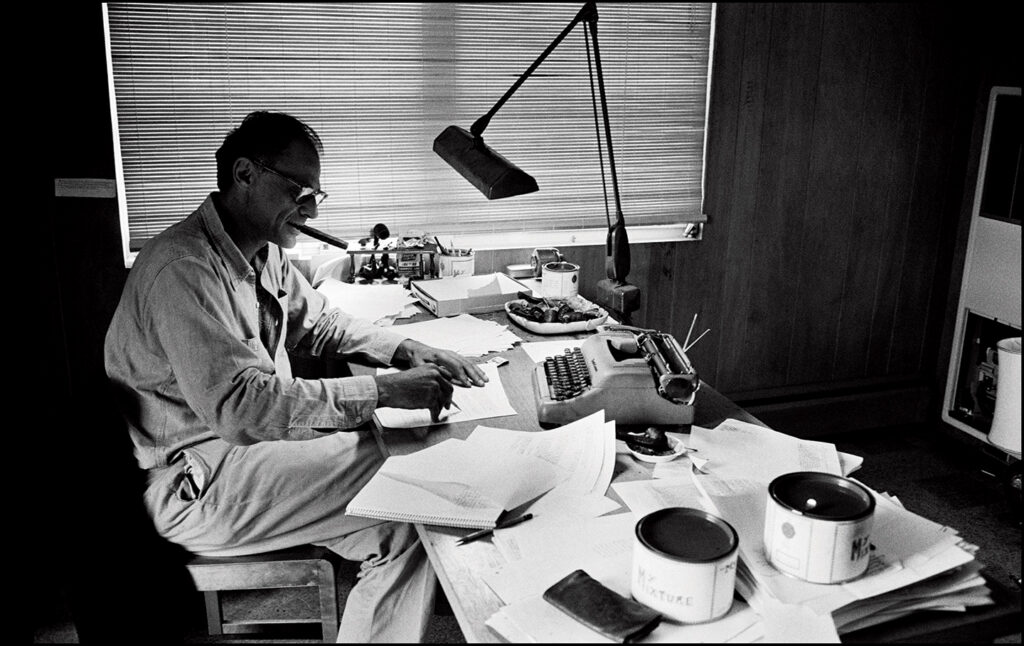
Act 1
Scene 1
LIGHTS COME UP ON A SPEAKER STANDING IN FRONT OF A MICROPHONE IN A SPOTLIGHT. SPEAKER ADJUSTS THEIR GLASSES, CLEARS THEIR THROAT, WIPES THEIR BROW WITH A HANDKERCHIEF TO REMOVE THE PERSPIRATION THAT HAS ACCUMULATED AND FINALLY TALKS TO AUDIENCE.
Speaker (tapping the microphone): Hello? Is this thing on?
Greetings to all of you assembled who decided to join this session on how to write a play. Of course, through the eons of playwriting, there may not be one correct answer, and the how of writing a play depends on the style and genre that you wish to explore. But a couple of things are clear: One should start by looking at Aristotle’s Poetics and determine if the course of action that he outlined thousands of years ago should apply to your play, or if you want to veer directly against Aristotle’s thoughts. What are they? Let me summarize. Aristotle said that “tragedy” (what we now call “drama”) divides into six different parts and ranks them in order from most important to least important.
ONE: Plot.
TWO: Character.
THREE: Thought.
FOUR: Diction.
FIVE: Melody.
SIX: Spectacle.
One could argue that in our twenty-first century, some playwrights and producers have put more emphasis on Spectacle than the other elements. Aristotle might be turning over in his grave. That’s funny, right? I was trying to make a joke. But none of you are laughing and that disappoints me.
Let me take this idea one step further. Whether you are writing a short ten-minute play, or a full-length multi-act experience, I believe that what is most important is to determine what the OBJECTIVE is that the characters have over the course of the script. And then determine whose story we are following. That character’s objective is more important than the others in the play, and I would say that they have a SUPER-OBJECTIVE — what is it that they want more than anything, which you will explore over the course of the action of the play? Then determine what OBSTACLES get in the way of the character getting what they want, and what ACTIONS and ACTIVITIES they engage in trying to get what they want. Does the character successfully reach their objective or not? That’s up for you to…
ALL OF A SUDDEN, THE POWER FAILS AND ALL GOES DARK, ACCOMPANIED BY THE SOUNDS OF THE POWER GRID GOING DOWN. SPEAKER TURNS ON A SMALL FLASHLIGHT THAT HAS BEEN IN THEIR POCKET AND LIGHTS THEIR FACE WITH THE FLASHLIGHT. SPEAKER TAKES A DEEP BREATH, LOOKS AROUND, PERHAPS POINTS THE FLASHLIGHT AT THE AUDIENCE. FINALLY, THE SPEAKER SAYS:
Speaker: That’s up for you to decide.
SPEAKER POINTS THE FLASHLIGHT TOWARD THE OFFSTAGE WING AND STARTS WALKING OFFSTAGE. JUST THEN, THE POWER RESTORES. THE SPEAKER TURNS TO THE AUDIENCE, SMILES, AND FINISHES THEIR WALK OFFSTAGE.
END OF PLAY