Our Great Trees
Looking Up
Six great American trees, from Oklahoma City's Survivor Tree to the Lahaina banyan, and the living histories rooted in each.
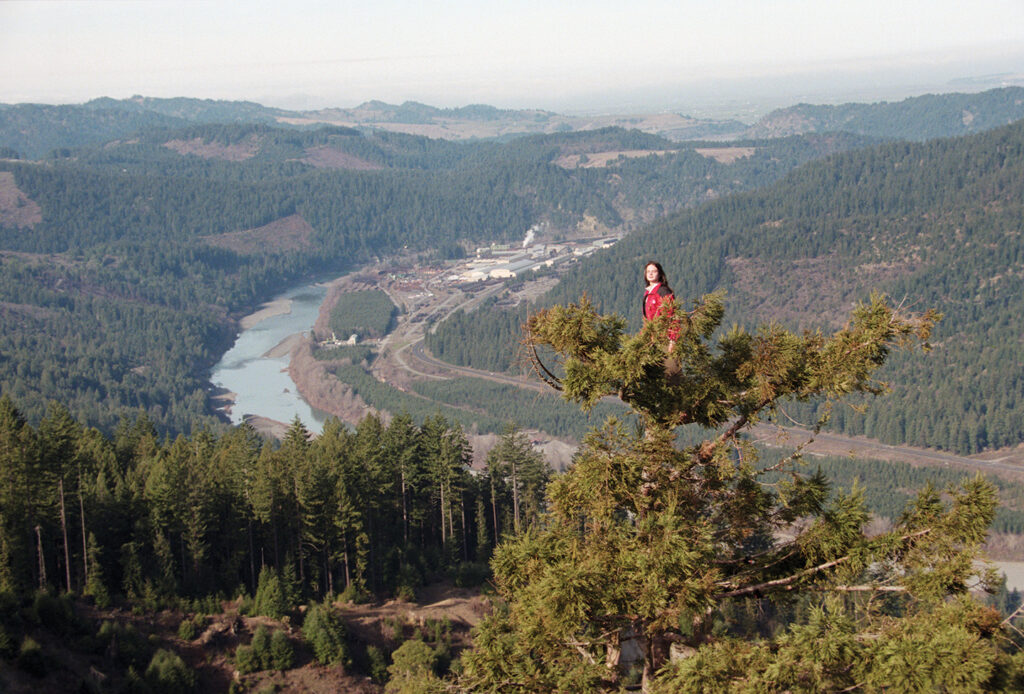
TREES ARE QUIET witnesses to our history. Essential to biodiversity and the quality of the air we breathe, they also have lives that span centuries of cultural, environmental, and societal shifts. Yet deforestation continues to have devastating consequences, including recent executive orders to remove protections against logging. Climate change and invasive pests threaten the survival of our street and park trees. Historic trees rarely receive the same attention as historic buildings, leaving them vulnerable to development and vandalism. As the naturalist Aldo Leopold wrote, “When we see land as a community to which we belong, we may begin to use it with love and respect.” These great trees, each notable for its own reasons, are living connections to our heritage. Caring for them creates a bridge into the future, an act of hope for a world that we will not see.
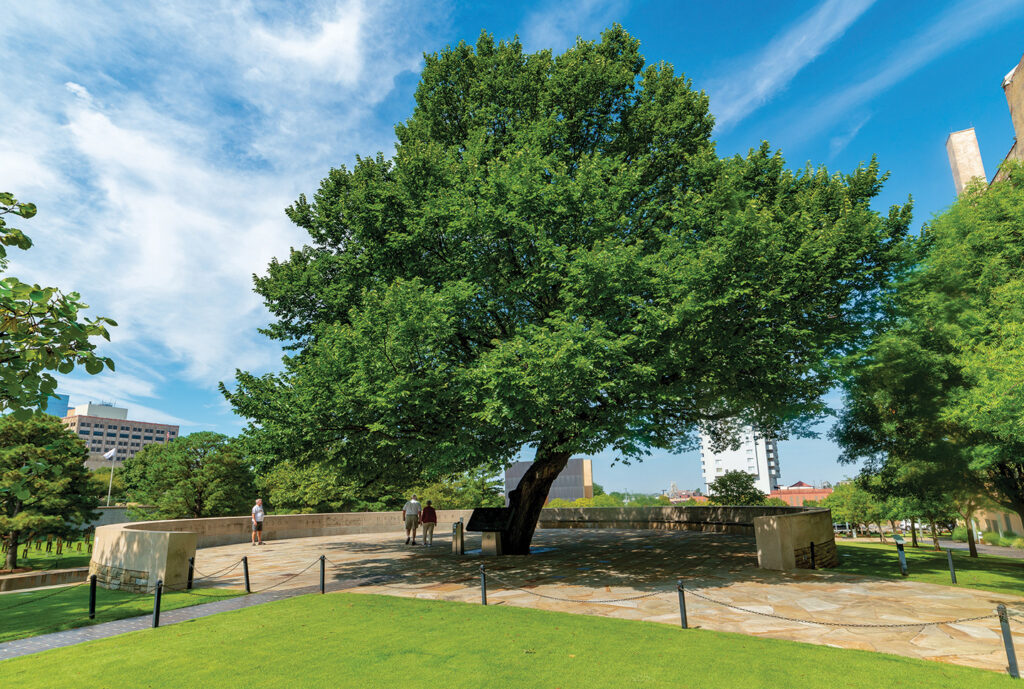
The Survivor Tree
Oklahoma City National Memorial, Oklahoma
Planted circa 1920, this American elm tree was largely overlooked until the April 19, 1995, terrorist attack that killed 168. Battered by the blast and scarred with shrapnel, what is now known as the Survivor Tree was nearly cut down. Still, it endured, thriving at the memorial site as a symbol of resilience. Its seedlings are now planted around the world, from the Fort Hood Memorial in Texas to the White House.
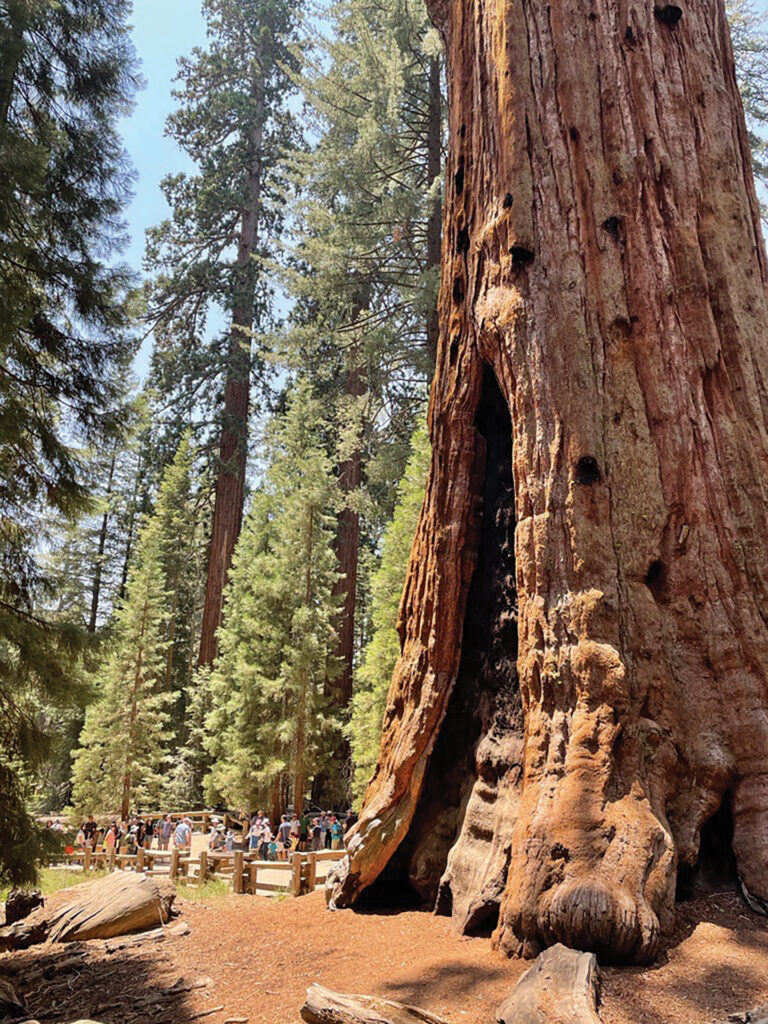
General Sherman Tree
Sequoia National Park, California
There are taller trees and those with wider trunks, but none rivals this giant sequoia’s volume. It’s around 2,200 years old and towers more than 274 feet. A utopian colony at the site in the 1880s anointed it Karl Marx. Following their expulsion to make way for a national park in the 1890s, it was rechristened after the Civil War general. Threatened by California’s wildfires, in 2021, General Sherman was wrapped in foil to protect it from a devastating blaze.
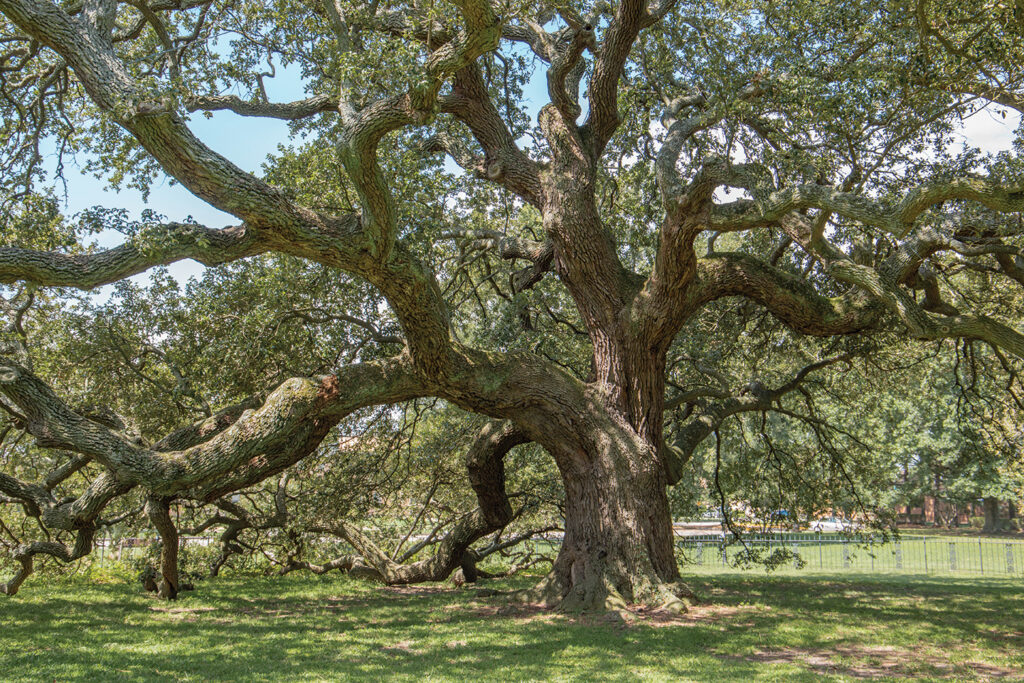
Emancipation Oak
Hampton University, Hampton, Virginia
Beneath this live oak in 1863, the Emancipation Proclamation was read in the South for the first time. Free Black woman Mary Peake had started leading classes under it in 1861 amid the Civil War, defying bans on the education of Black people. The tree became a haven for enslaved people who escaped Confederate territory. Those roots grew into Hampton University, with the branches of the old oak still sprawling further each year.
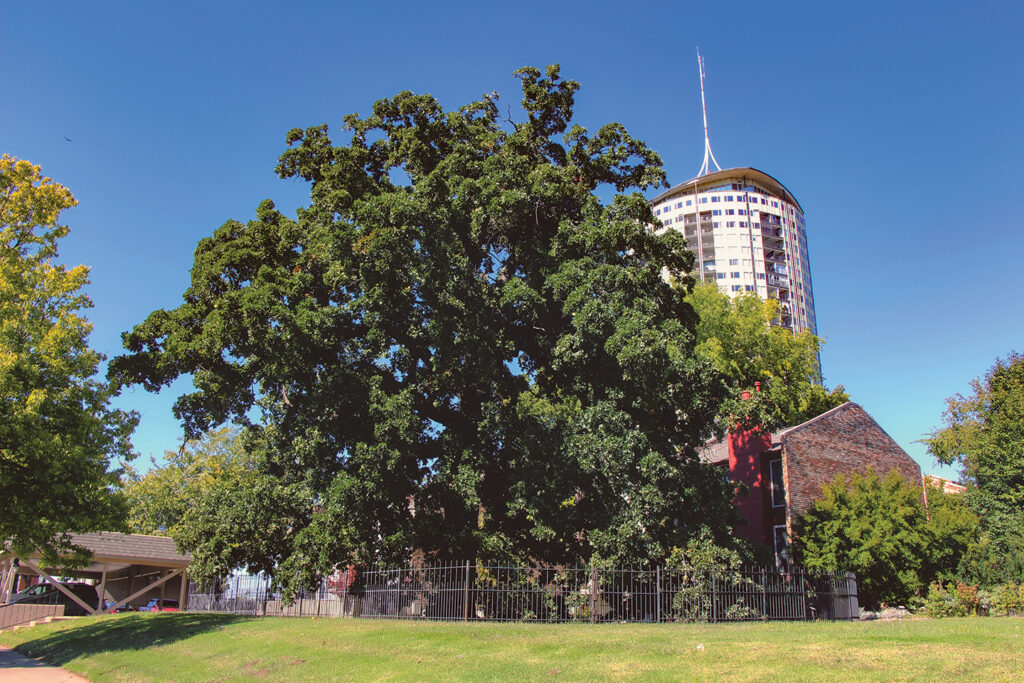
Creek Council Oak Tree
Tulsa, Oklahoma
This post oak overlooking the Arkansas River was an important gathering place for the Muscogee people in 1836 after the Trail of Tears. Ashes were taken from the final Muscogee ceremonial fires in Alabama before this forced relocation were placed here. In 2025, the tree was part of a repatriation of land by the city to the stewardship of the Muscogee (Creek) Nation.
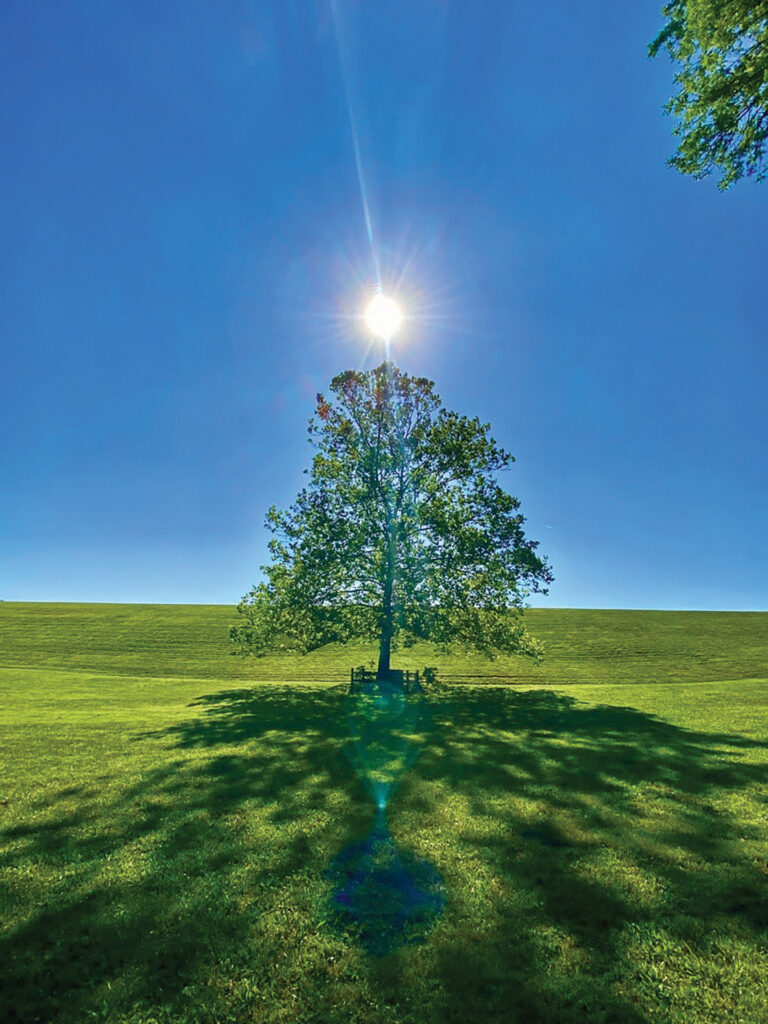
Moon Trees
Various locations
When Apollo 14 circled the moon in 1971, it carried a container of 500 seeds. These space travelers were planted across the U.S., mostly at community sites. The sycamore above, planted in 1976 at Lincoln State Park in Spencer County, Indiana, is one of the many earthside links to the ingenuity of space exploration. The program was largely forgotten until NASA planetary scientist Dave Williams began tracking down moon trees in the mid-1990s, identifying around 100.
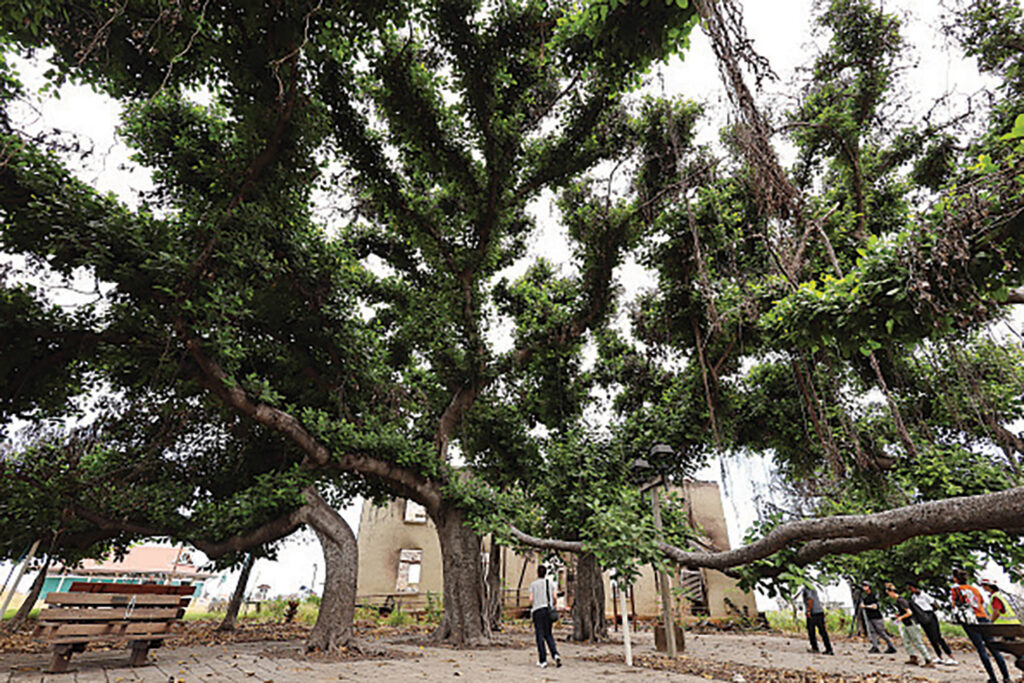
Lahaina Banyan Tree
Maui, Hawaii
The largest banyan in the U.S. had just marked its 150th birthday when a deadly wildfire swept through the town of Lahaina in August 2023. Its trunks which spread over a city block, were charred; its green canopy was a lifeless gray. Yet tree experts noticed that its lower trunks still had living tissue. By September, new leaves were on the tree. Its care is now part of a reforestation initiative to bring back Maui’s native trees and cultivate community healing.
Author Herman Hesse once wrote, “Trees are sanctuaries. Whoever knows how to speak to them, whoever knows how to listen to them, can learn the truth.” Do you have a favorite tree? Send a photo to us at editor@readartdesk.com to be included in a future issue.