Special Collections
Well Represented
Ralph Waldo Ellison burst onto the national scene in 1952 with his first novel, Invisible Man, which won the National Book Award and cemented his name in the international literary canon.
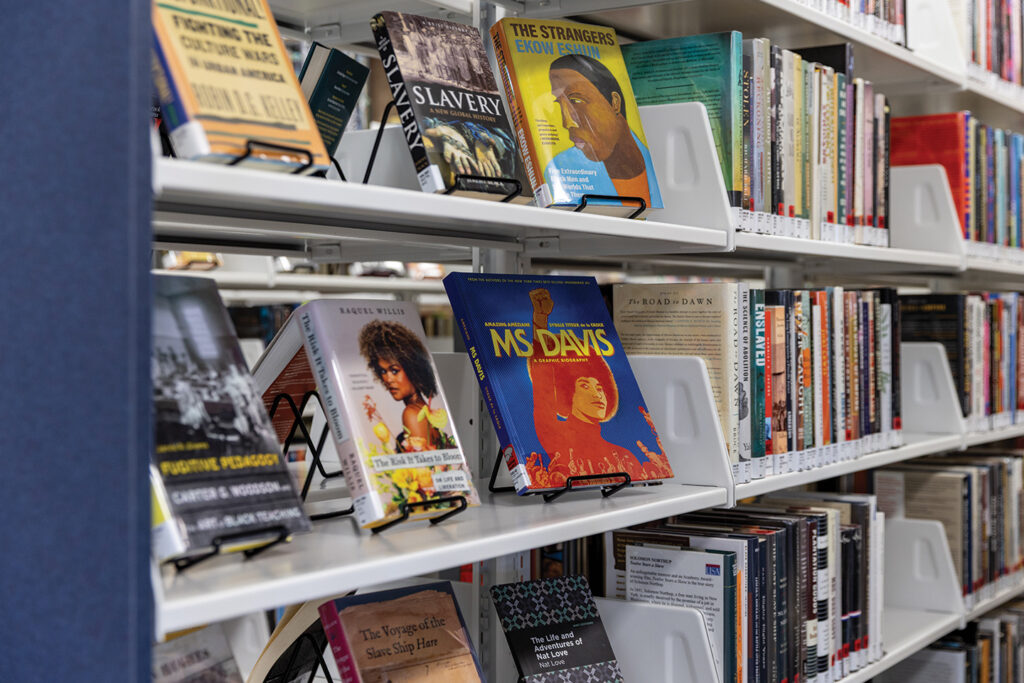
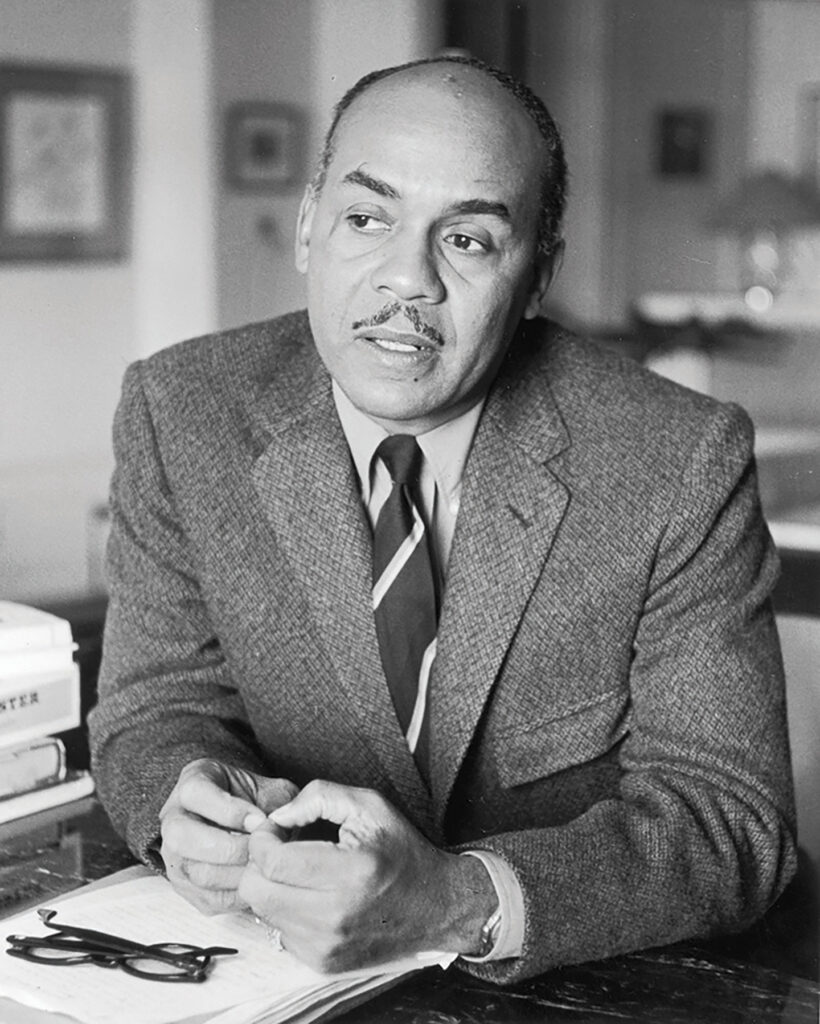
RALPH WALDO ELLISON burst onto the national scene in 1952 with his first novel, Invisible Man. It won the National Book Award in 1953, immediately establishing Ellison as a serious and seminal author and cementing his name in the international literary canon. From 1955–57, the Oklahoma City-born Ellison spent two years in Rome as a Fellow of the American Academy and then returned stateside, teaching at Yale, Rutgers, New York University, Bard College and the University of Chicago. Back in Oklahoma City, a library re-named for him in 1975 now houses the State’s Black History Collection, which includes a copy of The Carleton Miscellany, a renowned quarterly literary magazine published by Carleton College from 1960–1980, publishing pieces such as Going to the Territory by Ralph Ellison, alongside academic analysis of Invisible Man. The Collection has grown to 3,624 items, which can be searched online or at the library.
One of those is author and poet Quraysh Ali Lansana’s children’s book Ralph Ellison: More Than Invisible, which launched at the Ralph Ellison Library in January 2026. The biography celebrates the life of Ellison while introducing conversations about race, history, and identity.
“It means a great deal to me to have my books alongside Ellison’s work,” says Lansana, who has authored twenty-five books of poetry, non-fiction, and children’s literature. “I am attempting to make sure that Oklahomans, as well as the nation, honor his brilliance, but also understand his complexities… [He] wrote what many folks consider the most important novel of the twentieth century.”
The Ralph Ellison Library is the only branch in the Metropolitan Library System that is named after a single person, says Judith Matthews, special collections librarian. Its origins date back more than a century, when the Oklahoma City Library Board voted in 1921 to segregate the Carnegie Library, then the only public library in the city.
In response, the Dunbar Library was created that same year in the Slaughter’s Hall building in the Deep Deuce area, becoming Oklahoma City’s Black-only library. The library system stayed segregated until 1953. After a new location was found in the 1970s, officials began to search for a new name.
“It was originally going to be called Creston Hills, which is a neighborhood around there,” Matthews says. “But when Creston Hills was platted, it had covenant agreements making it illegal for African Americans to live there. There was a great community uproar that we should not be naming a library with that sort of legacy. The community pitched around ideas, and Ralph Ellison was an easy choice to go forward.”
Ralph Ellison Library has, fittingly, become a cultural hub. The Society of Urban Poets hosts free monthly programming at the library, including open mics, film screenings, and guest speakers, and provides opportunities for students to win scholarships, school supplies, and cash prizes.
“Any program we ask to do, the library supports us in whatever way they can,” says Billie J. Bowen, president of the Society of Urban Poets, which started in 1992 when the late Ronald Brownlee published an advertisement looking for other interested poets.
“[Ellison] loved poetry, and he wanted to develop his same level of poetry throughout our community,” Bowen says. “People who might not normally enjoy poetry come out and they write poetry and read poetry.”
Plans for 2027, the seventy-fifth anniversary year of Invisible Man, are underway.
“We are starting that conversation,” Matthews says. “Asking all of Oklahoma City to read Invisible Man is a tall order, but there are other, more accessible, and shorter things that we hope capture the spirit of Ellison and that show a reflection on his childhood here.” – MICHAEL KINNEY
The Ralph Ellison Library is located at 2000 NE 23rd Street in Oklahoma City, Oklahoma. metrolibrary.org