Voices Carry
The exhibition Home1947 puts visitors in the shoes of refugees, transporting them seventy-six years into the past.
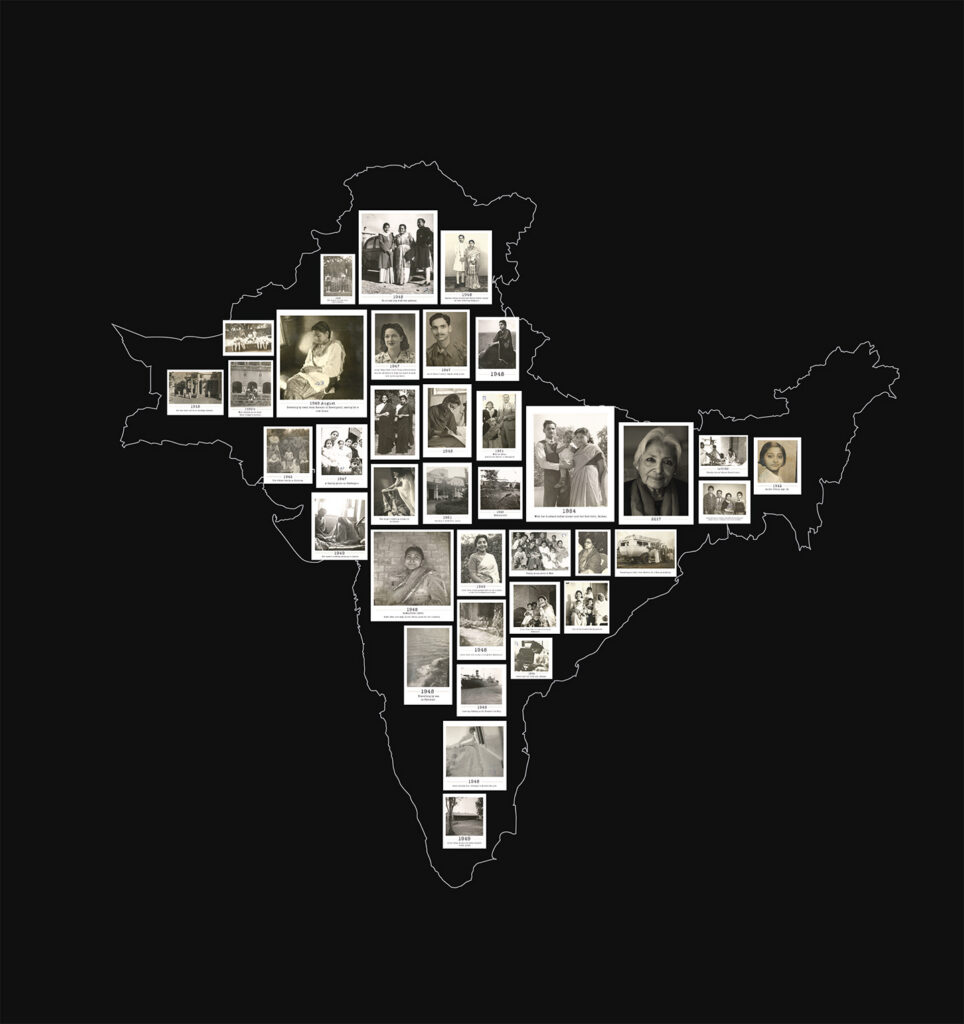
MILLIONS WERE DISPLACED. IN the rapid formation of the border between India and Pakistan at the end of the British Raj in 1947, a massive migration along religious lines marked by widespread violence still reverberates in the relationship between the two countries. Home1947: Sharmeen Obaid-Chinoy at Oklahoma Contemporary Arts Center examines the lives that were forever changed. The exhibition by Oscar-winning Pakistani-Canadian filmmaker Sharmeen Obaid-Chinoy, who recently was announced as the director of an upcoming Star Wars film, further resonates with the ongoing refugee crises.
“I was looking to express the raw emotions of leaving behind not just physical spaces, but also the intricate tapestry of memories, sounds, and relationships that shaped one’s sense of belonging,” says Obaid-Chinoy.
Senior director of curatorial affairs at Oklahoma Contemporary, Carina Evangelista first met Obaid-Chinoy while serving as interim director at New York’s Asia Society Museum. They discussed an updated version of Home1947, originally commissioned for the Manchester International Festival in 2017.
This is Home1947’s most comprehensive presentation to date, including two new short films for a total of nine as well as extensive archival materials.
“The question of how a place evolves when it serves as the place to call home to those displaced is at the heart of the shared experience of the citizens of India and Pakistan in 1947, one that continues to have ramifications at present,” Evangelista says. “How do people manage to evolve traumatic disruption into enrichment—an embrace of a new home and an embrace of new neighbors?”
Home1947 includes films, a motion-sensor sound corridor, archival photographs, oral histories, and virtual reality. It immerses visitors in history while considering its impact on the present.
“This new installation of Home1947 is a multisensory experience that puts visitors in the shoes of refugees, transporting them seventy-six years into the past, to the scenes and sounds of migration and collective loss,” says Noor Ahmed, general manager of the Citizens Archive of Pakistan.
Obaid-Chinoy is CAP’s co-founder, and its archives, joined by material from the Citizens Archive of India, provide oral histories of journeys, reunions, and memories of what was left behind. “Whether they made this journey by choice or to save themselves and their loved ones from persecution, the human and personal cost of this journey was immense.”
Home1947: Sharmeen Obaid-Chinoy will be on view at Oklahoma Contemporary in Oklahoma City from February 22 to July 22, 2024.