how to...
Think About AI Like an Artist
Does AI Dream of Artificial Sheep?
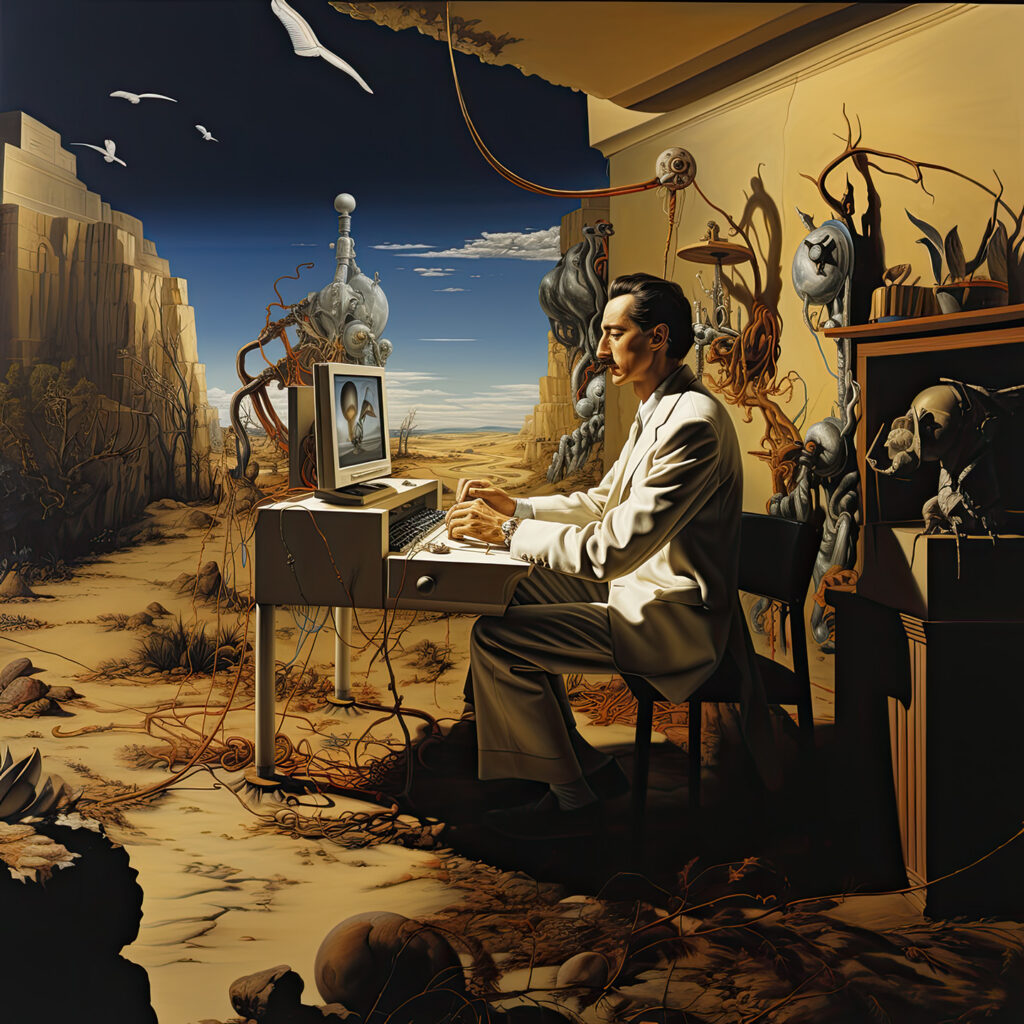
MORAL PANICS HAVE a strange way of following major technological advancements in the modern era. Since the widespread adoption of the printing press, successive generation-defining inventions have sparked concern of inevitable societal collapse. The modern novel, radio, television, video games, and the smartphone all inspired fear that children, women, morality, or society writ large would crumble to dust and disappear. Artworks and movements share a similar historical tendency. Yet, in 2023, the world still spins on its axis.
Enter Artificial Intelligence. Test versions of platforms created by OpenAI burst on the scene and into the popular consciousness over the past year, allowing users to conjure essays and renderings from thin air. The early adoption by millions of users forced many competitors to rush their own test AI platforms to market in an attempt to participate in the next gold rush.
Quickly, on the heels of these platform rollouts, came the next great moral panic. AI has been predicted to lay waste to myriad professions, destroy the education system, and according to an admittedly disconcerting number of scientists working on the new technology, harbor the potential to achieve sentience and go Frankenstein’s Creature on its human creators.
This last development does not seem a simple recycling of history’s previous moral panics. The proverbial parents of prior Big Inventions did not predict their innovations might signal the end of the world. If the scenario of AI evolving to obliterate the human race has the ring of familiarity, it’s because James Cameron already wove this story arc into the plot of his seminal 1984 sci-fi picture The Terminator.
So how should we think about AI in 2023? The metaphorical framework best suited to guide our understanding might just be the artist’s studio, designer’s atelier, or artisan’s workshop. Think of AI as a three-part tool kit: sketchpad, jig, and hazardous material.
SKETCHPAD
An artist’s sketchpad is a laboratory for observations and ideas in miniature. Artists use them to draw, of course, but they will also record their ideas, notes, plans, studies for final works, and even daily experiences. Finished sketchbooks are like collages of an artist’s creative and intellectual life during that period. Image generators could serve a similar function if used with intention and rigor. The “sketches” created through these platforms function as first drafts of not just artworks, but presentations, home improvement projects, or real-world photographic opportunities. The collections created could be archived and referenced over time to serve as both time capsules and inspiration for future works or plans.
JIG
A jig is a custom device or tool made by an artisan or technician to create speed and standardization in the manufacturing of tools or fabrication processes. Text generators in particular could be leveraged to create templates, boilerplate legal documents, or standard email correspondence, saving time for more strategic or creative activities on the part of people working across a diversity of disciplines and industries. Quality control is a key part of any process that brings a final product to market, but AI as jig could streamline the path toward testing and review of texts before publication or distribution.
HAZARDOUS MATERIAL
Any studio or workshop is full of compounds, solvents, compressed gases, and tools that pose significant risks to health and safety. With regulation, proper training, storage, protective equipment, and caution, these risks can be mitigated and even eliminated. Many of the tools and materials used to make art are dangerous. Their inherent dangerousness does not mean these vital things should be banned or avoided.
New technologies require new approaches to health, safety, and working conditions. Many people and companies most knowledgeable about AI are calling for its immediate regulation by the federal government. The technology is already being challenged in court over copyright infringement in multiple lawsuits. Use of AI by Hollywood studios is a central tenant of the WGA and SAG-AFTRA collective bargaining negotiations with the Alliance of Motion Picture and Television Producers. Our elected and appointed officials should heed this call, sharpen their pencils, and get to work. Perhaps ChatGPT could help them get started at the drafting table?
Jeremiah Matthew Davis is the director of Oklahoma Contemporary Arts Center in Oklahoma City.