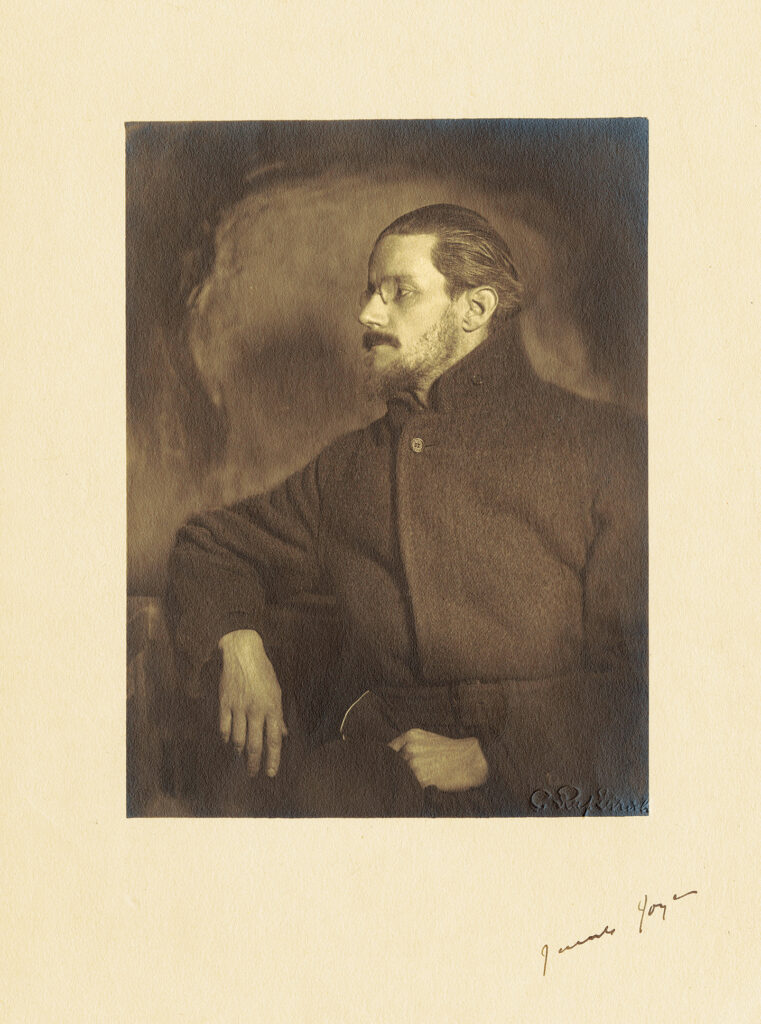
The Importance of James Joyce
Joyce’s literary legacy and lasting influence on artists, authors, and the world’s literary canon, explored through artifacts and scholarship.
James Joyce continues to dazzle. With certainty, we can say that the Irish novelist was the author of the most consequential novels of the twentieth century, his lasting influence on artists and authors around the world felt as much now as during his lifetime. Frustrating, creative, tenacious, and pushing all boundaries of the traditional novel, Mr. Joyce gained lasting renown that was celebrated then—and now—by academic journals, dedicated museums, and contemporary artists.
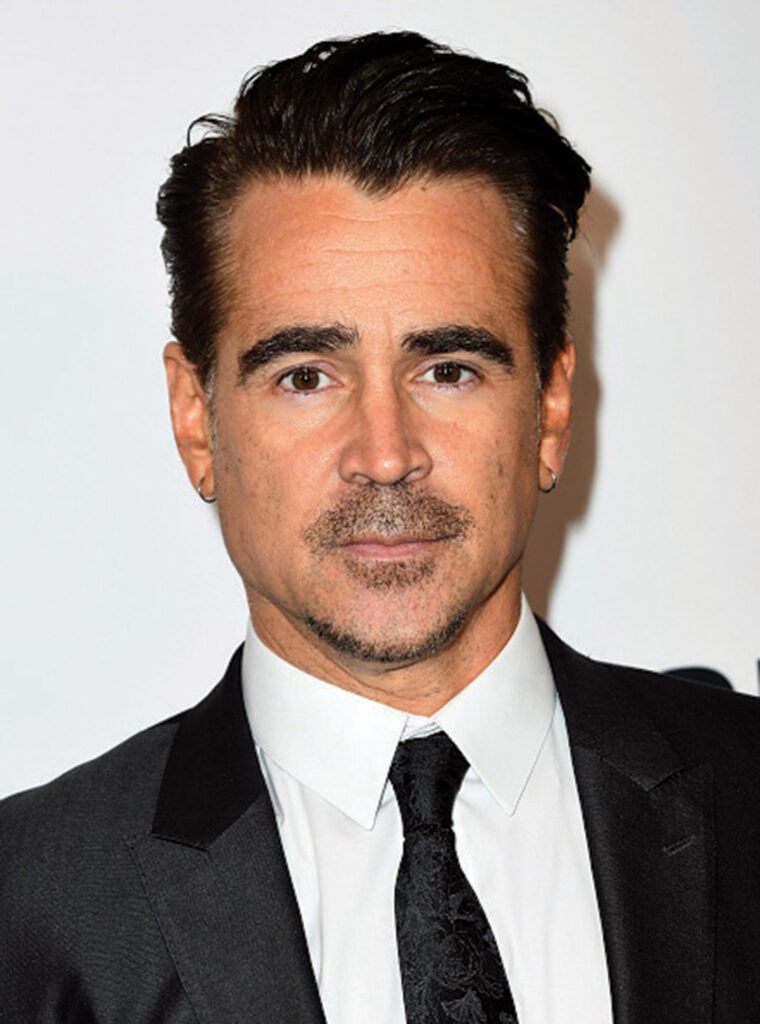
As a dabbler in Modern letters throughout my life—I’ve taken neither time nor patience to dive deep into a single genre, the demands of family and career taking precedence—I have always returned to Joyce as a figure that I wanted to know and understand. His first novel, Portrait of the Artist as a Young Man (1916), has lingered in my psyche since high school. I’m listening to it now on an audiobook, narrated by Joyce’s fellow Dubliner, actor Colin Farrell.
It was in the throes of my own life circumstance, in 2017, that I began connecting more fully with what might be Joyce’s most famous novel, Ulysses. Many intersections prompted this. I followed on Instagram an acquaintance from Texas now in the West Village, Susie Georges Lopez, who, it turned out, had spent the prior three decades establishing herself as a near-scholar on Joyce and his particularly complex Finnegans Wake. Her artwork and understanding re-inspired me.
Meanwhile, beautiful and brilliant Emily Wilson, PhD, was publishing her translation of Homer’s The Odyssey to great reviews. Joyce’s Ulysses—one day in the life of Leopold Bloom (June 16, 1904)—was patterned after Ithacan king Odysseus (Latin variant, Ulysses) and his ten-year journey home to wife Penelope on the heels of the Trojan War. Simultaneous to that, I was immersed in a grandfather-like-admiration into the wisdom and teaching of Joseph Campbell, beloved mythologist at Sarah Lawrence College for thirty-eight years, who was born in the year which Ulysses was set.
Campbell had written The Skeleton’s Key to Finnegans Wake (1944) early in his career. He, too, was lingering continuously on the legacy of Joyce. In listening to interview after interview with Campbell while on a treadmill at a local gym, I learned that he much preferred Carl Jung over Sigmund Freud, Jung another favorite of mine. Separately and suddenly, I discovered a deep, interstitial arrangement of figures all connected to the Irishman.
A few months into my little personal intellectual investigation—which continues today—I learned that Dr. Jung was maddeningly frustrated by Joyce’s Ulysses and even took to writing a review (1932) expressing his discontent with the novel. Then, one thing leading to another, Joyce and Jung became acquainted through the zeitgeist of 1930s Zurich. By 1934, Joyce brought his daughter Lucia to Jung for treatment, a condition ultimately deemed schizophrenia.
Fifteen years later, for his seventy-fifth birthday, Jung installed a stone cube near Bolligen Tower (his residence on the shore of Lake Zurich), inscribed on three sides and including a passage from Homer’s Odyssey: “He points the way to the gates of the sun and the land of dreams.” Joyce and Jung, I learned, were a mystical match in terms of the subconscious, cosmology, and lasting literary and artistic legacy. That they intermingled and informed one another deserves its own scrutiny, as one inspired the other.
Today, the most important artists honor Joyce in their artworks and exhibits. This summer, German artist Anselm Kiefer paid homage at White Cube in London with his show, Finnegans Wake. “Kiefer first read the Irish writer as a young man, devouring Ulysses (1922) and embarking on a slow and spiraling relationship with the later, more exacting, Finnegans Wake. It is a book of circles and echoes, more or less overt or secret; its riverine movement begins in the midst of things, and turns back on itself on the final page,” explains the gallery.
Currently on view at Garth Greenan in New York, Tales Of Brave Ulysses: Al Loving, Howardena Pindell, Alan Shields, and Richard Van Buren harks to our ancient protagonist. Five years ago, artist Spencer Finch, most known as the artist chosen for the National September 11 Museum and Memorial, exhibited his ultra-contemporary Shield of Achilles at the British Museum’s expansive look at the history of Troy, where famously Odysseus survived and Achilles died. Earlier, Finch equally embraced the Homeric hero with a series of works on paper called Odysseus.
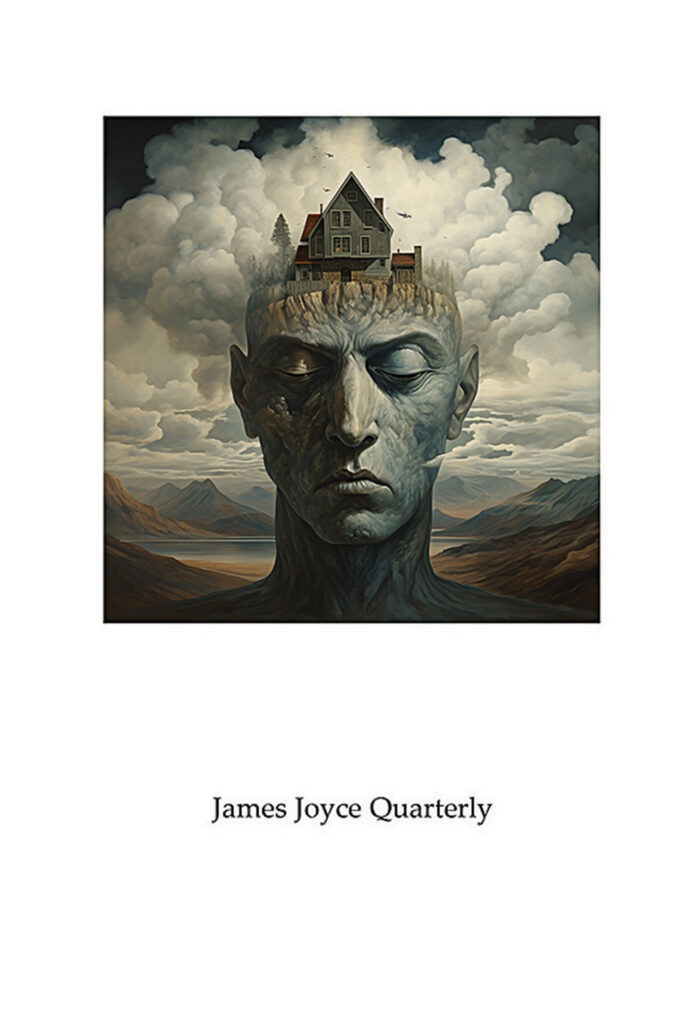
Remarkable also and important to mention is the historic legacy of the Dubliner on contemporary inquiry and institutions. The James Joyce Quarterly (JJQ), founded by Thomas Staley in 1963 at the University of Tulsa (a few miles from the permanent archives of Woody Guthrie and Bob Dylan and 108 miles from me), is celebrating its sixtieth anniversary. Its new issue features an AI-generated cover made in Midjourney. Says co-editor Jeff Drouin: “I took the word ‘housefather’ from Finnegans Wake, which is quoted in an article by Elena Violaris, and entered it into Midjourney, resulting in this image. In the Wake, the character Humphrey Chimpden Earwicker (HCE) is a father archetype who is associated with the land geography of Ireland. We chose to use this image for the cover because the AI somehow grasped the geological affinity of the archetype.”
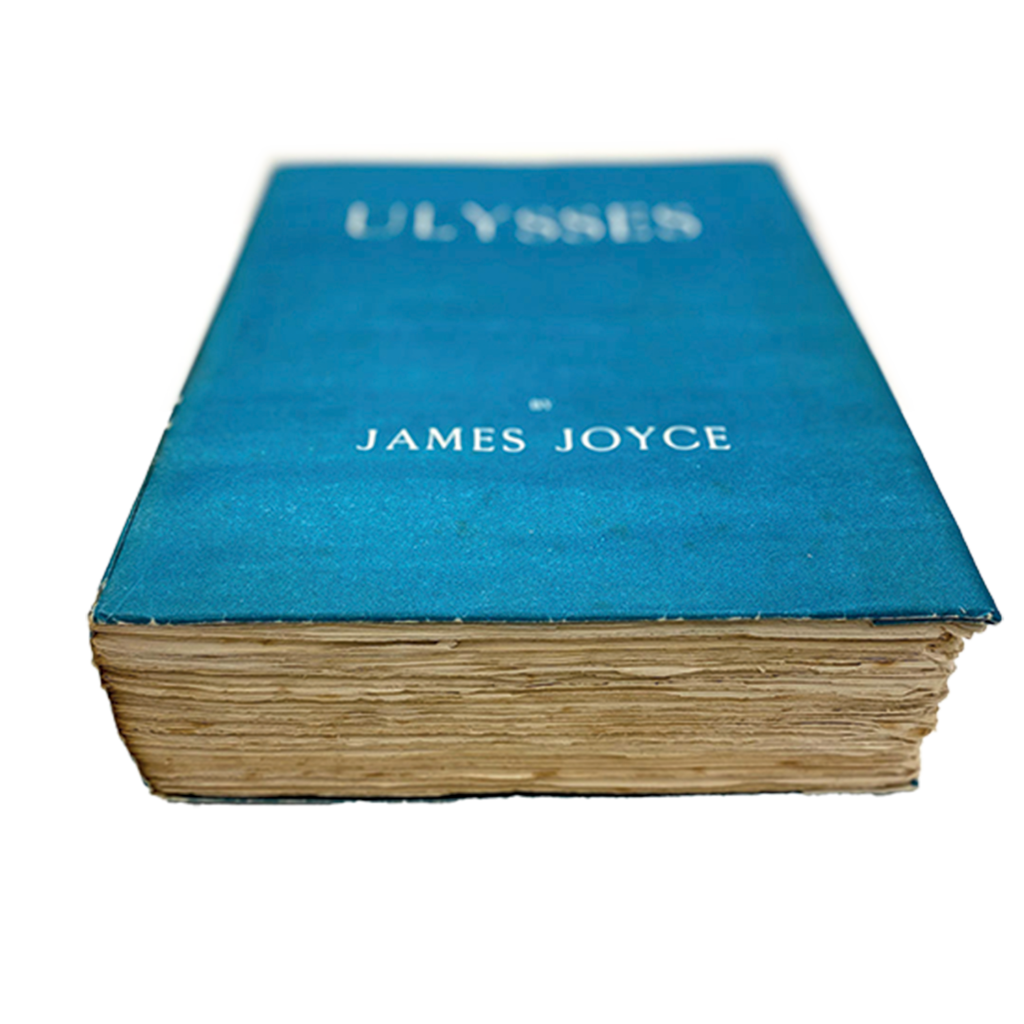
In 2022, during the centenary of Ulysses (the original blue book!), the Harry Ransom Center at the University of Texas at Austin—later legendarily led by Mr. Staley, one and same of Tulsa’s JJQ genesis—played a leading role in the global celebration of Bloomsday with its exhibition, Women and The Making of Ulysses. Of course, Cornell University in Ithaca, New York (the city named for our original hero’s Greek island home), houses its own substantial James Joyce collection and has invited Joyceans to symposia over the years.
I could hardly say it all better than mastermind Jung could and did, so I won’t. As the brilliant Swiss psychiatrist wrote of Joyce in that now hundred-year-old essay: “Like every true prophet, the artist is the unwitting mouth-piece of the psychic secrets of his time, and is often as unconscious as a sleepwalker. He supposes that it is he who speaks, but the spirit of the age is his prompter, and whatever this spirit says is proved true by its effects.” –LOUISA McCUNE
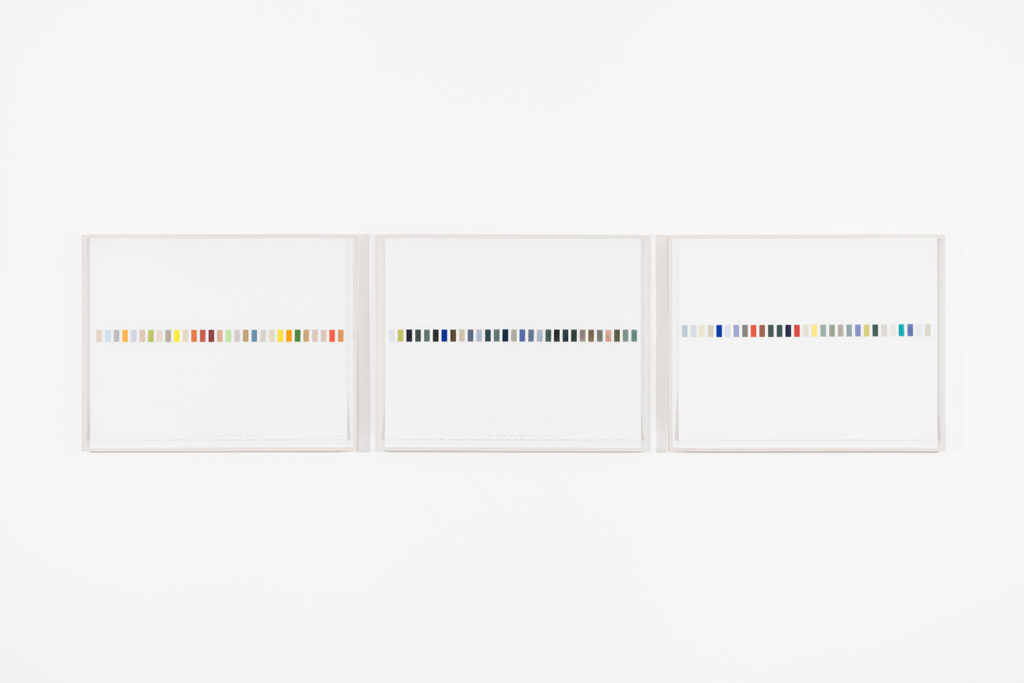
SPENCER FINCH
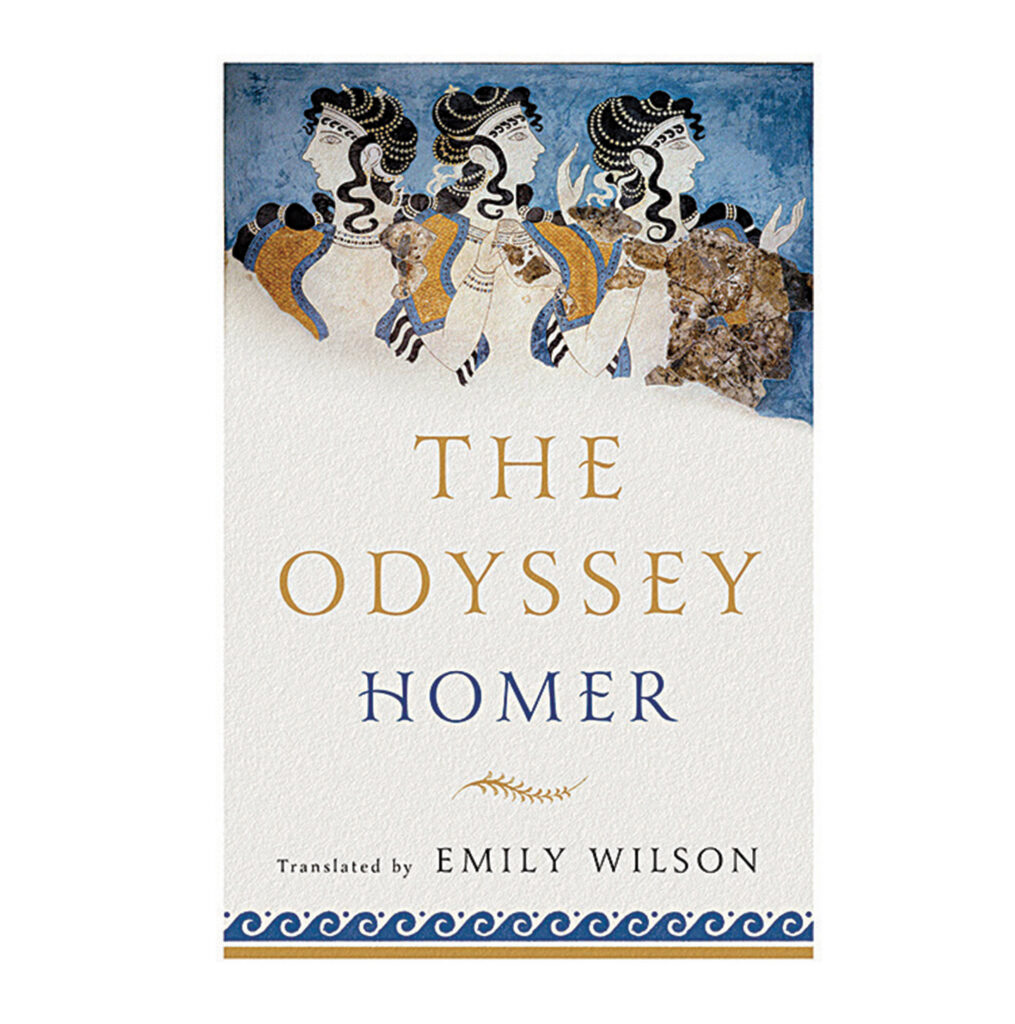
INSPIRATION
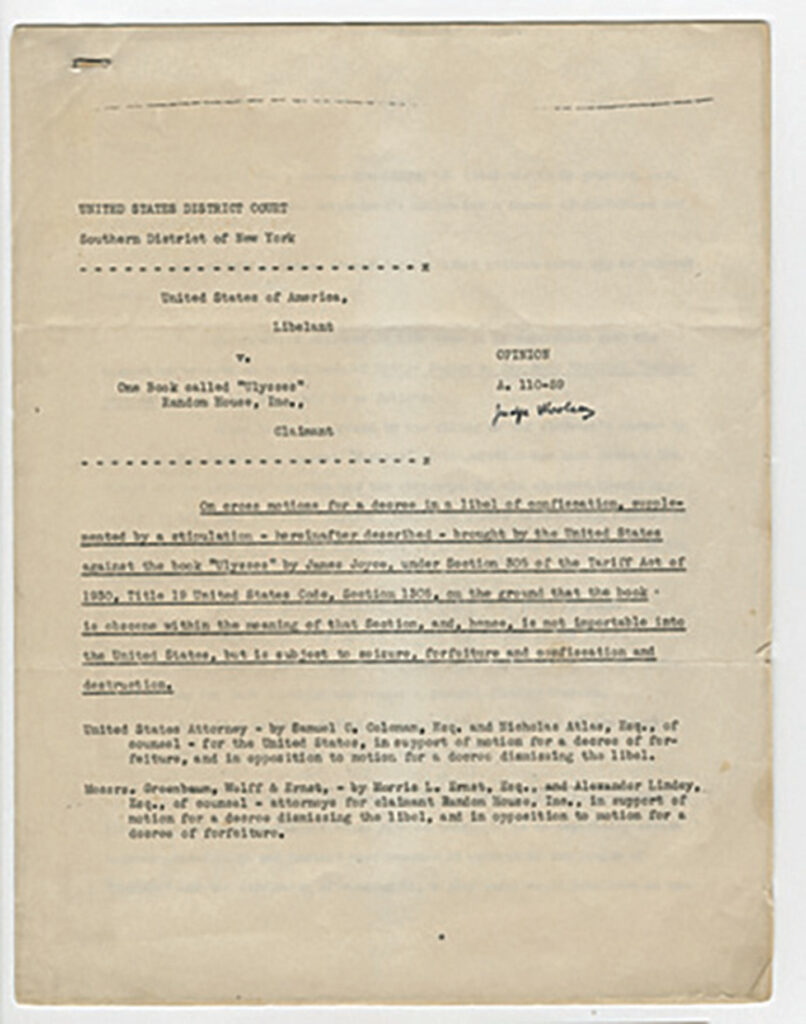
THE CASE
THE BLUE BOOK

EMILY WILSON, PhD
THE UNIVERSITY OF TULSA
THE DUBLINER