Theologian Serene Jones on Making Connections and Putting Community First
Stories That Bind Us
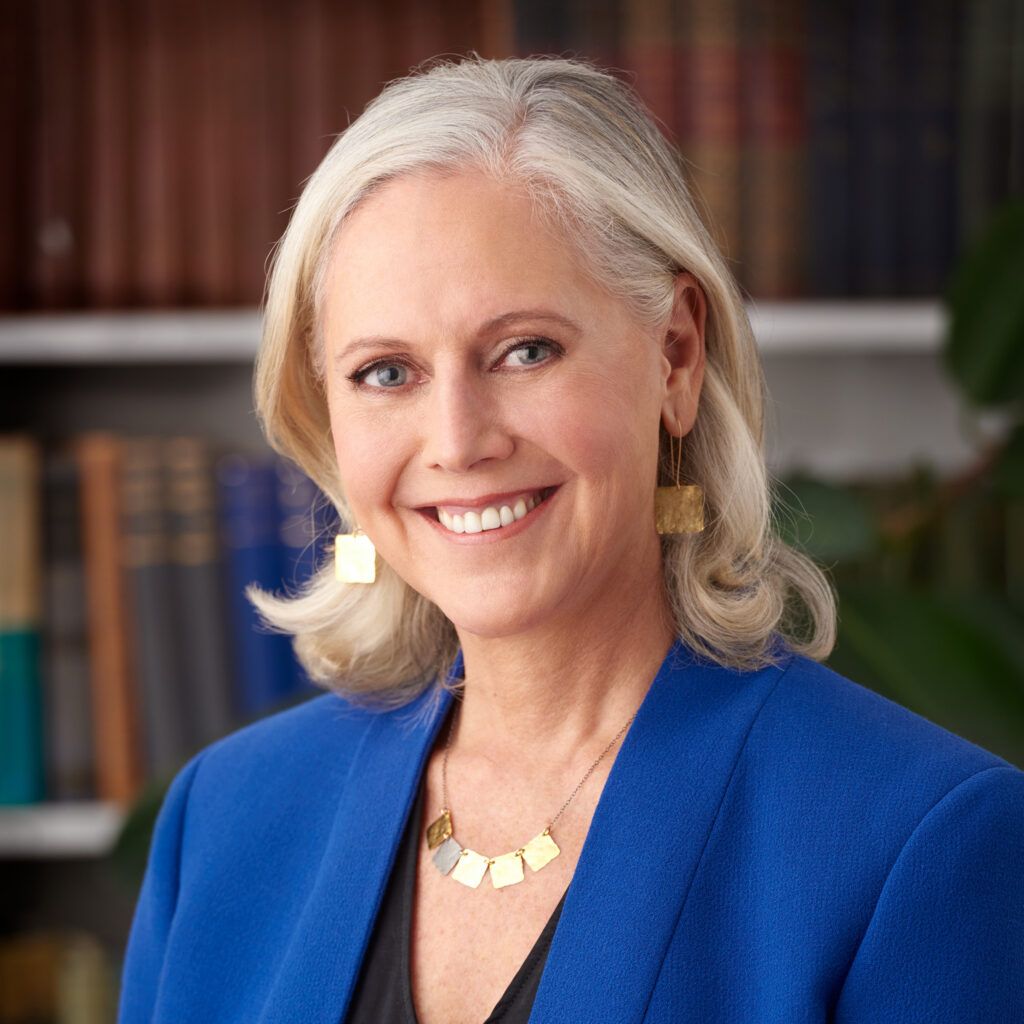
BY Serene Jones | PHOTOGRAPHY BY Jim Keffer
ON ALL SIDES of my family, my grandparents and great-grandparents were an active part of the formation of Oklahoma in its earliest days. Their stories of coming to the state and how they survived and became a community have profoundly shaped every aspect of who I am and how I view the world.
I think this is true for all of us in terms of the places we come from and how we’re formed. I also believe that, when it comes to moral principles, ethics, virtues, and human flourishing, if you look underneath these often abstract-sounding terms, you will find deep but usually straightforward and practical stories that a community tells itself about the meaning of its life and how its ethical decision-making process unfolds. They’re usually pretty simple, but they’re bedrock strong and often unconscious because of the pervasiveness of their scope in our lives. These are stories about the nature and purpose of being human. They’re written into us.
My grandmother Idabel Augusta Seitz Jones was one of five children raised by Adam and Effie Seitz. They came from Pennsylvania to the border of Kansas and Oklahoma for the land run. They sold all of their property to buy one strong horse, built a wagon, and in a state of utter poverty with hope of finding a better life, they came when they heard about the pending land run in Oklahoma.
My grandma would tell me stories of how they survived those initial twenty to thirty years out on their prairie. She would say to me, time and time again, that we had to trust our neighbors. We had no choice, even if we saw them only three or four times a year, because we knew that none of us there could make it alone. It didn’t matter what their religion was, where they had come from, what language they spoke, when disease broke out, crops failed, or parents of children died. We had no choice but to be there for each other.
My grandma always went to great lengths to describe to me what it felt like to connect to a community in a profoundly deep way without question because it was required for their own survival. They had to depend on one another—liking each other had nothing to do with it. Their destinies were interconnected by virtue of their proximity and place on this earth, and their continued life required accepting this fundamental reality of their interconnectedness.
My grandma would tell me another story about how she, as a young girl, survived and how she came to have confidence in herself and her importance as a human being. Her parents had left their canteen hanging from the struts underneath the wagon they had taken out to the field on a hot afternoon to plow, and my grandma discovered that if she wrapped herself around the coolness of that metal canteen, she experienced relief from the heat. The coolness of it on her body was a physical experience of safety and a sense of future—that she could survive, and her body was good, that what she needed would be there for her. To use her language, as a religious woman, it was her first recognition of grace. She realized that not only was she special, but this was an inherent characteristic of every human being: everyone was held in love and equally beloved.
She always said that if you really want to understand the world start by asking “the little people.” Start by asking the group that was referred to derogatorily at the time as “the sodbusters.” Start by asking the people who are trying to crack open the land to grow the food that will feed us. That’s what she called her own poor family. If you build a world for them, then you will build a good world, but if you start with the people on top, it will be a world only for them. If you start on the bottom to build the world up, you take everyone with you. They weren’t just general things she believed, she lived them every day. These realities were her.
I hope that all of us are able in our own lives to find that cool canteen under a wagon somewhere that stirs our resiliency and connects each one of us to the beloved character of the life that surrounds us, and that together we can get busy as neighbors and not enemies, because there is a lot of work to be done.
What I say may sound overly simple, but it’s very difficult in practice. The theologian Dietrich Bonhoeffer also had a sense for the simplicity and yet seriousness of this kind of commitment. He was part of a small group of people who attempted to assassinate Hitler, and he was executed just days before the camp where he was held was liberated. He wrote in his letters and papers from the German prison the following statement about what it means to live ethically:
“We have all been silent witnesses of evil deeds; we’ve been drenched by so many storms; we’ve learnt as if they are natural the arts of equivocation and of unintended pretense; experience has made us suspicious of each other and has hence kept us from being truthful and open; indeed, intolerable conflicts have worn us down, and if we’re honest, they have made us cynical.”
And then Bonhoeffer asks us this question. I can see him asking it of Idabel. “Are we still of any use? What we shall need is not really geniuses, or cynics, or misanthropes, or brilliant and clever tacticians. What we really need more than anything are plain, honest, and straightforward people.”
The question is, will the inward power of resistance be strong enough and our honesty with ourselves remorseless enough for us to find our way back to that straightforward path and the beautiful simplicity it walks toward?
I frequently talk about moral repair alongside spiritual repair. If we don’t become different kinds of people in terms of the deep stories we tell ourselves—about what matters and how we organize our lives and deal with the traumas that stop us from flourishing—then our problems will keep repeating themselves because we keep enacting the same realities.
Part of that moral and spiritual repair, as Bonhoeffer says, is simply becoming honest and straightforward about our past and to be, in terms of our own interior lives, honest about the complexities of who we are. It’s about recognizing that we have capacity for great things and capacity for not-so-great things, and all of those live inside of us just as they live in our society.
As my grandmother would say, when harm is done, you can’t fix the harm until the harm is named. That which is broken—and repaired—is embedded in our history. It’s embedded in our bodies, our psyches, our minds, our hearts, and it’s deeply embedded in our moral frameworks.
This is a passage from “Unmoored: How Interreligious Engagements and Ethical Traditions Anchor Democracy,” a live lecture by Serene Jones from September 23, 2021, as part of the Speakers’ Series program presented by the Institute of Human Flourishing at the University of Oklahoma. Jones’ presentation has been edited by Megan Rossman.