In the most famous scene of the classic 1949 movie The Third Man, Holly Martins (played by Joseph Cotten) confronts his old friend Harry Lime (Orson Welles) about the latter’s scheme to sell lethal, diluted penicillin on the black market. With a jaunty grin, Lime urges his conscience-afflicted friend to cheer up: “In Italy for thirty years under the Borgias, they had warfare, terror, murder, and bloodshed, but they produced Michelangelo, Leonardo da Vinci, and the Renaissance. In Switzerland, they had brotherly love, they had five hundred years of democracy and peace, and what did that produce? The cuckoo clock.”
Without endorsing warfare and terror, I concede that great art can be a by-product of power and its noxious concomitants—vanity, greed, ruthlessness, and so on. Roman emperors proclaimed their dominance with idealized images of themselves stamped on coins and celebrated with statues, fora, friezes, and triumphal arches throughout the empire. From Trajan’s Column in Rome, marking the emperor’s victories over the Dacians, the glorification expanded outward in all directions, including an elaborately sculpted arch in Orange, France, attributed to Tiberius, that may have heartened Roman colonists in the area with its images of Gallic subjugation, while serving as a cold, if picturesque, warning to the local citizenry.
Rival to the Borgias was the Medici dynasty that dominated fifteenth-century Florence via its family bank, the largest in Europe, whose franchises and subsidiaries employed more than half the local population. The prevalence of gold- and silversmiths, stoneworkers, master painters, and wood-carvers—the last outnumbered butchers—suggested that art, to the Medicis, was almost as important as food.
Above all, art ensured a kind of immortality for its patrons, whose likenesses were preserved by the greatest artists of the Renaissance—Leonardo, Michelangelo, Botticelli, Raphael, Brunelleschi, to name a few—to say nothing of Medici-financed architecture such as St. Peter’s Basilica and the Cathedral of Santa Maria del Fiore.
Machiavelli described his great benefactor, Lorenzo de’ Medici (the Magnificent), as “the greatest patron of literature and art that any prince has ever been,” though even Lorenzo’s vast influence was arguably surpassed by that of the two great Medici popes, Clement VII and Leo X, whose commissions included, respectively, Michelangelo’s Last Judgment and Raphael’s various portraits of, well, Leo X (among others).
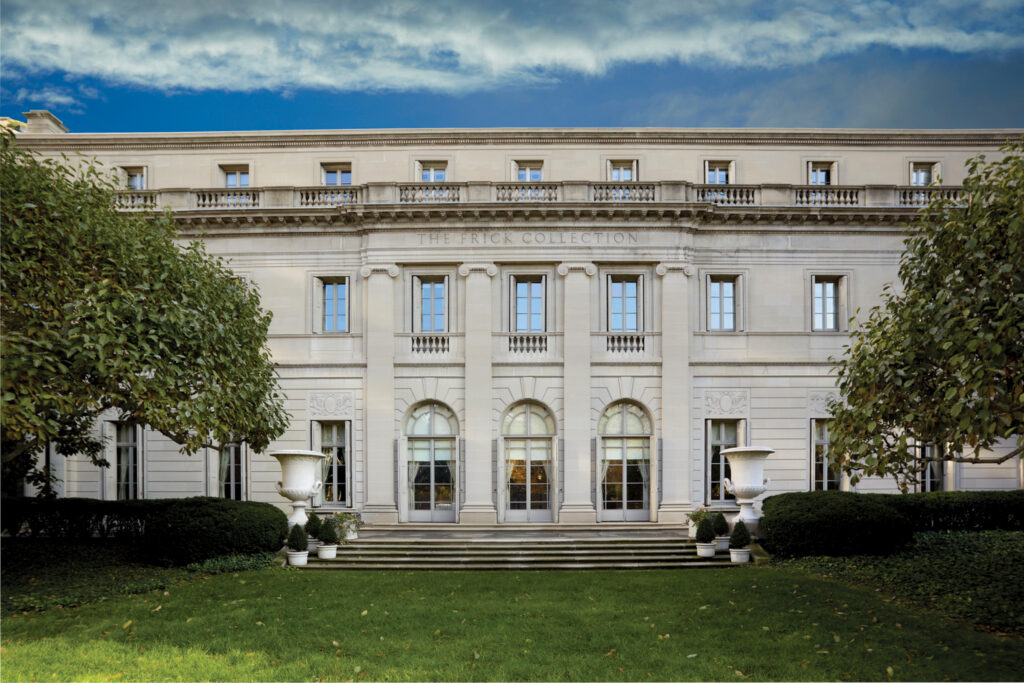
Centuries later, during the Gilded Age, the robber barons likewise turned to art as a means of bolstering their images for posterity. Henry Clay Frick made his fortune as a steel magnate in Pittsburgh before moving to Manhattan, in the early 1900s, and building his neoclassical mansion (above) to house his vast collection of Old Masters and fine furniture. A visitor’s experience is rather that of touring a gorgeous old home versus a museum, as the paintings are hung without concern for chronology or curatorial coherence. One goes from a Rembrandt portrait to an English landscape by Constable, and hence we associate the name of Frick with great art and tasteful opulence, as intended.
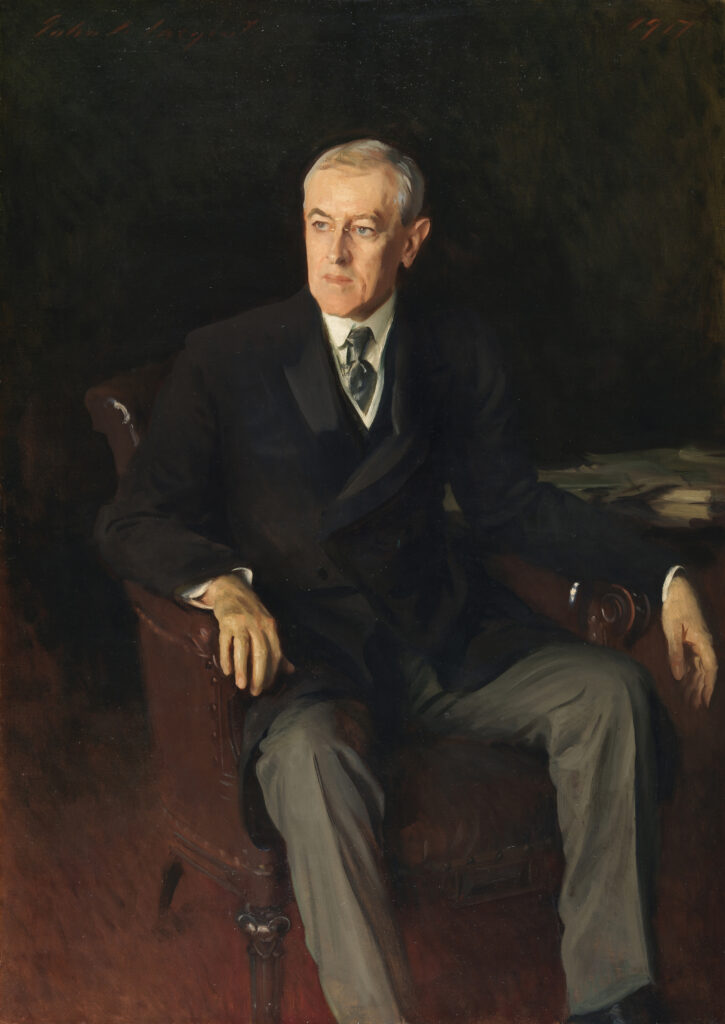
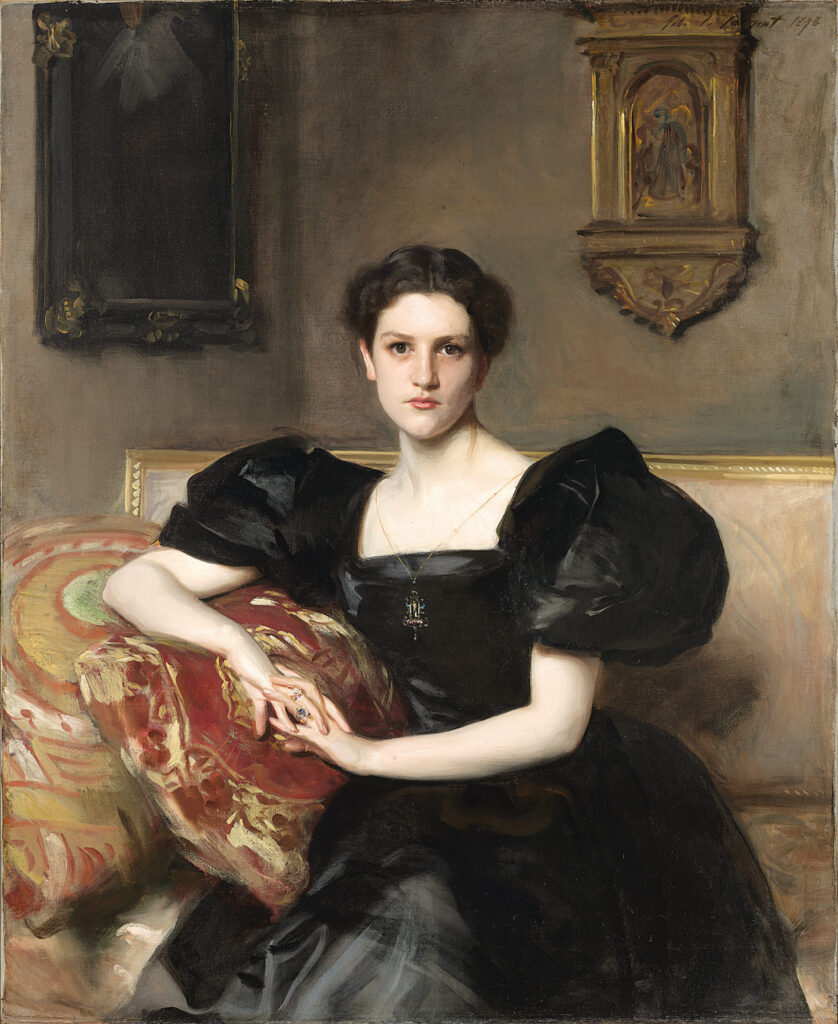
At the Frick, where I serve on the board, I once met the shrewdly appraising gaze of Lady Agnew of Lochnaw. Lady Agnew’s reputation as a society hostess was preserved for all time by her master portraitist, John Singer Sargent—“the unrivaled recorder of male power and female beauty,” as the critic Robert Hughes described him, “in a day that, like ours, paid excessive court to both.” Amid the garish excess of the Edwardian period, a Sargent portrait was an investment in immortality, as the painter himself was well aware—turning down subjects who didn’t suit him, for whatever reason, and charging around $5,000 per portrait (about $150,000 today).
Sargent painted two presidents, Theodore Roosevelt and Woodrow Wilson, and one of his last and greatest works depicted a wistful John D. Rockefeller, the ultimate embodiment of American plutocracy. Once Sargent had become almost as wealthy as his subjects, his reputation was downgraded to that of an accomplished society artist and little more; in recent years, though, his mastery has been celebrated anew—Group with Parasols sold for $23.5 million in 2004—a matter perhaps best explained by an admiring successor: Sargent, said Andy Warhol, “made everybody look glamorous. Taller. Thinner. But they all have mood, every one of them has a different mood.”
As for latter-day art collectors and patrons: those who think they ought to be nicer-than-average people should consider the case of the oil tycoon J. Paul Getty—the richest man in America as of 1957, according to Fortune magazine, and one who left a museum complex so heavily endowed ($1.2 billion at the time) that it currently must spend upward of $6 million a week to avoid taxes.
Despite his posthumous largess, Getty was not known for his warmth or generosity. Almost every night of his life he hand-washed his underwear, and when his sixteen-year-old grandson and namesake was kidnapped in 1973, Getty refused to pay a penny of the initial $17 million ransom. Four months later—after the kidnappers mailed the grandson’s ear to a newspaper in Rome, and lowered the ransom to $3 million—Getty agreed to pay $2.2 million, the highest tax-deductible amount, and lent the balance to the victim’s father at 4 percent interest.
“Paul was really too mean ever to allow himself to buy a great painting,” said his later companion, Penelope Kitson, an interior decorator who did much of the art-picking for Getty. Given that his own interest in art was negligible—he never bothered to visit his vast museum in Malibu—and that he was too stingy to gamble on new art of uncertain value, Getty himself was hardly a tastemaker. However, by sheer dint of ego, persistence, and not a little boredom, he managed to amass more than 400 paintings by Renaissance and Impressionist masters, and would later fill his unvisited villa with Greek, Roman, and Etruscan statuary that call to mind the final shot of Citizen Kane.
Getty collected art to remind people that he had a lot of money, and for Eli Broad, too, money was a means of asserting power, but in a more benevolent way that valued art and good works foremost. Once Broad had made billions in home-building and insurance, he and wife Edythe committed to giving away 75 percent of their wealth—mostly toward a vast and successful project to turn Los Angeles into a cultural mecca. “I want to give back, and I also have a big ego,” Broad frankly admitted in a 2003 Forbes interview. “I’d rather be recognized for doing good than for just making money.”
It helped that Broad, determined to learn about art and cultivate his own taste, was married to a woman who shared his interests. It was Edythe who first began collecting modernist work by Picasso, Miró, and Matisse, until the couple turned their focus to postwar American artists such as Rauschenberg, Basquiat, and Koons. In 2010, the Broads committed their collection of more than 2,000 contemporary works and $140 million of their own money to build the 120,000-square-foot Broad museum—one cultural marvel now among many in once forsaken downtown Los Angeles, mostly thanks to the energy and vision of the Broads.
The Broad, the Getty, and the Frick: monuments to their eponymous patrons? Perhaps, but I for one give thanks for such prodigious egotism, or for its fruits: a better world for artists, scholars, dealers, and museum-goers alike, as any visitor to Florence would likely agree. After Lorenzo the Magnificent’s death in 1492, the puritanical Savonarola led a backlash to Medici-era luxury, inciting his followers to destroy art, mirrors, fine clothing—whatever gave sinful pleasure—in a bonfire of the vanities.
But the legacy of the Medicis abides, and now when I wander amid the treasures of their Uffizi Gallery in the center of Florence, I feel like old Lorenzo himself: a prince.
Bridge Builder
Among power brokers in the art world, Alice Walton doesn’t easily fit with the others I mention. Although certainly rich enough—worth $59 billion as of October 2022—the youngest of Walmart-founder Sam Walton’s children lives rather modestly, most of the time, in a one-story ranch house in Texas, where she does most of her own cooking. More to the point, she did not want her name on the museum she all but single-handedly created, and for that matter has never bothered to commission a portrait of herself (“I would just as soon not see my wrinkles”).
Art, to Alice Walton, was never an incidental way to dispose of her fortune, but rather a passion she was born with and diligently pursued all her life. At the age of ten she bought, out of her own weekly allowance, her first work of art: a reproduction of Picasso’s Blue Nude from a franchise of the Ben Franklin dime-store chain her father owned at the time.
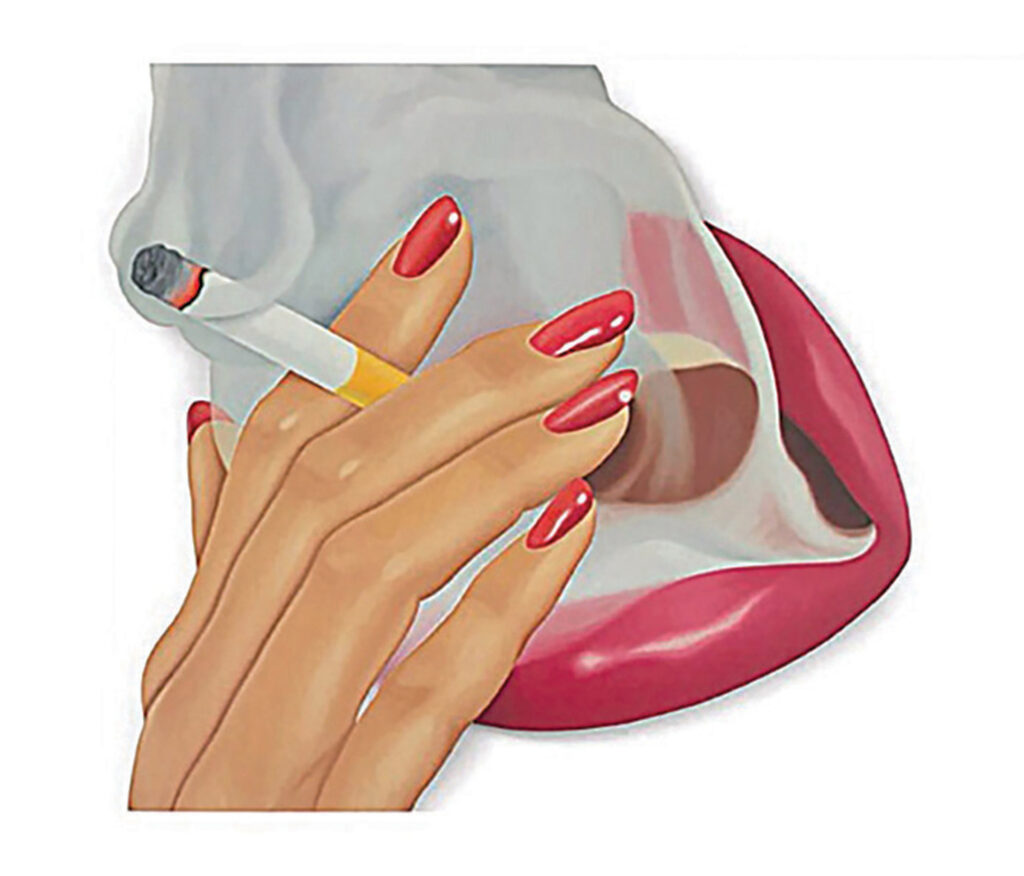
As a girl she taught herself to paint in watercolor, and soon began collecting watercolors, which evolved into a love of particular American artists and their most salient, appealing themes—the loneliness portrayed by Andrew Wyeth and Edward Hopper (“How do you paint loneliness? I don’t know, but they do express it”), or the sensual pleasure of Tom Wesselmann’s Smoker #9, which reminded Walton of her own struggle to quit smoking.
Finally her collection was formidable enough to rate its own museum, nestled in the woods near her hometown of Bentonville, Arkansas, in the Ozarks. The Crystal Bridges Museum of American Art was named by its founder for the nearby Crystal Spring and the bridges and walkways connecting the eight pavilions of the sprawling complex, passing amid ponds and under the treeline, and thus affording a kind of ideal balance between art and nature.
With an endowment four times larger than that of the Whitney Museum of American Art, Crystal Bridges may be viewed as nothing less than a tribute to the American spirit, which Walton defines as “the opportunity that we have in this country to grow and learn and be the very best we can, and to help other people.”
The Activist Collector
Pamela J. Joyner—an “activist collector,” as she considers herself—has made or revived the reputations of great Black artists such as Richard Mayhew, Alma Thomas, Mark Bradford, and Kevin Beasley, to name a few.
With her husband, Alfred J. Giuffrida, Joyner has amassed a collection of more than 300 works by some 100 artists, featured in a monumental volume, Four Generations: The Joyner/Giuffrida Collection of Abstract Art, and an acclaimed exhibition, Solidary & Solitary: The Joyner/Giuffrida Collection, that debuted in 2017 at the Ogden Museum in New Orleans.
“Ours is a mission-driven collection with no smaller ambition than to reframe art history,” says Joyner. She’s chaired the board at the Tate Americas Foundation (I’m on that one, too), and also served as a trustee of the Art Institute of Chicago, the San Francisco Museum of Modern Art, and the John Paul Getty Trust.
Within eighteen months of joining the last, she influenced the Getty Research Institute to create a $5 million African American Art History Initiative that will make the Getty a research hub for Black art. Meanwhile, she’s co-founder of the Black Trustee Alliance for Art Museums. Her influence on the contemporary art scene can hardly be overstated.