William Kentridge
In Praise of Shadows
Segregation, violence, oppression, and inequality: these are the injustices of twentieth-century South Africa. It was against this turbulent background that William Kentridge grew up and went on to develop his powerful and haunting artistic practice.
SEGREGATION, violence, oppression, and inequality: these are the injustices of twentieth-century South Africa, privileging white Afrikaners of Dutch descent and British South Africans over a disenfranchised Black majority population. Apartheid was introduced as a government policy in 1948, separating people according to the color of their skin, and not allowing those of African descent to own or rent land but, instead, forcing their mass relocation to distinct areas called homelands.
In 1994, apartheid officially ended, due to the efforts of Nelson Mandela and President F. W. de Klerk. It was against this turbulent background that William Kentridge (b. 1955) grew up and went on to develop his powerful and haunting artistic practice. Johannesburg, where the artist lives and works, continues to suffer from urban blight. Glaring evidence of poverty, crime, civic incompetence, power cuts, and lingering racism creates a palpable atmosphere of tension, which is manifest in the security-gated, electric-fenced, canine-guarded houses of the rich and still mainly white boroughs.
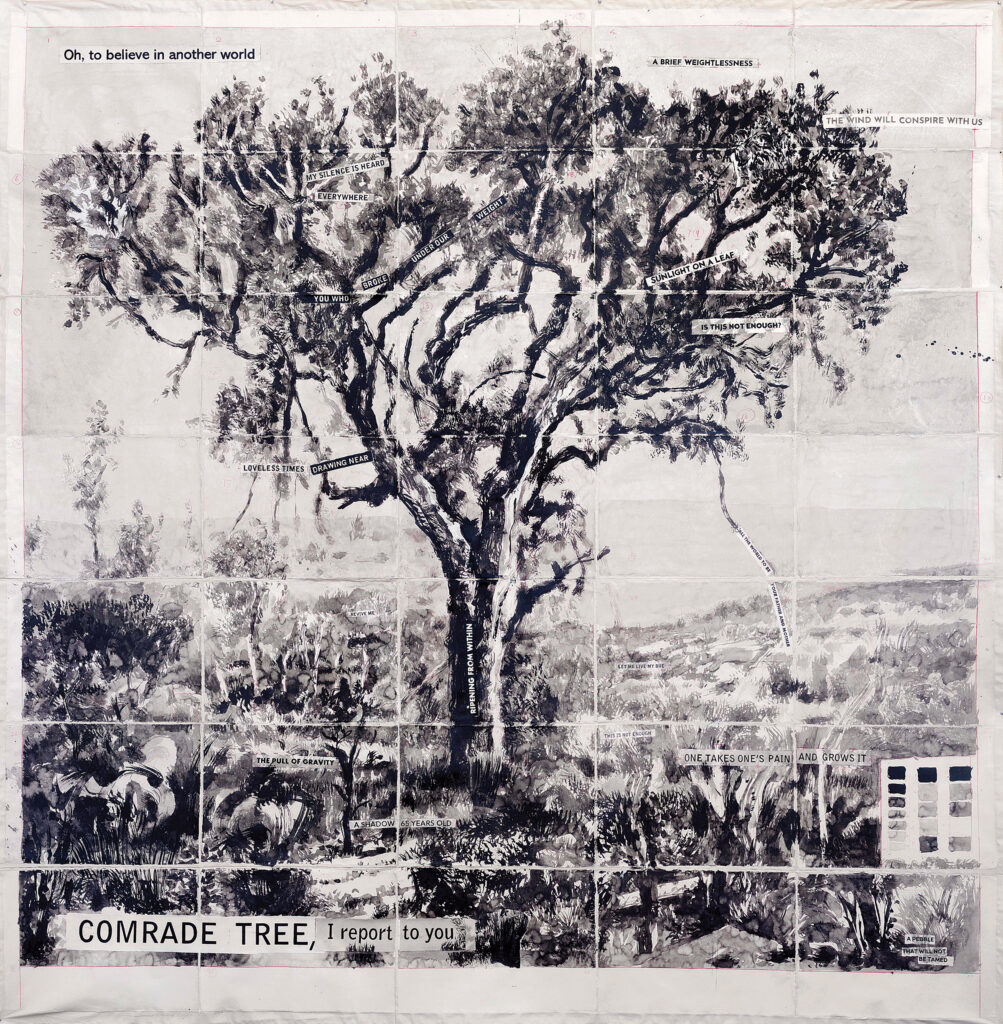
The Royal Academy in London and the Broad in Los Angeles have each dedicated major wall space to important, consecutive exhibitions about Kentridge, pulling out all the stops to showcase and honor a career spanning forty years, a mammoth task considering the range and complexity of media involved. Although Kentridge is well known for drawing and draftsmanship, his films, tapestries, and sets for opera and theater are equally compelling. The Royal Academy exhibition pulled together an even larger array of his prolific output, melding it into a vast, immersive retrospective. Stop-animation films, installations resembling eighteenth-century mechanical theater, and sculpture, as well as documentary material showing preliminary working methods and celebrating Kentridge’s collaborators: dancers, composers, puppeteers, weavers, printmakers, metalsmiths, and stage designers.
Partly autobiographical, the work is reflective of the artist’s preoccupation with history, most notably of European colonization and the postcolonial influence across the whole of the African continent. Modern eyes are confronted by the barbarity and injustices of a political system that was based on domination and subjugation. Simultaneously shocking and compelling, it is made more so by Kentridge’s treatment of his themes. Using uneasy social and political material as a backdrop to dance, puppetry, and music—usually associated with entertainment—the artist emphasizes the banality, cruelty, and absurdity of the nation’s leaders, but does so with a touch of comedy and irony.
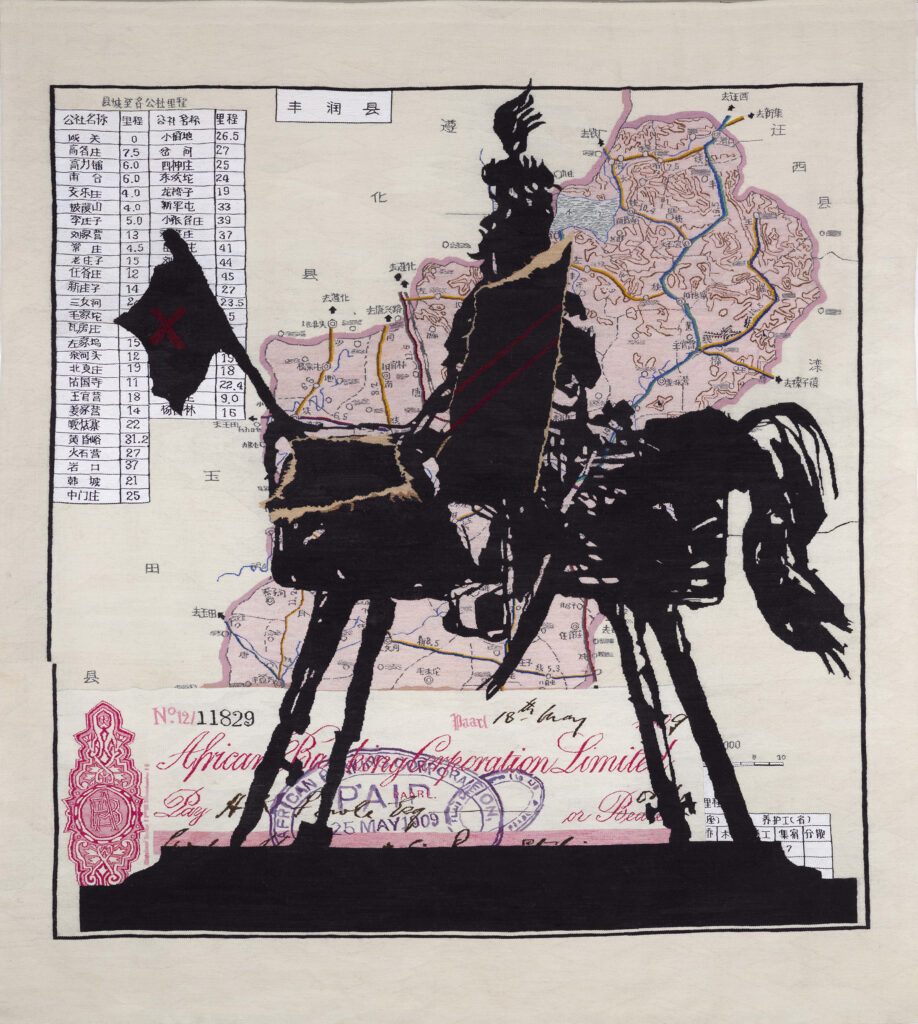
The onslaught of hard-hitting material can seem overwhelming but the ambition and scale really show what an extraordinary multiplicity of genres benefit from the artist’s vision. Seeing multi-screened films projected close to enormous tapestries of maps with colonial references and drawings of caged animals is powerful and moving. All together, they reinforce the idea of what South Africa has been through and what still needs to change, arguably more effectively than any amount of political debate could ever do.
William Kentridge: In Praise of Shadows is on view through April 9, 2023, at the Broad in Los Angeles. thebroad.org