Handle with Care
Tulsa, Oklahoma, is now home to the entire personal creative archive of America's most impactful minimalist poet, Bob Dylan.
BY Ryan Steadman | PHOTOGRAPHY BY Shane Bevel
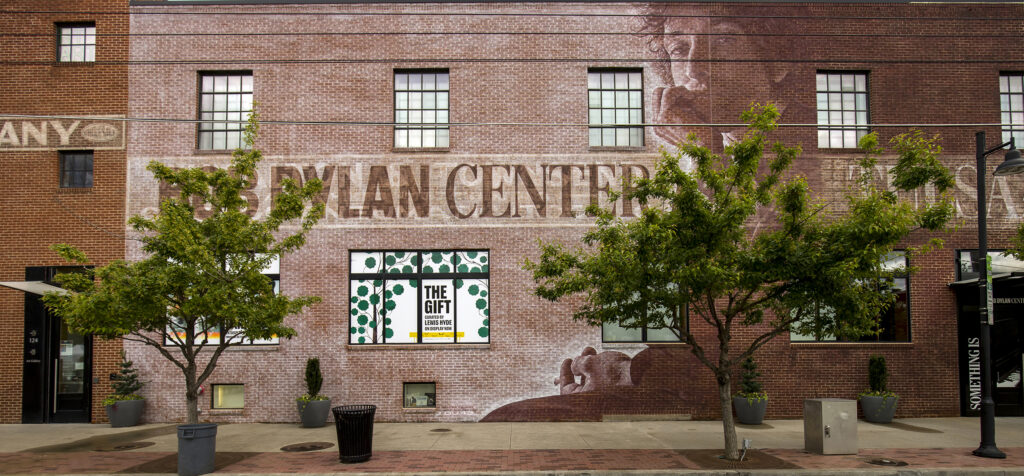
IN LATE JANUARY 1961, a young Jewish folk enthusiast from Hibbing, Minnesota, named Robert Allen Zimmerman dropped out of college and moved to New York City to become a full-time folk musician and meet his idol: the Oklahoma-born folk icon Woody Guthrie. To most parents, this adolescent scheme might sound like a terrible idea. But after earning eleven Grammy Awards, a Nobel Prize for Literature, and a Presidential Medal of Freedom, and selling more than 125 million records worldwide, it’s safe to assume that Bob Dylan was correct to follow his hunch.
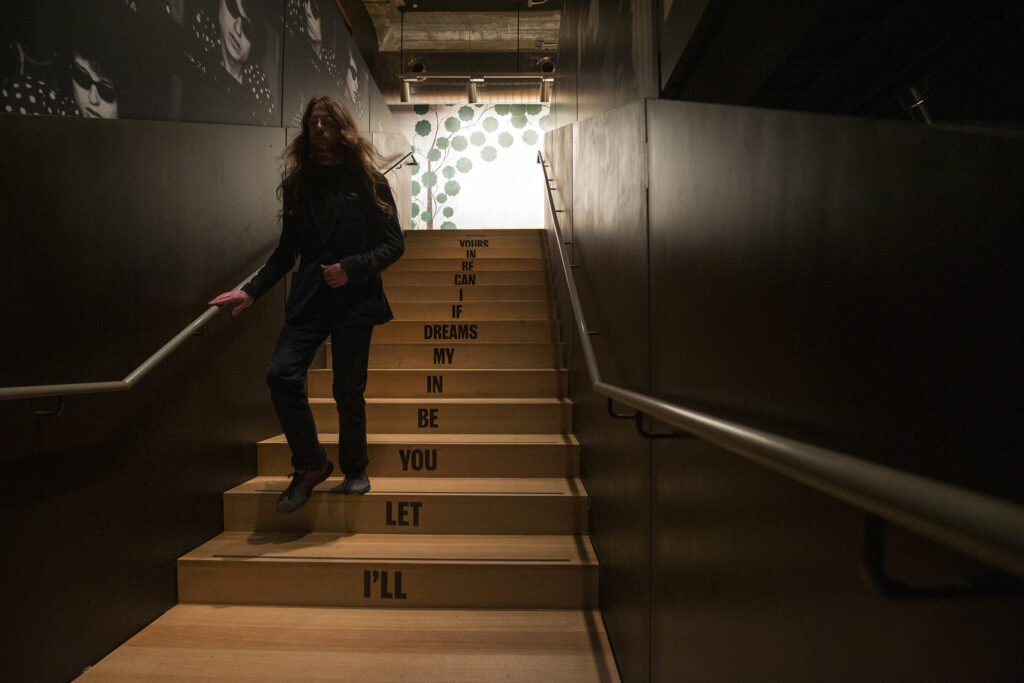
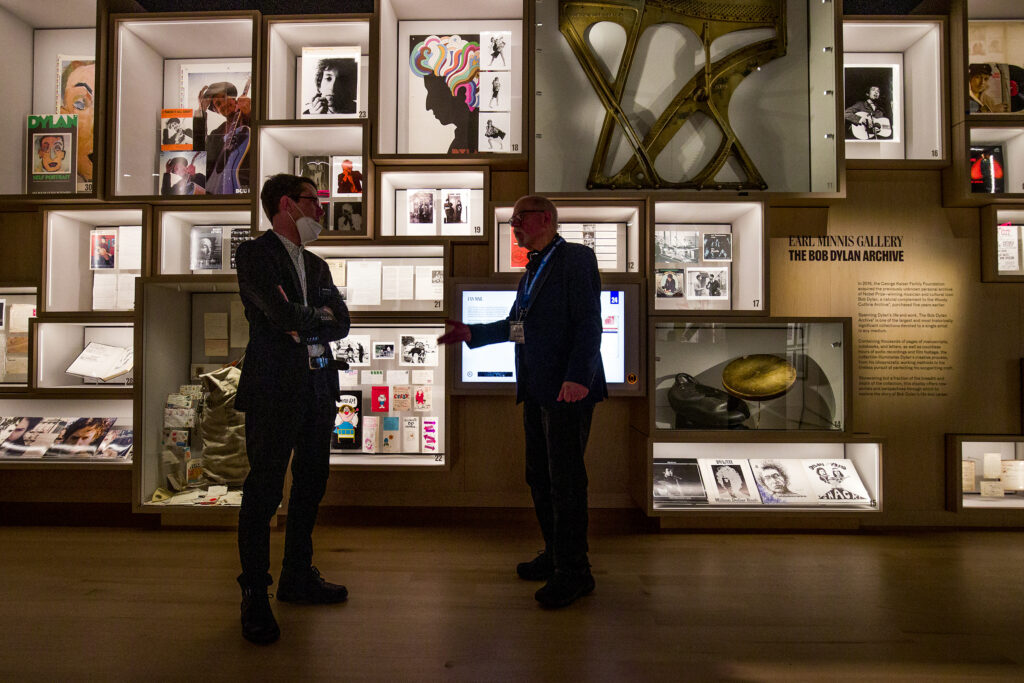
At the age of eighty-one, the bushy-haired balladeer has been sanctified with his own museum—the Bob Dylan Center in Tulsa, Oklahoma—right next door to one dedicated to his childhood idol. Designed by international architectural design firm Olson Kundig, the space has been outfitted with cutting-edge and multimedia technology meant to inspire both casual and longtime Dylan fans.
“For locals, I hope that the Bob Dylan Center serves as a welcoming hub of diverse cultures and sensibilities that characterize Tulsa’s thriving Arts District,” says Steve Higgins, American Song Archives managing director. “[And] for Dylan fans worldwide, I’ve no doubt they’ll be knocked out by the never-before-seen treasures in the Bob Dylan Archive, many of which will be on display in the center’s galleries.”
The Bob Dylan Center is home to more than 100,000 personal items owned by the musical legend, from essays, poems, correspondence, artworks, and philosophical musings to recording-session reports, contracts, sheet music, musical instruments, and rare photographs that span the artist’s sixty-year career. One example of the countless rarities in this collection is a sheet of Waldorf-Astoria stationery scrawled with the lyrics for the 1964 Dylan anthem “Chimes of Freedom”—regaled with edits in blue ballpoint pen and cigarette burns.
The idea for a Bob Dylan Center began in 2016 when the George Kaiser Family Foundation (a local philanthropy) acquired the archive, formerly located in New York City. Mark Davidson, PhD, librarian and collections manager at the center, oversaw the archive’s transport to the Helmerich Center for American Research at the Gilcrease Museum in Tulsa—a building specifically created to house and protect some of the region’s greatest historical treasures.
“After about a year of continuous, painstaking work, the collection was ready to host its inaugural cadre of researchers,” Davidson said in an email. “Since the archive opened, dozens upon dozens of researchers have come to Tulsa to pore over the documents and listen to never-before-heard audio tracks from across Dylan’s career.”
Higgins said in a statement that his wish for the center is for it to “explore the creative process and inspire the next generations of artists,” and this goal is most evident in the center’s naming of the Oklahoma-born US poet laureate Joy Harjo as its first artist-in-residence. At age seventy-one, Harjo has been named to a six-year appointment at the Bob Dylan Center. While there, she will present educational programs, live performances, and curated exhibitions, ensuring that the museum will continue evolving beyond what Dylanologists can even imagine today.
The Bob Dylan Center, located in Tulsa’s Arts District, is now open to the public. For more information and to reserve tickets