Encourage a Young Artist
Mark Rothko spent more than twenty years teaching art to children at the Brooklyn Jewish Center, and his lessons in compassion and confidence still hold.
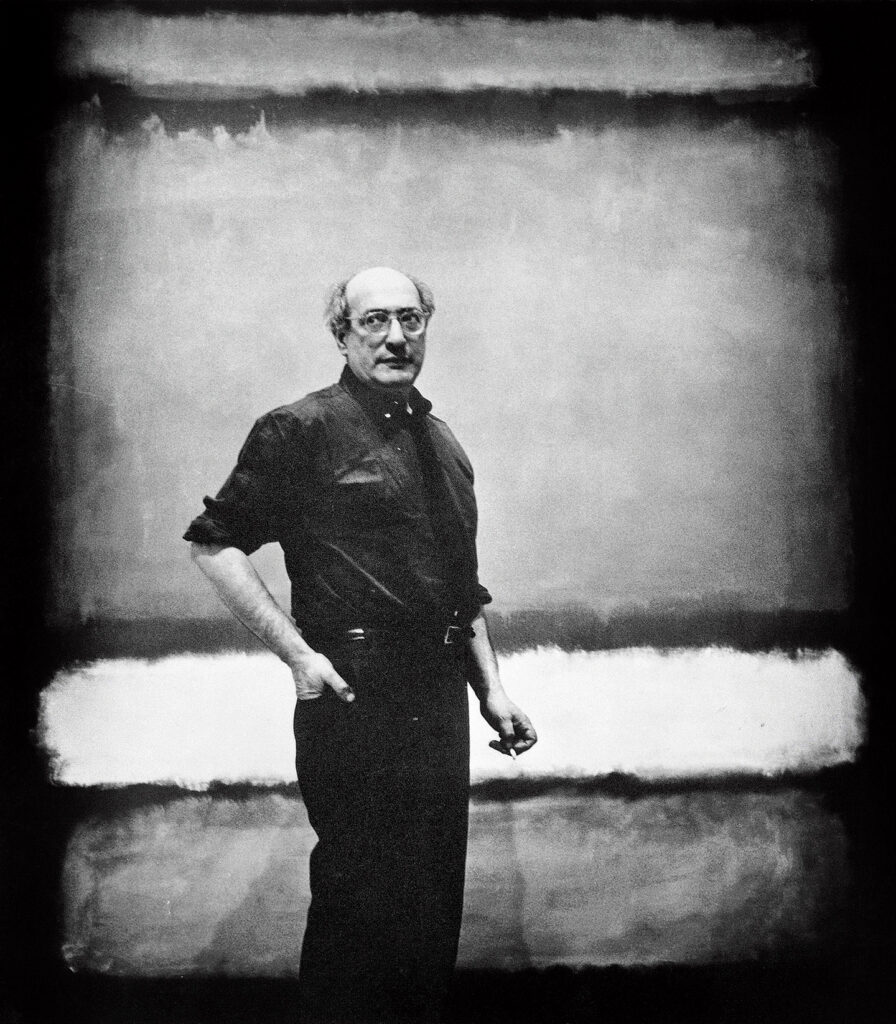
MARK ROTHKO BECAME of the first American artists to help shape and protect the untainted eloquence of children’s art. Despite reports to the contrary, many knew the influential abstract expressionist painter as a warm, compassionate soul and positive force in his community. Nowhere was that more evident than in his lesser-known career: art teacher at the Brooklyn Jewish Center, where he taught five-to-fourteen-year-olds for more than twenty years.
Rothko taught at esteemed colleges and universities later in his life, but even before mounting his first solo exhibition, he was already fascinated with teaching art to children. He even published an essay in 1934 titled New Training For Future Artists and Art Lovers that he hoped to expand into a book. While the book never materialized, harnessing the unique artistic abilities of children would occupy his thoughts—and even help inspire his iconic paintings.
In fact, according to Seth Cameron, executive director of the Children’s Museum of the Arts in New York City, Rothko’s strong beliefs about art made his approach to teaching it to children inseparable from his own process.
“For Rothko to have achieved his work, it required an incredible and sustained openness to affective experience,” says Cameron. “I don’t think he saw his practice as a choice; I suspect he thought of it as just what life is. For those of us who feel the same, it’s fairly direct to identify with the creative work of kids, to see the immediacy of their approach as indicative of intrinsic desire.”
As many Rothko fans know, his most famous paintings—with their large and irregular blocks of painterly color—feel immediate, like those of a child.
Rothko’s practical lessons for teaching art to children stand the test of time. According to his writings, what a teacher shouldn’t do—such as not imposing “laws which might induce imaginative stagnation and repetition”—is just as important as what they should. Counter to the idea of a rigid disciplinarian, Rothko believed an art teacher should act like a trusted confidant, offering possible solutions while enabling a student’s self-confidence and excitement. He also points out in his essay how, unfortunately, “most of these children will probably lose their imaginativeness and vivacity as they mature” due to adults forcing them to internalize misguided ideas about natural talent, training, and expertise.
Rothko thought that all humans felt a natural urge to communicate through art. Yet, unlike most adults, children are still free from the rules of taste and style that tend to strangle imagination.
Cameron elaborates on this, explaining how the ab-ex legend “recognized that making art is intrinsic to the human condition—that, by and large, we are born with the desire to bridge ourselves to the world through visual representation. This is just as true today as in 1934 and as it has been since cave painting.” Cameron also believes childhood art educators must give kids the tools they need to grow as artists.
In the end, the simplest of Rothko’s instructions for teaching art to children is also the easiest: exhibit their work. From the kitchen refrigerator to gallery walls, nothing imbues a young artist with confidence more than an appreciative audience.