Arts Education for a Better Future
Oklahoma Contemporary’s arts education programs provide children opportunities for creative development, motor skills, and analytical thinking.
PICTURE THIS: A school bus pulls up to a large, angular building that looks like it’s ready for liftoff, its metal exterior changing colors as the sun moves across the sky. The bus doors open, and a gaggle of schoolchildren—maybe third or fourth graders—spill out onto the paved sidewalk before the building’s entrance. The children are wiggly, noisy, bristling with excitement. They’re here to learn about art, and they cannot wait.
“My favorite thing is watching the kids get off the bus,” says Jamie Thompson, director of education at the aforementioned Oklahoma Contemporary Arts Center in Oklahoma City. “They aren’t intimidated. They know from the point they walk in the door that they get to ask us questions, and we’re here for them.”
While nearly 90 percent of Americans agree that arts education is necessary, support for arts education, especially in communities that cannot afford it, has declined, says the American Academy of Arts and Sciences in its 2021 report Art for Life’s Sake: The Arts and Public Education. “Faced with budget constraints and rising accountability pressures, policymakers and administrators have to make difficult decisions about the availability of the arts in schools. As a result, access to arts education has declined.”
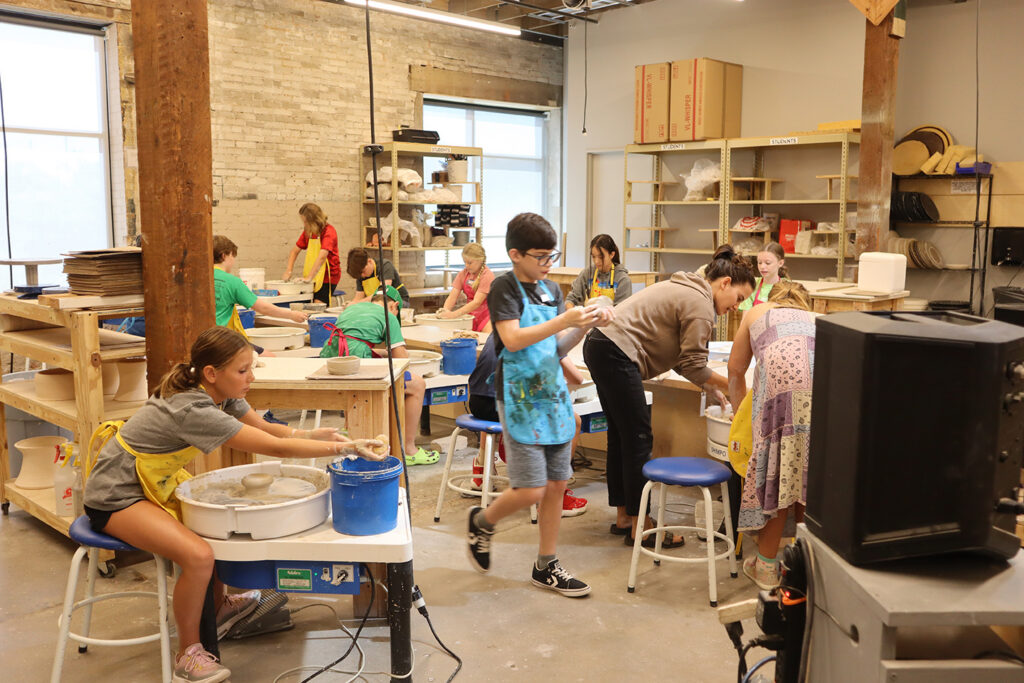
That’s where Thompson and those like her come in. They aren’t replacing traditional art education in Oklahoma’s K–12 schools, but they are making art education better, through class tours, youth art camps, professional development for art teachers, and more. Oklahoma Contemporary’s new downtown headquarters opened in 2020, amid the height of the pandemic, before its leadership knew how important the arts would be to society’s social and intellectual reemergence. “I am amazed at how resilient our children are post-lockdown,” Thompson says. “We are providing them opportunities in this building for continuing their growth as members of our society after losing, in some cases, a year of social and emotional growth in the classroom.”
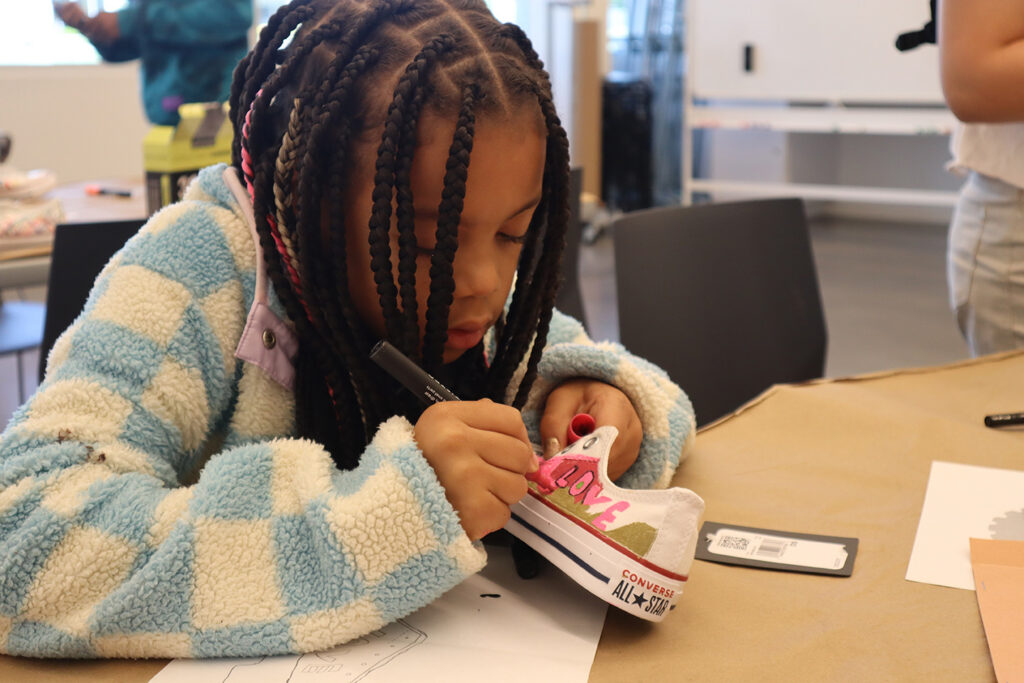
The arts help children develop motor, communication, and empathy skills. Art education reduces school absenteeism and increases academic performance.
“Engaging with art is essential to the human experience,” write Brian Kisida and Daniel Bowen in a 2019 Brookings Institute commentary, New Evidence of the Benefits of Art Education. “Yet, while we recognize art’s transformative impacts, its place in K–12 education has become increasingly tenuous.”
Case in point, American students receive less arts education than they did thirty years ago. “This trend is primarily attributable to the expansion of standardized-test-based accountability, which has pressured schools to focus resources on tested subjects.”
Among Oklahoma’s nearly 700,000 K–12 public school students enrolled during the 2021–22 school year, almost 117,000—16.8 percent—attended schools with zero art classes, according to the Oklahoma Arts Education Data Project, a public-private collaboration designed to increase equity and participation in arts education.
That’s too many.
Staffers at community art centers like Oklahoma Contemporary stand ready to fill in the gaps. Many of the exhibitions featured at the arts center, like 2021’s Ed Ruscha: OKLA, which focused on the legendary artist’s Oklahoma roots, cover many of the Oklahoma State Department of Education’s academic standards not only in visual arts but social studies and other subjects. Oklahoma Contemporary’s professional development team will host fifty-six Oklahoma City Public Schools educators in February, just as it recently did with another group of art teachers from suburban Edmond. The Oklahoma City Museum of Art, the National Cowboy & Heritage Museum, and Tulsa’s Philbrook Museum of Art are just a few of the Oklahoma art organizations offering free tours for school groups and professional development resources for educators.
The arts are integral to molding today’s youth into tomorrow’s leaders who are analytical, creative, and lifelong learners. Just ask Thompson, who says the arts education programming at Oklahoma Contemporary embraces fun, creativity, and failure (which fosters resiliency) in ways that resonate. “We end up with participants walking away having learned something, as opposed to just walking away.”
For more information about Oklahoma Contemporary Arts Center’s educational programming oklahomacontemporary.com