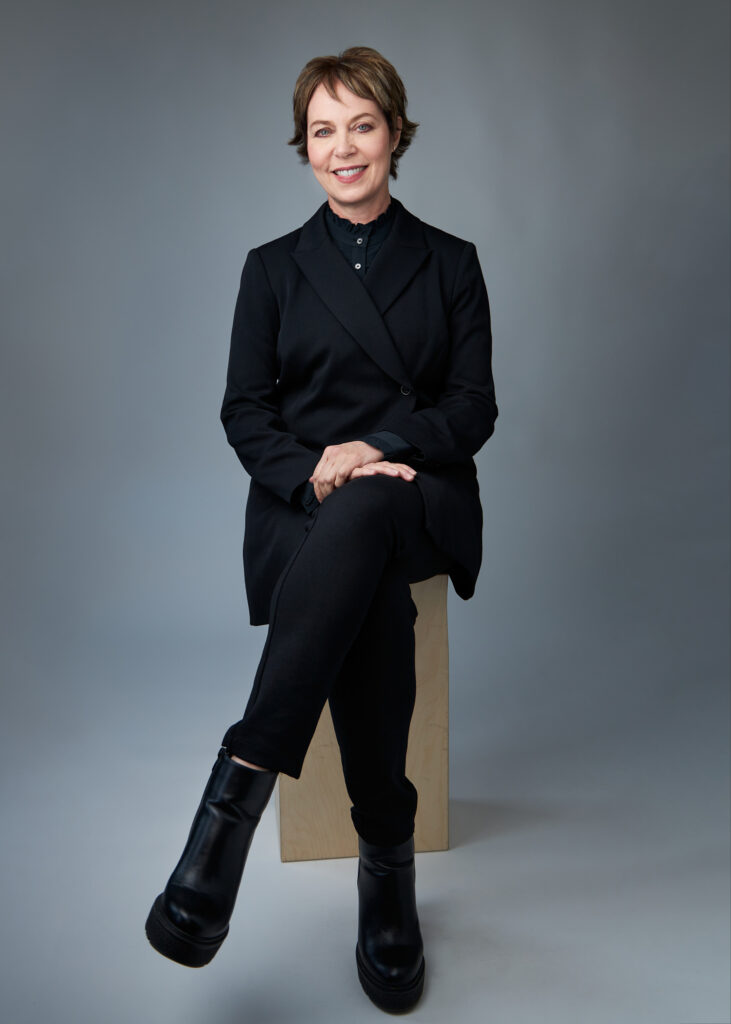
Ryan Nye: I’m not a journalist, but I do have some questions, and I thought we could maybe jump in and talk about you and your career.
Susan Jaffe: Okay, but before we do that, I want to congratulate you on your new appointment at Oklahoma City Ballet.
Ryan: Thank you very much!
Susan: Okay! I was born in D.C. and raised in Bethesda, Maryland. Before I went to a proper ballet school, I was in the local YMCA. A couple of us became too advanced to be in the YMCA to find a proper ballet school. I happened to get very, very lucky because I went to the Maryland School of Ballet, now called Maryland Youth Ballet. I had very good training. So I moved up to New York when I was sixteen and joined the second company of ABT, called Ballet Repertory Company.
We had heard that Mikhail Baryshnikov was going to take over as artistic director. Misha came to watch a class, and afterward one of the rehearsal directors came up to me and said, “Misha thinks you’re very talented.” It was shocking to hear.
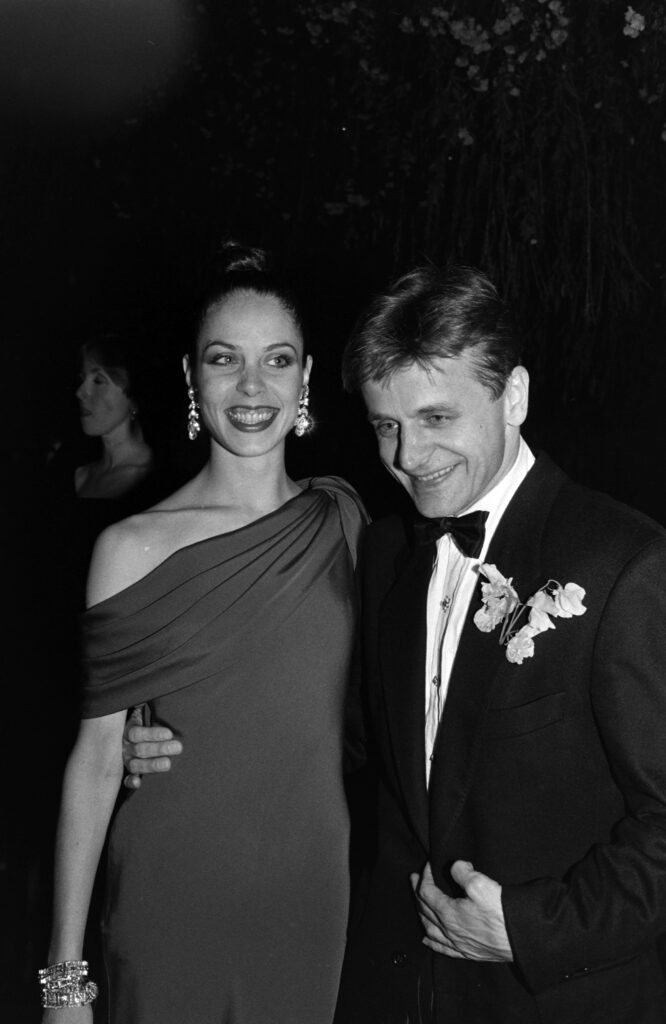
I joined the company in 1980, and at that time, Misha was focused on developing American stars because, until then, a lot of the stars were imported from Europe. There were very few American stars. I was part of a group of dancers that he really pushed, and a lot of us became soloists or principals. For my very first performance, we had a three-month rehearsal period before we were supposed to go to the Kennedy Center. Gelsey Kirkland and Patrick Bissell were to perform a pas de deux from Le Corsaire but they ended up not coming to the dress rehearsal. So Misha fired them. It was a big scandal, of course, and in the newspapers. He came to me and said, “How would you like to replace Gelsey, and then we’ll put Alexander Godunov in the place of Patrick Bissell?”
I said, “Well, thank you so much, but, you know, I’m not ready. I’m just 18. My first performance is supposed to be the fifth girl in the back in Raymonda, and I’m not—I can’t do that.” He said, “Oh, yes, you can. You’ll be just fine.” So they threw me in the studio with Alexander. I think we had two rehearsals, and then we went out on the opening night of ABT’s performances at the Kennedy Center under Misha’s reign.
It was his first night as director, and I became a name overnight, and I really had the impostor syndrome. I felt like, When are they going to figure out that I actually don’t know how to do this stuff, but I kept working. I just worked really, really, really, really hard and persevered just trying to catch up to my name really. I not only survived, but I thrived and then went off to work internationally and as a guest artist. So it was really a beautiful life as a dancer.
Ryan: I find that dancers can count the moments that really stand out on one hand. Is there a moment you find notable?
Susan: There are two standout performances in my mind. In one, around 1996, I was walking down the hallway, and Martine van Hamel, who was a principal dancer, said, “Good luck,” because I was in Swan Lake that night. I said, “Thank you, I’m going to have fun,” and she stopped in her tracks and turned around. She said, “You’re going to have fun?” And I said, “Yeah. I actually really think I’m going to have fun,” and I did. I went out there, and I had so much fun. I had no nerves. I was just—it was being in the flow. It was as if I were being danced. It was one of the most exhilarating sort of otherworldly types of feelings that I had ever had onstage. I got off that stage, and I said, “I don’t think I’ll ever dance that better,” and I don’t think I ever did.
Another was when I debuted at the Royal Ballet and was dancing with Irek Mukhamedov. One of their ballerinas had gone out, and I was in Italy dancing with La Scala. They called over and said, “Can you run over here and do La Bayadère with us?” I said, “Sure.” So I got there, and Irek really didn’t want to rehearse. He just wanted to do a few pirouettes and a lift, and then he said, “Okay. I’ll see you out there.” I was terrified. I also had on their costumes. I had a little bit of a different choreography.
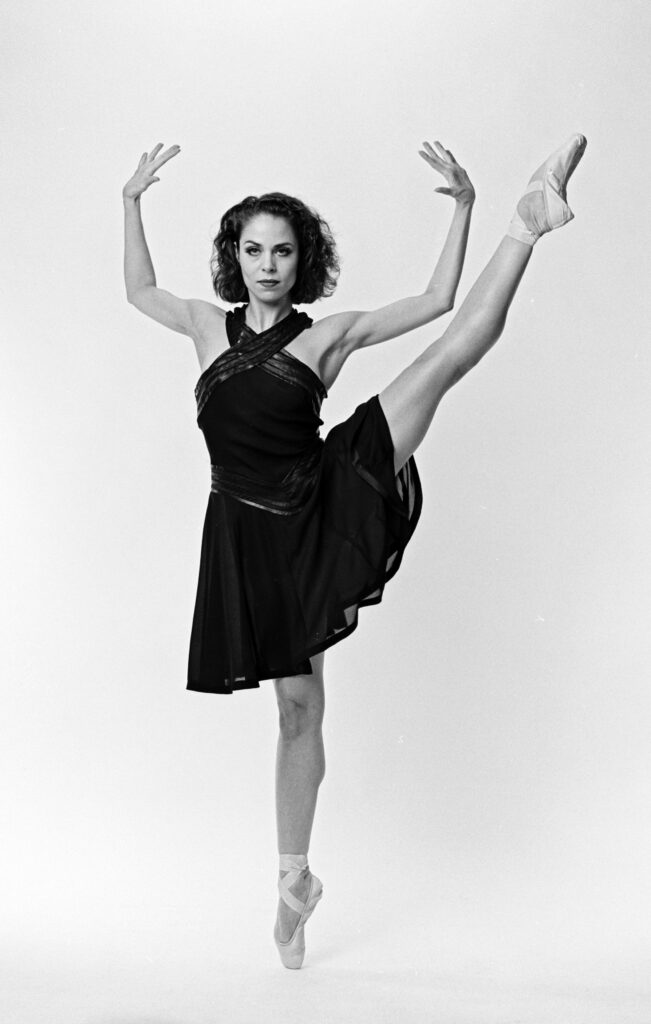
So I go out there, and I’m so nervous. I thought I was going to die. I got to the Snake variation, I tripped myself, and I fell in the side splits, facing the audience, and I remember just being so disgusted. I got up and I finished the solo, but by the time I went out for the second act, I had no nerves at all—how much worse could it be, you know, falling flat on your rear end in front of an audience. The reviews came out afterward and said we can’t believe that we just saw an American who could be so classical, because in their view Americans did not have true classicism. That was a really big deal for me.
Ryan: Everybody at some point ends up on the floor onstage. How do your experiences with UNCSA and Pittsburgh inform your role at ABT?
Susan: When I was the dean of the School of Dance at the University of North Carolina School of the Arts, I learned how to do a lot of administrative work and strategic planning. This meant honing my skills in creating a vision and strategy as to how we were going to grow and expand and become more visible and relevant in the United States and abroad. I also learned how to fundraise. I had fourteen faculty and three staff, so I also learned how to be a supervisor, plus, of course, teaching students. I choreographed three works over my eight years there and directed many of the productions. I took all those skills with me when I went to Pittsburgh. I remember thinking, gosh, if anybody ever wanted to hone the skills of an artistic director, go to university and be a dean or a chair and learn how to administrate.
I had gone to Pittsburgh [April 2020] and said, This is where I’m going to land. I’m going to bring the company into a new era. I bought a house. So when the artistic director position came up for ABT, I didn’t think that I would—I knew I had the skill, but there were a lot of people who were interviewing for that job who also had the skills. I didn’t think I would get the job because it was such a competitive search process. I thought, I’m just going to be very natural and very honest [during the interview process]. After a couple of months, the search firm called me, and I assumed he would tell me the committee has gone in a different direction, but he said, “I just want you to know that the committee has decided that it’s you.”
Ryan: Oh, my gosh.
Susan: I screamed. I was just—I was so shocked and so honored.
Ryan: Do you have any advice for dancers looking to move into a career?
Susan: First of all, be true to yourself and develop a positive, life-affirming work ethic. Everybody has talent who gets into a studio company or the corps. So you already have the talent, and then it is up to you and your will and perseverance to continue growing, to be hungry, to be good to yourself, positive toward yourself, and positive toward the environment. Your nervous system will be calmer, and therefore you can even take in more good things. Sometimes dancers can get very down on themselves or down on their situation—people grow at different rates and opportunities pop up for different kinds of people. You just need to keep your eye on the goal. Why does someone become a soloist? What is it? What makes that person a soloist or principal, and not just kind of sit back and wait for somebody else to tell them what to do? Proactivity is one of the biggest things, and perseverance, and to have a will of steel, and a great work ethic.
Ryan: It’s not easy to move forward in this career, and if you’re challenging yourself in a negative way, that only makes it harder.
Susan: Oh, completely. If you don’t get the part, you start making up all sorts of stories as to why you didn’t get that part, but that other person did. You have no idea why, and so oftentimes as a dancer—and I certainly did that myself—you create these stories and then you believe in them and they make you miserable.
Ryan: Exactly. I always say dancers only feel as valuable as their last casting.
Susan: It takes work to see and hone your own value regardless of what is happening around you. The people who can do that, those are the leaders. Those people are proactive and keeping their eye on the goal.