In Conversation
Wolf Like Me
Retired Yellowstone Wolf Project leader Douglas W. Smith talks with editor Louisa McCune about his favorite wolves, his biggest heartbreaks, climate change, and the books, music, and people that shaped him ahead of his Green Box Arts Festival conversation.
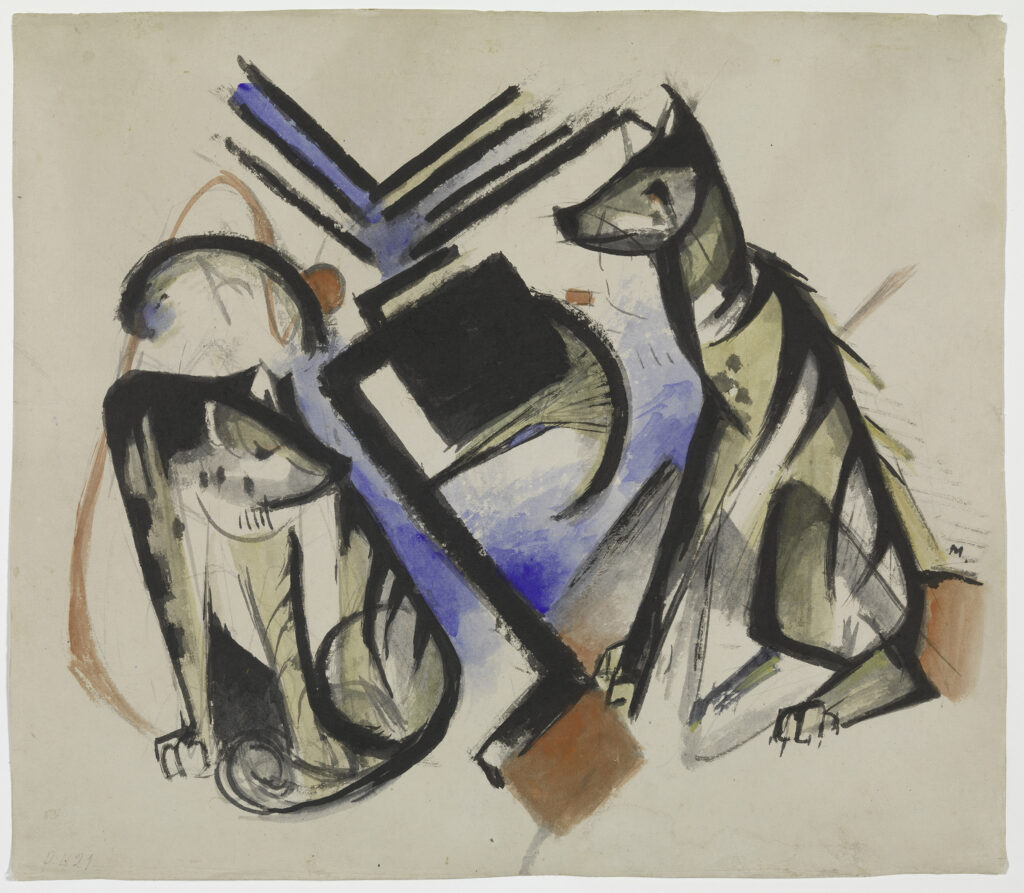
This summer, America’s beloved wildlife biologist DOUGLAS W. SMITH will join Green Box Arts Festival in person for an ArtDesk Conversation on July 7. Here, the horseback-riding Renaissance man reflects on influences like Pink Floyd, E.B. White, Vince Van Gogh, and Wolf No. 907, with editor in chief Louisa McCune. Recently retired, Smith was the project leader of the Yellowstone Wolf Project since inception and is an expert in wolves, elk, and birds.
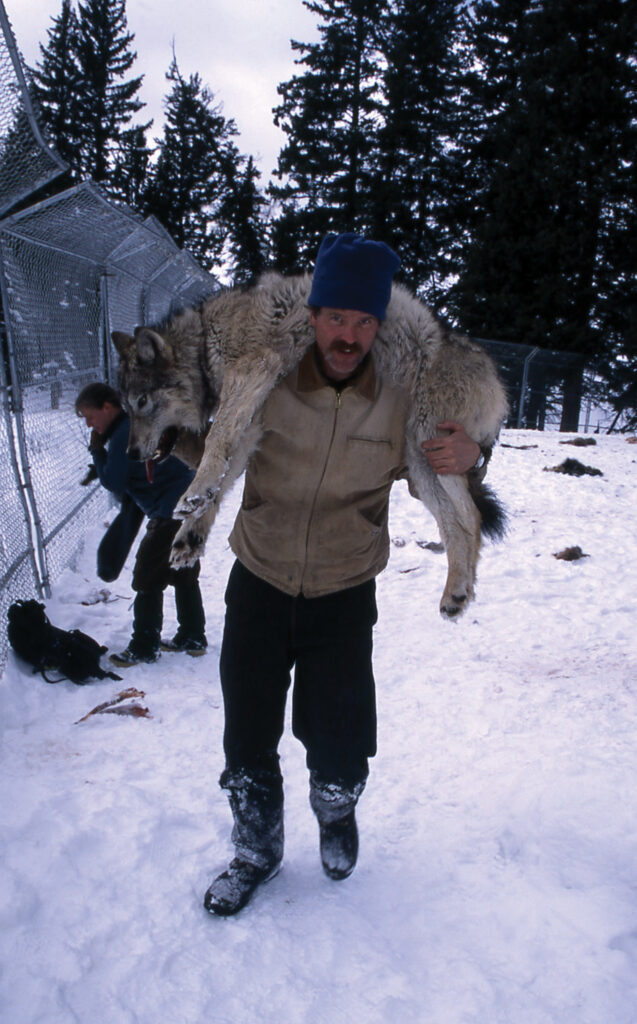
Of all the wolves, do you have a favorite wolf?
Tough question, very tough. I caught #907, the alpha female of the Junction Butte pack, three times. She is currently with the pack and has a litter of pups at age ten. The average lifespan of a wolf is about five years—so she is double the normal age at death. The first time I caught her both eyes were fine—the second time she was blind in one eye and has been that way ever since. If you see her in the field you can’t tell she is blind in one eye. We don’t know what happened but it looks like an injury—like she got poked in the eye. She also lost her alpha status and just recently—as a very old wolf—regained it. She is a classic gray in terms of coloration, very striking. It’s hard not to like her.
Wolf #7 of Leopold Pack, also a female from the early days (late 1990s), has stuck with me too as her leadership style was generous and kind. Watching the pack, it was hard to tell who was in charge as she ruled gently. You had to watch a while to see how other wolves deferred to her—many wolves rule with authority and you can tell quickly who is in charge. Not #7—she was gracious and patient. Great lessons there watching her. I feel like I need to add in a male. #113 of Agate Creek, like #7, was a kind-leading wolf—strikingly handsome (another beautiful gray wolf), classic colors for a wolf (gray is infinitely variable), and he lost his alpha status to his son but was not kicked out of the pack. Late in life I could have caught him again because he was so old. It would have been easy, but I didn’t have the heart.
Who is your favorite person to wolf-watch with?
Easier question. Rick McIntyre. He’s a gentle soul, and he knows the wolves really well—fills in many blanks for me. We also worked together a long time. Many people came and went on the Wolf Project over the years; there was some stability and continuity having Rick there every year. We’re both retired now—they seem to be doing just fine without us!
What was your biggest heartbreak in your Yellowstone wolf work?
There were many. Working with wolves—I am sorry to say this—acquaints you with death. The deaths of #31 and #38—they were illegally shot, and I had to watch them die. I regret that too. They were among the first wolves to come to Yellowstone, and they left the park on a trip where they both were shot and wounded outside the park. This was not my jurisdiction—it was the US Fish and Wildlife Service. They had the say. Tracking them in remote wilderness from the airplane, I found the two wolves wounded but alive and wanted to rescue them but the USFWS did not. So I checked on them each day from the airplane, just laying there not moving. I dropped food to them from the plane almost hitting them with meat! It didn’t help and they died anyway—over days. It was horrible. I would not do that again—I would just have gone in and got them. I was young and deferred to power and authority.
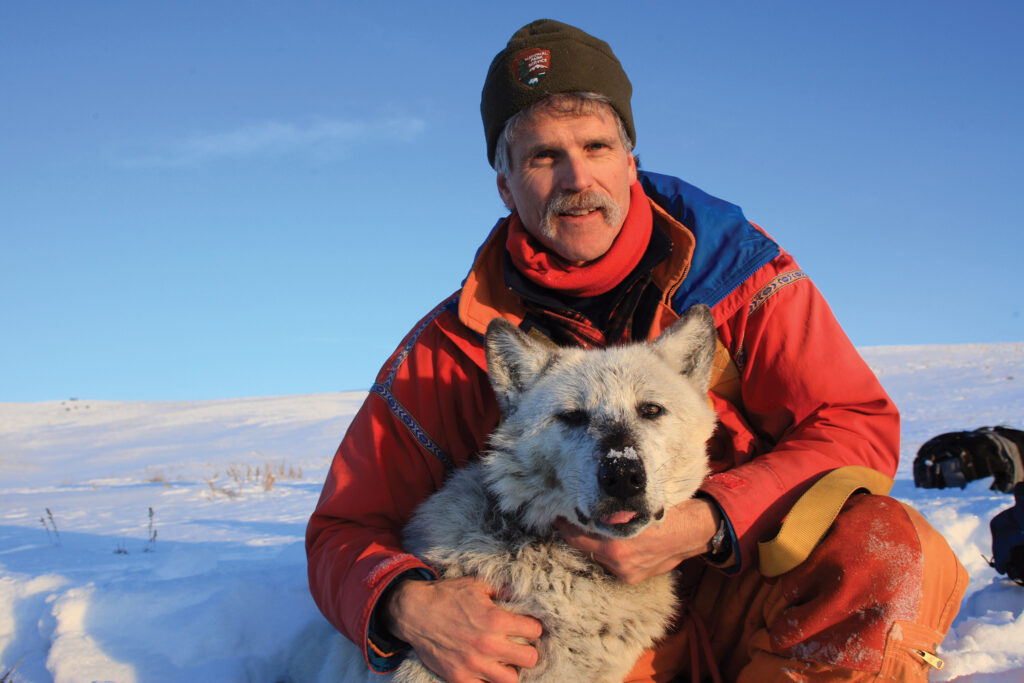
What is your biggest accomplishment?
Giving wolves the chance to speak and tell their stories. You may think that is odd, but in a way that was my goal: Learn about wolves and tell their stories to a wider audience thereby gaining them a voice and respect in a world that is oftentimes hostile to them.
How would you like to be remembered?
Loved all of nature and did the best he could.
How do your friends describe you?
Loves reading, writing, and thinking. Loves bird watching or time alone in nature with animals and is not a bad horseback rider. Sometimes prefers company of horses to humans. Claims he has learned a lot about life from them. Adores his wife.
What were your top ten every-day carries during your wolf work at Yellowstone?
Think I know what you mean: 1) binoculars, 2) small notepad, 3) pack, 4) bear spray, 5) field guide, 6) hat, 7) rain gear, 8) water/snack, 9) phone (for photos—this used to be a camera but a phone can do more—but on airplane mode so as to not be bothered), 10) sunglasses.
If you weren’t a wolf biologist, what would you be?
English teacher because I love reading, writing, and thinking. I also can connect with people, not always and not with everyone, but meeting a kind soul who loves nature and reading, writing, and thinking is inspirational.
Where is your favorite place to visit?
Yukon Territory.
What is the most surprising thing about retirement?
It’s busy. Very busy.
Spring, summer, fall, or winter?
Winter because of cross-country skiing, spring because of birds.
In all of myth, legend, fables, and fairy tales, do you have a favorite wolf story?
I wanna say my own, the one about when the wolf should have left but it came back and we looked into each others eyes, something I have carried with me since. But I’ll go with the Three Little Pigs because my father used to lay in bed with me at night and tell it to me, many different ways (new story each time) but from the wolf’s point of view. Maybe not a good story, but he died when I was young, so I hold that time dear.
Who is the most exciting or inspirational person you’ve met?
Alex Hall. Famous canoeist. Canoed over 35,000 miles in the Barren Lands—an area he dedicated his life to. I went on a trip with him in 2007.
What living person is the most influential in your life? Deceased?
Alive: Rolf Peterson—wolf biologist, MS advisor. Dead: half-brother (poet, writer, romantic, old fashioned, did not like modern takeover of world) and, have to say, E.B. White—a great writer with such a good view of the world. Wish I was more like him.
What are your desert-island records and books?
How the West was Won by Led Zepplin; Dark Side of the Moon by Pink Floyd; Calling Card by Rory Gallagher; Best of U2; Sticky Fingers by the Stones; After the Gold Rush by Neil Young. Books: sooooo hard. If only one, it would be an ecology textbook to read over and over. If more than one, a bunch of Mark Twain and E.B. White. Probably E.O Wilson, too—a friend and great naturalist, the best since Darwin.
Do you have a favorite wolf artwork or artist?
Hard, as oddly I have met many artists. Robert Bateman stands out as he does all of nature well and wolves, too. Great guy. John Banovich is a good friend. Single favorite wolf painting: Manfred Schatz—Challenged. I love it and have in my study. (Wolves attacking moose and moose kicks them away in a snow storm.) Single favorite painter: Vincent Van Gogh.
What do people misunderstand about wolves?
They are not blood-thirsty killers.
What do they misunderstand about wolf reintroduction?
It wasn’t cruel. And Canadian wolves aren’t a different thing—basically the same wolf everywhere.
Please summarize for us why we need wolves for climate change.
Wolves smooth nature out. Or, wolves are climate change buffers. Climate change will bring more variability in weather. There will be years of mild winters and warm weather allowing ungulate populations to build up. Then a really hard winter will hit—we have seen that—and it will bring about massive mortality. Wolves will keep ungulate populations from building up in the good years, then when the hard winter hits, the devastation will be less because the habitat won’t be suffering from overpopulation. In the end, less is more—wolves will give us that.
Do you have a favorite anecdote from your time at Yellowstone?
I once chased a wolf who showed habituated behavior to people, on horseback. It worked great, once the horse caught on. Combined two things I liked: wolves and riding.
Finally, what have you always wanted to answer but no one asked?
Why haven’t you given up hope?
Whew! What a set of questions—made me think deeply!
Dr. Smith will be at the Green Box Arts Festival on Friday, July 7, at noon. He lives in Bozeman, Montana, and is the author of Decade of the Wolf (2012).
Party On
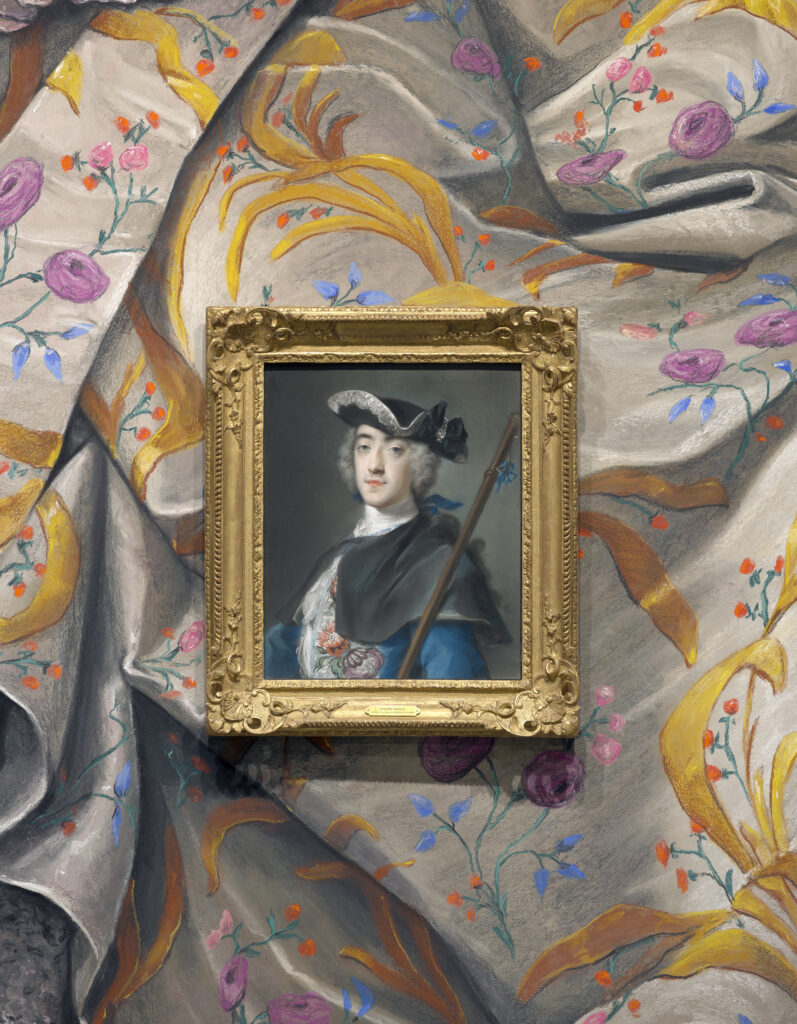
PARTY ON. Known as the “queen of pastel,” Venetian artist Rosalba Carriera made pastel portraits fashionable in the eighteenth century. Although the medium has fallen in prestige over the years, contemporary artists are elevating it again for its vivid colors and lush textures. At the forefront of this revival is Swiss artist Nicolas Party, whose recent rise to art world prominence has been propelled by his brilliantly hued pastel landscapes and portraits. At the Frick Madison in New York, he has created a site-specific installation in response to Carriera’s Man in Pilgrim’s Costume that adorns the walls behind and around it with cascades of pastel drapery. The mural, which is joined by two new works by Party, is on view through March 3, 2024, when the Frick Collection will depart its temporary home in the Marcel Breuer-designed 945 Madison Avenue building. –ALLISON C. MEIER