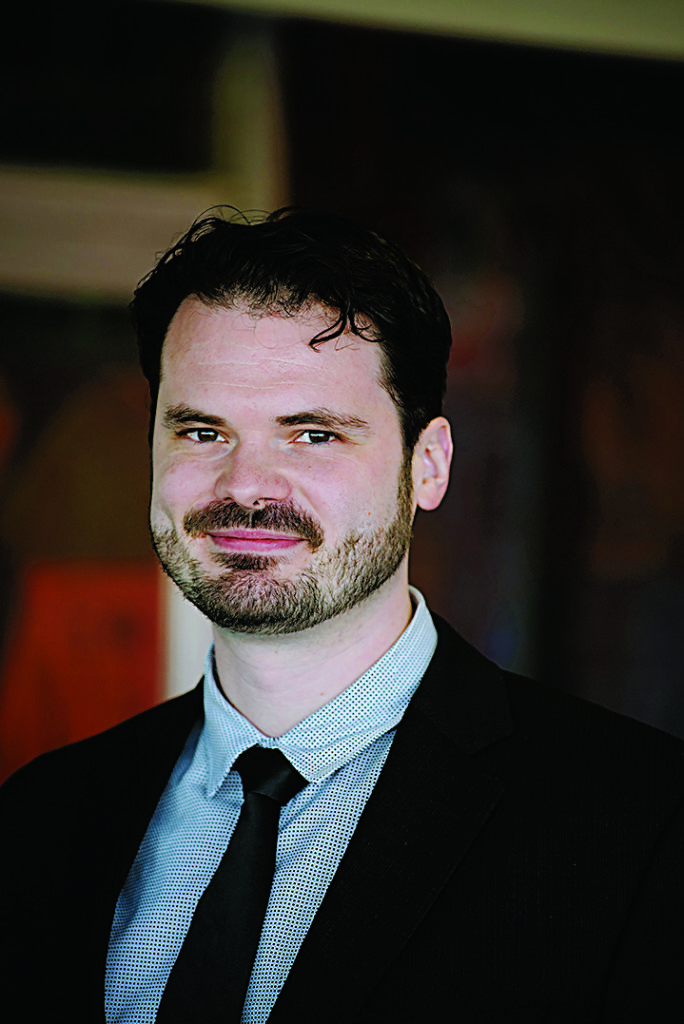
JEREMIAH DAVIS is the artistic director of Oklahoma Contemporary Arts Center. Davis has a background as a dramaturge having worked with theater-world luminaries.
LOUISA MCCUNE is the editor in chief of ArtDesk and the executive director of Kirkpatrick Foundation.
LM: Do you consider Jean-Michel Basquiat a contemporary artist? I would, but must contemporary artists be living?
JS: Basquiat is definitely a contemporary artist, though he is no longer living. There are multiple definitions of contemporary art, one of which identifies our current art historical moment as beginning in the mid-twentieth century with several movements that began to move away from the principles of modernism Our institutional definition of “contemporary art,” as work of many kinds created by living artists, offers a simple and easily understandable way for audiences to readily distinguish what we do.
LM: So we should allow for fluidity in the definition—with the mid-twentieth century as a beginning. Would that include Jackson Pollock?
JS: The consensus places Pollock—and abstract expressionism— at the very end of the modernist movement. Modernism put the artist at the center of art, elevating individual expression above historical narrative, precise technique, and established norms and values. Pollock, with his process-focused action paintings, leaves modernism with nowhere else to go. It is at this moment when a deconstructive impulse, with an emphasis on collage and an elevation of concept over form, begins to combine to inform what we now call postmodernism.
Another way to think about “contemporary” art is the period around the 1960s when artists began to shift away from mastery of technique in one or several media toward mastery of theory and concept.
Instead of a “painter” interpreting the world through paint as matter of course, the “artist” generates the idea, then searches for the right materials to express that idea in physical form. This is all reductive, of course. But nonetheless, we need to allow for flexibility in our definition of contemporary art to help provide context for our visitors.