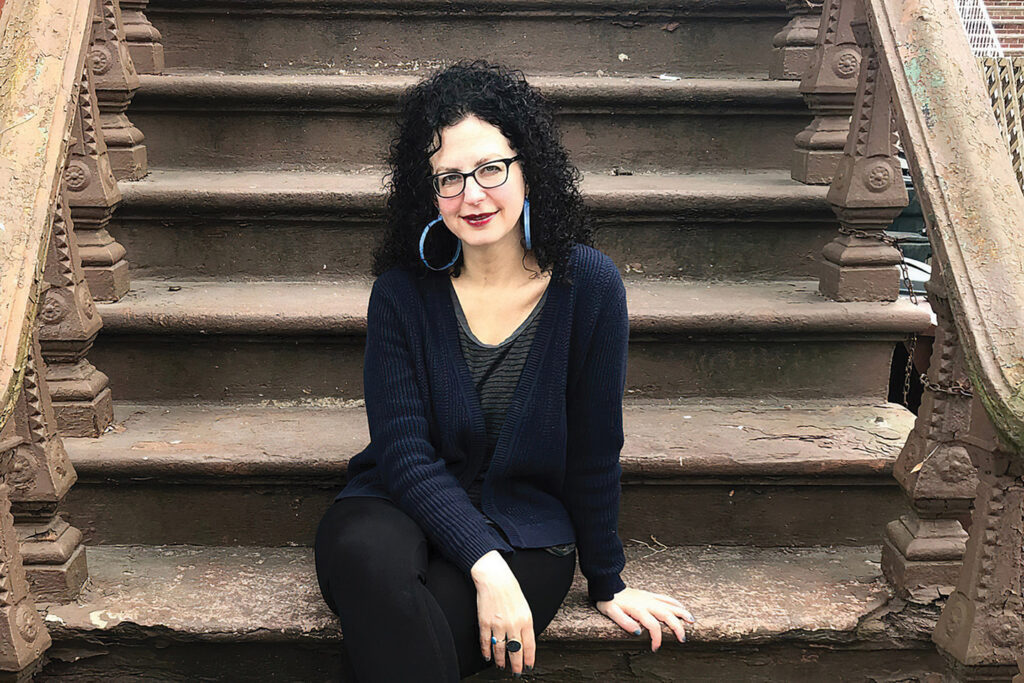
TELEVISION CRITIC EMILY Nussbaum is a small screen enthusiast. Her credits include inventing the iconic Approval Matrix at New York magazine and she was the TV critic for The New Yorker, where she chronicled the best of TV until 2020. She’s written two books, most recently Cue the Sun: The Invention of Reality TV, released this summer. Also this summer, Nussbaum was a contributor to the ArtDesk Conversations at the Green Box Arts Festival in Green Mountain Falls, Colorado.
What is your perfect TV watching experience?
A cozy sofa, large flat screen, DVR, Diet Coke, popcorn, Junior Mints, and a teenage son with a lot of opinions. Alternatively: in bed, iPhone, earphones. Basically, I like to be comfortable watching a show that I had no idea was as good as it is.
When you recollect childhood TV watching, what comes to mind?
I once convinced my babysitter to let me stay up to watch the scandalous double feature of Love Boat and Fantasy Island.
What is the best thing about TV today? And the worst?
The best is that the TV landscape allows for much wilder ambition than in the past, broader variety, more diverse voices, themes, and visual styles that used to be completely beyond the scope for television—back when people thought of it as “the boob tube”
The worst is the terrifying collapse of the Hollywood economy and the post-streaming era, leaving talented creators gasping for opportunities.
What are you tired of seeing on TV?
Prestige-y dramas with hollow insides and historical series full of lazy modern slang—unless it’s done as an intentional theatrical move, as on a fabulous show like Dickinson or The Great.
What do you miss seeing on TV?
The nasty wildness of 1970s television.
Who are some of your favorite TV characters?
Tony Soprano and Carrie Bradshaw, the two great antiheroes—perfect TV characters.
Off the top of my head—I could easily pick 1000 more: Geoffrey Tennant and Ellen Fanshaw on Slings & Arrows, Philip and Elizabeth Jennings on The Americans, Amy Jellicoe on Enlightened, Dr. Peter Benton on ER, Tom Wambsgans on Succession, Taystee Jefferson on Orange Is the New Black, Liz Lemon on 30 Rock, Charlie Kelly on It’s Always Sunny in Philadelphia, Rogelio de la Vega on Jane the Virgin, and Kim Kelly on Freaks and Geeks.
Who are you most impressed by in the world of television? Who are your favorite TV actors, writers, directors?
Robert and Michelle King are the under-celebrated visionary auteurs behind two of the most ambitious modern TV shows, The Good Fight and Evil. Also, the many invisible writers that few people know about—television has always been a deeply collaborative medium.
Some off-the-cuff favorites: Norman Lear (All in the Family, The Jeffersons), Jenji Kohan (Weeds, Orange Is the New Black), Tina Fey (30 Rock), Alena Smith (Dickinson), Quinta Brunson (Abbott Elementary), Michaela Coel (I May Destroy You), and Eric Kripke (The Boys).
How much TV do you watch?
I don’t write the TV column for The New Yorker anymore, so not as much as I used to. I try to keep up on anything that sounds good or interests me! I ask people online what’s new and keep a list.
What would be the perfect TV series remake?
The Love Boat.
Why did you want to write your new book?
Right now, reality television is the most powerful and influential pop culture genre out there, lots of people despise it, loads more adore it, but it’s shaped our entire cultural landscape, for better or worse (and sadly, elected a president.) Even so, few people know much about its history, because the subject has been treated as trivia. This book is an attempt to trace that unexplored origin story, which starts back in 1947, in the era of Candid Camera and Queen for a Day, and ending with the rise of Bravo and The Apprentice.
I didn’t actually watch a metric ton of reality TV to write the book, I mostly focused on interviews with more than 300 people who were in the kitchen when the soup got made—they have all kinds of wild stories.
What is the best part about being a TV critic? Does everyone want to talk to you about their TV viewing?
I’m fine with it. I just ask them what they like and try to get in touch with my inner algorithm. As a critic, I get to be a part of the conversation. Even though I’m now a staff writer and no longer the TV critic for The New Yorker, working on profiles and essays—I still have opinions.