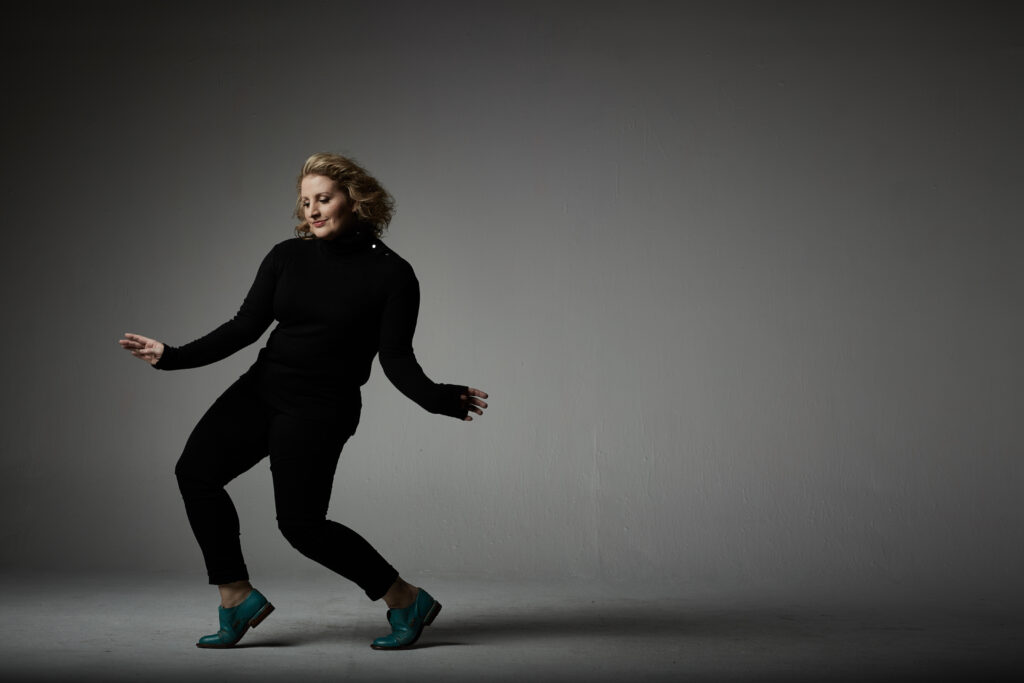
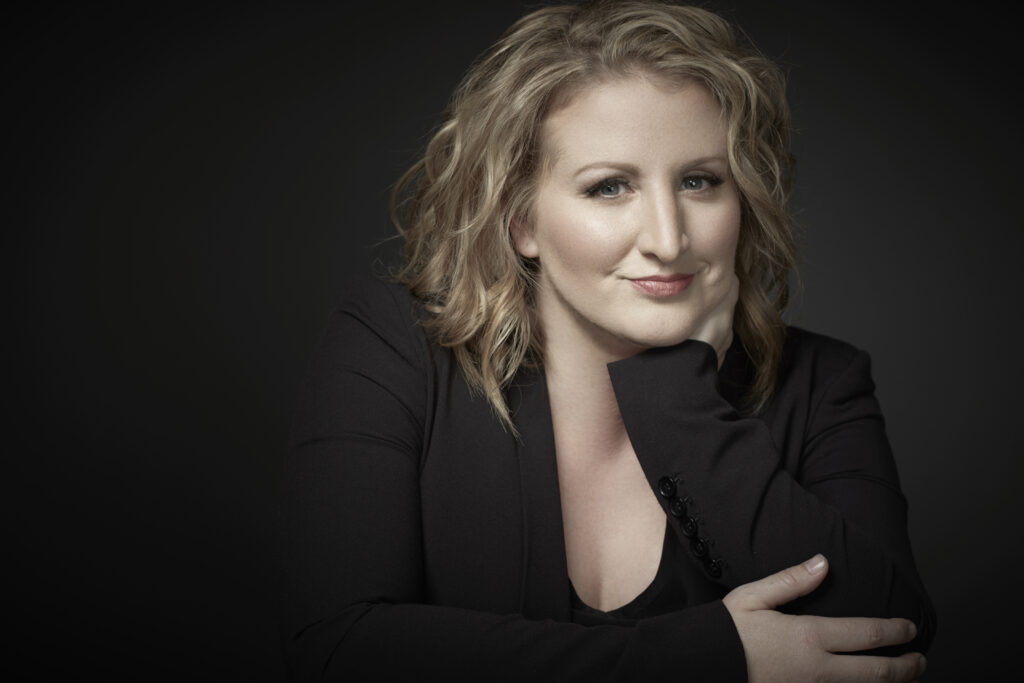
LET’S BE VERY CLEAR: This isn’t the Mandy Moore who stars in NBC’s This Is Us. While this Mandy Moore is used to being confused for that Mandy Moore, with the release of La La Land—the Oscar-winning ode to Old Hollywood—the other Mandy Moore is finally getting confused for this Mandy Moore. Because it’s this Mandy Moore who choreographed the twirls and dips and spins in La La Land that first sent Ryan Gosling and Emma Stone into the stars of the Griffith Observatory and, later, Hollywood history.
Moore is no Hollywood amateur, either. She’s spent years crafting moves on So You Think You Can Dance, Silver Linings Playbook, Modern Family, and Glee, and even on the stage of Shania Twain’s Las Vegas residency. ArtDesk interviewer Lindsey Weber talks to the choreographer about her Colorado influences, a case of mistaken identity, and what it’s like to be the toast of the town.
LINDSEY WEBER: How did you first get into dance?
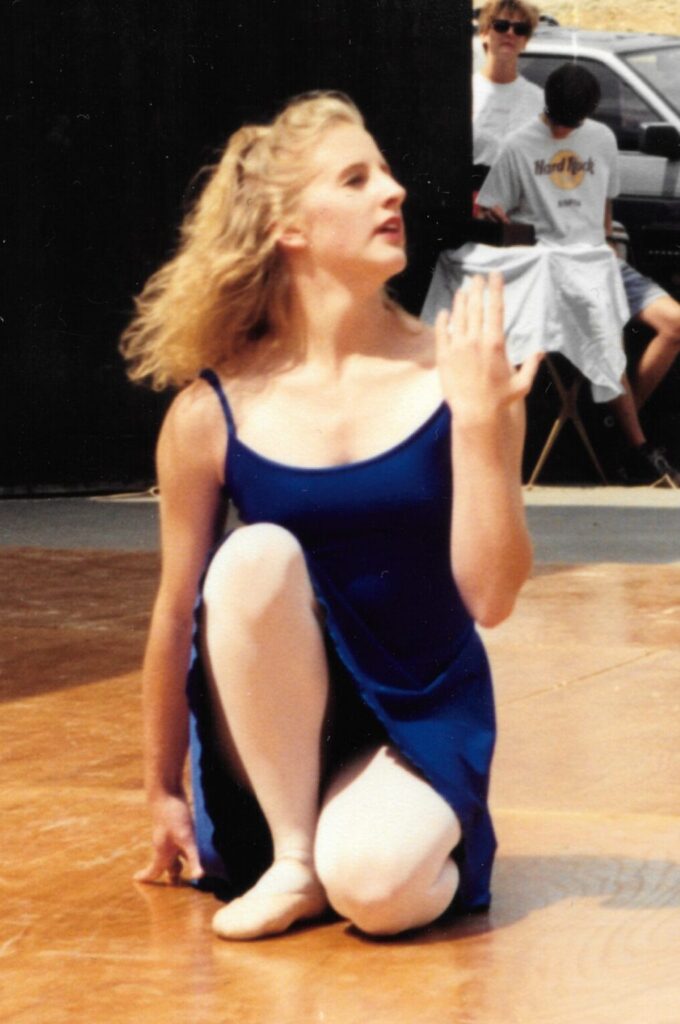
MANDY MOORE: I grew up in Summit County, Colorado. When I was very young, my mom realized that I loved to dance. Because I would—like a lot of kids—be dancing around all the time. Every time there was music on, I was doing a solo performance for my parents. When I was eight years old, my mom ran into the local [dance] studio owner at the post office. Her name was Kim Delgrosso. She said, “I think I have a little dancer on my hands,” and Kim said, “Bring her into class.” It sounds crazy, but honestly, from the very second I stepped into class, I was like, “Oh yeah, this is it for me.” I loved being in class. I started with ballet and tap, but not very long after that came breakdancing.
Ballet/tap is usually the combo that most young girls go for.
The breakdancing came kind of out of nowhere. I was the only girl! About a year after that, I signed up for everything. Any class that we had or was offered—I was there all of the time. Summit County is a little bit of a transient community. So many different kinds of people came into the county—and so many different kinds of dance. We would have a belly-dancing teacher for a while; we would have a modern-dance teacher who would teach Martha Graham or [Lester] Horton technique. It was nice to be exposed to so many different kinds of dance; I don’t know if a lot of kids really get to do that.
When did you decide that you didn’t just want to be a dancer, but a choreographer?
Very early and, actually, not consciously. My teacher Kim would always say, “Oh, you should make up your own solo!” or “Why don’t you make up a dance with your friends and then you guys can perform it in the recital?” So I always felt a real freedom when it came to creativity and creating movement. It was one and the same for me, dancing and choreography; they went hand-in hand. For a long time, I didn’t realize that people could make up movement for you. I always assumed that you made up your own moves when you danced.
Shows like So You Think You Can Dance and Dancing with the Stars put a newfound emphasis on the choreographer. When they first aired, it was a new thing to have the choreographers in the spotlight. Is that something you noticed when you starting choreographing for SYTYCD?
I moved to Los Angeles in 1994. My friends and I joke that we were born in the wrong generation because we all moved out here inspired by those great dance movies of the ’80s, you know? Then as soon as we all moved out here it stopped. Dance literally stopped. There was nothing going on unless you were on tour with a boy band. The start of SYTYCD and Dancing with the Stars really started a revolution—not only to bring dance back into mainstream culture, but to then have that connected to a choreographer. We hadn’t seen a time like that since the MGM era. Now with La La Land, it’s kind of shifting back to film, back to the old movies…and, man, I’m not mad about being a part of that. You train your whole life to do stuff like that, so to see people embracing and supporting something like La La Land—it shows that people’s views are changing about dance on film and about the art of dance in general.
What are some of the influences that you had in mind for the film?
Seven Brides for Seven Brothers. There’s a specific scene called Goin’ Courtin’. Damien [Chazelle] and I probably watched that scene ten times. Obviously the choreography and the feel and the moves are not the same as La La Land, but every single frame had a reason. You would see somebody kind of in the foreground, or you’d see somebody far away, or they’d all be dancing in unison and then you just catch the side of this chair. All of that was very deliberate. There was nothing left to chance.
You’ve worked with expert dancers and now you’ve worked with novices, actors who don’t necessarily see themselves as dancers at all.
I think the third part of my story, which not a lot of people know, is that I’ve always been a teacher. I’ve been teaching for twenty years, from four-year-old kids to senior citizens. When you’re training someone to dance, there’s a real beauty in that vulnerability, but you don’t always have the luxury of time to really train them. Whereas, with an expert dancer, sometimes they just come to you with what they know and you have to work through ways to get that vulnerability out of them. On So You Think You Can Dance, we only get those kids for, like, six hours. Imagine what we could do in twenty.
It’s funny that the two most popular dance shows right now are So You Think You Can Dance and Dancing with the Stars, which are total opposites of the same coin.
People always like to see celebrities, and I think Dancing with the Stars is almost more of a variety show. There are some great artistic performances, some that are just good ol’ fun, and then there are some that totally don’t really work at all. It’s got a really nice range of entertainment. SYTYCD is going for a super-high-quality, artistic dance. There’s an element of entertainment obviously, but it’s less of a variety show.
I’m curious how your La La Land success comes off in the choreographer community. It seems so rare for something like this to happen now.
The dance community in general and the choreography community really rallied behind this. It’s so cool to hear from your peers, when they send you a supportive text. The film did inspire a lot of people who are hopeful that this does spark a new generation of work for us, because there’s been a lot of really great, super-challenging choreographers out here for a long time. Each one of them deserves a shot at their own La La Land. For a choreographer, there’s nothing like it.
You’re hoping it’s not a fluke.
Things like this become a fluke if people assume that it was easy to do. You have to assemble the correct scene, you have to have the correct content. The team that was assembled to create the film, they’re
all people that are incredibly talented and are not afraid to push the envelope in some way and stay true
to their vision. Without that, I think it will be a fluke.
What was the most complicated La La Land setup?
Are you kidding me? That was like every damn set. The freeway dancing? The traffic was one of the most
complex and incredible things I’ve ever worked on. It’s super-complex, even though it was a very seemingly
simple moment.
Perhaps the question you’ve been asked the most is about the “other” Mandy Moore.
You have to understand that this has been going on for at least fifteen years for me. I’m forty, so it was about
fifteen years ago that she started becoming known. It was kind of like, “Okay, this is a joke. This is funny.”
But after a while it became not funny because everywhere I went, if I had reservations at a hotel, they would say, “Oh, we thought you were going to be the real one.” I’m like, “Wait, what do you mean, the real one? I’m right here.” It all definitely came to a head at the Golden Globes with the La La Land speeches. And literally, the next presenter is [the other] Mandy Moore.
You’ve clearly met.
No! This is the even more hysterical part. I was the dancer on That ’70s Show when she was dating Wilmer
Valderrama and she was on set with me. I didn’t get a chance to meet her that day, but since then we have
been back and forth on Twitter a little bit. People have just been crazy with her about La La Land! She’s like,
“That’s not me.” And when people talk to me about This is Us, I’m like, “That’s not me.”
It’s so strange that you’re both having such huge years. At the same time.
At some point, we need to make a thing of it. I’m sure it’ll happen.