The Opera Different
LOCATED IN THE LAND OF ENCHANTMENT, THE SANTA FE OPERA INNOVATES AND EXCITES WITH ITS FRESH IDEAS. THIS SUMMER, DOCTOR ATOMIC DOES JUST THAT.
BY Michael Duty
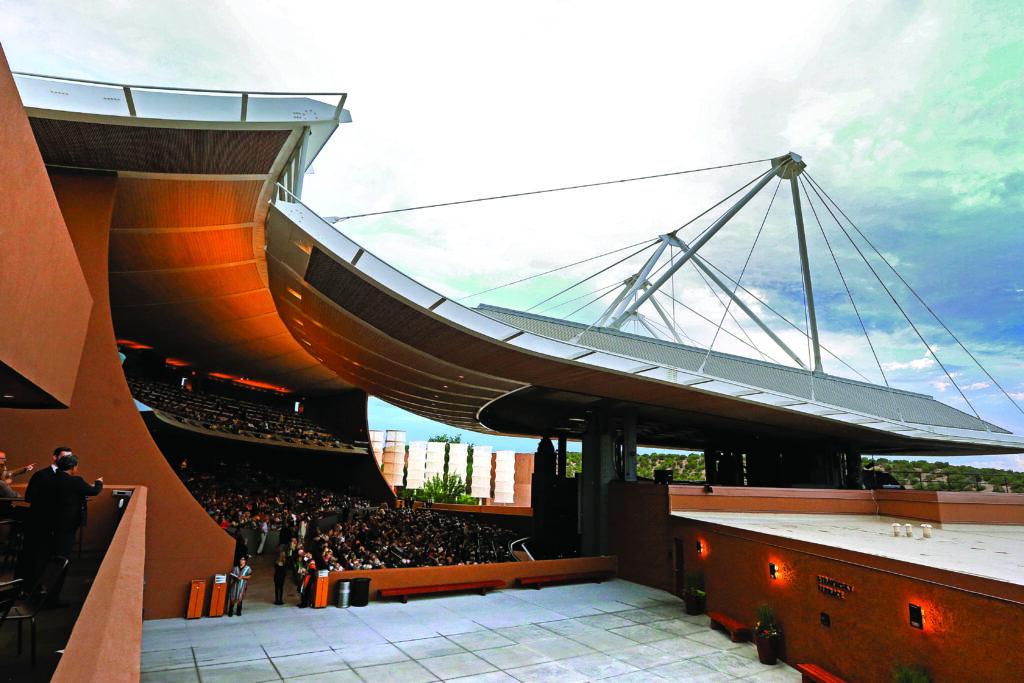
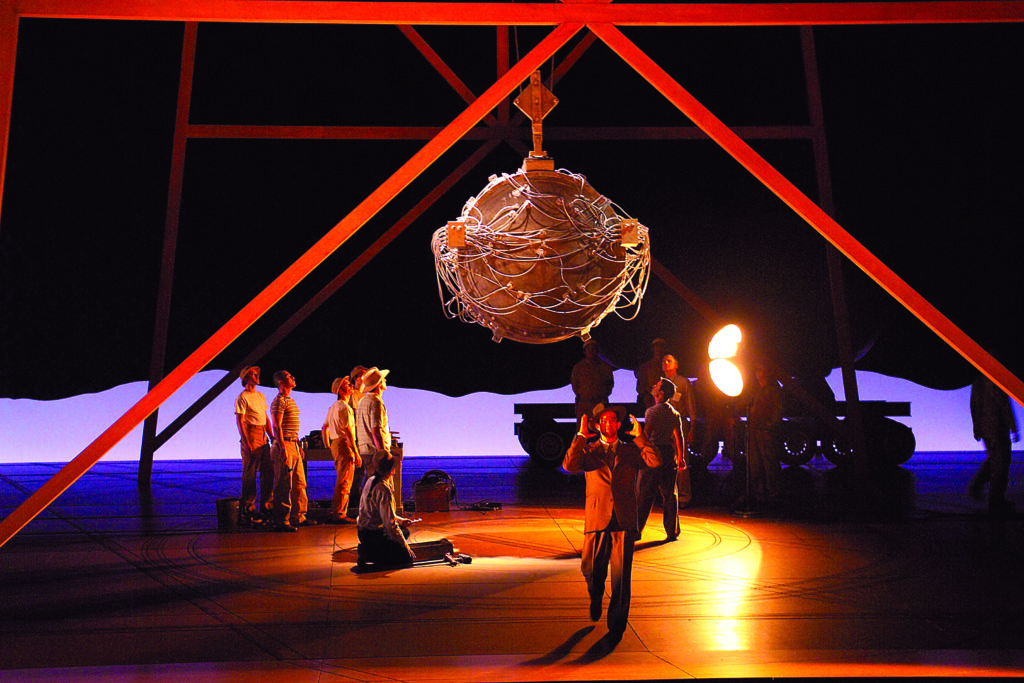
THIS SUMMER, THE audience for Doctor Atomic at the Santa Fe Opera will be able to see beyond the stage to the twinkling lights of Los Alamos, New Mexico. Surrounded by a timeless and majestic landscape, opera patrons will gaze upon the past, the present, and the future of the modern age, an age that began with the explosion of the first atomic bomb. The weapon that ended World War II and ushered in a new era was created by scientists working in Los Alamos under the direction of Robert Oppenheimer, the “Doctor Atomic” of the opera’s title.
Peter Sellars, the director and librettist of Doctor Atomic says, “We live in a world that the Los Alamos scientists could not imagine but which they created. Our world changed forever the night the bomb exploded.”
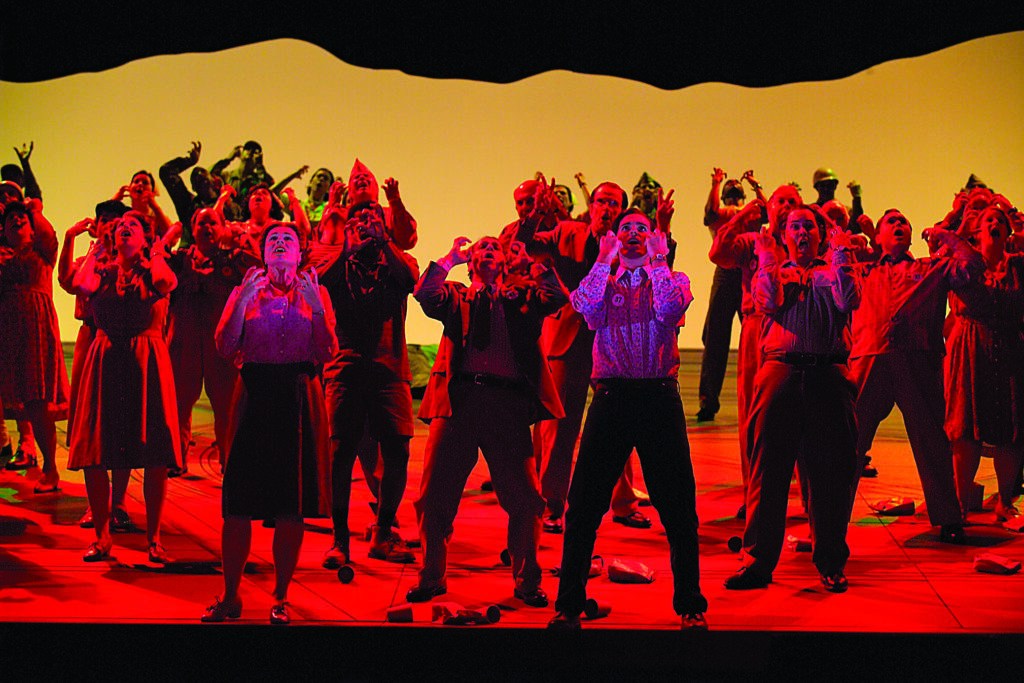
Doctor Atomic is Sellars’s attempt to tell the story of the last two months of the Manhattan Project leading up to the detonation of the first atomic bomb in July 1945. It is also his attempt to shine a light on the world that created the bomb and the world the bomb created. It incorporates the viewpoints and experiences of many
people involved with the project, including the often overlooked wives of the Los Alamos scientists.
Sellars also incorporates information gleaned from interviews with modern scientists and with the native people of the surrounding pueblos.
Sellars says he wants to include those insights because he believes that opera presents a unique opportunity to tell such stories: it is a medium that brings many communities together in one place in an immersive experience that goes beyond the rational.
THE SANTA FE OPERA was conceived with the purest artistic values that exist.
In many ways, Sellars’s comments reflect the philosophy of the Santa Fe Opera’s founder, John O. Crosby.
Crosby conceived the opera as an ongoing summer festival that would feature both classic and cutting-edge contemporary works in each season. Since the opera’s first season in 1957, Santa Fe has been the site of fifteen world premieres and forty-five American premieres by world-renowned composers and librettists. The opera has also nurtured the careers of many young singers through its apprentice program. When he founded the opera, Crosby noted there were scant opportunities for young singers to develop their talents, and he established the apprentice program to remedy the situation.
Santa Fe seemed an unlikely setting for the establishment of a new opera festival in 1957. Situated in the
mountains of northern New Mexico, the capital city of the state was home to only 38,000 people when the opera was founded and was a long way from both performers and patrons.
Crosby’s vision, however, was to use that isolation and the beautiful landscape to the benefit of the festival. “In addition to the quality of the productions, our setting has been perhaps the most important factor in our success,” says Charles MacKay, the general director of the Santa Fe Opera.
For sixty-one seasons, opera viewers have sat under the vast New Mexico sky to revel in world class performances of traditional and contemporary work. What ties each season together is the Santa Fe Opera’s unwavering commitment to quality in each facet of the operation, from the selection of the works to the many details of costuming and staging. Frederica Von Stade, who has performed at the Santa Fe Opera on many occasions, says the opera has succeeded because of Crosby’s original vision. “The Santa Fe Opera was conceived with the purest artistic values that exist,” Von Stade says.
Crosby guided the Santa Fe Opera for more than forty years and was succeeded in 2000 by Richard Gaddes, who was succeeded by the present general director, Charles MacKay, in 2008. MacKay, who has literally grown up with the Santa Fe Opera, attended his first performance there at the age of nine. The audience, according to MacKay, has been equally supportive of both the traditional and the modern. “It has been very rewarding to see how strongly our audience has responded to new work, even among our most traditional patrons,” MacKay says.
MacKay will retire after the 2018 season and his successor, Robert Meya, will take the reins in October. Meya has already named the Santa Fe Opera’s first artistic director, Alexander Neef, who will also continue in his role as the general director of the Canadian Opera Company. Harry Bicket will round out the creative team as music director.
MacKay believes that the new creative team will adhere to the same balanced approach in crafting new
seasons, but they will also bring in their own ideas. “They will have new interesting ideas but still retain a
connection to our traditions,” he says.
While the management structure of the organization is changing, its artistic philosophy will remain true to Crosby’s vision of mixing the old with the new. The 2019 season will include yet another world premiere,
The Thirteenth Child, by composer Poul Ruders and librettists David and Becky Starobin. The opera, which is based on a little-known fairy tale by the Brothers Grimm, was commissioned by the Santa Fe Opera and the Odense Symphony Orchestra in Denmark. It is designed to appeal to both children and adults, according to MacKay.
The choice of a new work, based on a source from long ago, stays true to the mission the opera has pursued for more than sixty years. Over time, new works have touched on a wide variety of subjects and eras. In 2015, the opera premiered Cold Mountain, which was based on the best-selling novel set during the Civil War, and last year, the opera staged the world premiere of The (R)evolution of Steve Jobs.
The Santa Fe Opera has always chosen to produce new works that delve into the complexities of the modern age. Santa Fe’s majestic and ancient lands provide the perfect setting for works that highlight the notion that change is inevitable. Works that explore the birth of the atomic age or the life of a pivotal figure in the digital age showcase the opera’s ability to explore the past, present, and future with equal artistry.
For more information about the Santa Fe Opera’s 2018-2019 season, visit santafeopera.org.