EMERGING ONTO THE Los Angeles art scene in 1965, Melvin Edwards began welding together chains, nails, hammers, and locks to create sculptures for the series Lynch Fragments. Jagged and jarring, these abstract metal sculptures became his response to the civil rights movement of the 1960s.
For more than fifty years, Edwards has continued the sculpture series that helped cement his reputation as a pioneer in African American art. Yet his body of work is much more than Lynch Fragments—his many sculptures have explored abstraction and minimalism in the context of his own cultural experience. They are on display in museums internationally, installed as large public art projects, and hung in private collections.
“We want art that slows us down and encourages us to ask questions and reflect and understand the world out of the artwork itself,” says Alexander Gray, the New York gallerist who represents Edwards. “Mel’s work is extraordinary that way.”
Edwards’ first solo exhibition was in 1965 at the Santa Barbara Museum of Art in California. By 1970, he was the first African American sculptor to have a solo exhibition at the Whitney Museum of American Art in New York. In addition to his successful career, he was a professor for four decades at several California institutions before retiring in 2002 from Rutgers University.
“Mel has an artistic career that has endured many decades and many social and political lives—both struggles and triumphs,” Gray says. “He’s an artist who we can situate in the past, but it’s much more interesting to situate him in the present.”
EDWARDS is an artist who we can situate in the past, but it’s much more interesting to situate him in the present.
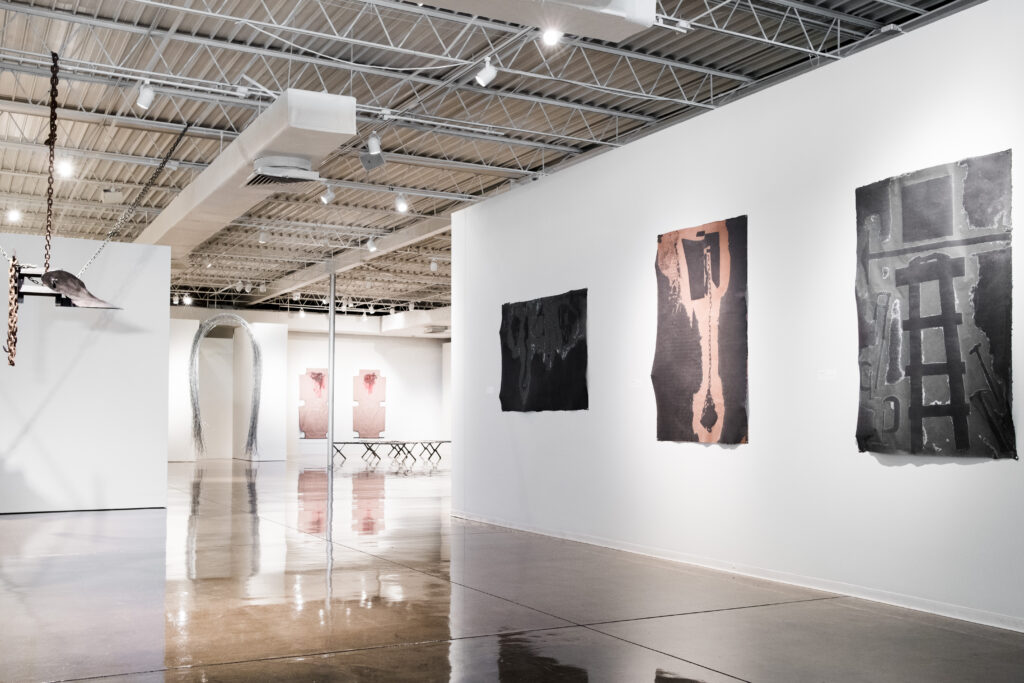
Edwards unveiled his solo show, In Oklahoma, at Oklahoma Contemporary Arts Center. Sixteen works from Senegal—where he spends part of the year and has a studio—were among new works created entirely on-site. “He [has done] something completely new just for us,” says Jennifer Scanlan, curatorial and exhibitions director for Oklahoma Contemporary. “To bring an artist of this caliber to Oklahoma City is really exciting.”
Edwards grew up in Houston and spent a lot of time in East Texas, where he became very familiar with a 200-mile radius that includes Nacogdoches, Texas; Shreveport, Louisiana; and Broken Bow, Oklahoma. “Much of my cultural roots are in the region,” Edwards says. “I’m not surprised about anything that happens [here.] A lot of things are possible.”
Catherine Craft, associate curator at the Nasher Sculpture Center in Dallas, organized the massive 2015 Edwards retrospective, Five Decades, exploring fifty years of his career. Craft says she and Edwards have talked often about the use of chains in his work. “People often make the association of the chains of slavery and go immediately to the political, racial context of the message,” she says. Instead of telling people what to think, Edwards’ art represents an array of experiences, and he welcomes conversations about them. “It’s not preaching at you. You can engage with the work,” Craft says.
Edwards’ African American identity is an important part of his individuality, which manifests itself in his work by way of symbolism. “I was born who and what I am. Why would you separate them?” Edwards says. He combines the sculpture’s meaning with its form, line, and composition, creating a “very interesting relationship to abstract sculpture.”
Edwards observes the relationship between his materials and the process of creating new objects from them. “His work space is gloriously chaotic and disorganized and [includes] warehouses filled with material that he’s had since the sixties or seventies,” Gray says. “He has a universe in which he makes his own art.” That universe includes interesting objects found in old places and new items he buys from steel manufacturers and big-box hardware stores
“I’m a person who experiments with the work and tries to come up with something unique,” Edwards says. “When I start out, or how I start out, doesn’t matter as much as what evolves.”

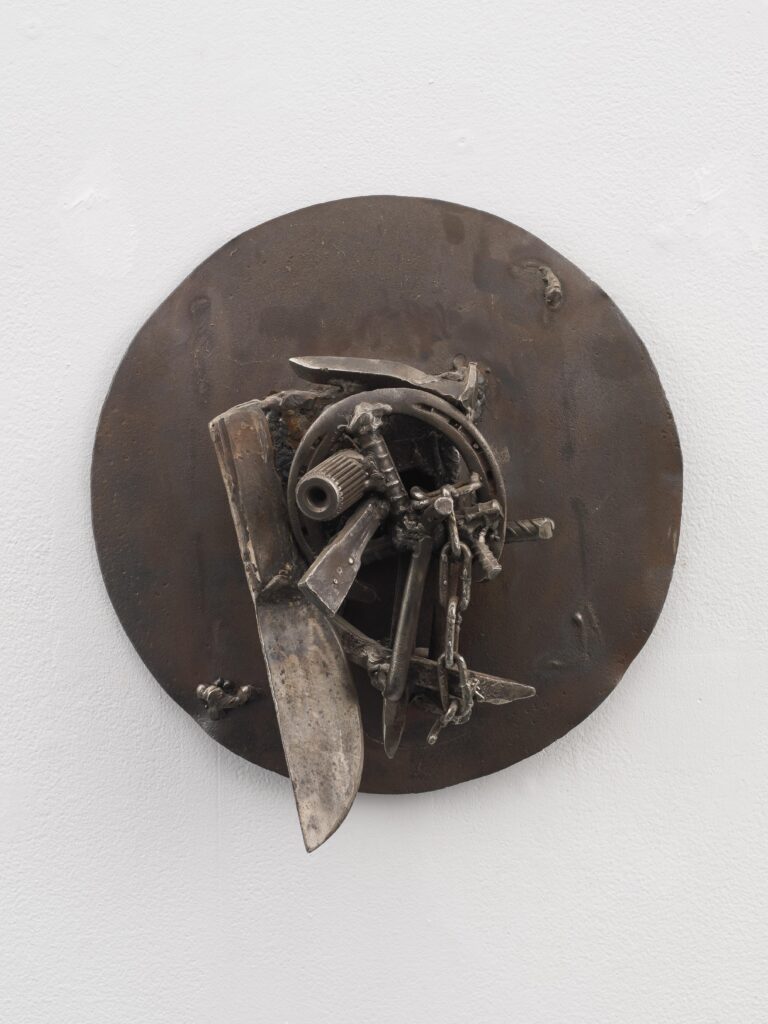
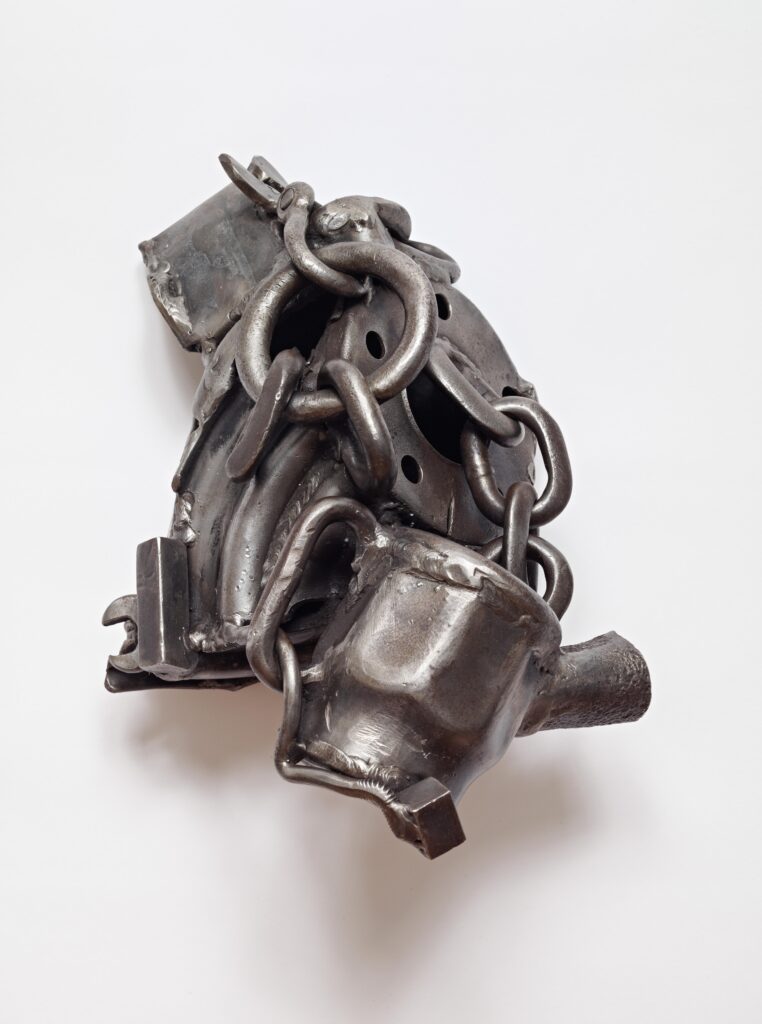
LYNCH FRAGMENTS
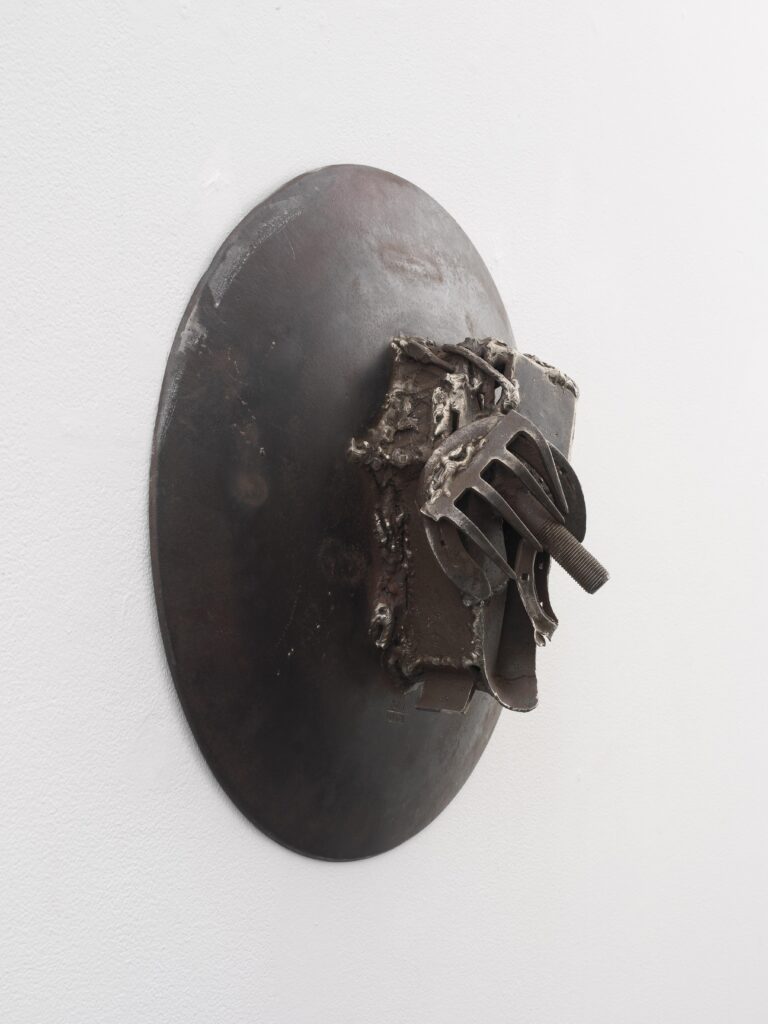
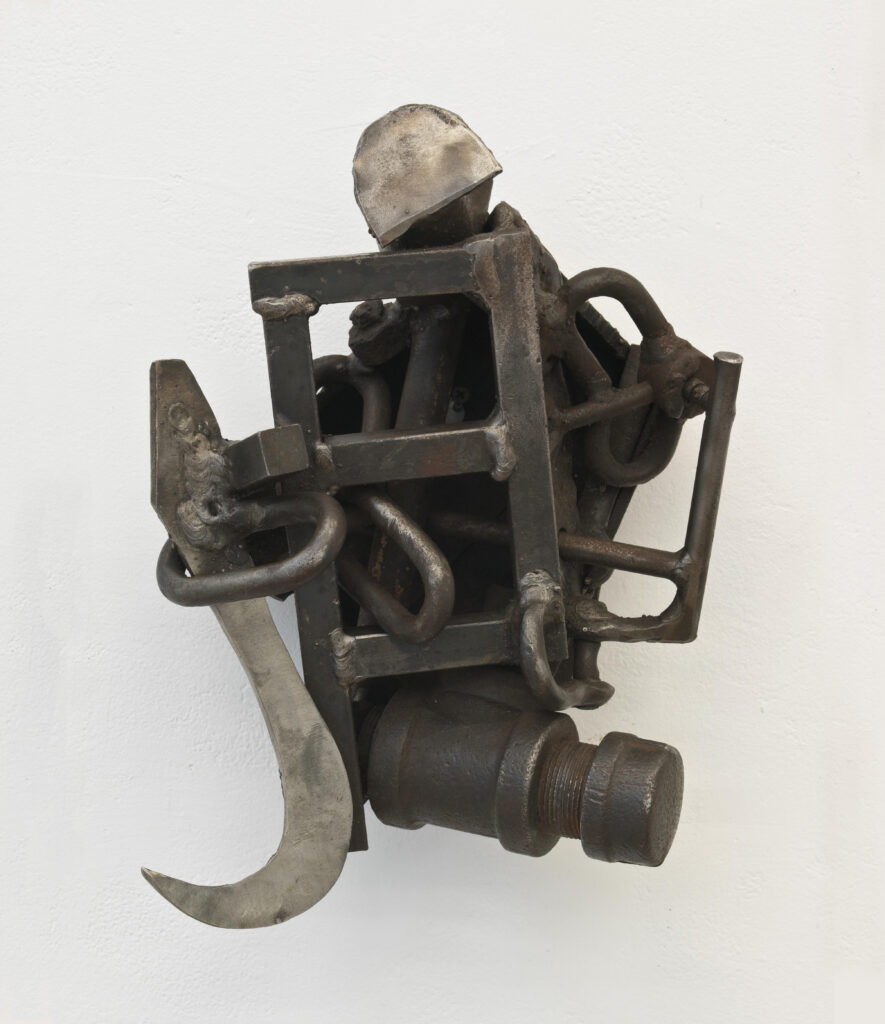
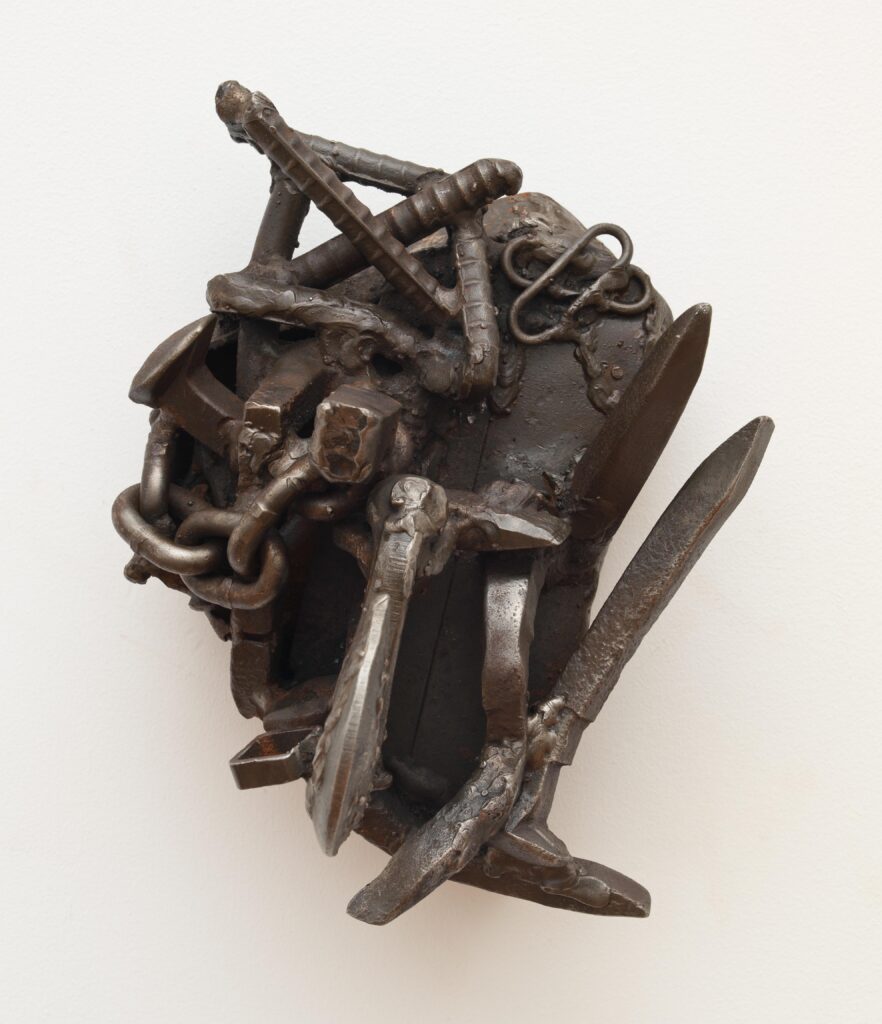
MELVIN EDWARDS is best known for Lynch Fragments, an abstract sculptural series of welded steel works constructed over three distinct periods from the 1960s to the present. The series addresses Edwards’ activism concerning the Vietnam War and civil rights movement. Photography courtesy of Alexander Gray Gallery