The Absolute and Essential Importance of Arts Education
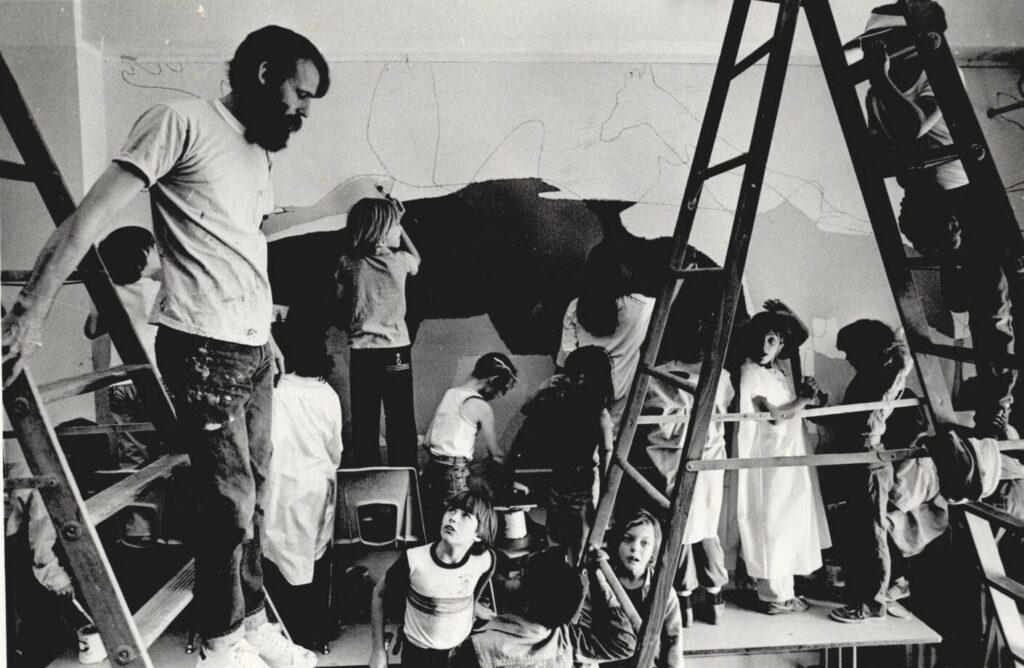
Key findings about arts education across the nation show that children, when exposed to art from a young age both in school and in their community, take that experience and apply it broadly to their lives, not only encouraging them to seek higher education but to create critical thinkers who find deeper meaning in all aspects of their world.
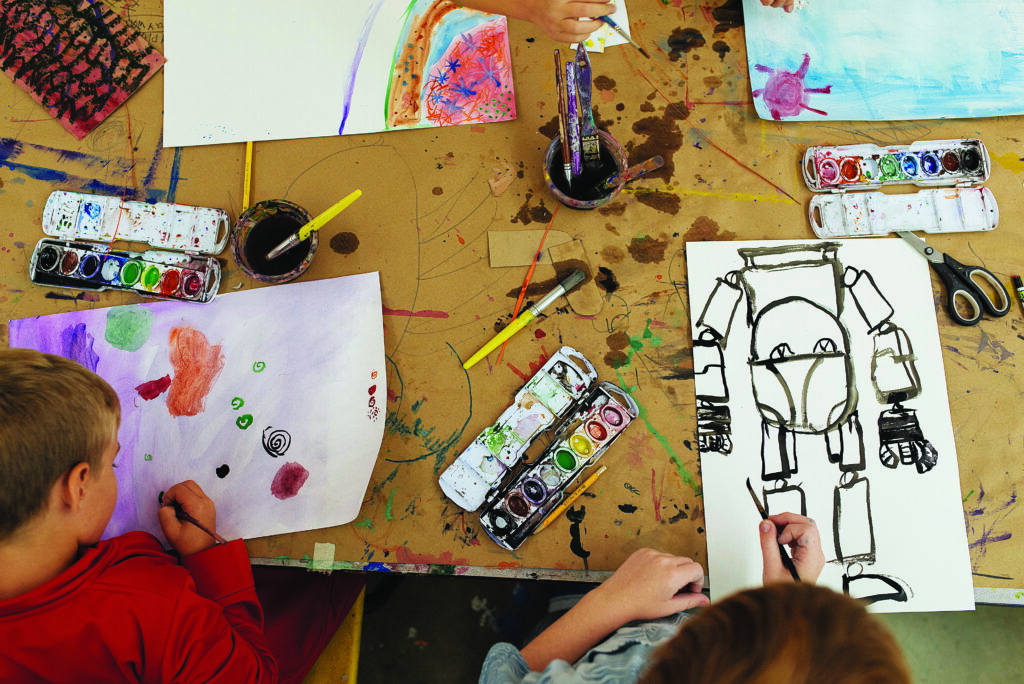
Every child is an artist. The problem is how to remain an artist once he grows up.
Year after year, budget cuts have reduced Oklahoma’s funding for education by 28 percent—the highest per-student cuts in the nation. In February 2018, Governor Mary Fallin signed the state legislature’s bill to slash $16.2 million from the Department of Education. Additionally, reductions to the state’s budget for the Oklahoma Arts Council resulted in the hiatus of several of its arts-education grants and programs. With schools annually adapting to these decreasing resources, the arts are regularly among the first things to go. Furthermore, where arts programming remains, the burden is frequently on teachers for funding and materials. A report released in May 2018 by the National Center for Education Statistics stated that 94 percent of teachers in the United States pay out of their own pockets for classroom supplies.
Yet, studies consistently demonstrate the vital importance of the arts in education. The arts-advancement nonprofit organization Americans for the Arts compiled recent reports showing that students of low socioeconomic status with a high participation in the arts have a dropout rate of 4 percent, compared to 22 percent for those with a low arts participation. Standardized test scores are higher for students who study art and music, while low-income students are more than twice as likely to graduate from college if they are involved in the arts. Although students with wealthier backgrounds can often obtain these valuable experiences outside the classroom, for many students, public schools are their only option for learning.
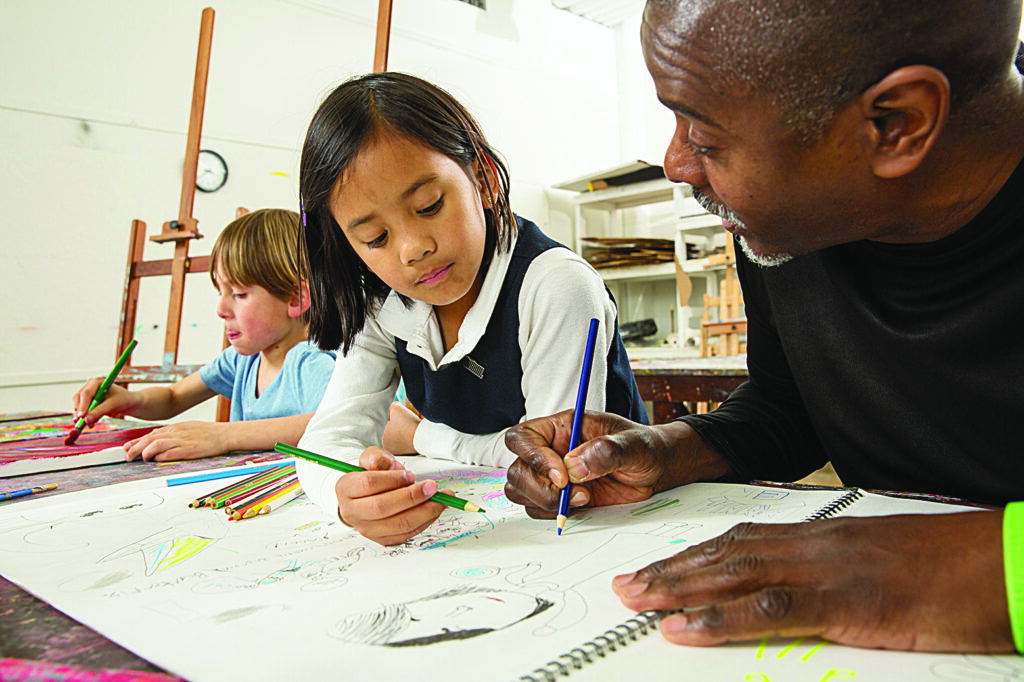
Coordinated by Arts Council Oklahoma City, the Arts Partnership for Oklahoma City Public Schools connects schools to local agencies, to bring visual and performing arts into classrooms. The All Access Arts initiative, also from Arts Council Oklahoma City, has brought visual and performing arts to under-served schools and other community spaces such as libraries and parks.
The Oklahoma Arts Institute, which promotes the pursuit of art professionally through its tuition-free summer residency program for high school students, brings in nationally known artists and organizes a fall program for adults and educators. Yet the nonprofit, which operates through a public and private partnership, is also dealing with cuts in the Department of Education, which provides essential matching funds to its private donations.
In recent years, when Eugene Field Elementary in Oklahoma City had to eliminate its visual-arts program, the now defunct artist-run Current Studio partnered with the school on a grass roots endeavor that gave it a short
lifeline. Today, the school participates in an artist-in-residence program but does not have a permanent art teacher, and children have “occasional” but not routine art experiences.
Oklahoma Contemporary Arts Center launched Art for Every 5th Grader in 2016 to engage each Oklahoma City Public Schools fifth-grade student in contemporary art through exhibition and classroom settings. In August 2018, all OKCPS fifth-grade teachers were invited to Oklahoma Contemporary for a meet-up, with their collected feedback guiding the 2018–19 iteration. The outreach is only a part of Oklahoma Contemporary’s education programming for youth and adults, which ranges from classes and camps to workshops and field trips.
Autumn Brown, a teaching artist at Oklahoma Contemporary Arts Center, explains that the goal is not simply “to create little artists, but resilient little people,” and to foster “a mind-set of creativity and growth for life’s challenges.” She has witnessed kids over the age of six who have rarely used scissors, and many who have never had a chance to just be imaginative or take creative risks. “The frightening thing is those are the things we need to grow as a society,” Brown says. In the fall, when Oklahoma Contemporary opens its campus in Oklahoma City, more than 8,000 square feet of the
new 53,916-square-foot building will be dedicated to galleries and classrooms.
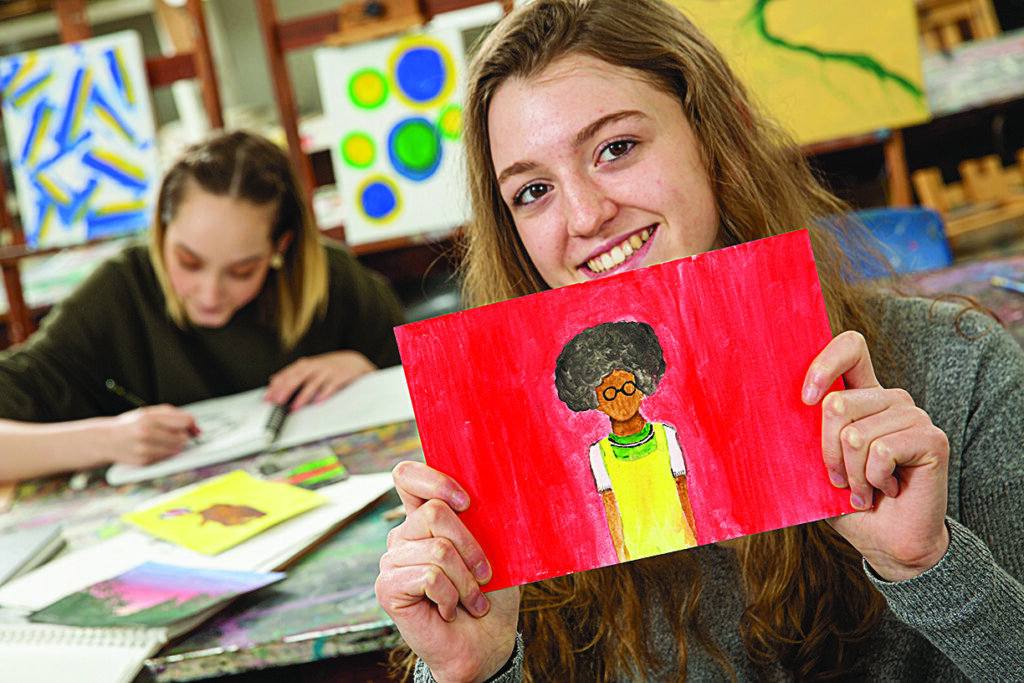
“Our objective is to provide opportunities for students and teachers to develop and exercise these muscles so that they can transfer those skills back to their classroom,” says Julie Delliquanti, director of education and public programs at Oklahoma Contemporary.
These studio-style learning spaces will include areas for early childhood-education and a teen art studio. The focus on education in the building’s design is a statement about the significance of learning as part of promoting creative expression.
“We do not see ourselves as a one stop solution to fix the woefully inadequate support for the arts in Oklahoma City Public Schools,” says Delliquanti. Instead, she adds, through its evolving initiatives and new campus, Oklahoma Contemporary “aims to ensure all students can access quality arts experiences in order to improve their odds of academic and personal success.”
If we want our schools and students to succeed, arts education is an overwhelmingly effective strategy.
EXTRA CURRICULAR
CAMPS AND CLASSES AT OKLAHOMA CONTEMPORARY
THE STUDIOS AT OKLAHOMA CONTEMPORARY provide an exciting variety of learning opportunities for all ages. Housed adjacent to Folding Light, the Studios will include designated spaces for early-childhood, digital media, photo and video, and teen programs. In addition to public programming, youth and adult students will be able to take individual classes that support their artistic goals.
“We’re excited to carry over and expand our Camp Contemporary program, which will continue to focus on contemporary artists, new artistic practices, and a collaborative curriculum,” says Christine Gibson, manager of youth and family programs. “We plan to broaden our Art for Every 5th Grader program and K–12 field trips by offering inquiry-based gallery tours and art-making opportunities multiple times a day. [We] are honored and thrilled to offer additional arts-education programs to the youth of Oklahoma starting in fall 2019.” —KELLY ROGERS
Young adults who had intensive arts experiences demonstrated higher levels of volunteering and civic engagement than young adults who did not.
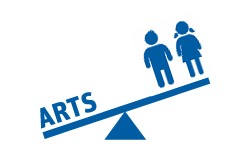
Young people of low socioeconomic status who engaged in the arts earned better grades and had higher rates of college enrollment and attainment than similar youth who have less arts involvement.
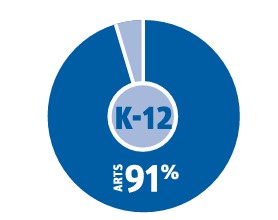
91% of Americans believe the arts are part of a well-rounded K–12 education.
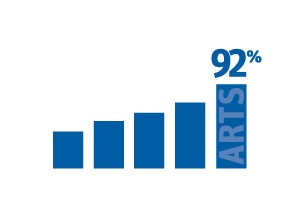
In 2015, students who took four years of arts and music classes while in high school (only 18% of test-takers) scored an average of 92 points higher on their SATs than students who took only one-half year or less (16% of test takers). Scores of 1077 vs. 985, respectively.
Each additional year of arts coursework is associated with a 12% increase in the likelihood that adolescents will eventually earn a four-year college degree.
After tracking more than 22,000 students for twelve years, researchers at the NEA found that students with high levels of involvement in the arts were five times more likely to graduate high school than those with low involvement in the arts.
ELEMENTARY
Centenary
Oklahoma City’s Wilson Arts Integration School boasts several pieces of New Deal art, including murals by Audre Yates and work by American Indian artists Acee Blue Eagle and Herbert White Buffalo. The school—which celebrates its 100th anniversary in 2019—is committed to art education, and not just by adding art to its curriculum. Wilson students learn through arts integration, a philosophy in which students are taught the three Rs (and more) through art disciplines. “You can teach anything through the arts more effectively,” says Anita Arnold, executive director of Black Liberated Arts Center, which collaborates with Oklahoma City Public Schools in the John F. Kennedy Center for the Performing Arts’ Partners in Education program, which provides professional development to public school teachers nationwide.
In the five years after switching to arts integration in 1997–98, Wilson increased its standardized test scores, placing it among the top local elementary schools. Retired pre-K teacher Susan Bumgarner, who was invited by First Lady Michelle Obama to the 2013 State of the Union address, says arts integration is more work but “a lot more rewarding.”
With big plans for the school’s 100-year celebration, Wilson alum, parent, and school historian Amy Sergent notes, “Throughout the years Wilson has been a community that embraces the arts. The passion for the arts
reflects the school’s values, creates a sense of pride, and brings people together. This passion is also reflected
in the arts-integration program, which helps students develop creative thinking skills to become lifelong learners.”—BRENDAN HOOVER