The Chinati Foundation Carries Donald Judd’s Ambitious Vision Forward
Square One
“IT IS NOT A CHOICE to be remote, but the fact is that you can’t do anything very large and serious in the middle of society.” — DONALD JUDD
When Donald Judd was a young soldier in 1946, he took a bus from Fort McClellan in Alabama all the way across the country. He was particularly struck by West Texas, its quality of light and wide-open spaces. “Dear Mom,” he wrote. “Van Horn Texas. 1260 population. Nice town beautiful country mountains.” Three decades later, Judd, then a successful artist and a leading member of the minimalist movement, had grown disillusioned with the New York art world. In the seventies he returned to West Texas, moving his family to the small high-desert outpost of Marfa. Two years later, with support from the Dia Art Foundation, Judd began constructing a museum that would embody his ideas about art, architecture, and landscape. The eventual result of his labor, a collection of large-scale installations housed in a former military base, opened to the public as the Chinati Foundation in 1986.
Judd’s original vision for Chinati involved a permanent showcase of three artists: himself, John Chamberlain, and Dan Flavin. The museum’s attention to not just what art was shown, but also how and where it would be installed—not to mention its remote, difficult-to-reach destination—set the Chinati Foundation apart from other institutions of its time. “He had no models,” says Jenny Moore, Chinati’s executive director. Even now, as the idea of establishing art outposts outside major cities (see: Dia:Beacon; Mass MOCA) has become more familiar, “Chinati still remains unique in that it’s a situation for art founded by an artist himself. He wanted to create what he considered the ideal experience for his work, and he extended that to other artists, the ones he thought were the best of their time.” Or, as Judd himself put it in a 1990 interview, “The work is in Texas because I live there…It is not a choice to be remote, but the fact is that you can’t do anything very large and serious in the middle of society.”
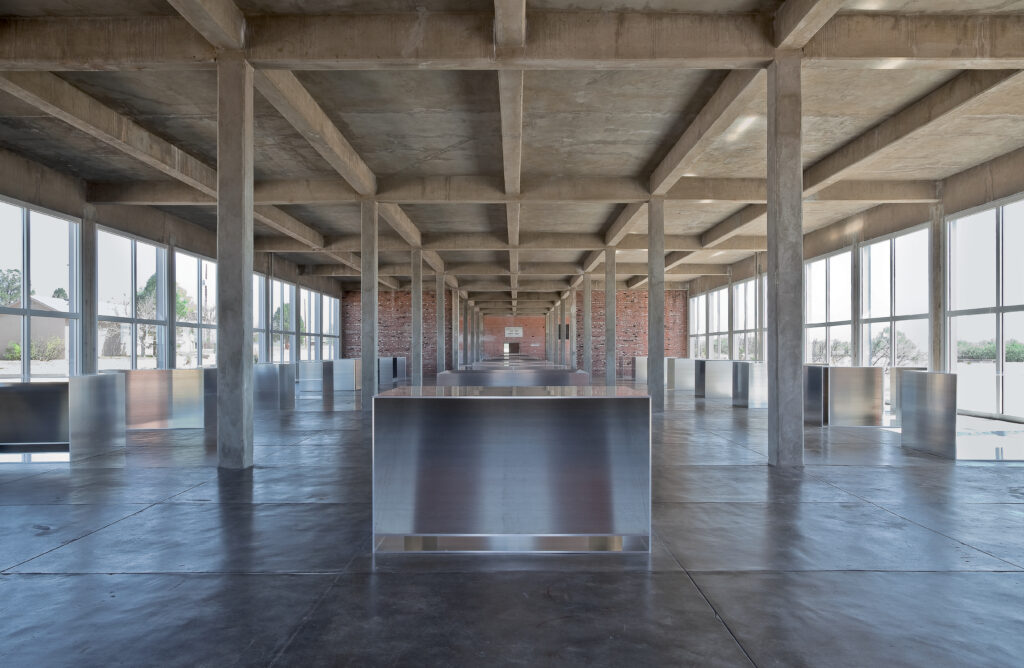
The center of Chinati’s permanent collection is Judd’s 100 untitled works in mill aluminum, which are housed in two former artillery sheds. Judd wanted Chinati to focus on works of art that were “inextricably linked” with the surrounding environment; the boxes are perhaps the most striking example of this. They each have identical exterior dimensions but different interiors, and shift color throughout the day as the sun hits them from different angles (Chinati offers periodic sunrise and sunset viewing). Over time, Judd’s vision for Chinati expanded; alongside work by Judd, Chamberlain, and Flavin, the collection now includes works by Carl Andre, Ingólfur Arnarsson, Roni Horn, Ilya Kabakov, Richard Long, Claes Oldenburg and Coosje van Bruggen, David Rabinowitch, and John Wesley; the foundation regularly hosts temporary exhibits by artists like Larry Bell and Zoe Leonard.
When Judd died of cancer in 1994 at age sixty-five, the Chinati Foundation found itself at a crossroads: How would it continue to further the singular vision of its founder when he was no longer around to provide guidance? Marianne Stockebrand, a German curator and Judd’s former partner, took the helm of the foundation after his death. With the help of Chinati’s associate director, Rob Weiner, and a small board of trustees, they worked to ensure the museum would not only live on, but would continue to expand in accordance with Judd’s vision.
Six years after Judd’s death, Chinati unveiled a significant installation of work by Dan Flavin, housed in six former army barracks. “The fact that a project of that scale could be accomplished here was very inspiring,” Moore says. “It indicated that at that point Chinati was not just surviving, but thriving.” In 2016, the foundation opened a large-scale installation by Robert Irwin, untitled (dawn to dusk). The installation, Irwin’s largest work to date, seventeen years in the making, and deemed an “emotionally resonant monument to light and space” by ArtNet.
CHINATI STILL remains unique in that it’s a situation for art founded by an artist himself.
Over its three decades of existence, the Chinati Foundation has helped transform the small, high-desert town of Marfa into an international arts destination. Moore takes pains to point out that Marfa had a long and rich history before Judd showed up; that said, “it’s remarkable what’s developed here in the wake of what Judd established at Chinati,” she says. “There are music festivals, film festivals. By my most recent count, there are fifteen other arts organizations in this town of about 2,000 people.”
Chinati has seen attendance increase by thirty percent annually over the past three years at a time when many museums are struggling to draw visitors. The museum is at another crossroads: the popularity of the foundation is putting a strain on its historic buildings. “Many people who were here at the beginning had very close links to Judd,” Moore adds. “As time passes, that won’t always be the case.” With the foundation enjoying a period of financial stability, Chinati embarked on the creation of their Master Plan that outlines a broad vision for how the institution will move forward. The plan, which was developed in collaboration with the design firm Sasaki and unveiled in late April, takes into account both the preservation of Chinati’s existing structures as well as looking forward to future development.
Bringing Judd’s vision into the future without him there to chime in has not been a simple task. “You’ll see bumper stickers around town that say WWDJD—‘What Would Donald Judd Do?’” Moore says. “Well, we haven’t found the key to the closet that has all the answers. But we’re fortunate that he wrote so much about what he wanted to see happen here.”
Ultimately, what remains inspiring about Donald Judd, and what continues to draw people to the Chinati Foundation, was the precision and ambition of those dreams. “Judd could create something here on a scale that wasn’t possible where he was living before, in New York,” Moore says. “People come here and are inspired by that sense of possibility. It’s a reminder that extraordinary things can happen if there’s a will, and an opportunity to do it.”
The Chinati Foundation/La Fundación Chinati is located at 1 Cavalry Row in Marfa, Texas. Open to the public Wednesday through Sunday, most of the collection is available only by guided tour, and reservations are encouraged. Visit chinati.org for details.
Marfa, Texas
POPULATION 1,733
Marfa, Texas, home of the Chinati Foundation and more than a dozen other galleries, foundations, and museums, is notoriously difficult to get to but always worth the trouble.
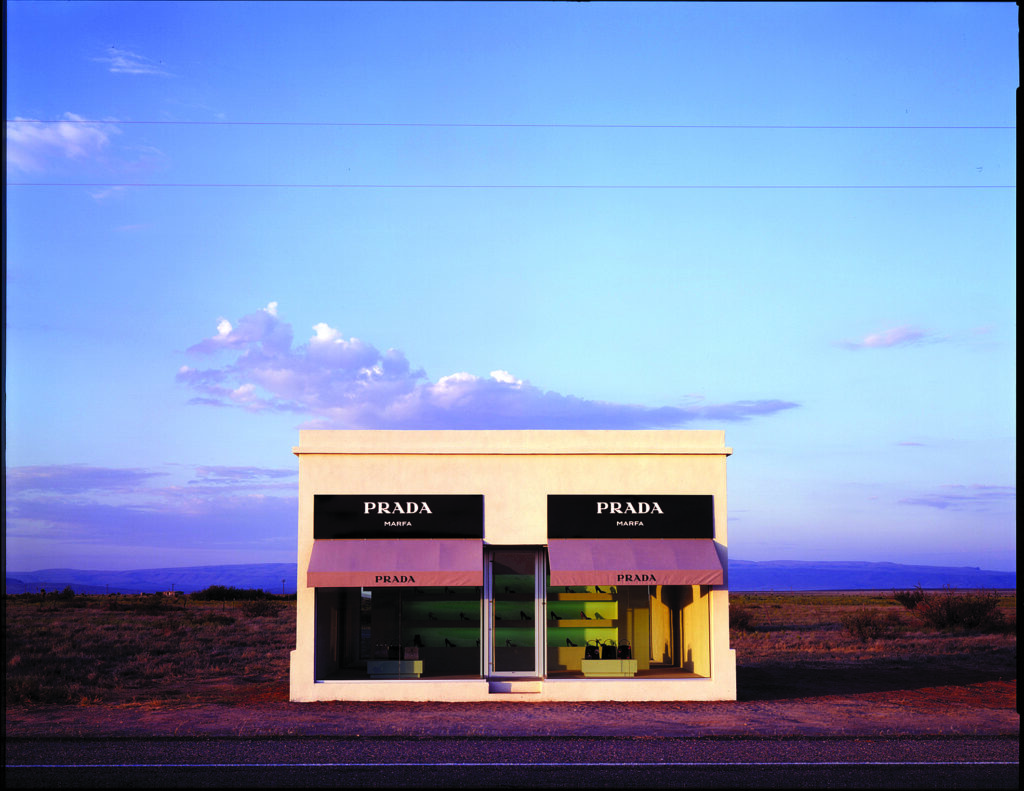
GETTING HERE: Both El Paso International Airport and Midland International Air and Space Port are about a three-hour drive from Marfa. When you’re about an hour from town, tune into Marfa Public Radio at 93.5 FM for NPR shows and stellar local programming. The must-see Prada Marfa, by Elmgreen + Dragset, is just outside of Valentine, Texas.
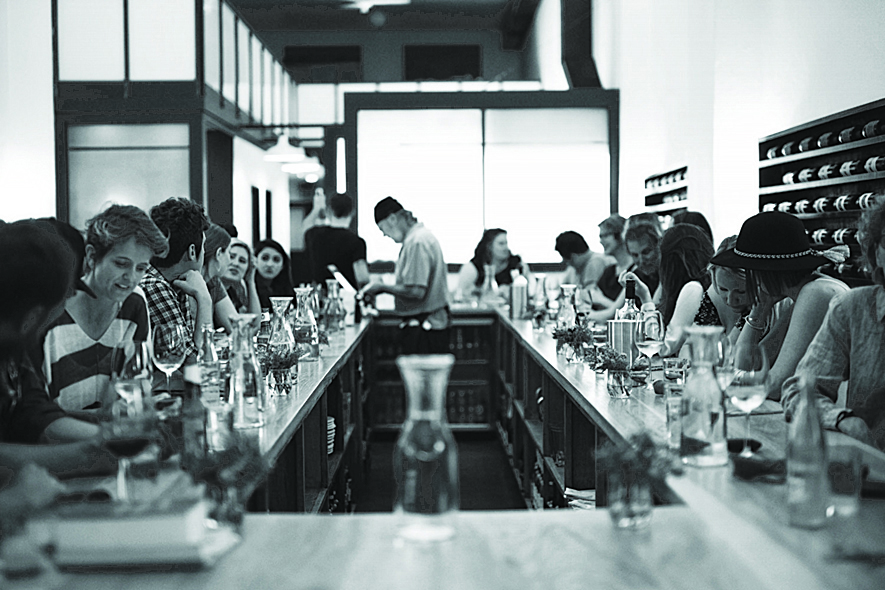
FOOD: Stellina’s ever-changing daily menu serves Mediterranean home cooking; communal seating makes it a good place to befriend a local or fellow tourist. Food Shark’s fresh and flavorful wraps and salads are a lunchtime tradition. Marfa Burrito cooks up delicious, filling breakfast burritos in a casual, homey setting. On Saturday mornings, stop by Farmstand Marfa to sample local produce and baked goods—and to enjoy some excellent people-watching.
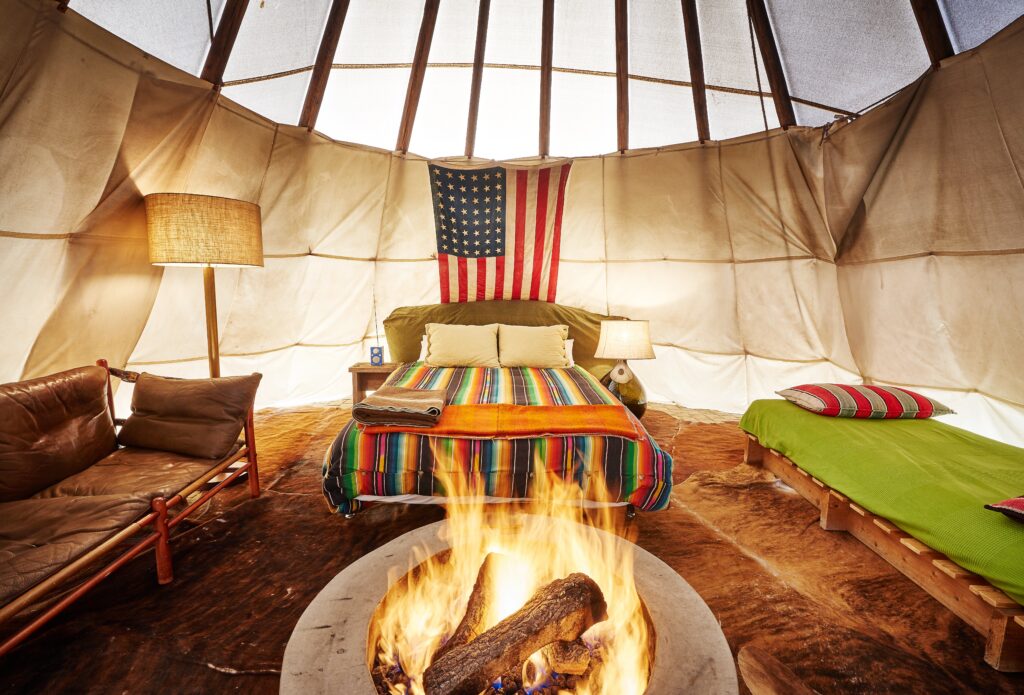
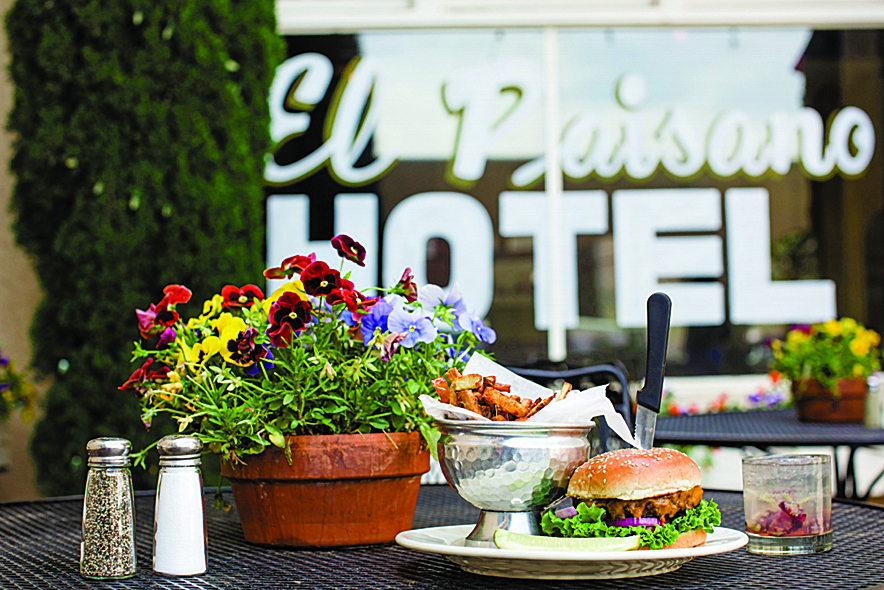
WHERE TO STAY: The sleek Hotel Saint George is the newest addition to Marfa’s hotel scene. The Saint George boasts a lively bar and fine-dining restaurant, the Marfa Book Company, and, most recently, an outdoor pool and lounge. The historic Hotel Paisano is where the cast of Giant, including Elizabeth Taylor and James Dean, stayed in 1955 during filming. The Thunderbird Hotel is a 1950s motel turned minimalist retreat. El Cosmico, a hip campground adjacent to the Chinati Foundation, rents out swanky tents, tepees, and travel trailers.
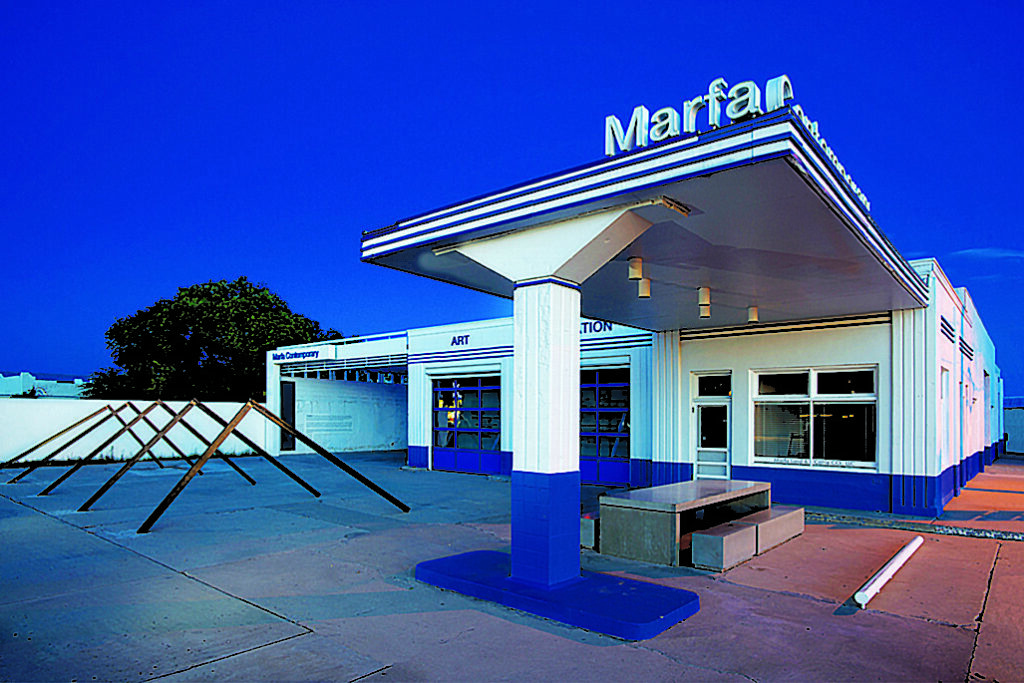
WHAT TO DO: A visit to the Blackwell School, a one-story schoolhouse where the town’s Hispanic children were educated until the schools were integrated in 1965, offers some historical perspective. At Marfa Gliders, FAA-certified pilots will give you a high-altitude tour of the town. Marfa Maid Dairy offers farm tours and cheese-making classes. Marfa Contemporary offers tours and talks with exhibiting artists. If you need space to relax and unwind, the Well’s skilled masseuses can help you out; the space hosts yoga classes and a weekly meditation group. Be sure to consult marfalist.org for up-to-date information about open-mic nights, readings, film screenings, and concerts around town. Be sure to consult marfalist.org for up-to-date information about open-mic nights, readings, film screenings, and concerts around town.—Rachel Monroe