Sliver by the River
AS NEW ORLEANS CELEBRATES 300 YEARS, ONE RESIDENT ADDRESSES ITS COMPLICATED HISTORY.
I FIRST MOVED to New Orleans in the spring of 2014 to work for the Orleans Public Defenders, not as an attorney but as a mitigator. My job was to tell the untold stories of kids charged with crimes, humanize them before judges, and try to mitigate or lessen the potential prison sentences. Until then, I worked as an investigative journalist and documentary filmmaker, and my new job demanded I apply the same skills to uncover and document the truth about my clients’ lives, families, and city.
My investigations stretched back generations, before the city’s mayor was indicted on federal charges, before Katrina, before a strategic shift to attract tourists, before Betsy and desegregation, before the time when hurricanes were bestowed with female names, before the Great Mississippi Flood and lynchings—of African Americans and Italian
immigrants—before emancipation, all the way to the city’s founding.
History casts a long shadow.
The young people I got to know, like the city they were born in, were marked by trauma and shaped by resilience. When we consider the choices imposed on people beyond their control, and view them through this lens, we see them cast in a new, more promising light. The same may be said about a place.
Now, four years and dozens of investigations later, I’m no longer a visitor. New Orleans is home. I’m a part of its fabric, however small, and its gentrification, both good and bad. As the city commemorates its tricentennial this year, no matter what you know—or think you know—about New Orleans, it’s time to take another look and, perhaps, give it a second chance.
New Orleans began as a crime. John Law, a Scottish gambler with a penchant for losing big bets, arrived in France in 1714—four years before New Orleans was founded on a curve along the Mississippi River. In France, Law befriended the right people, including the regent of France, Philippe, duke of Orléans, who helped him launch a financial scheme to colonize and exploit a large swath of Louisiana owned by France at the time.
Law issued stock to financial the scheme, and recruited and forced 6,000 settlers and 3,000 slaves to emigrate. In France, the stock of Law’s company soared before collapsing after word spread that gold had not been found in New Orleans and, instead, the area consisted of a narrow sliver of flat land surrounded by swamps infested with snakes and disease. Law used the money he had raised to fund his lavish lifestyle.
In 1720, Law was chased out of Paris by a mob angry about his failed scheme. Back in New Orleans, meanwhile, the small, dwindling colony had grown desperate for more settlers and their labor, so France decided to send male prisoners. After they arrived and began chasing after native women—whose people had occupied the area for at least six centuries—France decided to send Parisian prostitutes to join them. France also purged its asylums, and abducted vagabonds and the homeless, forcing them in droves onto ships to New Orleans. The tickets were one-way.
Five decades after New Orleans was founded, the sheer totality of France’s losses on its Louisiana investments made the decision to give up its territory to Spain—and help end a costly war—a little easier. By then, New Orleans was populated by American Indians, African slaves, recently freed slaves, and French and Canadian refugees from various wars. The Spanish made a series of miscalculations about the people of New Orleans, imposing restrictions—like banning French wine—that led to an uprising. Over the next century and a half, the city and its people diversified, and battled against surging storms and floods as its sovereignty traded hands back to the French and, finally, to the United States.
Antebellum New Orleans held our nation’s second-busiest port, becoming an economic powerhouse due to its African slave trade. The city fueled economic growth by selling forced labor up the Mississippi Delta and beyond. Isaac Franklin, one the nation’s biggest slave traders, became the richest man in the American South. He acquired plantations now occupied by Angola, a Louisiana prison where several of my former clients are incarcerated.
Today, commitments to equality made during Reconstruction have yet to be fulfilled. As African Americans slowly gained some freedoms after the Civil War, the white elite lost power. They didn’t take it very well. They worked hard to pass racially restrictive laws. They also formed the earliest Mardi Gras krewes, such as Comus, which was founded six months after the Civil War ended. It excluded blacks. Mardi Gras krewes were not integrated by law until 1992.
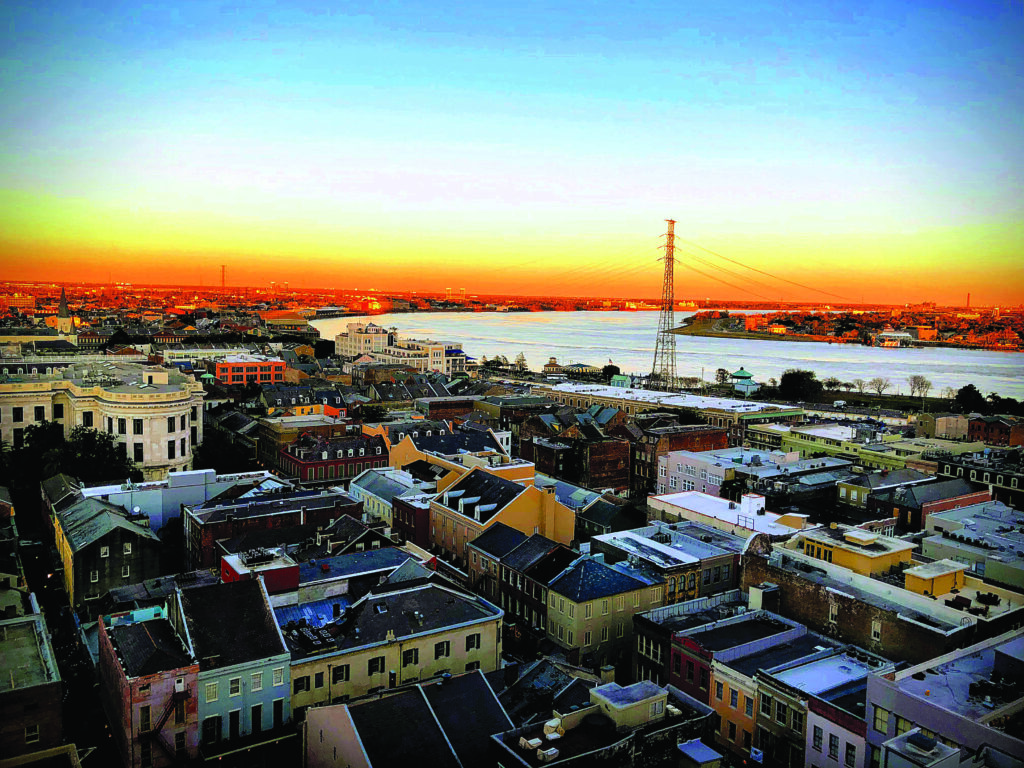
During this time, the city also came together to do the unthinkable: it drained the swamps and marshland surrounding the “sliver by the river”—the city’s original high ground. The steam-powered drainage systems were publicly funded and opened up what now encompasses the greater—over 232,000 acres—to development at lower elevations.
According to Richard Campanella, a geographer at Tulane University, whites moved to new neighborhoods and excluded black families through racist deed covenants. “In a rebuke of two centuries of local architectural tradition, new tract housing was built not raised on piers above the grade, but on concrete slabs poured at grade level,” he writes. My house is among them.
Those of us who choose to live in New Orleans understand the risks. Inevitably, the city will return to what it once was, only worse. The question is when. This is part of the city’s fleeting beauty: knowing that what’s protecting you is eroding and under threat, that at any moment the levees could break, and yet committing to the city in spite of it.
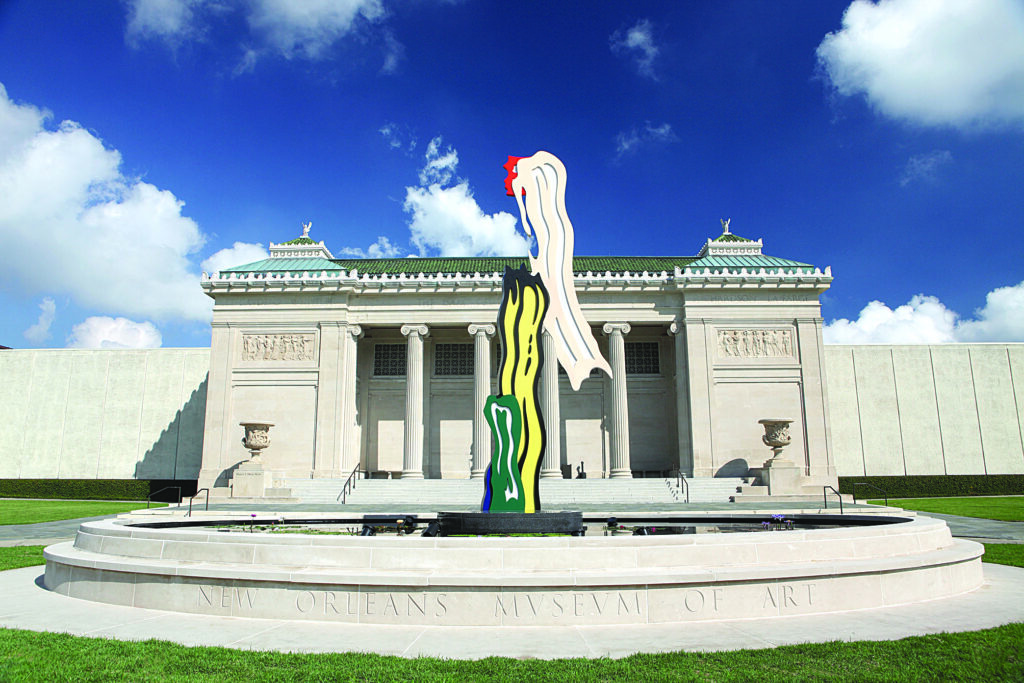
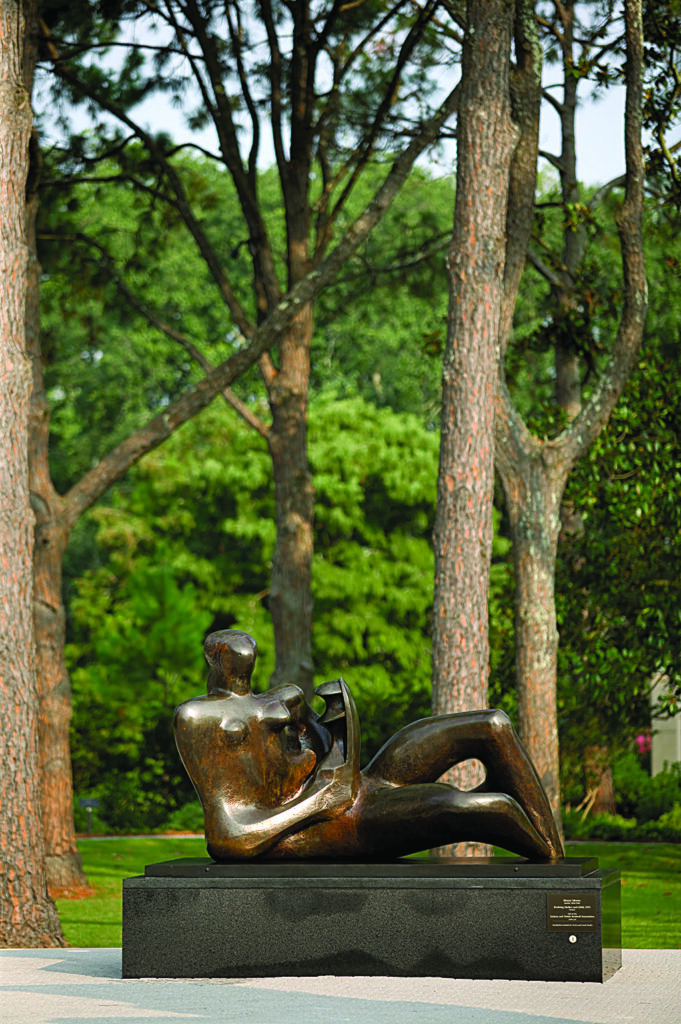
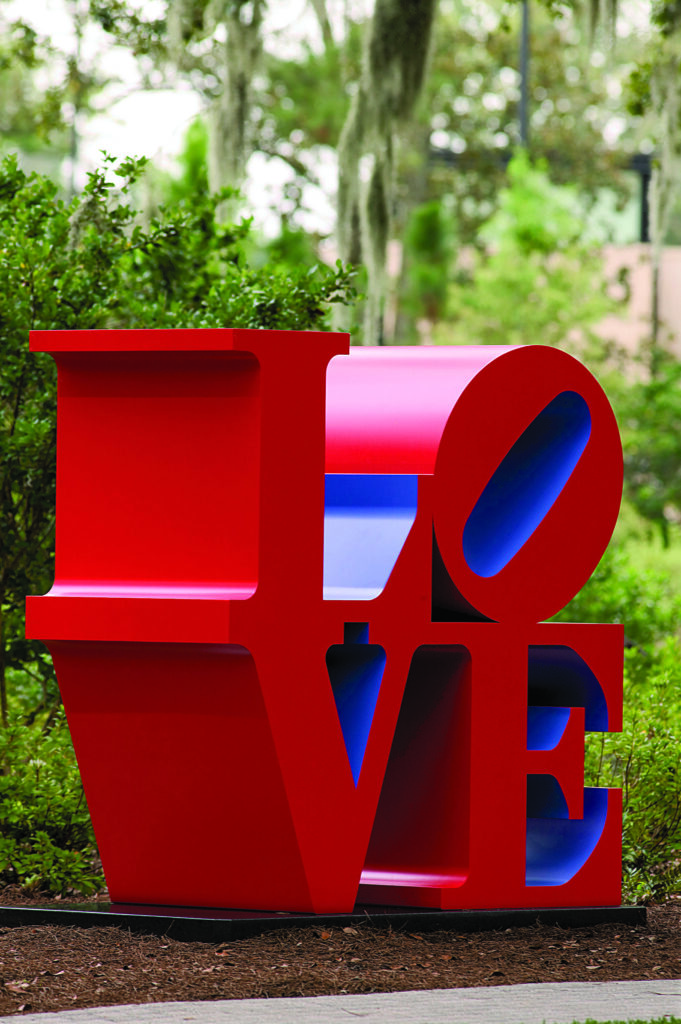
More than anything—even the intoxicating Spanish architecture that dominates the French Quarter—it’s the people of New Orleans who make it worth while, their refusal to be ruled, their ambivalence to power, their artistry, and the majesty of their music, sprung from slave spirituals. Artists can still afford to live and make new work here. But it’s changing, and like the city itself, no one knows how long this will last. By immersing yourself in the city’s art and architecture and cuisine, you’ll be uncovering its history, tapping into its throbbing vein of untold stories.
My favorite haunts are included on these pages. Not shown is a looming piece of neoclassical architecture: the New Orleans criminal district courthouse. Located at the corner of Tulane Avenue and Broad Street, it serves as the processing center for a city that’s now the incarceration capital of the world. It’s worth visiting, if only, to remember that to live in or visit New Orleans is a privilege. For every person who chooses to come here, someone else living at a lower elevation wants out.
NOLA NOTABLES
FOOD
1000 Figs: Serving fresh cuisine with vegan options | 1000figs.com
Lilette: Cozy bar and bistro inspired by French and Italian cooking. | liletterestaurant.com
Shaya: Upscale Israeli cuisine with creative wine list | shayarestaurant.com
Parkway Bakery and Tavern: The best poor boy sandwich in town | parkwaypoorboys.com
DRINK
Bacchanal: A wine bar set in a magical, meandering building on the edge of the river | bacchanalwine.com
French 75: A vintage, elegant institution erected in the 1800s | arnaudsrestaurant.com
Pal’s Lounge: A local dive and patio bar within walking distance of Bayou St. John and City Park | palslounge.com
N7: An off-the-beaten-path wine bar and garden tucked away behind a private gate | n7nola.com
STAY
The Ritz-Carlton: This opulent French Quarter mainstay is true treat. | ritzcarlton.com/neworleans
Soniat House: Old world charm is paired perfectly with modern, luxurious amenities. | soniathouse.com
The Roosevelt: The spa and rooftop pool make this historic hotel indulgent. | therooseveltneworleans.com
Hotel Monteleone: Home to the Carousel Bar, the city’s only revolving cocktail lounge | hotelmonteleone.com