Shop Talk
Sarah Sears of S Design asks Kevin Bethune, author of Reimagining Design, three probing questions about big leaps, impostor syndrome, and design in business strategy.
BY Sarah Sears
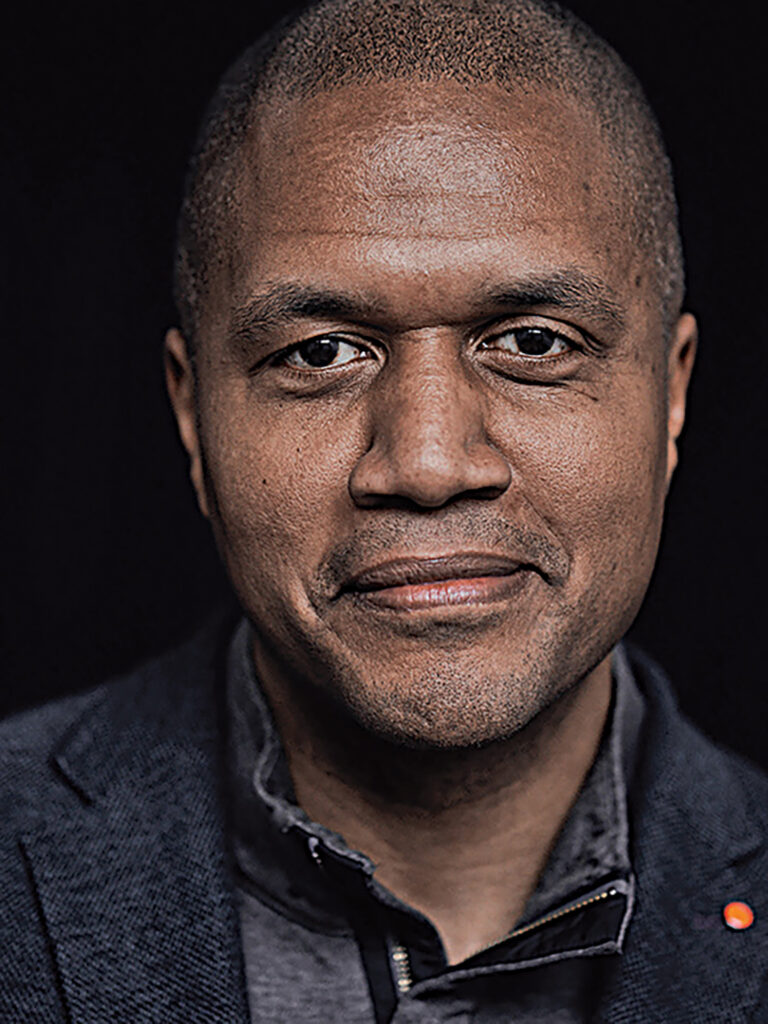
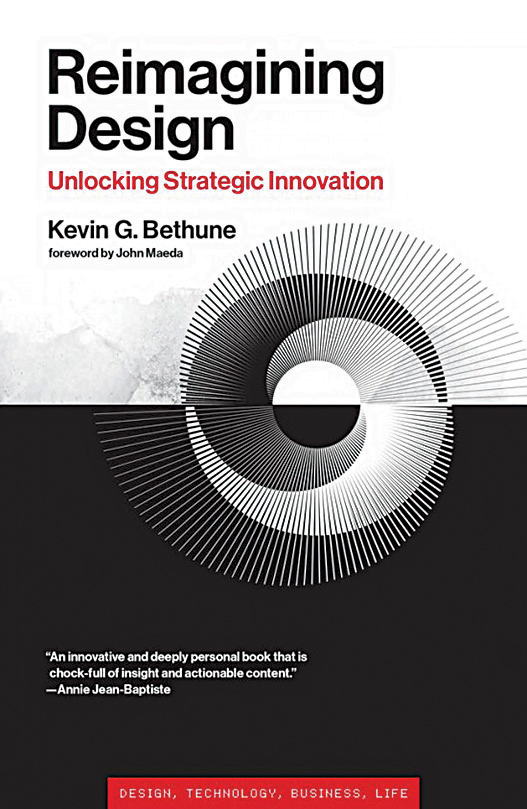
KEVIN BETHUNE engineered hardware upgrades to nuclear reactors at Westinghouse prior to designing the Nike Air Jordan Fusion 8 mid-top sneaker. Bethune is an expert of strategic design thinking and the founder and chief creative officer of dreams • design + life, a firm that delivers design and innovation services using a human-centered approach. Here, Sarah Sears of S Design asks the author of her current favorite book, Reimagining Design, three probing questions.
SS: In Reimagining Design, you write about taking big leaps in your life. Is there one that stands out?
KB: I quit Nike to go back for a second dose of graduate school. I thought I was finished with school as I held an engineering degree and an MBA. This career gamble was a calculated bet to solidify my career at the intersection of design, business, and tech, and allowed me to work on design and innovation for the rest of my career. That leap unlocked my dreams.
SS: Was there ever a time that you experienced impostor syndrome?
KB: I don’t think there was ever a chapter where I didn’t feel some impostor syndrome. This was the case after being thrust into a new discipline, surrounded by peers with more experience. You feel fear, intimidation, and a hesitancy that you might say the wrong thing or look stupid. I realized my peers were no smarter than me, and with hard work and applied learning, I could figure things out and perform and exceed expectations.
SS: What is the biggest barrier for business leaders to incorporate design into business strategy?
KB: While design thinking* has been helpful in the business community, there is still too much ambiguity in understanding the difference between design thinking and the actual practice of design. Codifying design’s place at the strategy table and ensuring it is represented through every thread of problem-solving should be the goal. Determining who is at the table really matters when it comes to solving the challenges of the future, especially in a hyper-connected, rapidly converging world. Diversity, equity, and inclusion are critical threads that need to inform our future-state teams.
* “Design thinking is a human-centered approach to innovation that draws from the designer’s toolkit to integrate the needs of people, the possibilities of technology, and the requirements for business success.” —TIM BROWN, executive chair of IDEO