ACCORDING TO Americans for the Arts, “public art humanizes the built environment.” That is why since Philadelphia first began its percent for art program in 1959, municipalities across the country have implemented city ordinances to ensure public art is found in public spaces.
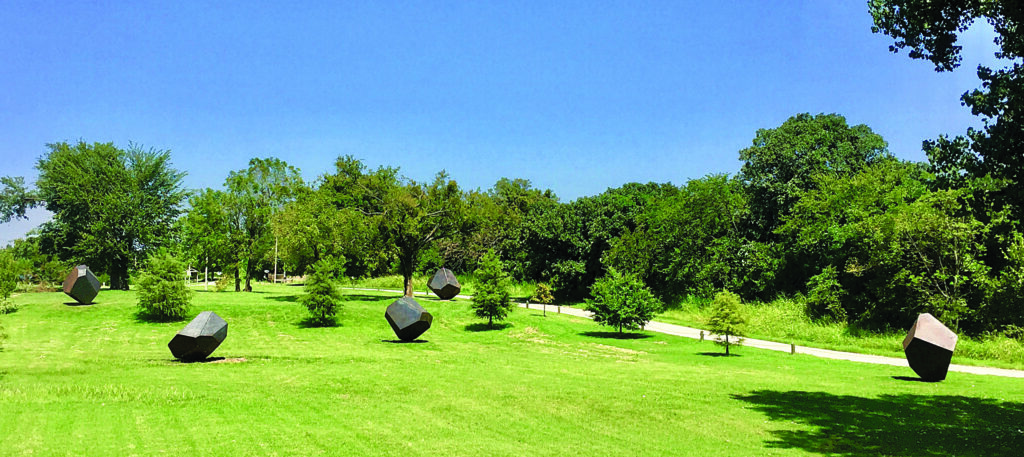
Sixty years later, Oklahoma City has its own collection, one that is growing in size and scale and free to view for anyone who is passing by. It’s not just framed paintings or pencil sketches in a portfolio but also colorful murals that take up entire sides of buildings, massive steel sculptures, even a bridge.
In 1980, the city established the Oklahoma City Arts Commission, which gave the municipality the ability to commission art. By 2009, the growing demand for more public art led the city to pass 1% for Art, requiring one percent of the construction cost for any new or renovated structure on city property to be spent on art for the site.
“There is a growing expectation to see works of art incorporated into the urban fabric, both public and private,” says Robbie Kienzle, liaison and program planner for the city’s Office of Arts and Cultural Affairs. “The days of ‘Oklahoma City can’t afford pretty’ are long gone, and now residents and elected officials ask how much more art can be included in upcoming projects.”
In 2011, the arts commission contracted local artists S-X-L in collaboration with Butzer Architects and Urbanism to design the Skydance Bridge, which was recognized in 2012 by the Americans for the Arts Public Art Network as a top-fifty public art project in America. Although it’s perhaps the most recognizable offspring of 1% for Art, dozens of others have been created, with even more on the way.
“The benefits of public art [are] more than economic,” says Kienzle. “The pride and social connectedness these beautiful and aspirational assets bring are now seen as priceless.”