Shakespeare in the City
Outside Voices
New York Classical Theatre’s approach to live performance could be seen as non-traditional.
BY Kelly Rogers
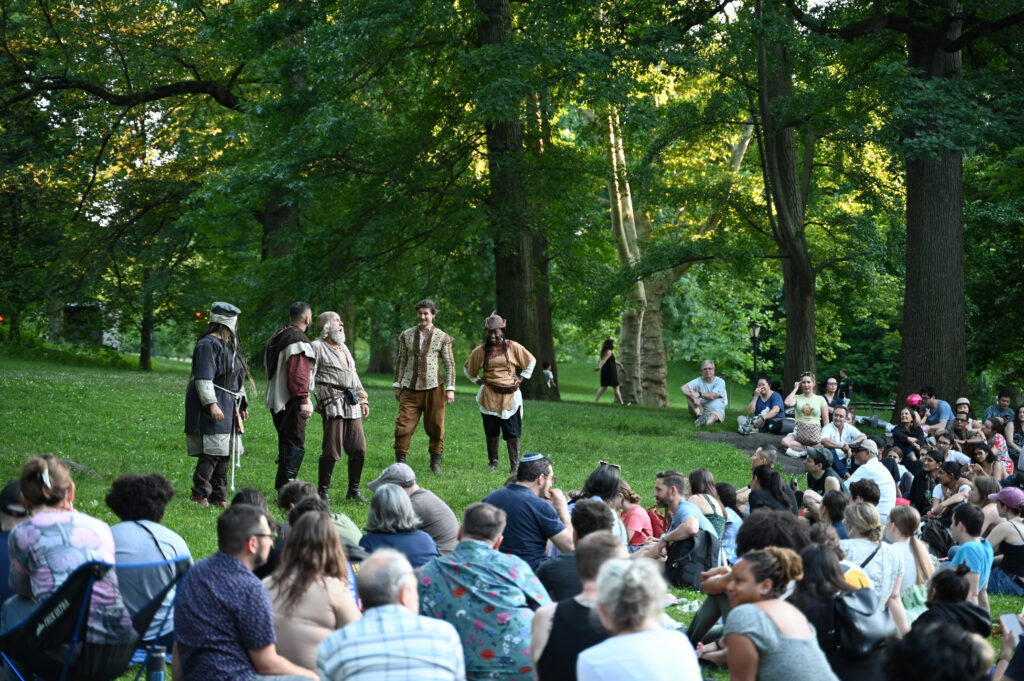
NEW YORK CLASSICAL Theatre’s approach to live performance could be seen as non-traditional: There are no assigned seats or tickets, the audience follows the actors to different locations throughout each show, and New York parks serve as the primary backdrop for most performances. But according to Stephen Burdman, NY Classical’s founding artistic director, this is actually much closer to how Shakespeare intended for an audience to experience his work.
It’s a combination of environmental theater (dissolving the distinction between the audience’s space and the actors’ space) and promenade theater (when the audience follows actors from place to place) that Burdman has developed, known as panoramic theater. Here, there is no third or fourth wall; if you’re watching, you are to some degree a part of the show, too. Burdman says this gives an immediacy to the work that the audience can respond to, and the 360-degree staging means there’s no bad seat in the house.
This summer, NY Classical presents The Tragedy of Julius Caesar across three Manhattan parks through July 5, 2026. Using public spaces as a stage allows for more people—and dogs—to engage with literary works, whether they planned to attend or just happen upon it. “Anyone can show up at any point in the show and enjoy it,” says Colin Knapp, NY Classical’s director of development and communications.
Burdman founded NY Classical twenty-six years ago, and has since seen multiple generations of theater-goers attend its productions of classical plays, from Hamlet to a fifteen-minute version of A Christmas Carol. He’s produced nearly forty shows for the company, and has earned the nickname the “Shakespeare surgeon” for his meticulous ability to modify hours-long scripts into abbreviated narratives that are better suited for a panoramic style.
Revisiting old works isn’t just for nostalgia’s sake. Burdman says the ideas and questions raised by Shakespeare’s work are for everyone, and Julius Caesar, one of his most civic-minded plays, presents timely themes ahead of the United States’ 250th birthday. For this show, NY Classical collaborates with Civics Is Sexy, an organization facilitating civic education for the digital age. Every Thursday during the run it will lead pre-show conversations and activities in a program series called Rome to Right Now.
The only requirement for attending NY Classical Theatre is curiosity, and the payoff is easy to see when observing the audience, Burdman says. It creates an opportunity for New Yorkers of all ages, classes, and interests to intersect: “The rush-hour subway? It’s our goal for our stage and our audience to look like that.”
Outdoor performances of The Tragedy of Julius Caesar are free and open to the public through July 5, 2026.