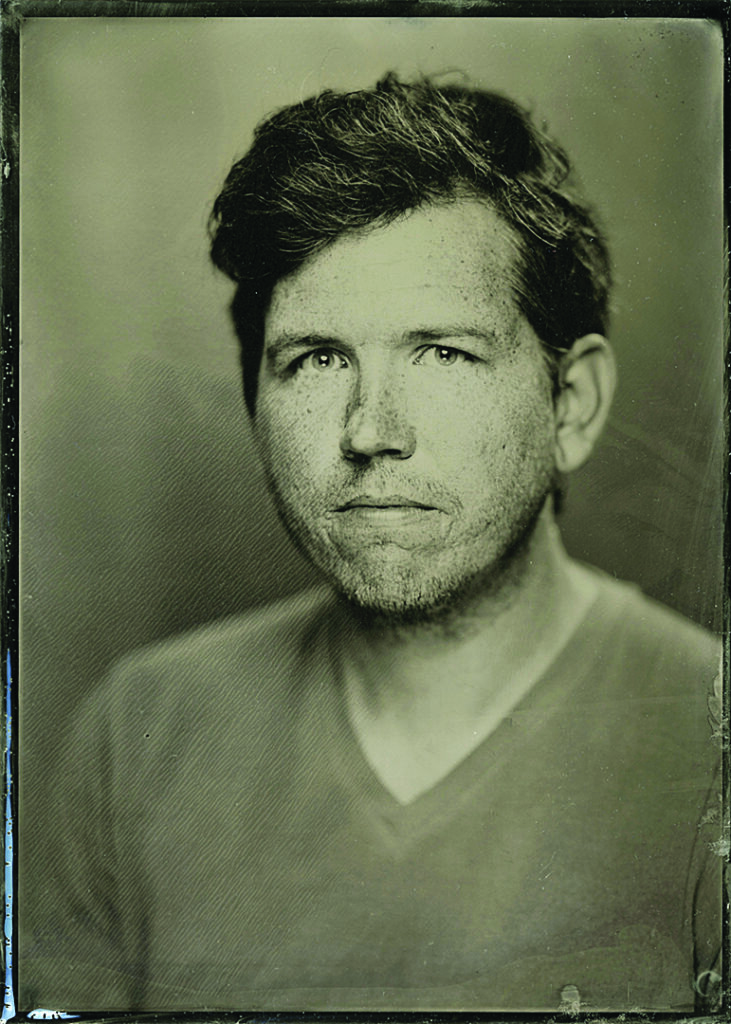
As a sophomore in high school in Georgetown, Texas, Ben Barry, now thirty-four, would log on to the achingly slow dial-up connection and search message boards for early Adobe Photoshop tutorials. He taught himself to do the kind of
image manipulation that was cutting edge, for a sophomore in high school in the late 1990s: text that looked like it was on fire or frozen in a cube of ice. “I wouldn’t exactly call it graphic design,” Barry says.
After graduating from the University of North Texas in Denton, Barry honed his skills at a graphic-design firm in Austin. One day, he logged on to Facebook to find a targeted ad informing him that the then nascent tech company was hiring designers. He submitted his portfolio on a whim. A month later, he had accepted the job and was planning his move across the country to California; it would be the first time he’d ever lived outside of Texas.
Barry’s graphic-design colleagues were shocked that he’d leave behind a highly desirable job in Austin for a job
with a company not known for its aesthetics. “[Facebook’s founders] were focused on making sure it worked and that
it was fast. They were thinking about speed, reliability, information density. It was built by engineers, not designers,” Barry says.
Nonetheless, at Facebook, Barry felt that he’d found kindred spirits. “That very first week, I remember thinking: these are my people. I had a small group of friends in college who were computer nerds who were also creative. This was like being surrounded by those people. And they were all smarter than me.”
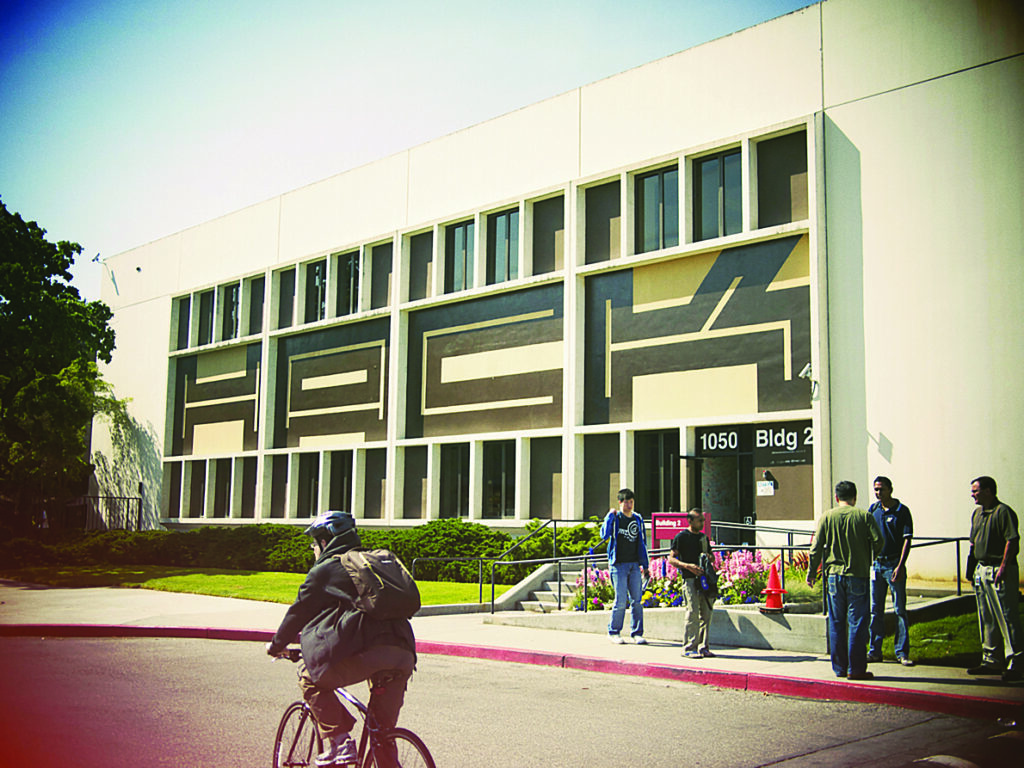
In 2010, the growing company had acquired several properties, including a warehouse. The company had no immediate plans for the large space, so Barry (along with Everett Katigbak) began setting it up as a print studio. “We set up a space on the side so we could start making stuff,” Barry says. “More and more people found out about it and liked what we were doing. We got more and more support until it was an official team with a budget.”
In short order, what soon became the Analog Research Lab was outfitted with screen-printing equipment, letterpresses, a laser cutter, and a Risograph.
In 2012, Fast Company deemed Barry “Facebook’s Minister of Propaganda,” thanks to his work refining and reinforcing the company’s internal culture through posters, booklets, and other printed matter. The ARL’s work also ensured the digital company was still grounded The night before President Obama’s visit to the Facebook offices, Barry worked into the early-morning hours to create a limited edition screen-printed poster commemorating the event, which the president signed the next day.
In 2014, Barry left Facebook to open his own design studio, Nonlinear, in Portland, Oregon. “I get some of the cooler
projects around the fringe of technology,” he says. Today, Nonlinear is described as a small visual-design studio with an interest in technology, science, art, architecture, politics, the environment, and social good.
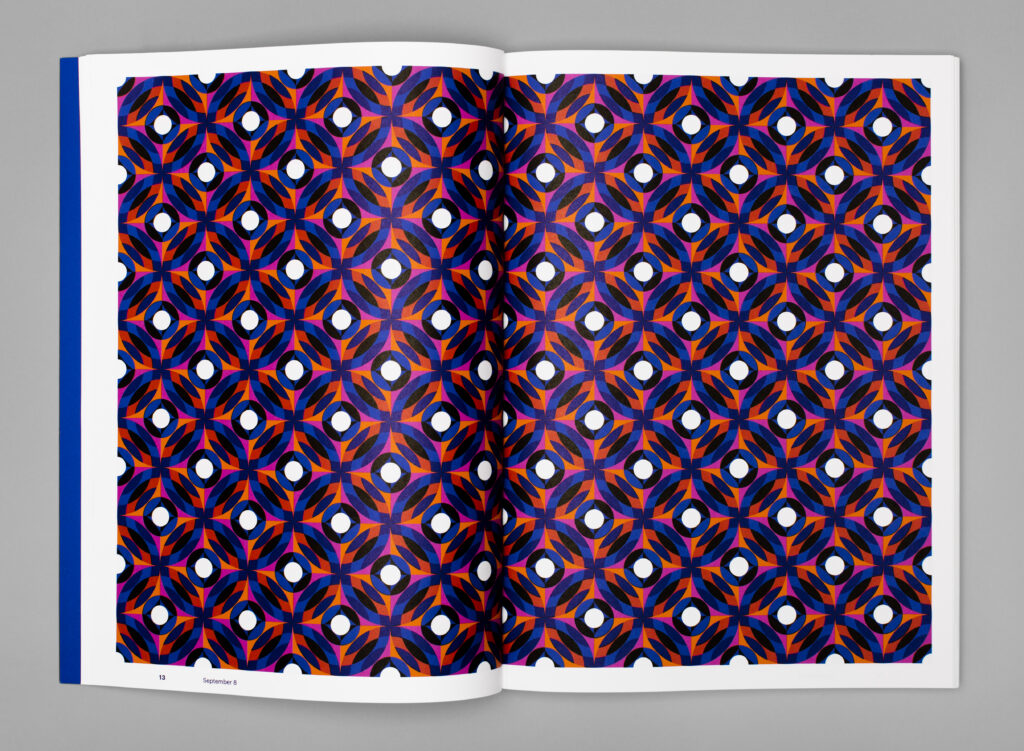
“So much of our time and attention is put into creating logos or symbols, and that’s satisfying to me,” Barry says. “I like to go deep with whatever I’m working on and know that I have considered every angle, every line, and every mark of this thing.”
FIND MORE DESIGN WORK BY BEN BARRY: nonlinear.co // @benbarry // @nonlinear.co