Friends in Conversation
Pratt & Harjo
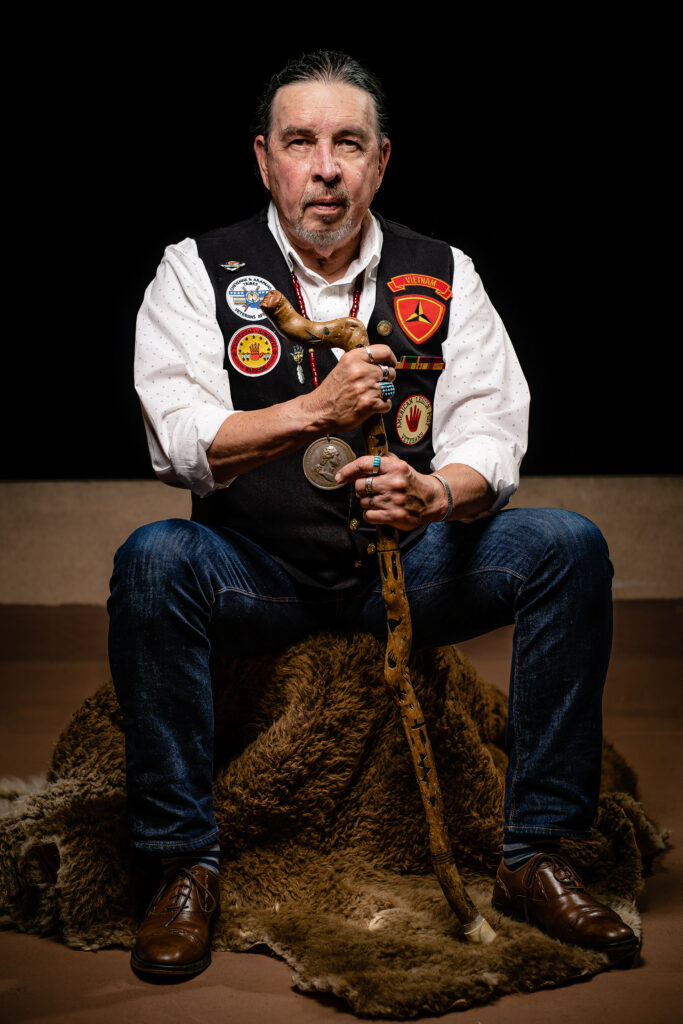
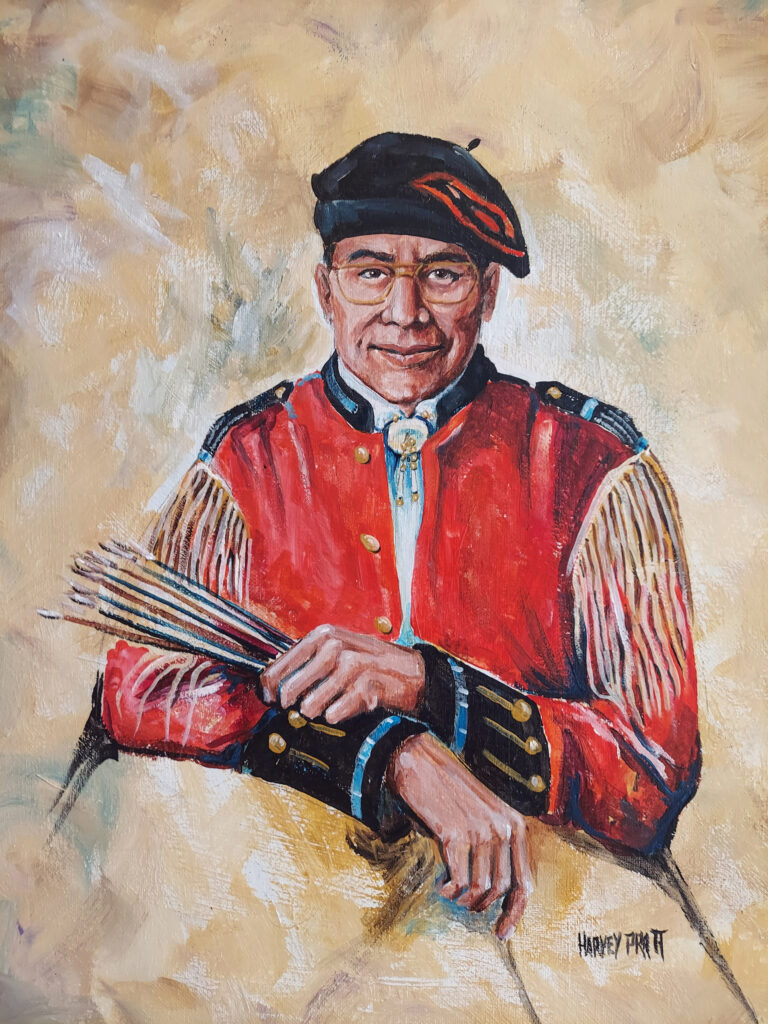
Just before the unveiling of Harvey Pratt’s largest project to date, the National Native American Veterans Memorial in Washington, DC, two elder statesmen of Native American art discuss their pasts, honorable service, and finding a uniting principle across art forms and community.
Ben Harjo: How long have we known each other?
Harvey Pratt: Oh, my gosh. Since we were babies, man.
Ben Harjo: We used to do the mall shows and the bank shows or any other show that was out there before museums and a lot of galleries started to develop and emphasize Indian art. In the mid-1960s, that’s when I graduated, and then went to the Institute of American Indian Arts in Santa Fe, and spent three years there studying art, and then went to Oklahoma State after that, and spent a few years there with a break in between from our Uncle Sam. I graduated, and then worked for a little bit before I started doing art full time as a profession. I’ve been reading a book on Doris Littrell and all the things she went through to promote Indian art, not only across the nation but within the state of Oklahoma.
Harvey Pratt: She really helped me. Charles, my older brother, had a gallery and I put some art in there and learned that I could sell, and then got introduced to Littrell. But I did start with Charles, with his little gallery on South Western in Oklahoma City.
Ben Harjo: Gosh. That was a long time ago, too, and we’ve both become pretty well-known with our artwork. I travel and do more shows than you do, but it’s great to have these shows where we can commune and just have a good time.
Harvey Pratt: Absolutely. I don’t do a lot of shows because I had a career as a forensic artist in law enforcement for fifty-one years. I always enjoyed going to the shows and visiting, catching up, and seeing who the new artists are and who is doing what.
Ben Harjo: That was the exciting part—to meet new artists who we weren’t familiar with and see what they’re doing, and how they were promoting Indian art and in what vein, because so many people expected it to always remain static.
Harvey Pratt: When I started, we were doing mostly flat style, and it slowly evolved. Some of the artists are now changing that whole style and being a little more free and loose. We’re old guys—we remember a lot of the old stories and how they taught us about the ceremony and the style and the dress. So we always painted in those ways, and the dresses evolved.
Ben Harjo: I’ve got some old pictures of some of the dances and how the fancy dancers went from the large feather bustles. Even the women, they changed their dresses just as songs have changed over the years. Let’s talk about the memorial because you had a great design that I thought deserved the respect and admiration of all of us Native American veterans, both the indigenous as well as the non-indigenous. Tell me how you came about the design.
Harvey Pratt: The Smithsonian sent a team of people around to Indian country across America and into Alaska, asking veterans what they wanted in the memorial. Russell Willey, the director of the Cheyenne and Arapaho veterans, said, “Harvey, why don’t you submit a design?” and I said, “Oh, no. There will be people from all over the world doing that.” I kind of blew it off and then a couple of months later, he asked me again. I said, “Okay. Let me dream on it. Let me dream about it.”
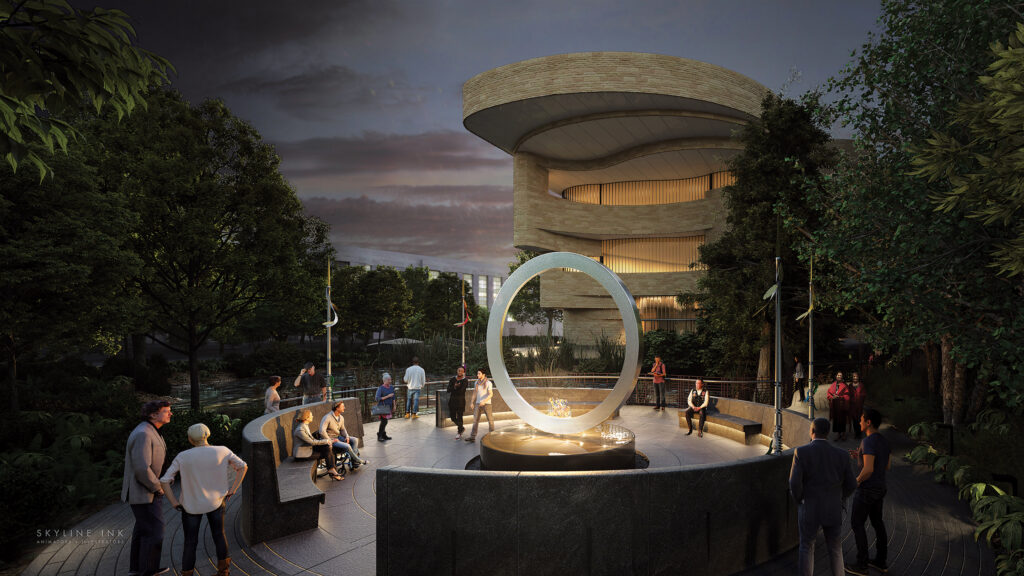
Harvey Pratt: The design needed all of the federally recognized tribes to accept and understand it. I’m one of the Southern Cheyenne chiefs, and we do a lot of ceremonies. Our traditions and ceremonies and the spirituality of Indian people, and the elements—I need to incorporate water and the fire and the earth and the air. I need to incorporate the directions, because tribal people say that power comes from the directions. We have the four directions, the six directions, and some tribes say there are seven—where they stand in the middle is a direction. I thought, well, I’ll incorporate the cardinal points. Cardinal points are extremely important, they complete the circle. The circle completes everything. It makes us all one. Everything is connected. There’s no beginning and no end, and it’s timeless.
Harvey Pratt: I included the Path of Life, where you prepare yourself when you come into the memorial. You can come in from any side that you want, and once you get inside that’s where you’re in harmony with all the elements and the power in the directions, and the feathers, the lances and the prayer cloths, where the water is and the fire. I actually dreamed this, Ben. I dreamed about it that night.
Harvey Pratt: When I got up that morning, I came downstairs, and I drew some designs, and incorporated the five armed services seals. Regardless of who you are or what tribe you are, there’s something in this memorial for you, and you’ll recognize it. If my great-grandfather walked into there, he would recognize those things that were important to us, and other tribes that are of our generation will walk in there and they’ll see the same thing. They’ll recognize certain things that they can use. They can use that water. They can have that sacred fire. If my grandkids go in there, they’ll recognize those things and their children will recognize those things.
Ben Harjo: I was so happy when you [won the competition]. Barb [Harjo’s wife] and I were both yelling in the house.
Harvey Pratt: I got a phone call on June 27 [2018]. [The competition manager] said, “Well, the good news is you won, and the bad news is now you’ve got to do it.” I thought once I did it, somebody else would just take over and they said, “We want to make sure that things don’t get changed on you. You have to oversee it all.” It has been an enjoyable learning session, and we’ve met some really wonderful people that are involved in it to help us. My son, Nathan, introduced me to Skyline Ink and Hans and Torrey Butzer of Butzer Architects—an architecture and urbanism company out of Oklahoma City. They designed the Oklahoma City National Memorial, so they had been through this before. They helped us wade through all of the little curves. Hans is the dean of the College of Architecture at the University of Oklahoma.
Ben Harjo: It’s supposed to be unveiled in November, we were all hoping that we could go celebrate the event—but it looks like it may be a while before we can do that.
Harvey Pratt: They’ll do the big grand opening at a later date. I’m just so proud to be a veteran. I grew up honoring and respecting veterans. That’s just part of our culture, and one of the questions that I get asked a lot is why do you Indian people fight for this country when this country treated you so poorly. I say, we’re—Native people—we’re a warrior society, and we respect our warriors. When America was discovered, the creator gave it to Indians. Indians were the first people here. So this is Indian country. This is our land. It will always be our land. I said our blood is soaked all over this land, and now we’re defending this flag and this country and other parts of the world and our blood is in that. So this is Indian country. That’s why we fight for it.
Ben Harjo: Isn’t that the truth. We’re combat veterans, so we celebrate a lot of our warriors who didn’t come back as well as those who did. We honor our veterans always.
Harvey Pratt: When I came back, my family had a dance for me and they honored me and they fed the people. They honor [our veterans]. It was honorable to serve. I’ve always appreciated that. When I see other veterans being honored, I’m proud for them. We’re all together and we’re all veterans and we respect one another. There are 574 different federally recognized tribes plus state recognized tribes. They’re going to come to the memorial, and they’re going to do a ceremony. It will become a place of ceremony, a place of comfort, a place of strength. War mothers and people are going to come in there, and they’re all going to do something—make a pledge and pray for somebody, tie something on a fence, tie something on the lances, a prayer cloth, and bless the water. It will become a powerful place.
Harvey Pratt: Non-Natives will see these Native people doing these ceremonies, praying for their sister or their brother or their dad and they’re using the water, and they’ll begin to understand. I think it’s an education for non-Natives, and people will know we’re still here. We’re still here. We’re still doing things.
Ben Harjo: We’re still here, we’ll always be here, and we’ll take pride in our country and in our warriors.
On Veteran’s Day, November 11, 2020, a virtual event will mark the completion of the National Native American Veterans Memorial. The memorial is located in Washington, DC, on the grounds of the National Museum of the American Indian.