Les Ballet Afrik at the Guggenheim
On Fire
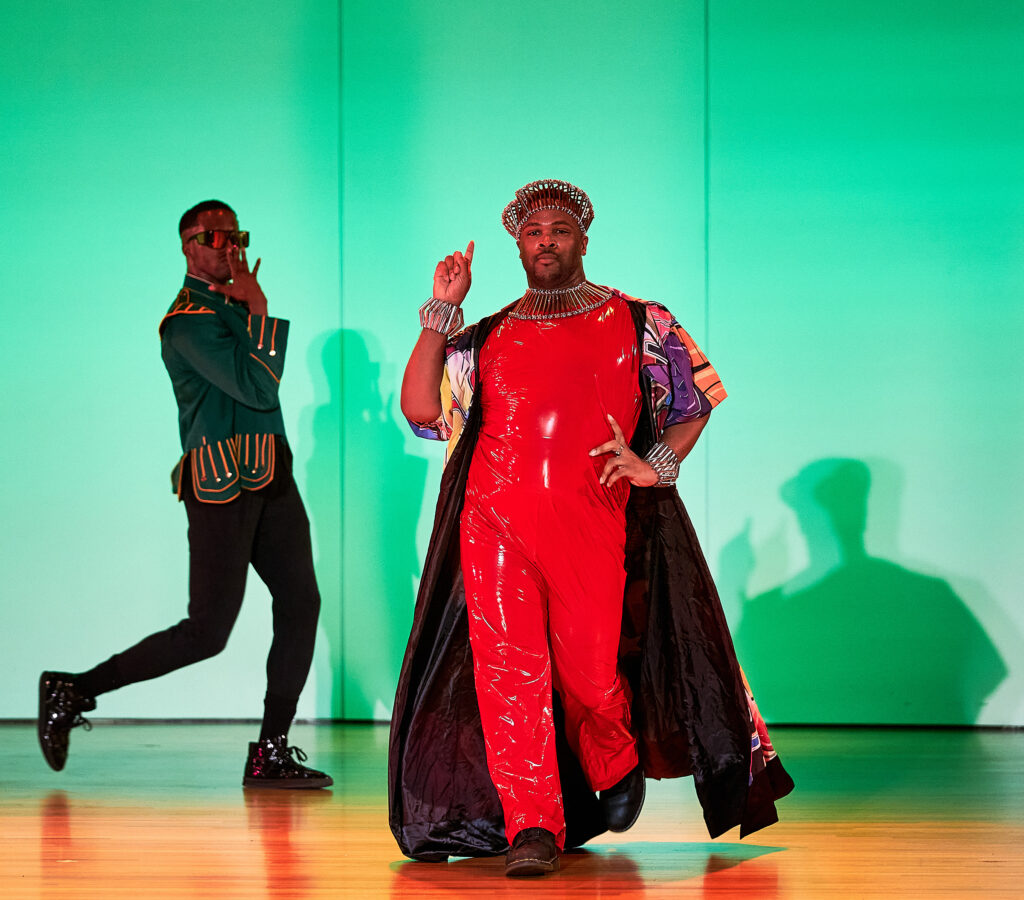
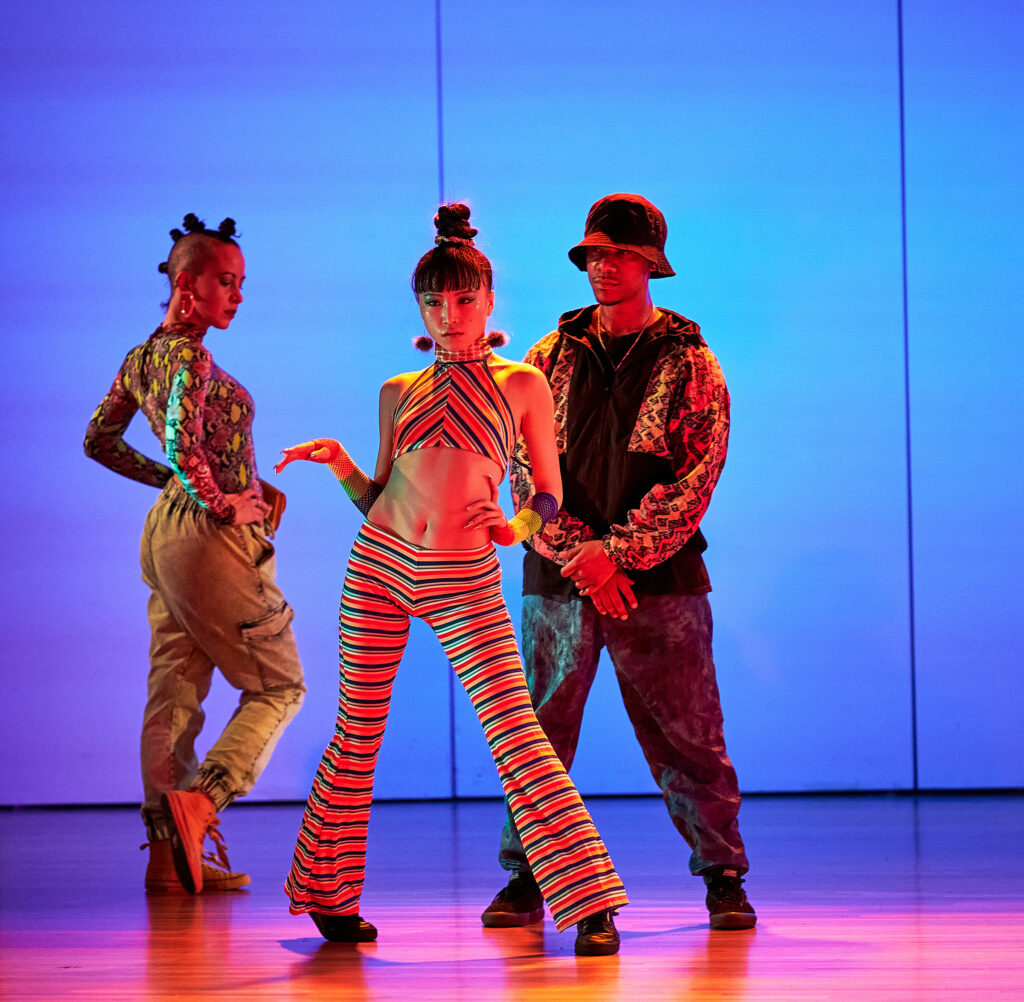
STRIKE A POSE. Omari Wilson brings his unique AfrikFusion style to the Guggenheim’s theater, marrying traditional African dance with modern styles of house dance that dominate the club scene, and voguing made famous by New York City’s drag balls.
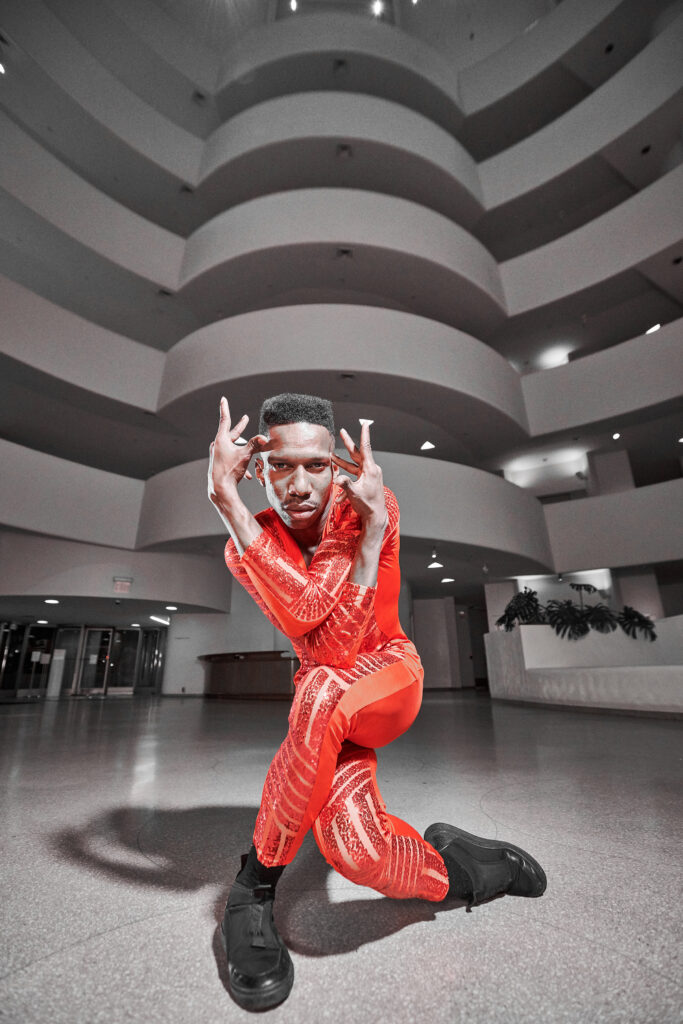
Omari Wilson, the founder of Les Ballet Afrik talks with dance editor Larry Keigwin about the upcoming performance and this subculture of contemporary dance.
Larry Keigwin: I loved your show at the Guggenheim for their Works & Process performance series. You were—for lack of better words—engaging us in downtown club life, vogue, and ball life. Can you speak to the challenges and what excited you about working specifically in a museum space?
Omari Wiles: The challenge was trying to keep the audience engaged with the dancers and the choreography without having to be center stage all the time. I wanted to make sure I used the space as if it was a club and not a theater. Club life is about the movement in the space you’re in. When you’re at a club, you’re looking in every direction.
LK: You could totally feel the energy. It was as if you were at a highly choreographed and well-staged ball. Now you’re building a full show that will be at the Guggenheim at the end of March, New York is Burning. Can you speak to the inspiration?
OW: I started off in ballroom in I saw so many different men of color expressing themselves in masculine and feminine ways and being celebrated, where for me it was really di-cult to express myself that way coming from the African dance community. In [the documentary] Paris is Burning (1990), Pepper LaBeija is this male figure but also this motherly figure within ballroom—her energy, her voice, and the way she commanded the room. I was, like, oh, wow. I want to be able to express myself in this way. Everything Paris is Burning showed me—from the clothing to the personalities and the way I saw black men, gay black men, and Latino men carrying themselves with a sense of regalness. Although their struggles might have been facing them before they got through that door, they might be facing them after they leave that ball. At the time of the ball, they were the celebrities, and that has inspired me throughout my career.
My mom and my dad come from Senegal and owned their own dance company. I wanted to create my own name, and being a part of ballroom really inspired me to do that because although you’re a part of a house, you are expressing your own creativity, your own individuality. I feel like through New York is Burning, I’m hoping to guide the audience. It’s not just voguing. There are a lot of struggles in these people’s everyday lives so to be able to even create what they create—it becomes their outlet.
Creating this show and titling it New York is Burning felt like I’m paying homage to the New York ballroom underground world. This show is a way to educate the communities around me, to hopefully inspire them to want to become allies of this community, and to help build it—not just take from it. To really notice this is a culture and these people, these kids, these members, these houses, they need not only your support, but your understanding and respect. I used to be told, “Oh, you’re a voguer? You’re not a dancer. What kind of technique do you have?” They didn’t know I came from a family of dancers.
LK: I think dance can teach people a lot about discipline and presentation. I love the term “vogue femme.” I studied that for a very short time because I choreographed the revival of Rent Off-Broadway, and I made Angel into a vogue femme character. I studied briefly with Willi Ninja. I had a memorable time in the studio with him. Was he part of your ballroom experience?
OW: I had the honor of witnessing him perform on stage, and it was amazing to see this man’s storytelling. And his excellence. It made me carry myself a different way. I’m not just this little black boy from Africa, or I’m not this little black boy from Bed-Stuy, Brooklyn. I have much more potential as long as I want it to be there. I can’t sit around, and Willi Ninja didn’t sit around. He got up and he did what he needed to do, you know, to tell a story, and I think that was so inspirational. Vogue femme really spoke to me because I was so closed in about my feminine side and my sexuality that when I saw black and Latino gay men voguing in that way and still be a man—it was really inspirational. I went to the clubs. I went to this club called the Karate Club in Harlem. I went to little house clubs with house music, where you saw everyone. You saw the whackers, the breakers, the hip-hop dancers, the voguers. It was everyone all together and that was really interesting.
LK: What an outlet. I love that. And I’m sure the club no longer exists.
OW: That’s the only problem about New York. New York is literally burning down our clubs, our night life. I feel like a couple of clubs are closing at 2 a.m. now, you know. Like in LA and all these other states. The vogue scene is losing these spaces.
LK: Just as it’s getting warmed up.
OW: Shows like Pose, and Legendary that’s coming to HBO, and RuPaul’s Drag Race, all these places of progress. This show means a lot, and it means a lot to be doing it at the Guggenheim because, again, the Guggenheim is a huge deal, and the company being one year old, it’s a big deal for us, but it’s a big deal for me. It’s a really big deal to bring awareness to this community. We’re not looking for support—we’re looking for respect, and that starts at the littlest things.
LK: I love that it isn’t in a typical ball space. The Guggenheim is such a great place to let the audience dive in. I want to say thank you and wish you so much good luck, and I look forward to seeing the show.
New York is Burning will be performed by Les Ballet Afrik at the Solomon R. Guggenheim Museum in New York City on March 29 and 30, 2020.