Marfa Revival
The Chamberlain Building shines anew in downtown Marfa.
BY Leigh Arnold | PHOTOGRAPHY BY Alex Marks
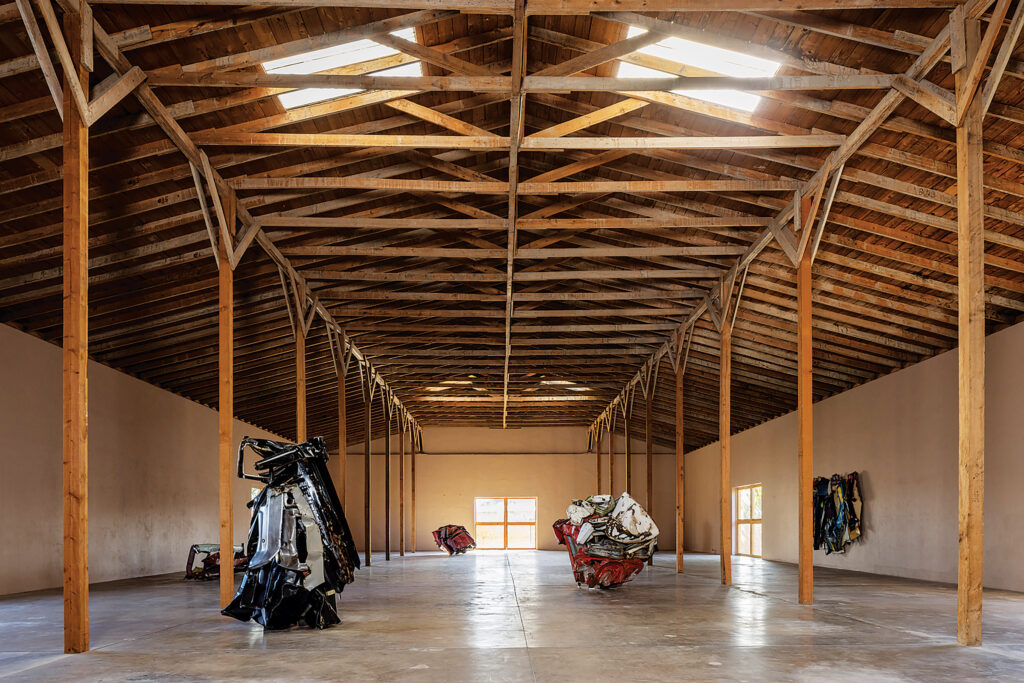
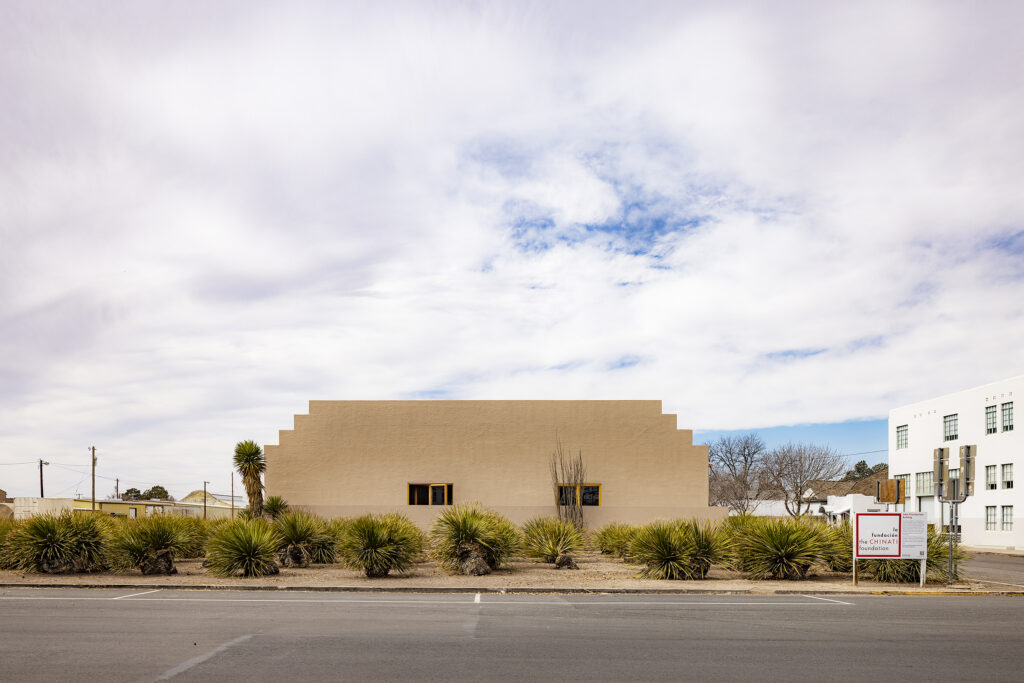
LOCATED IN THE center of town, the Chinati Foundation’s Chamberlain Building was built in 1940 as the headquarters of the Marfa Wool & Mohair Company. Originally composed of three separate structures: an office, a warehouse, and storage space, the building underwent a considerable restoration in the early 1980s to accommodate the work of John Chamberlain, best known for his abstract sculptures of crushed car parts.
Carried out by visionary artist and foundation founder Donald Judd, the original renovations included combining the three spaces, replacing sliding glass doors with four-panel windows, constructing an adobe wall along the back side, and planting grids of sotol plants in front of the building.
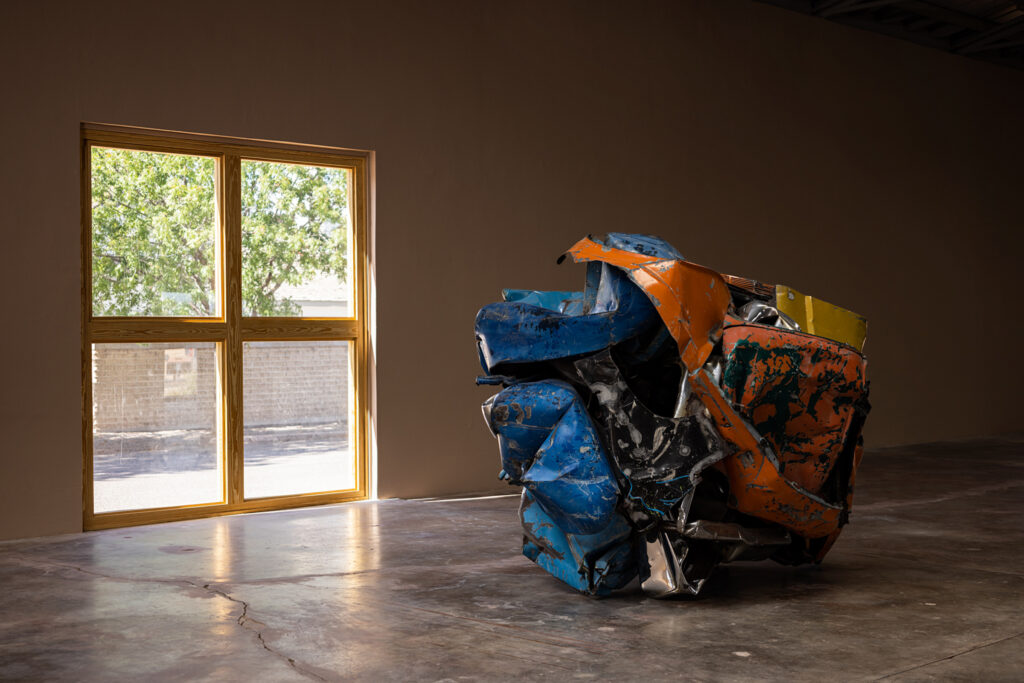
Once construction was completed, Chamberlain installed twenty-two of his large-scale, painted and chromium steel sculptures dating from 1972 to 1983, along with a monumental urethane foam and cotton canvas sculpture titled Barge Marfa (1983) that the artist carved on site and a monitor featuring Chamberlain’s only film—and the only work of time-based media in the foundation’s collection—made in 1969, The Secret Life of Hernando Cortez.
Nine of the twenty-two steel sculptures form the centerpiece of the installation as Texas Pieces—Chamberlain’s first colored metal constructions following a seven-year interruption during which he focused on working in other materials. Made on a ranch outside of Amarillo, Chamberlain’s Texas Pieces sprawl throughout the building, their vivid hues and dynamic compositions demonstrating his command of color and form. Judd was an early champion of Chamberlain’s work, declaring that “it was the only sculpture in which color was successful,” and noting that the artist’s use of the automobile was novel in the history of the medium. He included Chamberlain as one of three artists in his original vision for the Chinati Foundation as a place to display large-scale, permanent installations.
Judd’s commitment to this concept is evident in his renovation of the building, itself an example of his mastery of architecture and understanding of space, with a particular sensitivity to the way Chamberlain’s sculptures were installed. The Chamberlain Building is significant as the foundation’s first publicly accessible installation in Marfa when it opened in 1983 and it remains the largest collection of works by Chamberlain in the world.
The most recent restorations were extensive, but JC Stoddard Construction and architectural firm Schaum/Shieh working in partnership with Chinati maintained a material and aesthetic loyalty to Judd’s original designs. Among the more significant updates to the structure, the roof and skylights were replaced, and the underlying trusses and deck were reinforced.
Additionally, the concrete ramps, steps, and landings at the building’s entrance were reconstructed to be ADA compliant, ensuring accessibility for all. Cosmetic updates, like patching and painting of all exterior stucco and interior plaster, repairing the perimeter adobe wall, as well as the reconstruction of Judd’s famous pivot doors and replacement of the gravel and sotol plantings as designed by the artist, rounded out the work completed on the Chamberlain Building, which reopened to the public earlier this year and will be free to visitors for the remainder of 2022.