Intergenerational Generosity
Ann Lacy is the namesake for her foundation, a nonprofit that funds culture, arts, and education in Oklahoma and beyond. The Ann Lacy Foundation, run with the help of her grandson, Chris Lawson, is a family endeavor in encouraging community growth through the arts. Lacy arrived in Oklahoma in 1946 and has since developed her talents into creative roles—fashion designer, stand-up comedian, painter, and writer, just to name a few—making her a true renaissance woman. Now 91, Lacy is a treasure trove of tales from another time in Oklahoma City’s history. Jeremiah Davis, Oklahoma Contemporary Art Center’s artistic director, sat down with Lacy and Lawson to discuss the history and the future of their philanthropy.
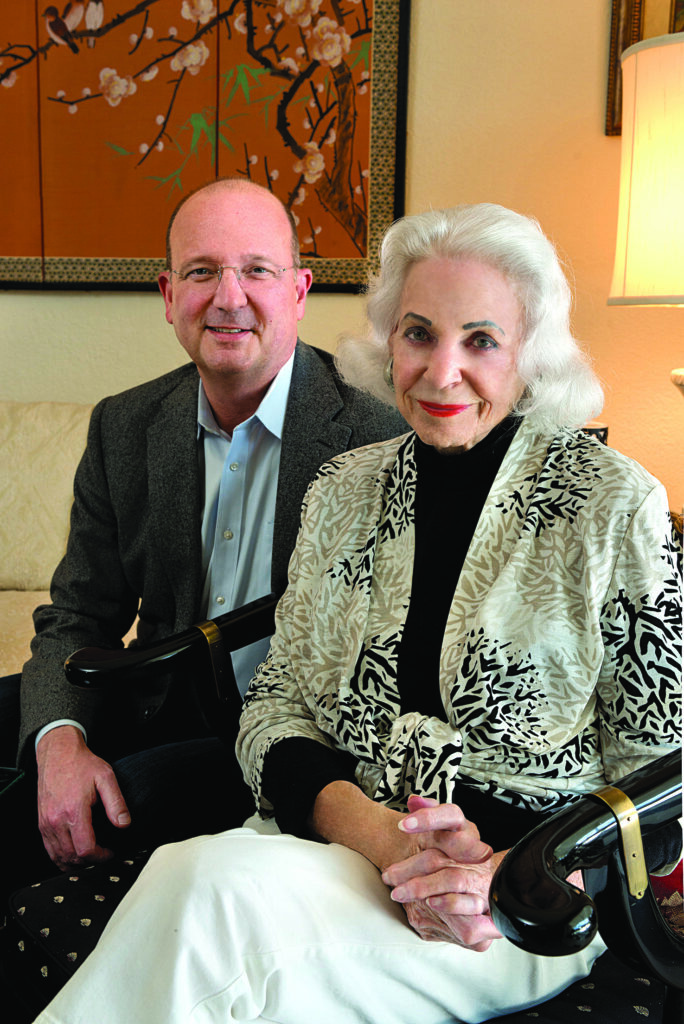
JEREMIAH DAVIS: Ann, how did you get your start and what was Oklahoma City like in the beginning of your career?
ANN LACY: I moved here because my brother wanted me to come here. He was working here, and this was at the end of the war, so I came to Oklahoma City to spend some time with him on my way to Dallas. Well, I never made it to Dallas. I started doing first one job and then another, and it seemed like somebody always needed me to do something—which would postpone my leaving.
CHRIS LAWSON: The city has changed tremendously. We could not have envisioned it in 1995 as we were starting
the first MAPS. I recently had some old friends come back to Oklahoma. They were shocked at all that has changed so much, and yet it’s so important for us to make sure that we have the cultural amenities that go along with the business amenities. We are making sure that we’re keeping an eye toward continuing to add to the richness of the city.
JD: What is the mission of the Ann Lacy Foundation?
CL: Supporting arts and education in Oklahoma City and beyond. We’re also very involved with the Opera in the
Ozarks, which Ann has been adviser to. That has connected us with Painted Sky Opera, which is trying to get off the ground here. We are enriching the culture of the city, which means we’re going to support the budding arts organizations and continue to support the big ones.
JD: I understand the arts are important to you. You’re an artist; you’ve written books. You’re a playwright.
AL: Yes, and I was doing stand-up comedy. I actually had a fan club following me around.
CL: She was good then. She still is good.
JD: That’s amazing.
CL: [Ann] has been involved in the arts. She was in Mummers Theater back in the beginning. She’s been involved in creating art for so long between the fashion and the sewing and the painting, and china painting. It’s a natural extension of what she finds interesting for herself. And, of course, she’s a great leader at getting everyone interested in what she’s interested in.
JD: Chris, in terms of the importance of cultural and art philanthropy, what do you think the added value is for our community, to put your philanthropic resources to work in the area of arts and culture?
CL: We provide access. Oklahoma City has survived many years with volunteer organizations bringing art to life, including donated art, sculptures, and paintings. Yet, if you want to bring up the quality, you’re going to have to pay
for it, and you get stuck in a quandary of, well, if we had to charge admission prices or if we had to charge the value of
this particular artist’s work, most people would not be able to access it, enjoy it, appreciate it, learn about it. So that kid who is growing up in Oklahoma City with limited access to the type of art that is experienced in larger cities—then
that’s a key for their future.
This conversation has been edited and condensed