A PHILOSOPHY FOR OUR TIME
Everything Old is New Again
LET’S CONSIDER THE private diaries of one of Rome’s greatest emperors, the personal letters of one of Rome’s best playwrights and wisest power brokers, and the lectures of a former slave and exile turned influential teacher. Against all odds and the passing of some two millennia, these incredible documents survive.
BY Ryan Holiday
What do they say? Could these ancient and obscure pages really contain anything relevant to
modern life? The answer, it turns out, is yes. They contain some of the greatest wisdom in the history
of the world.
Together these documents—Marcus Aurelius’ Meditations, Seneca’s letters, and Epictetus’ lectures—constitute the bedrock of what is known as Stoicism, an ancient philosophy that was once one of the most popular civic disciplines in the West, practiced by the rich and the impoverished, the powerful and the struggling, alike in the pursuit of the Good Life. But over the centuries, knowledge of this way of thinking, once essential to so many, slowly faded from view.
Except to the most avid seekers of wisdom, Stoicism is either unknown or misunderstood. Indeed, it would be hard to find a word dealt a greater injustice at the hands of the English language than “stoic.” To the average person, this vibrant, action oriented, and paradigm- shifting way of living has become shorthand for “emotionlessness.” Since the mere mention of philosophy makes most people nervous or bored, Stoicism on the surface sounds like the last thing anyone would want to learn about, let alone urgently need in the course of daily life.
In fact, it is exactly what we need. This philosophy asserts that virtue (meaning, chiefly, the four cardinal virtues of self-control, courage, justice, and wisdom) is happiness, and it is our perceptions of things—rather than the things themselves—that cause most of our trouble. Stoicism teaches that we can’t control or rely on anything outside what Epictetus called our “reasoned choice”— our ability to use our reason to choose how we categorize, respond, and reorient ourselves to external events.
Certainly, many of history’s great minds not only understood Stoicism for what it truly is but sought it out: George Washington, Walt Whitman, Frederick the Great, Adam Smith, Immanuel Kant, Thomas Jefferson, Matthew Arnold, Ambrose Bierce, Theodore Roosevelt, Ralph Waldo Emerson. Each read, studied, quoted, or admired the Stoics.
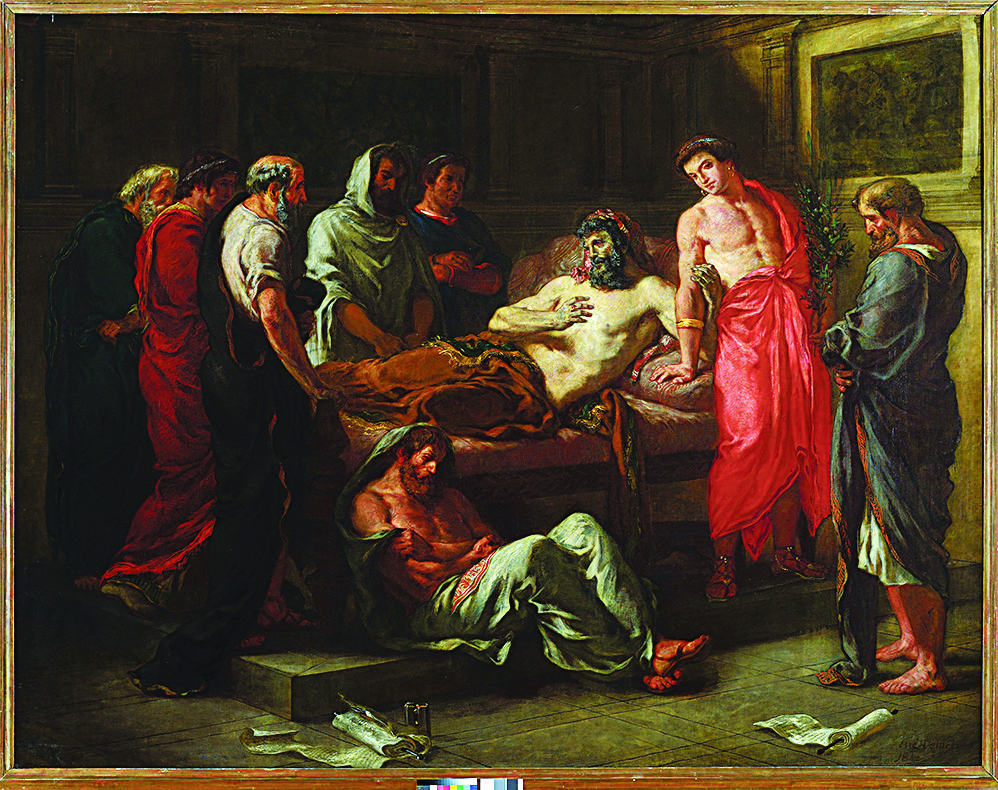
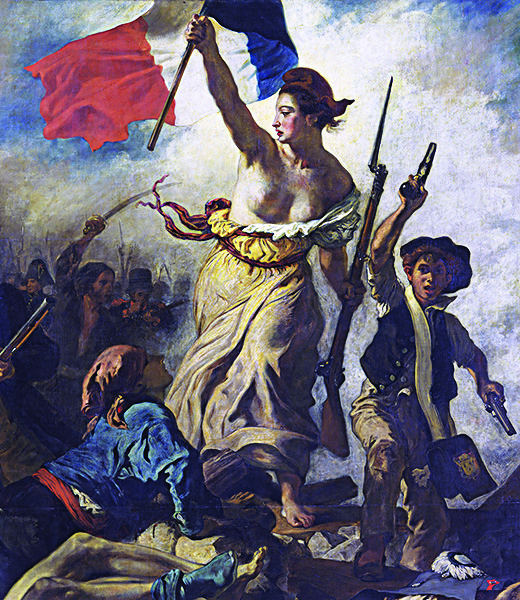
Eugène Delacroix, the French Romantic painter, took it further, saying that Marcus Aurelius’ Meditations was his “consoling religion of resignation.” And while resignation sounds negative, it was undoubtedly this philosophy which guided him through the aftermath of his famous painting Liberty Leading the People, which the French government banned for eighteen years. Delacroix would repay his debt to the Stoics
with perhaps his finest painting, Last Words of the Emperor Marcus Aurelius, which now sits in the Musée des Beaux-Arts de Lyon.
Similarly, the ancient Stoics themselves were no slouches. As we saw above, the three most prominent names—Marcus Aurelius, Epictetus, Seneca—belonged to, respectively, a Roman emperor, a former slave who triumphed to become an influential lecturer and friend of the emperor Hadrian, and a famous playwright and political adviser. All three were pragmatists and focused on a series of questions not unlike the ones we continue to ask ourselves today: “What is the best way to live?” “What do I do about my anger?” “What are my obligations to my fellow human beings?” “I’m afraid to die; why is that?” “ How can I deal with the difficult situations I face?” “How should I handle the success or power I hold?”
By controlling our perceptions, the Stoics tell us, we can find mental clarity. In directing our actions properly and justly, we’ll be effective. In using and aligning our will, we will find the wisdom and perspective to deal with anything the world puts before us. It was their belief that by strengthening themselves and their fellow citizens in these disciplines, they could cultivate resilience, purpose, and even joy.
“The person who has practiced philosophy as a cure for the self becomes great of soul, filled with confidence, invincible—and greater as you draw near,” Seneca wrote. He called philosophy both a practice and a cure, two words that invoke getting better but also overcoming resistance and struggling to improve each and every day. Any bold creative endeavor will inevitably face setbacks. Every artist knows the struggle of facing the blank page or canvas each day, and uncertainty, pain, and the unexpected are part and parcel of what they do. It’s why, for an artist, the Stoic way of life is a must-have in their tool kit—it’s the path to that place of inner confidence and greatness of soul that Seneca talked about.
Now the mantle is ours to pick up and carry and do what we can.
In their writings—often private letters or diaries—and in their lectures, the Stoics struggled to come up with real, practicable answers to life’s questions. They ultimately framed their work around a series of exercises in three critical disciplines.
The Discipline of Perception: How we see and perceive the world around us
The Discipline of Action: The decisions and actions we take—and to what end
The Discipline of Will: How we deal with the things we cannot change, attain clear and convincing judgment, and come to a true understanding of our place in the world