EDGAR HEAP OF BIRDS ARRIVES AT OKLAHOMA CONTEMPORARY
Natural Anthem
Although he has reached an international level of renown, Hock E Aye Vi Edgar Heap of Birds has purposefully deviated from the paths expected of a major contemporary artist, finding instead that collaboration and community are at the forefront of his practice.
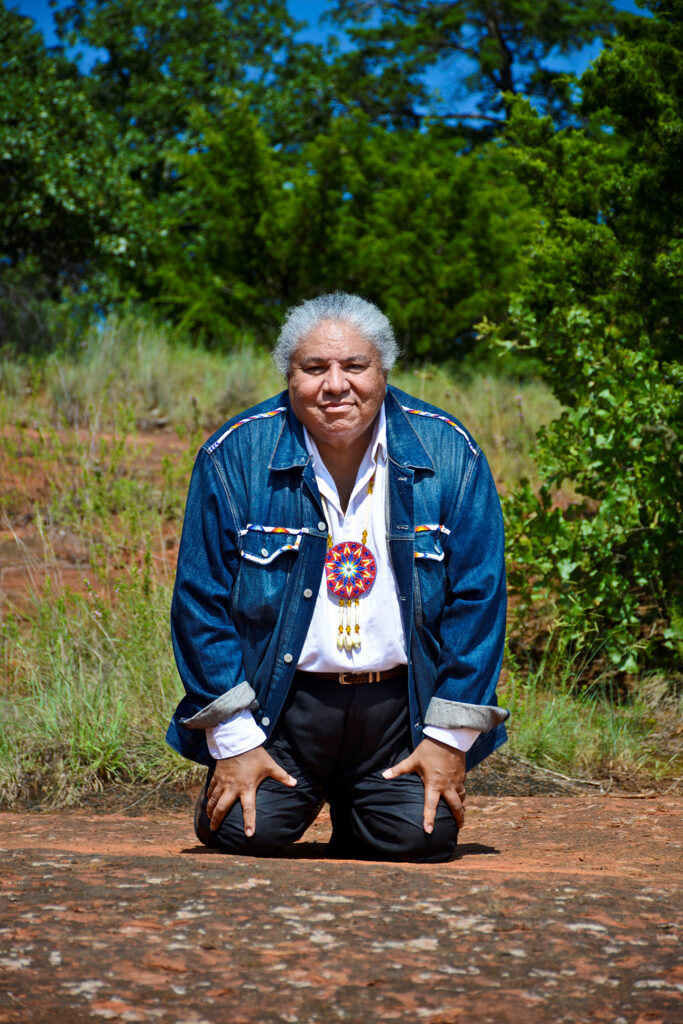
ALTHOUGH HE HAS reached an international level of renown, Hock E Aye Vi Edgar Heap of Birds has purposefully deviated from the paths expected of a major contemporary artist. His searing works range from public signs that bring attention to the forced relocation of the Trail of Tears to text-based prints on Indigenous resilience, and he has exhibited his work across the globe, from the 2007 Venice Biennale to a 2019 solo show at MoMA PS1 in New York. Heap of Birds studied at the prestigious Royal College of Art in London and Tyler School of Art at Temple University in Philadelphia, but in the early 1980s, he moved to Oklahoma, where he has lived ever since.
He sees this separation from the art world’s hotspots as bolstering, not limiting. His work uses the minimalism of conceptual art to confront histories of violence and erasure and celebrate the vibrancy of Indigenous culture. As a citizen of the Cheyenne and Arapaho Nation, he has a viewpoint that comes from within the tribal lands and its community, where he is a ceremonial leader.
“When you live in Chelsea [New York], the apparatus is your main gig,” he says. “I’m not doing that, and I feel there’s more here than that. There’s the real world, there’s the tribal world, there’s the natural world, and all these other kinds of events—the solstice, the equinox—that are so significant. That’s what I’ve been immersed in for forty years rather than an art career.”
In speaking with Heap of Birds, one finds that his connection to his culture and artistic creation comes up frequently, where collaboration and community are at the forefront rather than any individual prestige. He cited his “ghost prints”—which arguably have received the most institutional acclaim—the monoprints from secondary plate pulls that leave the colors and text fainter, as being similar in process to the “collaborative movements of everybody through an evening” at a powwow. He engages with a wide breadth of media using this approach.
“I think artists should be able to make art out of anything,” he says. “It’s not so much like, “Where’s my golden paint?” or “Where’s my foundry?” and all this jazz. I do pretty much anything, and in the tribal and ceremony way, when you need to go make a fire or make a prayer, you can’t fuss around about how do you do that.”
Even with this deep connection to Oklahoma and its people, his work has not been widely exhibited in the state. Oklahoma Contemporary in Oklahoma City is now opening a sprawling retrospective called Honor Song that will fill every gallery and the neighboring Campbell Art Park. Staggered openings of these spaces will occur from January 30 to April 24, 2025, and the main exhibition will be on view through October 20, 2025.
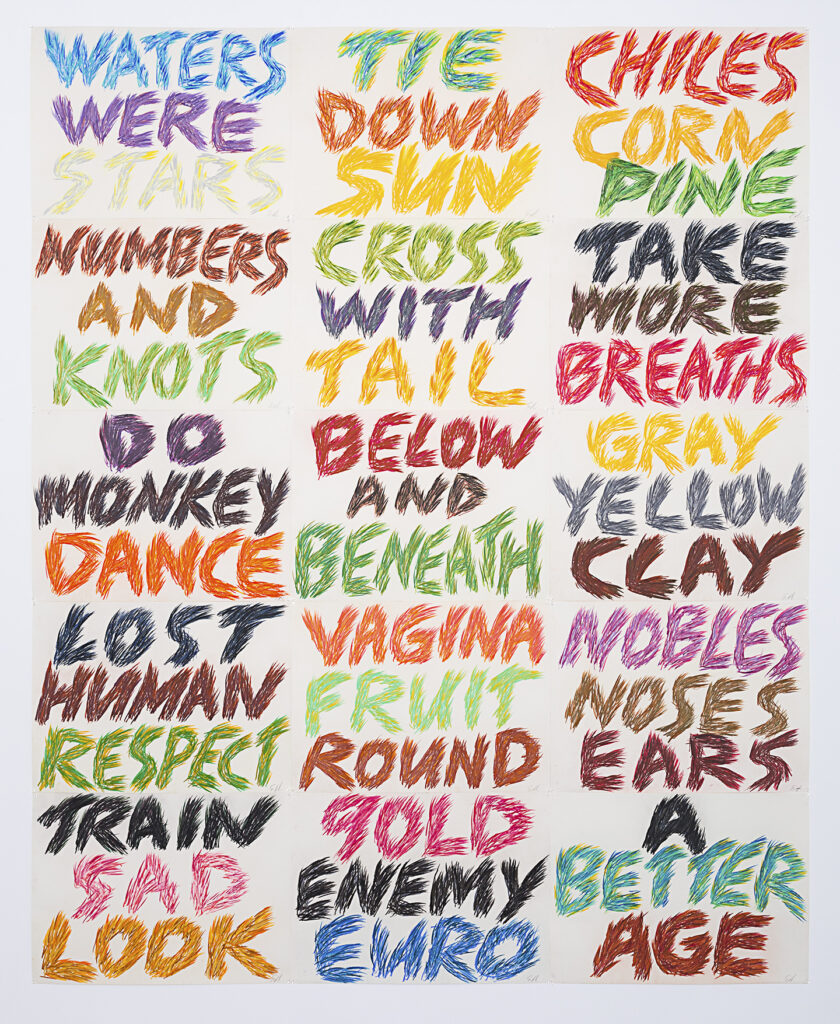
“His work is ultimately about trying to draw attention to other people’s stories, using his words in ways that are enriched by his perspective,” says exhibition curator Pablo Barrera. “He enlivens these things that people tend to shy away from but presents them in an unflinching but very humane way that, instead of creating discomfort, I feel invites folks to engage, understand, learn from, and even heal.”
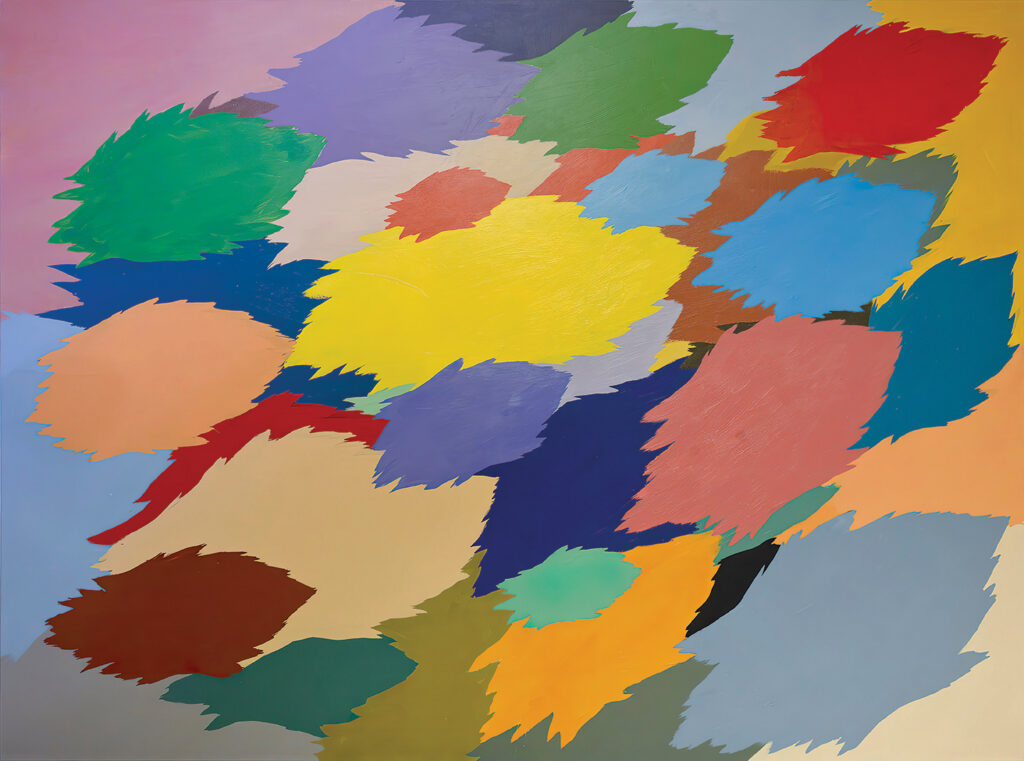
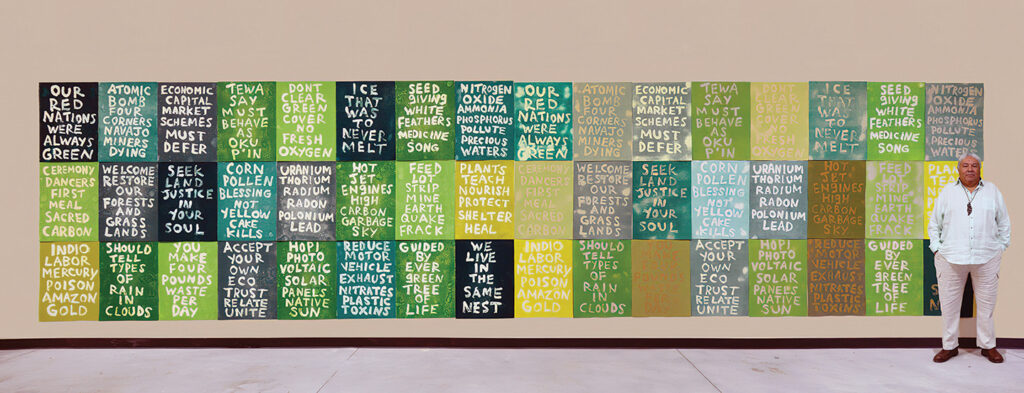
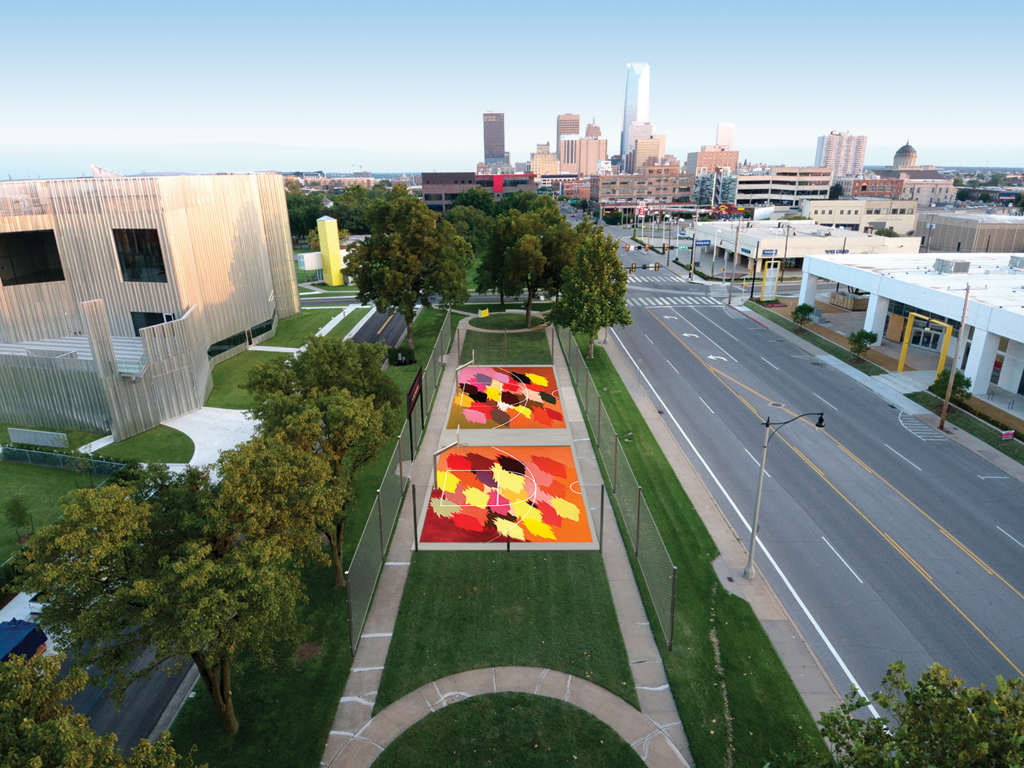
While Honor Song will highlight his art made with a lifelong activist’s eye—text proclamations such as “atomic bomb four corners navajo miners dying” and “our red nations were always green” read like protest anthems—the first work visitors will encounter is an outdoor basketball court with the backboards and surface painted to evoke tribal sovereignty. The diversity of the work reflects Heap of Birds’ commitment to accessibility in even his most abstract art, yet also demonstrates that Native American art is never one thing, despite how it is often presented in museums.
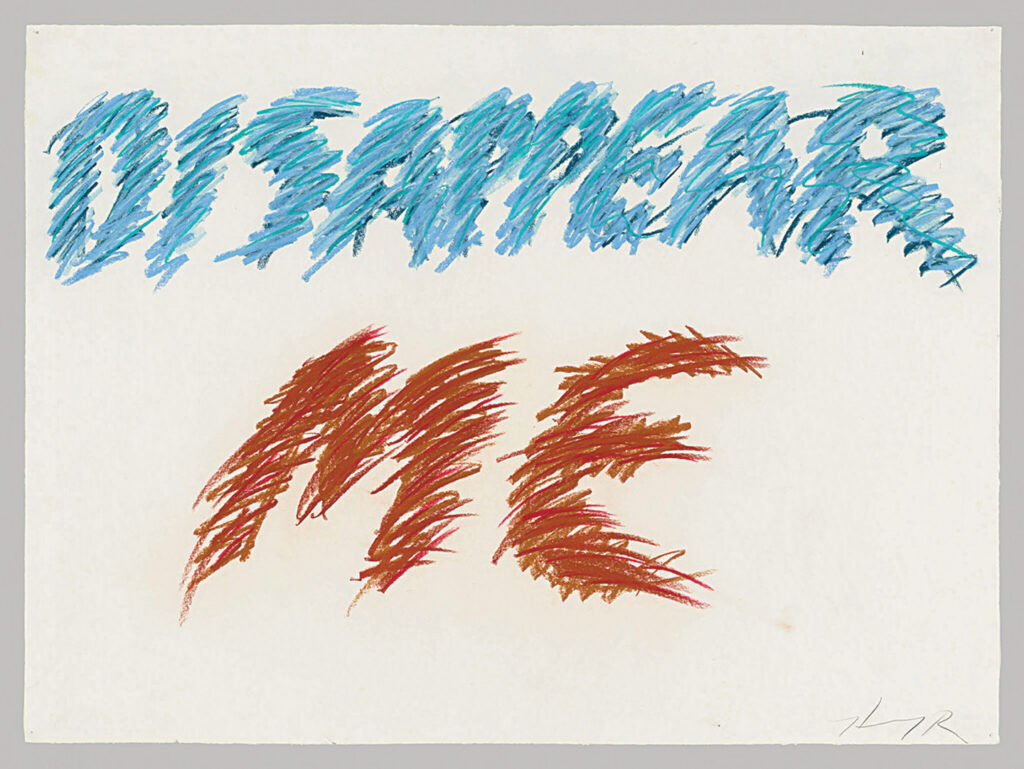
“I think the perspective is usually to show arts and crafts, and I think that’s really important,” says his wife, Shanna Ketchum-Heap of Birds, a scholar on contemporary Indigenous visual art. “But art with a contemporary edge like Edgar’s, we need it to have that perspective that gives rise to contemporary concerns, like social and political issues that tribes are contending with now.”
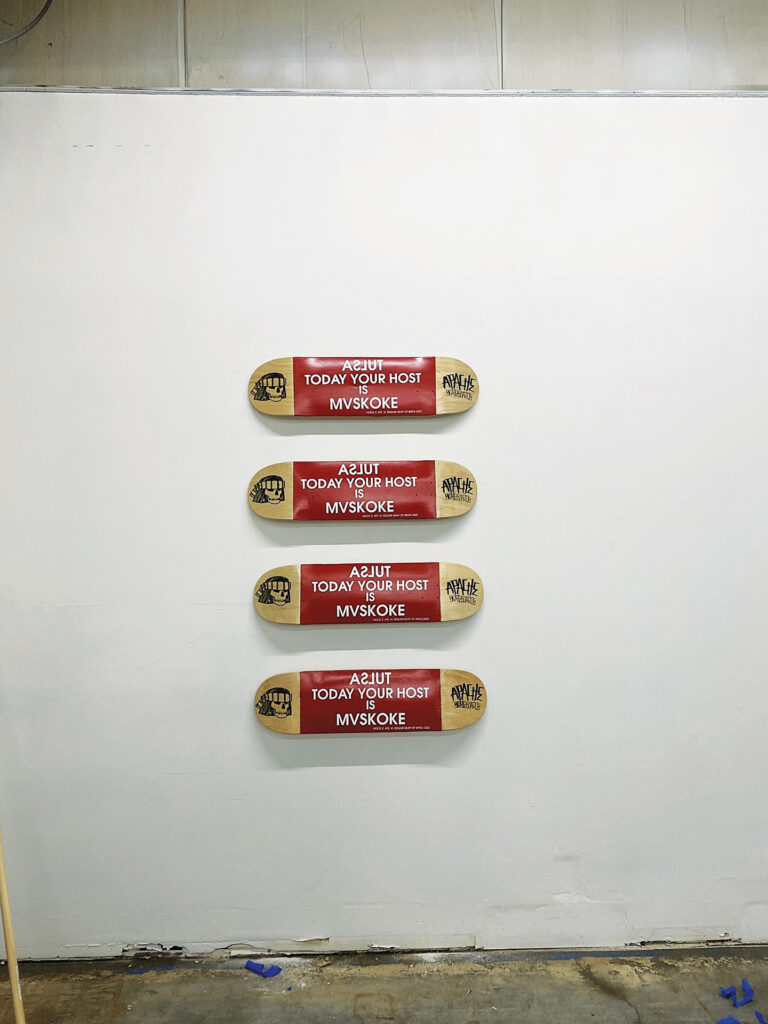
Recently retired after thirty years of teaching at the University of Oklahoma, Heap of Birds is still pushing these boundaries of what it means to live as an artist. “Life is a big, big thing; it’s not a tiny, little masterwork,” he says. “Being a human being is a really broad job.”
Hock E Aye Vi Edgar Heap of Birds: Honor Song will be on view at Oklahoma Contemporary through October 20, 2025. okcontemporary.com
Printer Paper
PRINTMAKING AS AN OUTLET
PRINTMAKING IS A major part of Edgar Heap of Birds’ practice, but rather than use it to simply replicate an image over and over, he engages with it as a space for collective action and experimentation.
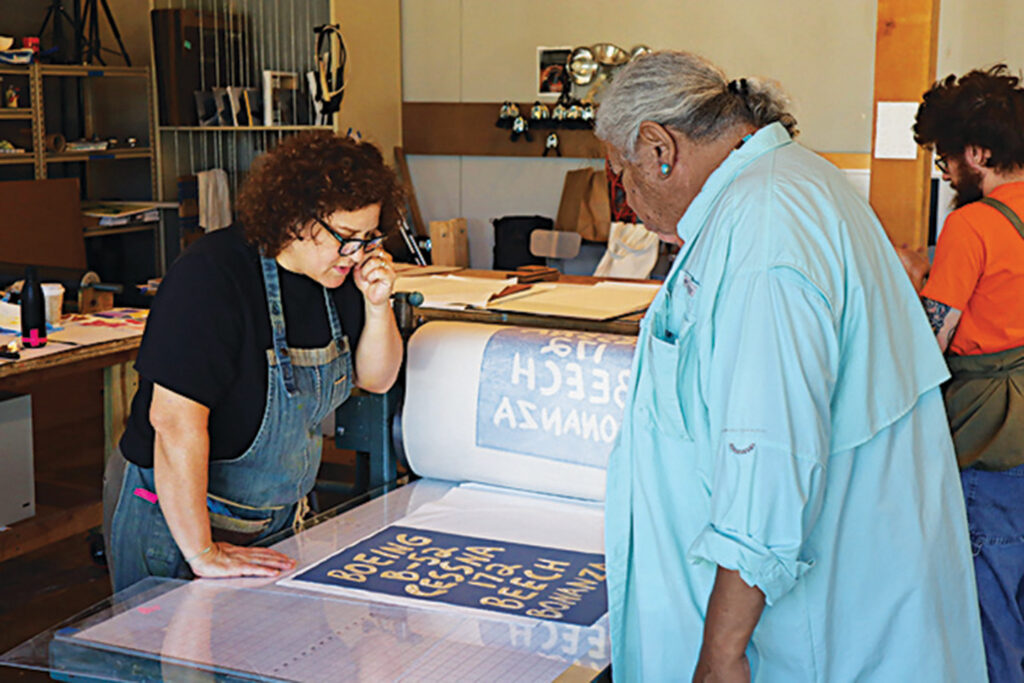
“I print like I paint,” he says. When working with other printmakers, he wants their own creativity to come through. “I don’t really tell them, ‘Make it like this.’ I like seeing things happen.”
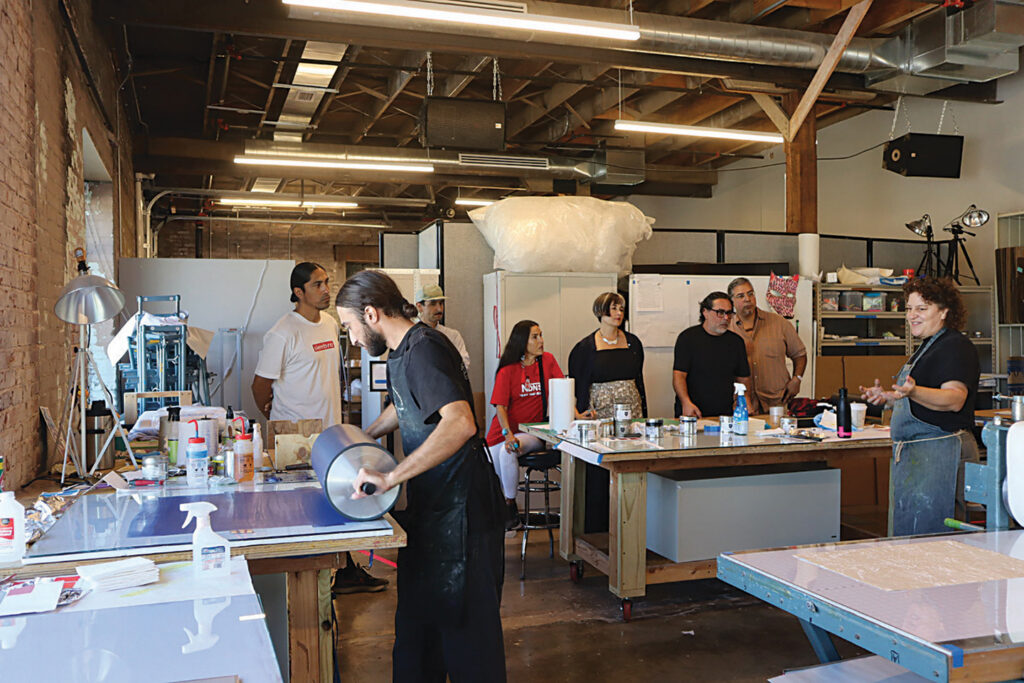
Ahead of the opening of his retrospective, a group of local, national, and international curators, educators, and printmakers were invited to Oklahoma Contemporary Arts Center to get hands-on with this approach. The workshop was held October 11–13, 2024, alongside Indigenous Peoples’ Day weekend, and was organized with support from the Getty Foundation through its Paper Project Initiative.
“We explored some of his ideas of knowledge transfer and how he captures narrative and story,” says curator Pablo Barrera.
The participants were joined by Heap of Birds and master printer Marina Ancona of 10 Grand Press and assistants Conor Flynn and Wesley Kramer, who led them in learning about viscosity monotype and intaglio printmaking, techniques not widely used in printmaking in the state. They used plates based on Heap of Birds’ distinctive ink drawings with ink of bold text evoking Indigenous identity, history, and issues. One is emblazoned: “COLD / WAR / WEAPONS / AERO / YEARS / NATIVE / LABOR.”
The limited-edition portfolio of prints is being presented in Oklahoma Contemporary’s Learning Gallery as part of Honor Song, offering another insight into how collaboration as an Indigenous value is deeply embedded in the artist’s work. As Barrera says, “Edgar’s practice is something that I think is far more fascinating than just the outcomes.” – ALLISON MEIER