Drawing a Blank
Without legislative support for the arts in public schools, Oklahomans are forced to get creative.
BY Peggy Dodd
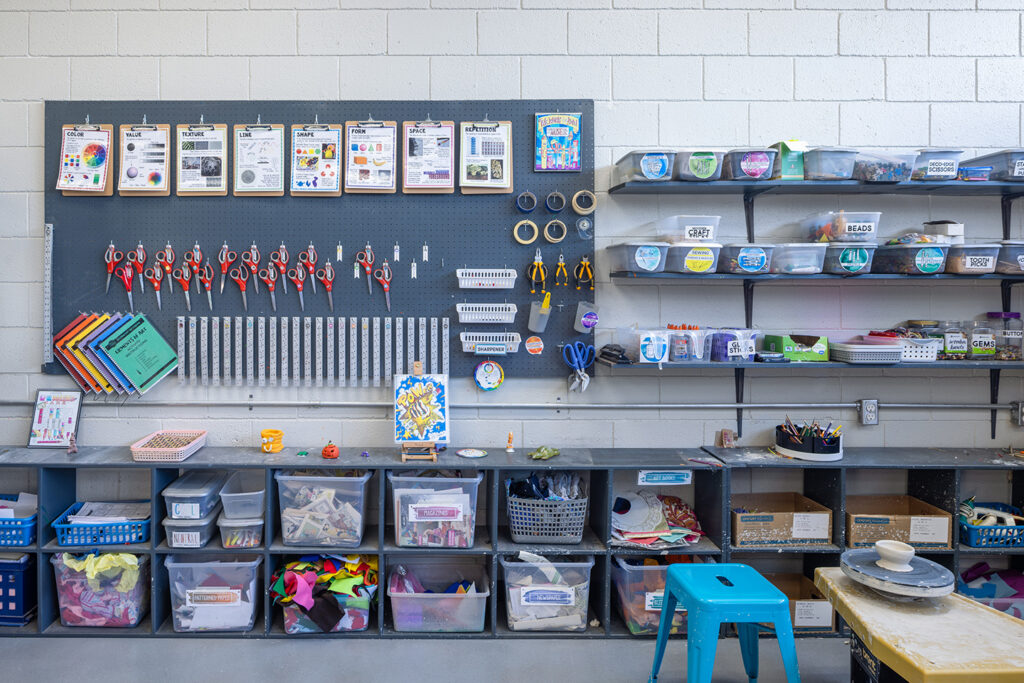
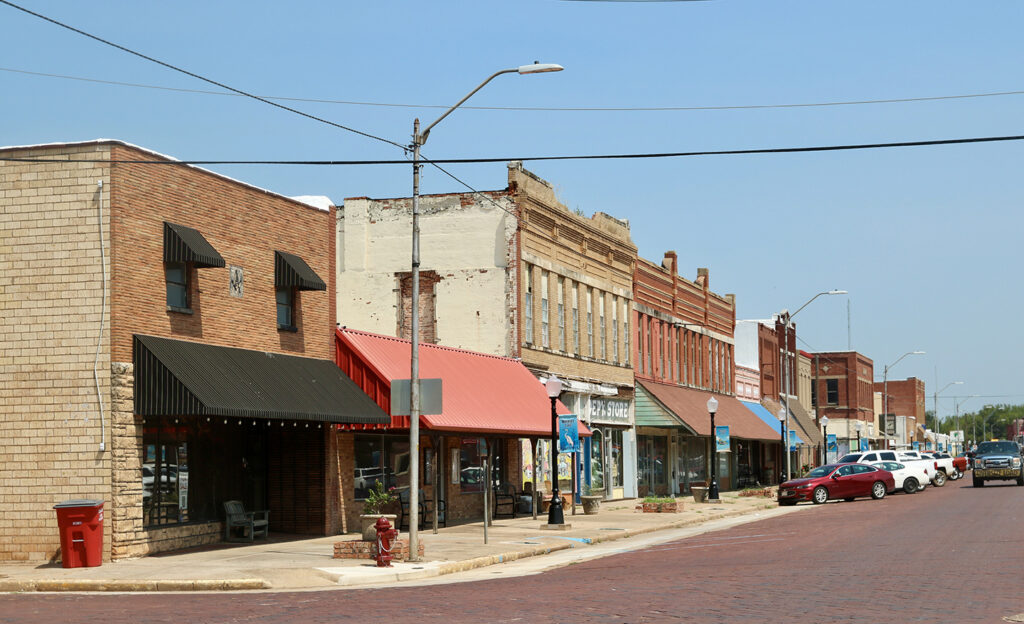
IN A SMALL rural town near the Texas border, art teacher Glenn Howard is working to preserve the arts for public school students. In Waurika, Oklahoma, population 1,800, the high school has only intermittently offered art classes over the years, facing a lack of supplies and funding.
Under requirements set by the Oklahoma legislature in 2024, fine arts credits can fulfill some graduation requirements, but are completely optional. Beginning this year, Oklahoma won’t require any fine arts credits to earn a high school diploma.
The decision to offer fine arts classes will now be left up to school districts across the state, leaving advocates worried about the future of drama, art, and music opportunities in public schools. Rural districts with already limited resources, like Waurika, are especially at risk.
“If we see these classes are no longer a requirement, then we’ll probably see fewer students enroll,” says Jennifer Allen-Barron, arts education director for the Oklahoma Arts Council. She explained that, if enrollment gets too low, schools could cut classes, narrowing opportunities for kids who love the arts.
Anita Arnold, executive director of the Black Liberated Arts Center (BLAC), says the arts are more than just a creative outlet, citing that teachers use music and drama as tools to “engage the students and tap into their full potential,” helping kids retain math and science lessons. BLAC is an Oklahoma-City based nonprofit that has facilitated arts education opportunities across the state for the last fifty years.
When Wilson Arts Integration Elementary School, an urban school in Oklahoma City, began incorporating the arts into every subject, test scores dramatically increased. Arnold helped introduce the program at the school in the late 1990s, which still operates today as part of a national partnership with the John F. Kennedy Center for the Performing Arts in Washington, D.C.
According to state data, Wilson Elementary consistently out-performs the majority of public schools in Oklahoma. In 2024, Wilson’s test scores were 72% higher than the state average.
“Every student deserves access to a high-quality education, especially one that includes the arts, so they can explore their creativity and develop critical thinking skills,” says Dr. Molly Hart, superintendent of Utah public schools. Utah high schoolers must earn 1.5 credits in the arts to receive a diploma, some of the most robust requirements in the nation.
U.S. News & World Report ranks Utah fifth in the nation for the quality of its public schools. Meanwhile, Oklahoma schools rank forty-eighth on the list.
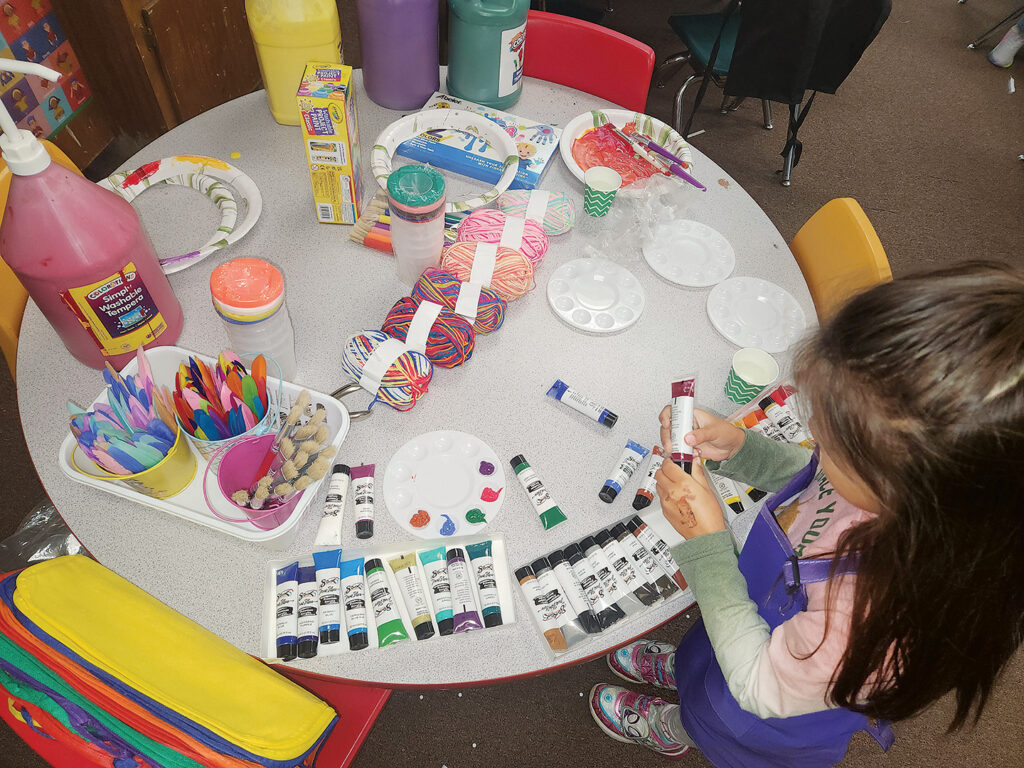
Federal data shows in 2024, Oklahoma ranked below the national average in reading and math scores. Oklahoma is also ranked as one of the lowest spending states for total expenditures per student across public elementary and secondary schools.
Limited Resources
Oklahoma has long struggled to teach public school students even the basics, consistently ranking below the national average on standardized test scores. Last year, Oklahoma’s education department quietly implemented a new scoring system that reduced the amount of knowledge students were required to demonstrate in order to score at a proficient level. Even still, federal data shows that, in 2024, Oklahoma ranked below the national average in reading and math. Oklahoma is also ranked among the lowest states for total expenditures per student across public elementary and secondary schools.
Even with the promising test scores from Wilson Elementary, not all students have access to arts courses within Oklahoma public schools. According to data from the advocacy group Oklahomans for the Arts, one in four schools does not offer any fine art courses, leaving 17 percent (nearly 117,000 students statewide) of the state’s students without access to the arts, compared to only 2 percent of students in neighboring Missouri (as reported by the Arts Education Data Project).
It Takes a Village
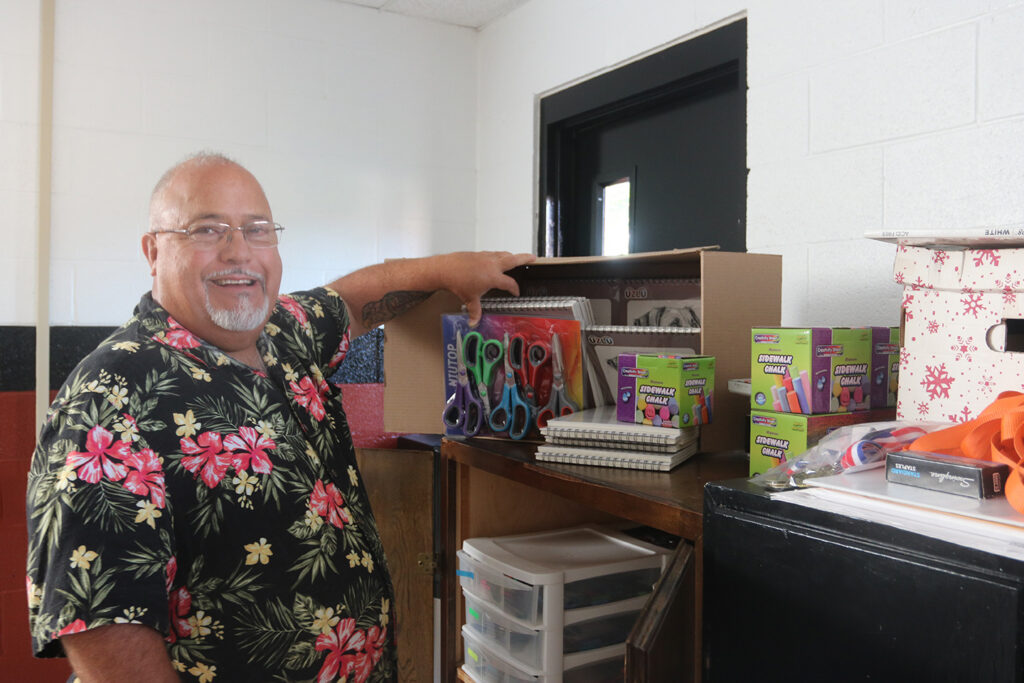
Last year, Howard returned to Waurika to teach high school and middle schoolers after leaving for a coaching job in a neighboring school district. He returned to an art program that had no supplies.
“Our community has really helped, buying supplies and doing fundraisers,” Howard says. “I’m trying to make sure we apply for every grant that we can, and find alternative funding sources.” He added that the school administration has been supportive of his efforts. He was able to restart the program with just the essentials—pencils and sketchbooks—to hold a basic drawing class for students.
Art is just one of many duties Howard juggles at the school. His days begin at 6:30 a.m. at the Waurika bus barn, transporting students to school. He also teaches a few computer courses before ending his day at 4:30 p.m.
Clay Forst, a local rancher and president of the Waurika school board, says it’s a challenge for rural schools to find qualified math and science teachers, let alone someone to teach art.
Despite the changes to Oklahoma’s graduation requirements, Forst says Waurika is committed to offering art classes. “Anything you can put in front of students to broaden their minds and broaden their perspective outside our little hometown is a great thing,” Forst says.
In a rural school district just fifty miles south of Oklahoma City, Valerie Beck taught visual arts to over a thousand students in Lindsay, Oklahoma. She retired after twenty years of teaching, and now judges statewide youth arts contests and serves on committees to support fine arts education in Oklahoma. From problem-solving skills to discovering individualism, Beck says art projects teach students the value of practice and hard work, but worries now about the future of funding without the requirement for graduation. “It’s always the first thing to go,” Beck says. “They’re not gonna knock out football.”
The Frontier and ArtDesk contacted the director of fine arts at the Oklahoma State Department of Education for an interview. The administrator, waiting for approval from the agency’s communication’s department, stopped responding to messages. The Oklahoma Department of Education did not respond to requests for comment.
Grants and Private Donors Pitch In
Though the future for arts education in public schools is uncertain, Oklahoma has a long history of people championing arts opportunities within their own communities. Lifelong Oklahoman Carolyn Watson worked to improve the quality of life for residents in rural southern Oklahoma by advocating for learning opportunities not normally available in students’ everyday classrooms, including arts and culture.
The Carolyn Watson Rural Oklahoma Community Foundation, established in 1995 and managed by the Oklahoma City Community Foundation, began its scholarship program in 2010. Since then, $3.4 million in scholarships have been awarded, $1.8 million in community grants have been distributed, and 541 classrooms have been awarded grants across the state. The funds endowed in Watson’s name provide teaching enhancements for schools, promote literacy programs at public libraries, and support higher-education efforts of students in rural communities through scholarships.
When students can’t get to the arts, Oklahoma Children’s Theatre brings the art to them. The theater takes its shows on the road to rural and low-income elementary schools, sometimes including educational workshops from the actors.
“No elementary school has a theater program,” says Mollie Reid, director of programs at Oklahoma Children’s Theatre. “So no matter where we go, the art we are providing is something [students] do not have access to within the school.”
The Oklahoma Arts Council is also working to implement the arts as part of the core curriculum in every Oklahoma school. The council invested more than $194,000 in rural programs during fiscal year 2024, accounting for 44 percent of the total nonprofit investment in arts education. One rural elementary school used the money to pay for programs that teach students stop-motion animation, mask-making, and music. Another school hired an artist to teach.
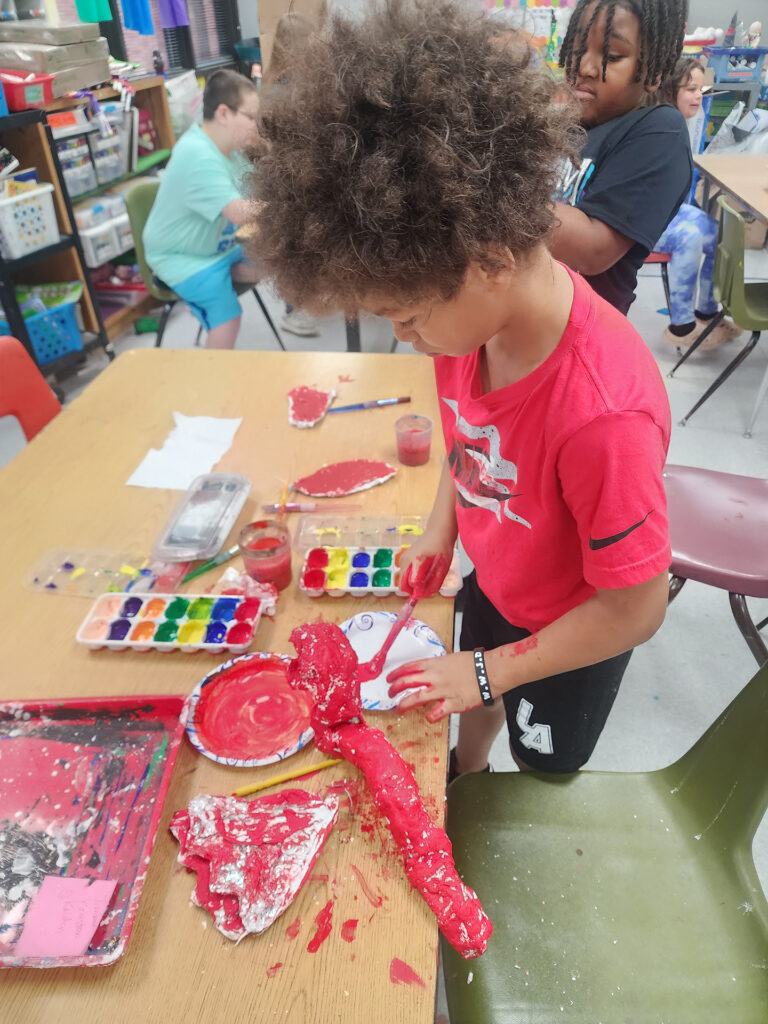
Allen-Barron points out there’s also a link between arts programs and student behavior, suggesting that fine arts courses can help motivate troubled kids to show up to school.
“The arts offer students a chance to express something complicated in a safe and healthy way,” Allen-Barron says. “I hope that school leaders looking for solutions to absenteeism and mental health issues will find some answers in the arts, because we see so often what an impact it can have for students dealing with those things.”
In Waurika, students painted a mural in the center of town last spring, and there are plans for another community mural this fall. The high school moved Howard into a larger classroom and is investing in new art tables for the students. Next, he hopes to offer a ceramics class.
As for the return on investment in the arts? Beck says this is the part that comes easily. “Anything you put into art will pay itself back out into the kids. They’ll use that their whole life.”
This story was produced in partnership with the nonprofit newsroom The Frontier, a grantee of Kirkpatrick Foundation. – WITH ADDITIONAL CONTRIBUTIONS FROM BRIANNA BAILEY