Doin’ fine
Private and public investment elevates Oklahoma City into an arts destination
OKLAHOMA CITY IS making moves that matter. A $26 million capital campaign for the downtown Oklahoma Contemporary Arts Center marks the city’s first significant investment in the arts since the 2002 Oklahoma City Museum of Art building.
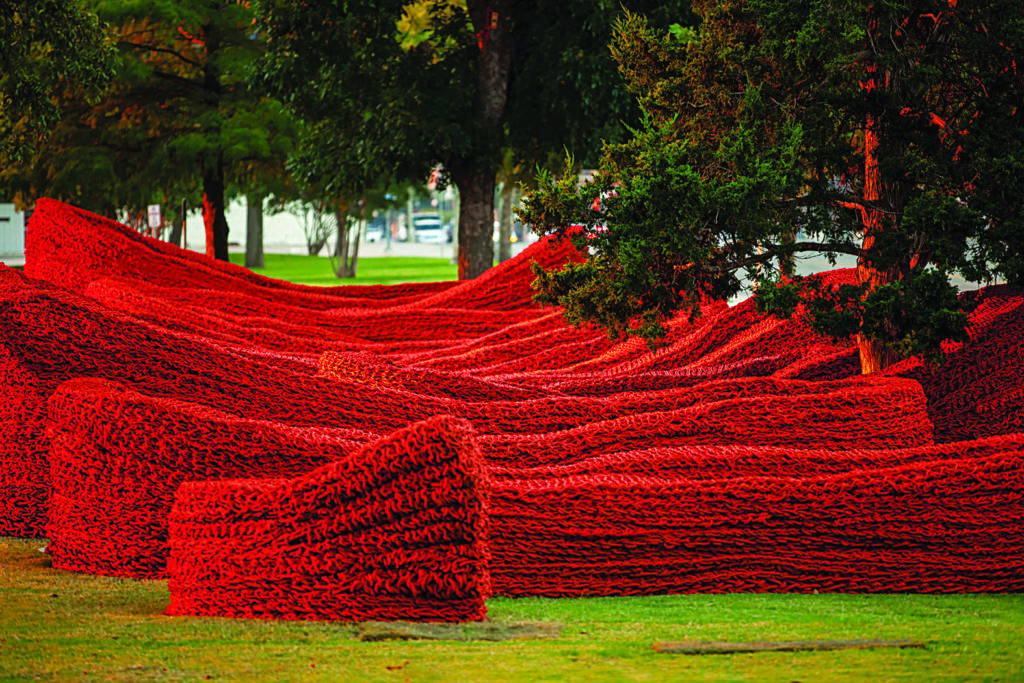
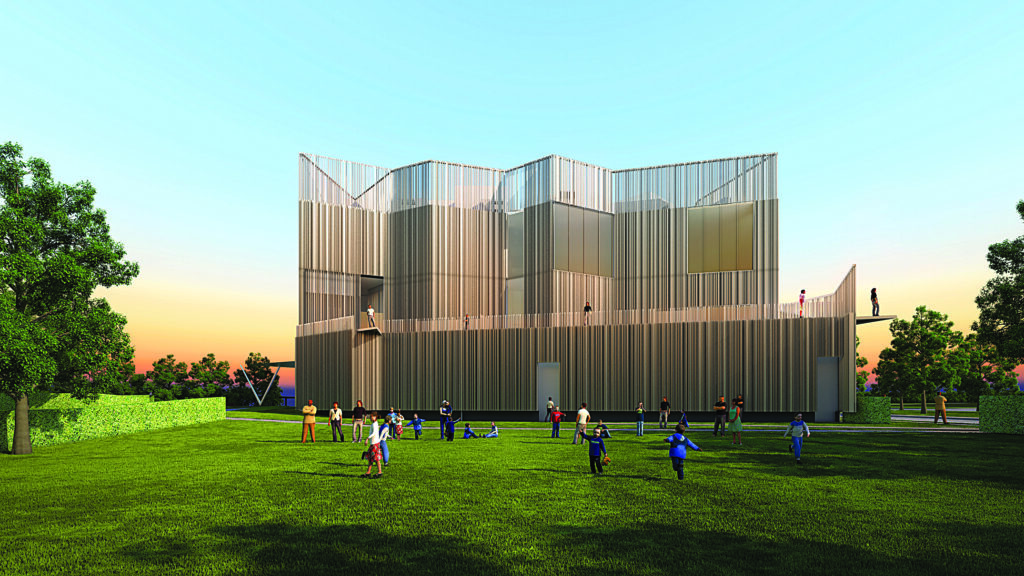
The brand-new Oklahoma Contemporary campus will open in the fall of 2019. The building’s metal exterior will reflect Oklahoma’s technicolor skies and become a work of art in itself. Galleries, classrooms, and performance spaces will be enveloped inside the building’s origami-like structure. Oklahoma Contemporary is currently located on the grounds of State Fair Park and has recently exhibited internationally known artists such as Melvin Edwards, Jeffrey Gibson, and Summer Wheat. Works by Tomás Saraceno and Orly Genger have been installed at Campbell Art Park, a grassy expanse in downtown Oklahoma City adjacent to the site of the new building.
The center’s curatorial and exhibitions director, Jennifer Scanlan, is a former curator at the Museum of Arts and Design and a former independent curator in New York. “Inclusivity is a core value. Looking towards the new building, and with the addition of new staff, we’re able to have more outreach. We definitely have the new building in our sights, and inclusivity is part of our strategic thinking for it.”
The One Percent for Arts ordinance in Oklahoma City requires all improvements made to city infrastructure to include 1 percent of the budget for public art. With this investment, public art and murals abound.
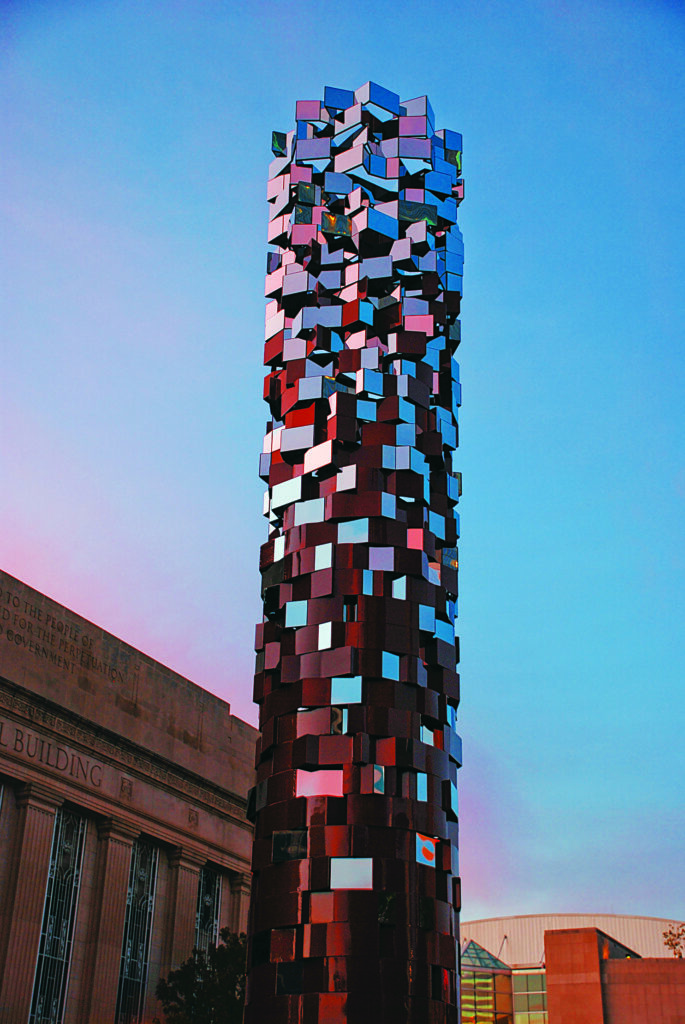
Installed in 2012 outside the Civic Center Music Hall, the site-specific sculpture Where the Earth and the Sky Meet, by Phillip K Smith III, embodies the distinctive red dirt and the expansive blue skies of Oklahoma. Smith, a Los Angeles artist, is known for his large-scale works at Desert X in the Coachella Valley and Joshua Tree National Park.
Also downtown, in the central business district, famed Condé Nast editorial director and sculptor Alexander Liberman installed Galaxy in 1985. At forty-five feet tall and in his hallmark “Liberman red,” the sculpture is an emblematic work for this artist.
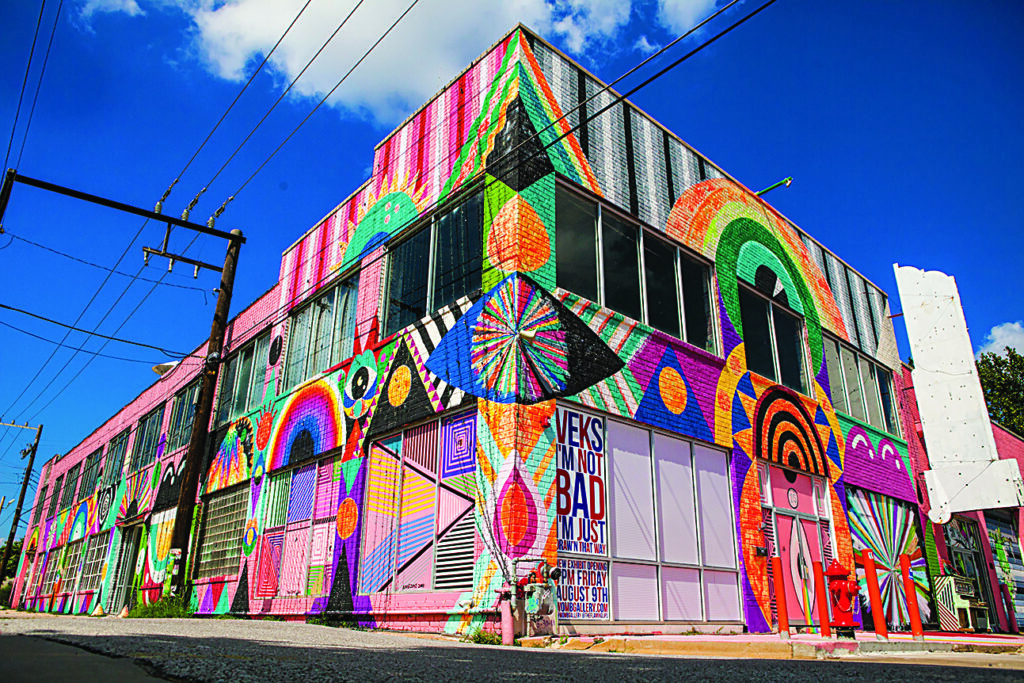
A mile or so north, in Automobile Alley’s vibrant shopping district, internationally renowned muralist Maya Hayuk adorned a building once known as the Womb. Its vibrant colors and pink exterior express the explosively creative personality of rocker Wayne Coyne, lead singer of the Oklahoma City–based band the Flaming Lips; who commissioned the piece in 2011.
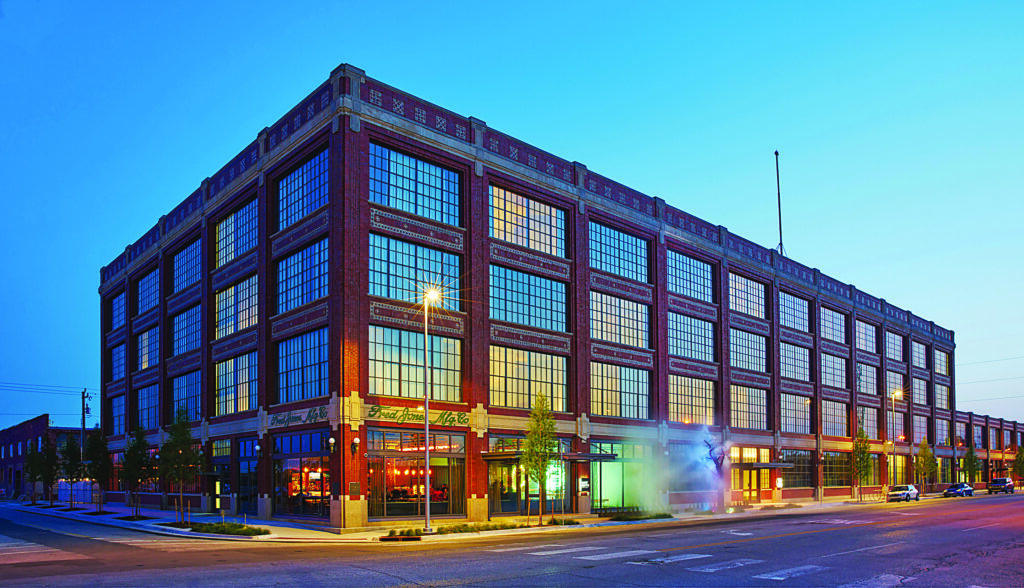
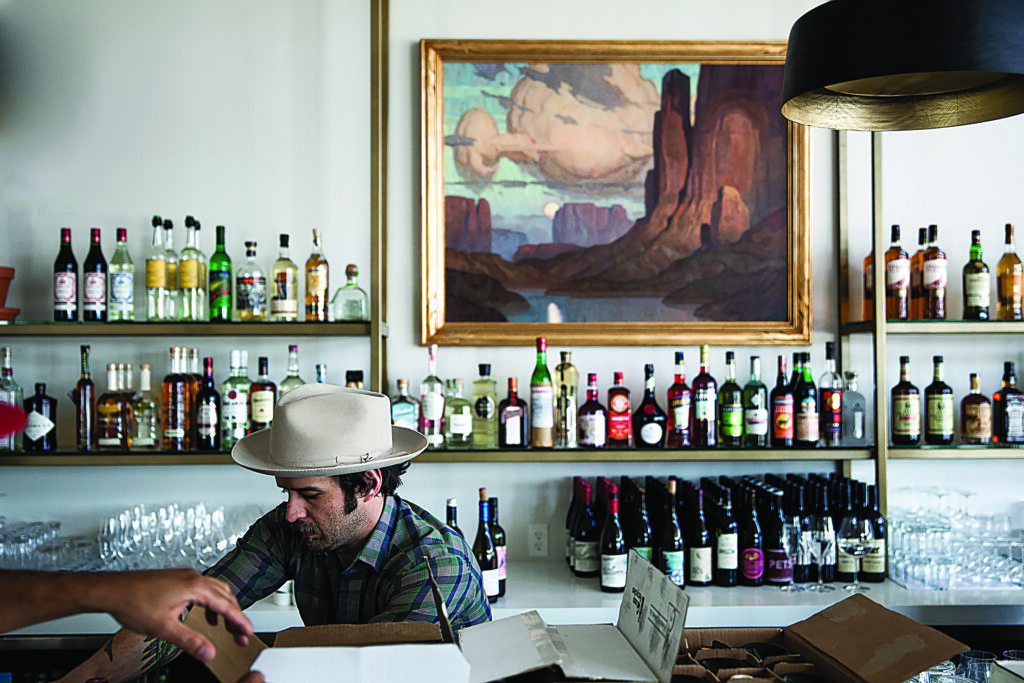
West of downtown, a former Model T plant designed by renowned architect Albert Kahn, is now home to the 21c Museum Hotel. Kahn engineered the building’s large, light-drenched industrial spaces in the early twentieth century. Co-founders of 21c, Steve Wilson and Laura Lee Brown—members of the Whitney Museum’s national committee reimagined the use of hotel common areas as gallery space, and museum-quality works rotate through the hotel chain’s locations across the country.
The Oklahoma City Museum of Art’s equally high-minded film programming, led by Yale University alum Dr. Michael Anderson, also testifies to the city’s expanding horizons. “Our audience comes out for difficult films. They are excited to take on the challenge,” says Anderson.
The Oklahoma City Philharmonic welcomes a new conductor, Alexander Mickelthwate. A native of Frankfurt, Germany, Mickelthwate has raised a baton in Atlanta, Los Angeles, and Winnipeg. The fall repertoire includes a work by accomplished Chinese composer Tan Dun, called Passacaglia: Secret of Wind and Birds, a twelve-minute piece for orchestra and cell phones, and a concert about the intersections of identity and science, called Wild Individualism.
Oklahoma City is building upon a solid base of cultural commitment. The recently elected mayor, David Holt, supports
the momentum. “No one wants to live in a sterile environment free of artistic expression,” says Holt. “In Oklahoma City, we learned long ago that though infrastructure investments like water lines or police stations are extremely important, it’s equally difficult for a city to thrive when it doesn’t embrace arts and culture. And if you don’t have a healthy and ever-growing portfolio of public art, you’re not wearing your city’s culture on your sleeve.”