Deep in the Art
IN HOUSTON, OUR TEXAS CORRESPONDENT MICHAEL DUTY REVISITS THE MAKINGS OF A MAJOR ARTS DESTINATION
BY Michael Duty
The many thousands of visitors who descended on Houston, Texas for the recent Super Bowl found a vibrant multi-cultural city that is justifiably proud of its role as a leading center for energy production, biomedical research, and space exploration. Given those many attributes, those visitors may have been unaware that the city can also boast of an equally vibrant contemporary arts scene.
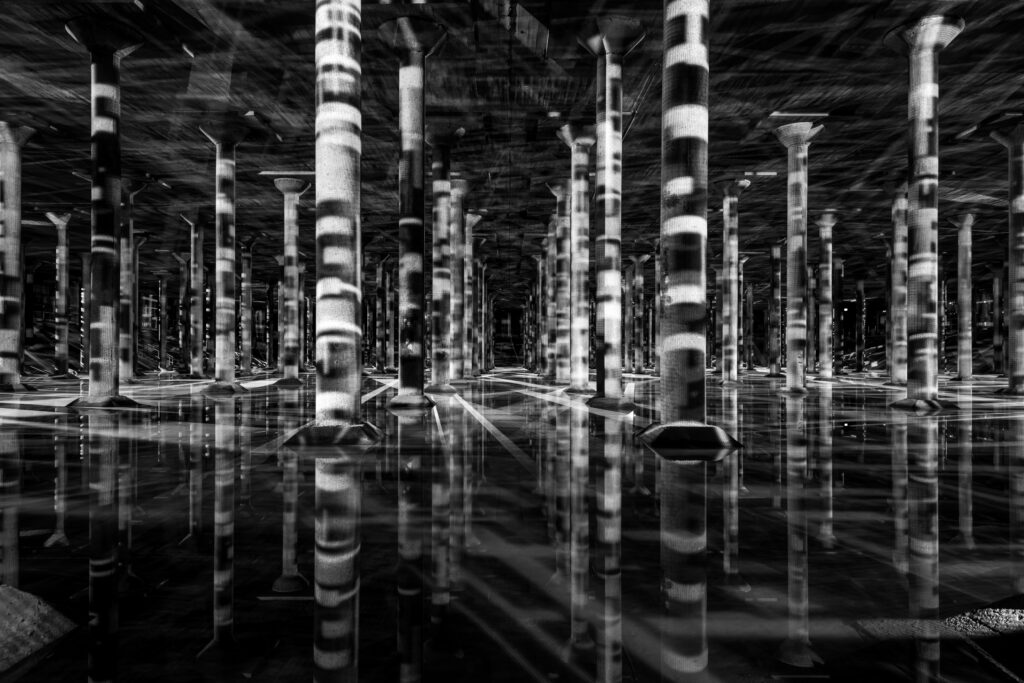
One of the newest and perhaps the most unusual additions to Houston’s contemporary arts landscape is the Houston Cistern in Buffalo Bayou Park. For most of its 90-year history, the Houston Cistern, was just that, an underground storage facility for Houston drinking water. The 87,500 sq.ft. facility was built in 1926 and closed and drained in 2007 when engineers determined that a leak could not be repaired. Slated for demolition in 2010 by the city, the site was “rescued” in 2010 by the Buffalo Bayou Partnership, who saw the facility’s potential as a unique space for a continuing series of art installations
The Cistern itself, with its 221 25-foot-tall columns and thick walls which produce a 17-second echo effect, provides a multi-sensory experience that transports visitors from the busy city above to a serene environment below.
The first art installation, Rain, Magdalena Fernandez at the Houston Cistern, is a collaboration between the Buffalo Bayou Partnership and the Museum of Fine Arts, Houston, which acquired the Venezuelan artist’s work for its permanent collection several years ago. At the time, the piece was titled 2iPM009 and was part of the artist’s Mobile Paintings series. Repurposed and retitled for the cistern, the work is an abstract video
projection that incorporates the columns, walls, and water on the floor into the experience.
Fernandez combines intricate geometric light projections with sound effects and a soundtrack performed by the Slovenian choir, Perpetuum Jazille, whose members snap their fingers, slap their hands on their thighs and stamp their feet to simulate the sound of falling rain. All those elements combine to immerse the visitor in an environment that utilizes multiple senses. The sound of falling rain can be both soothing and foreboding as claps of thunder interrupt the contemplative nature of the work.
The Moody Center
FOR THE ARTS
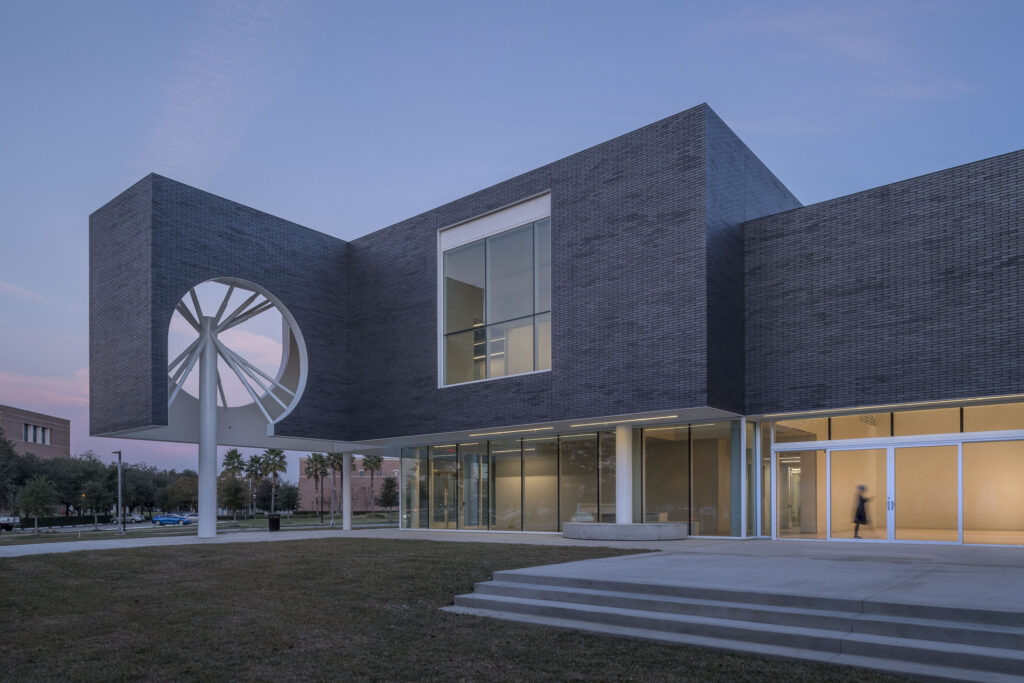
The newest star in Houston’s constellation of art venues is the Moody Center for the Arts at Rice University. The Moody Center was designed by architect Michael Maltzan and is a multi-faceted and collaborative center for Rice students and the city of Houston. Opened in February, among the installations on view now are works by Diana Thater and Olafur Eliasson.
The Moody Center for the Arts is open Tuesday through Saturday at 6100 Main Street in Houston. All exhibition spaces are free and open to the public. For more information, please visit moody.rice.edu.
Houston
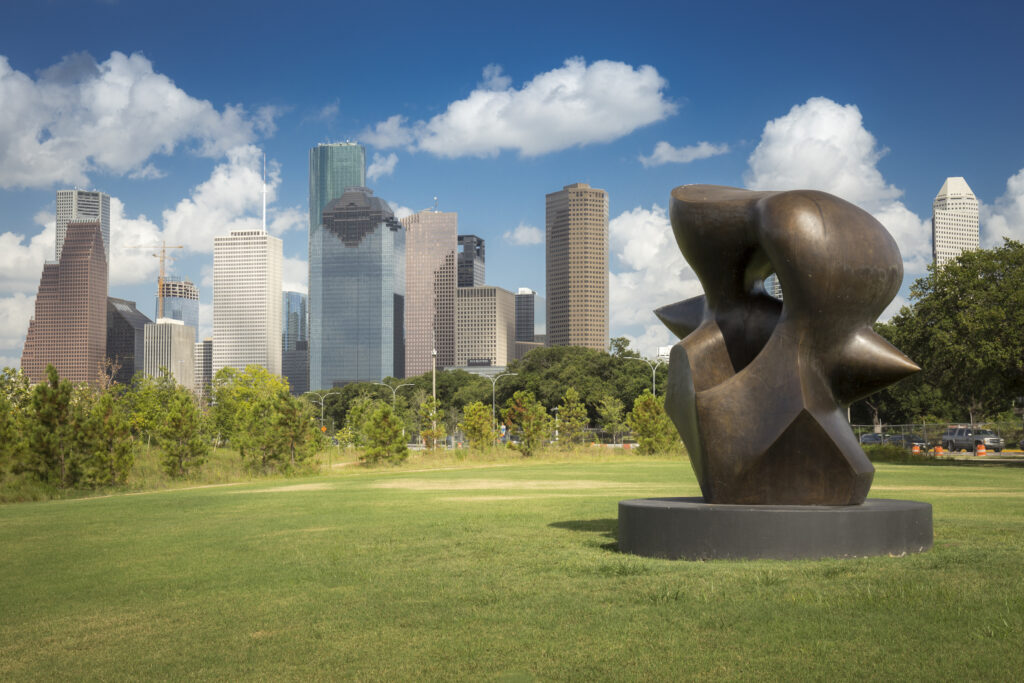
Visitors seeking a more conventional art experience can wander along a walking trail in Buffalo Bayou Park that incorporates several notable sculptures, including Henry Moore’s Spindle, Jesus Moroles’ Houston Police Officer’s Memorial, and the most recent addition, John Runnels 2014 piece, Portrait of Houston: It Wasn’t a Dream, It was a Flood.
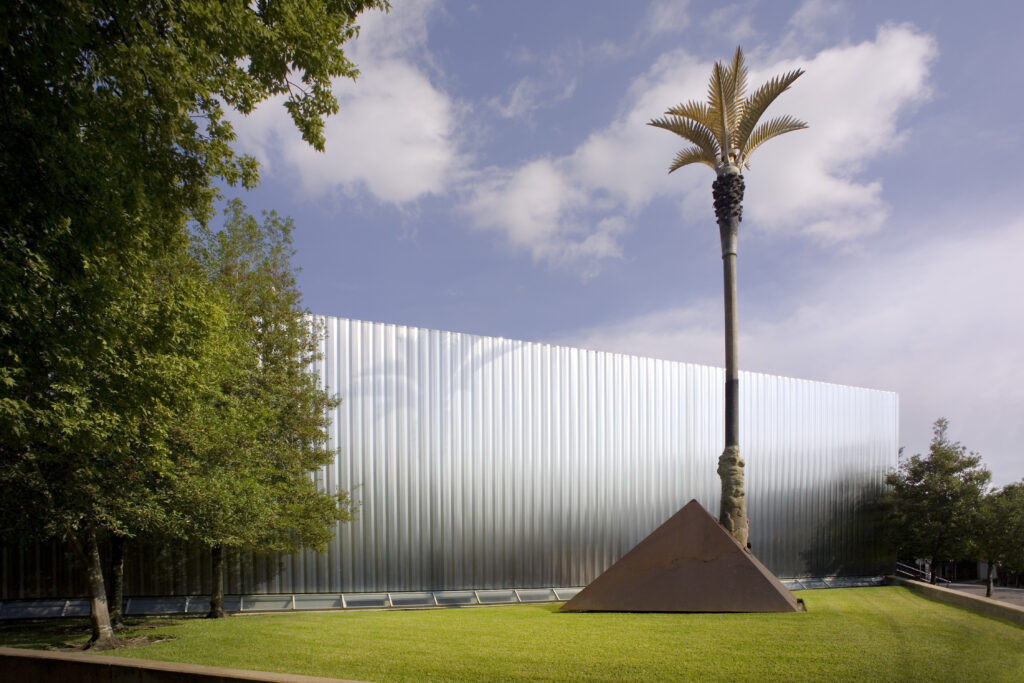
A short drive away is one of Houston’s best-known and most revered art destinations, the Menil Collection campus. Set in a quiet neighborhood filled with vintage bungalows (many of which are painted in the same grey tones as the Menil museum), the campus includes the Renzo Piano-designed Menil Collection, a gallery devoted to works by artist Cy Twombly, a converted 1930s grocery store that houses three works by Dan Flavin, and the world-renowned Rothko Chapel. Houston philanthropists and art collectors, Dominique and John de Menil began working with Mark Rothko in 1964 to create “a sacred space in Houston.”
The Chapel, designed by Rothko and containing fourteen of the artist’s murals, opened in 1971 and has been treasured by Houston visitors and residents ever since. It is a quiet and serene environment where visitors are welcome to linger, meditate, practice yoga, or participate in a varied calendar of activities and programs. Outside the chapel, positioned in a reflecting pool, is Barnett Newman’s bronze sculpture, Broken Obelisk, which is a memorial to Martin Luther King, Jr.
The de Menils were prolific collectors whose tastes encompassed items from prehistoric times to the modern day. The museum they established holds over 17,000 paintings, sculptures, prints, drawings, photos, and rare books. One of the unique facets of the museum and the collection is the de Menils’ desire to link modern and contemporary art with the art of ancient and indigenous cultures. As a result, a visit to the Menil Collection is likely to include exhibitions of indigenous African art alongside comprehensive surveys of Surrealism or other modern art movements, all set in Piano’s light-infused spacious galleries. Opened in 1987, the Menil Collection fulfills Dominique de Menil’s dream of a museum that “seems large on the inside, but small on the outside.” Admission to all of the buildings on the Menil Campus is free.
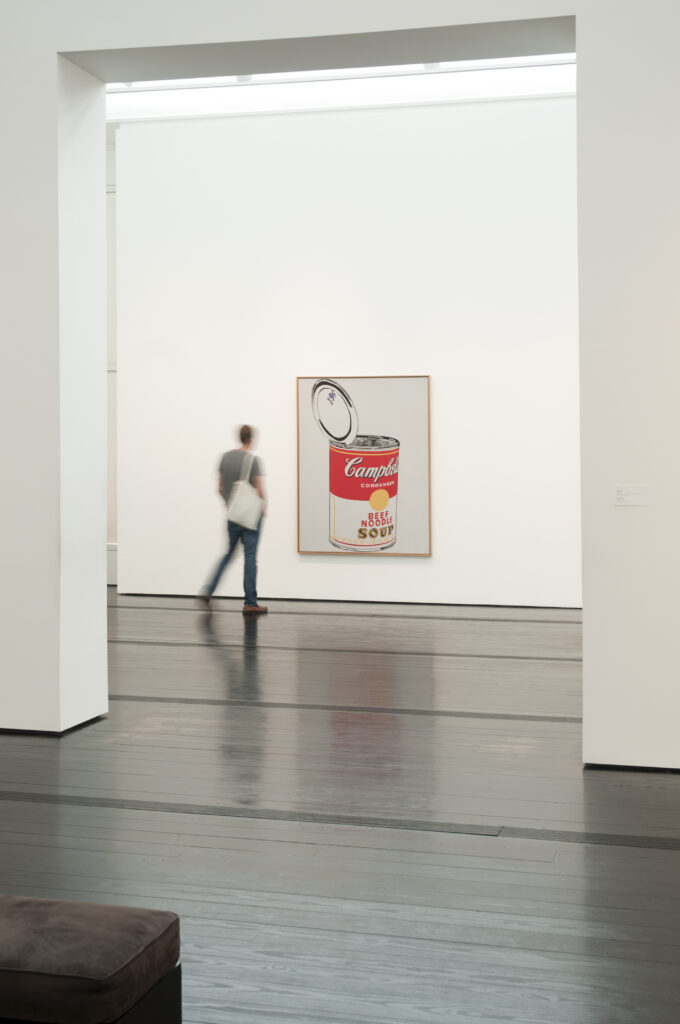
Located down the street from the Menil campus is what could be called the “flagship” art museum of the city, the Museum of Fine Arts, Houston. Encompassing two buildings, the MFAH is a major institution with a comprehensive collection that stretches from ancient to contemporary art. The museum actively collects contemporary art and frequently mounts major exhibitions on individual contemporary artists as well as thematic examinations of various elements of contemporary art.
One of its most popular pieces is James Turrell’s installation The Light Inside, encompassing the entire tunnel that links the museum’s two gallery buildings. The work employs changing colors and tones and is one of Turrell’s signature creations. MFAH visitors quite literally walk through the installation as they progress from one building to the other.
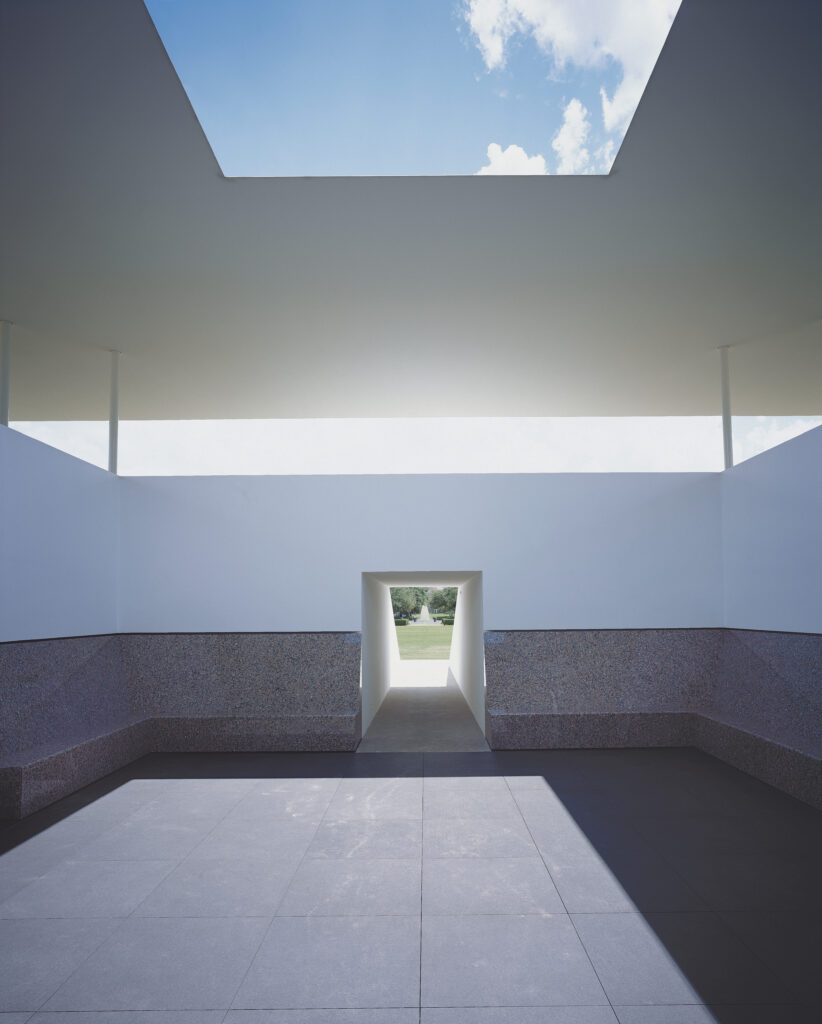
MFAH’s Turrell is a perfect springboard to another Turrell work at nearby Rice University that was built on a grander scale. Twilight Epiphany Skyplace is located in the Suzanne Deal Booth Centennial Pavilion and was unveiled in 2012 as part of the university’s centennial celebration. The two-level pyramid-like structure hosts musical performances as well as daily LED light sequences that are projected onto the building’s ceiling and through an aperture in the roof at sunset and just before sunrise. Visitors simultaneously view Turrell’s projections and the changing sky revealed in the roof aperture.
Beginning in 1995, the Rice Gallery has been the only university gallery in the country devoted to commissioning site-specific installation art. The gallery is basically a box, with one wall composed
of glass, which allows for the work on display to be viewed from the outside before visitors enter the space itself. This simple form has allowed the gallery to host work by a wide variety of artists, from Joel Shapiro to street artist Gaia and Vietnamese-American photographer Dinh Q. Lê.
Fittingly, the gallery’s final installation is a recreation of one of its first, Sol LeWitt’s Glossy and Flat
Black Squares, which debuted in 1997. Kim Davenport, now the chief curator at the Moody Center for the
Arts describes LeWitt’s squares as a set of instructions that “reside on paper” before they are installed. Thus,
like musical compositions, the works can be recreated at different times and locations.
The LeWitt installation will continue until May 14, 2017, and then the Rice Gallery will close and its programs will be incorporated into the newest star in Houston’s constellation of art venues, the Moody
Center for the Arts at Rice University.
In terms of design, it would seem that these institutions have little similarity with each other—the morose cavern of the Buffalo Bayou Park Cistern, or the airy Menil Collection, or the brand-new Moody Center—but in spirit, these spaces are connected. They strive to present contemporary art in new and stimulating ways, adding to Houston’s reputation as a leader not only in energy and business but in the arts as well.
Space City, USA
SPENDING A WEEKEND IN HOUSTON
Start your morning with a cortado and avocado toast from Tout Suite (2001 Commerce Street). Enjoy happy hour and snacks at the lively Weights + Measures (2808 Caroline Street). After shopping at the chic River Oaks
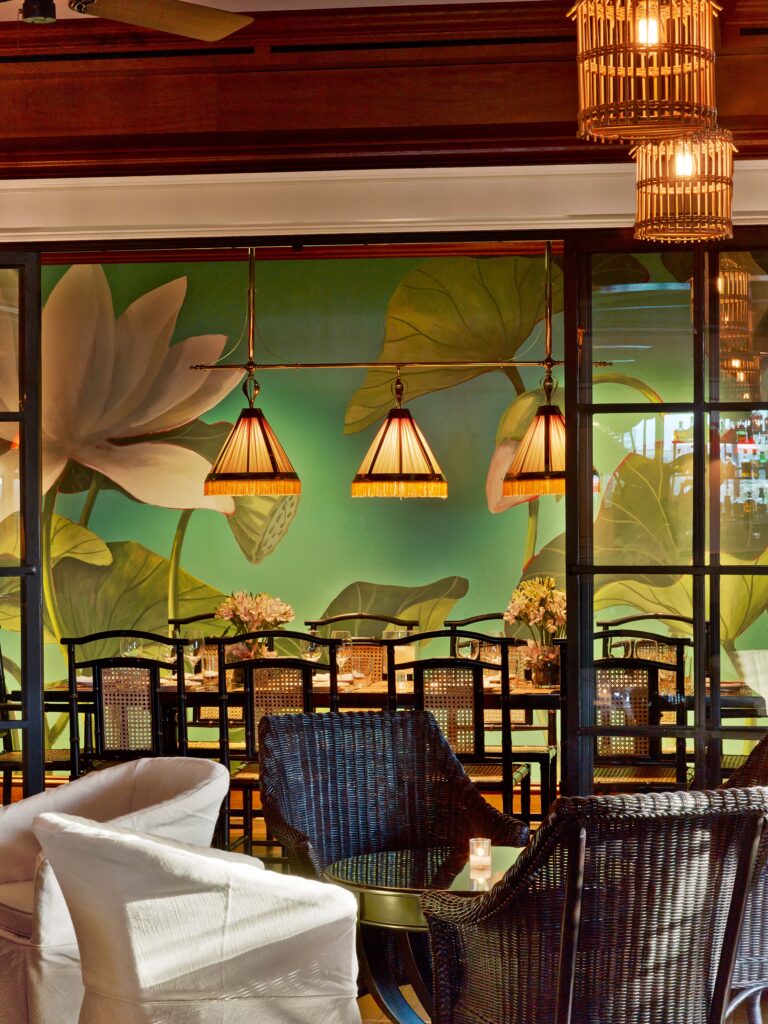
Shopping Center (1964 West Gray Street), settle in at the gorgeous Le Colonial (4444 Westheimer Road) for a contemporary take on Vietnamese cuisine. Luxurious hotels abound in this city, but the Hotel ZaZa (5701 Main Street) is not to be missed. Finally, a quick trip to the Space Center Houston (1601 NASA Parkway) is in order to fully experience the intersection of the arts and sciences that this city is so well known for.