Day Glow
JEN LEWIN’S INTERACTIVE INSTALLATION INVITES EXPLORATION, PARTICIPATION, AND BEST OF ALL, PLAY
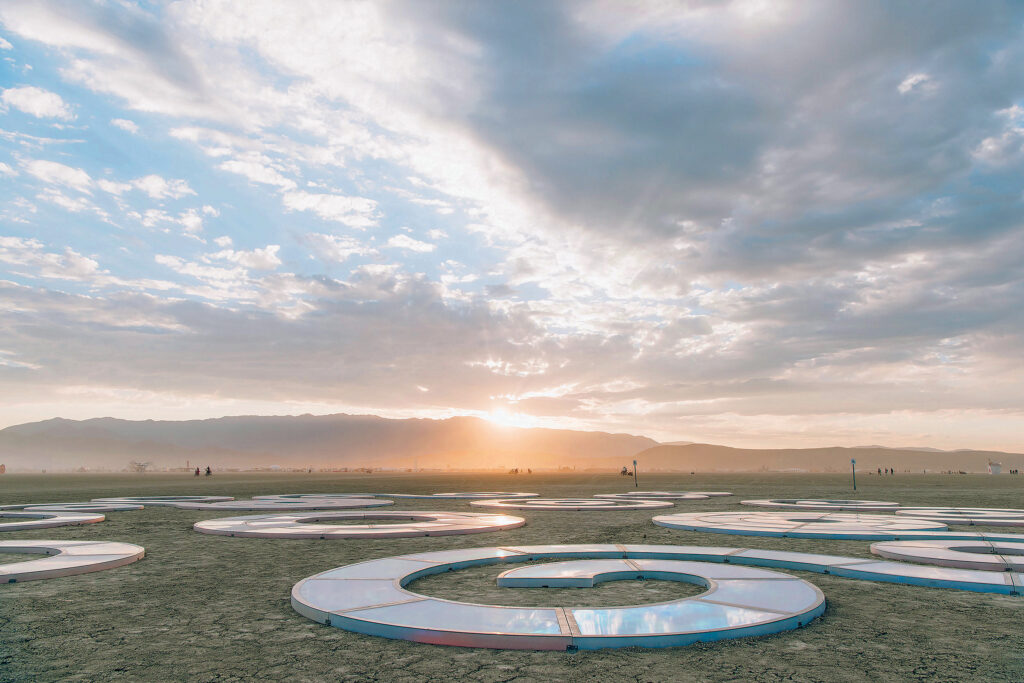
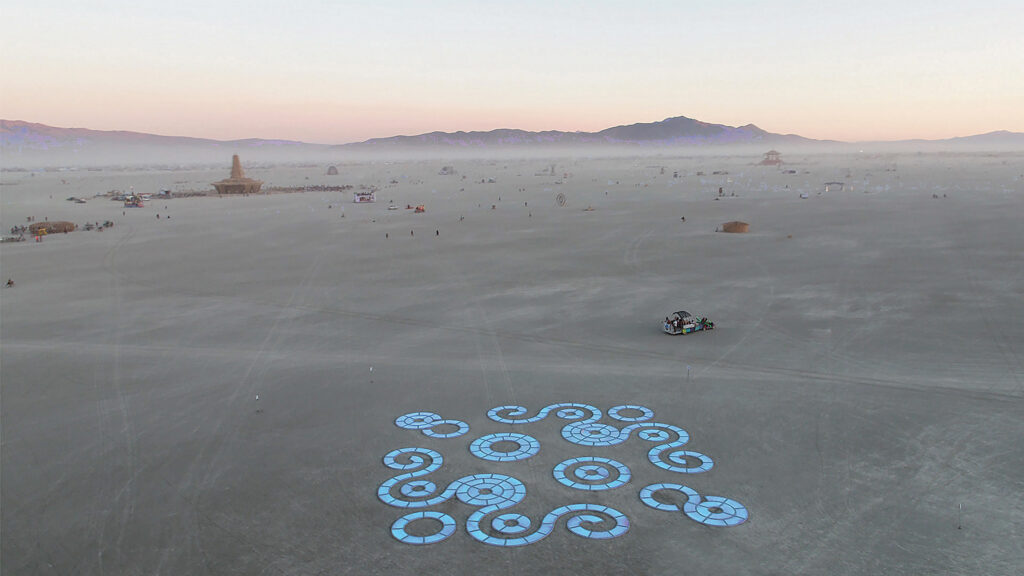
AS ONE OF the greatest painting teachers of the modern era, Hans Hofmann taught his students that, “In nature, light creates the color. In the picture, color creates the light.” If he were alive today, Hofmann surely would have marveled at how Jen Lewin masters both tools with her interactive public artworks. Aqueous—a massive public sculpture coming to Oklahoma City’s Campbell Art Park in April as part of Oklahoma Contemporary Arts Center’s big debut—reflects the natural light of its surroundings during the day but also blooms with illuminated color at night. Lewin’s artwork fits in perfectly with the art center’s inaugural exhibition of artists who work with light, featured in Bright Golden Haze. That theme was, in turn, inspired by architect Rand Elliott’s new arts center building, dubbed “Folding Light” because of the way it captures the ever-changing light of the Oklahoma sky. It’s a trait that the building will share with this latest rendition of Aqueous—an artwork that was first shown at Burning Man in Black Rock City, Nevada, in 2017.
The artwork itself is a wondrous marriage of artistic and technical mastery, consisting of 10,000 square feet of dichroic panels that gracefully spread across the landscape in meandering patterns. During the day, Aqueous’ surface partially reflects the sky in beautiful blues and pinks that shift and fade with the changing light as you wander around it.
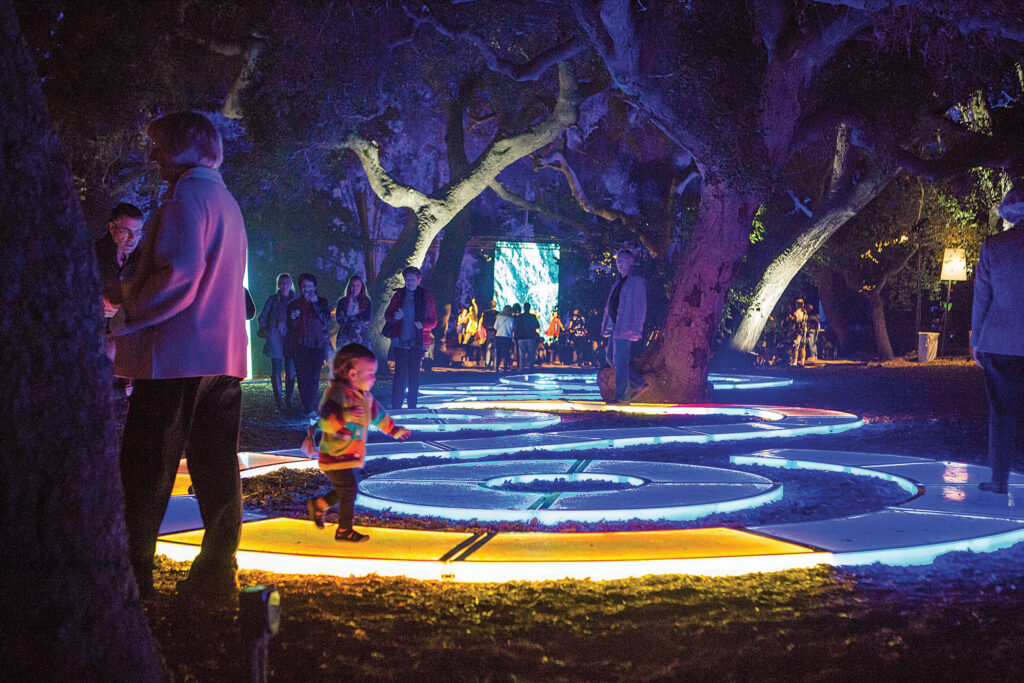
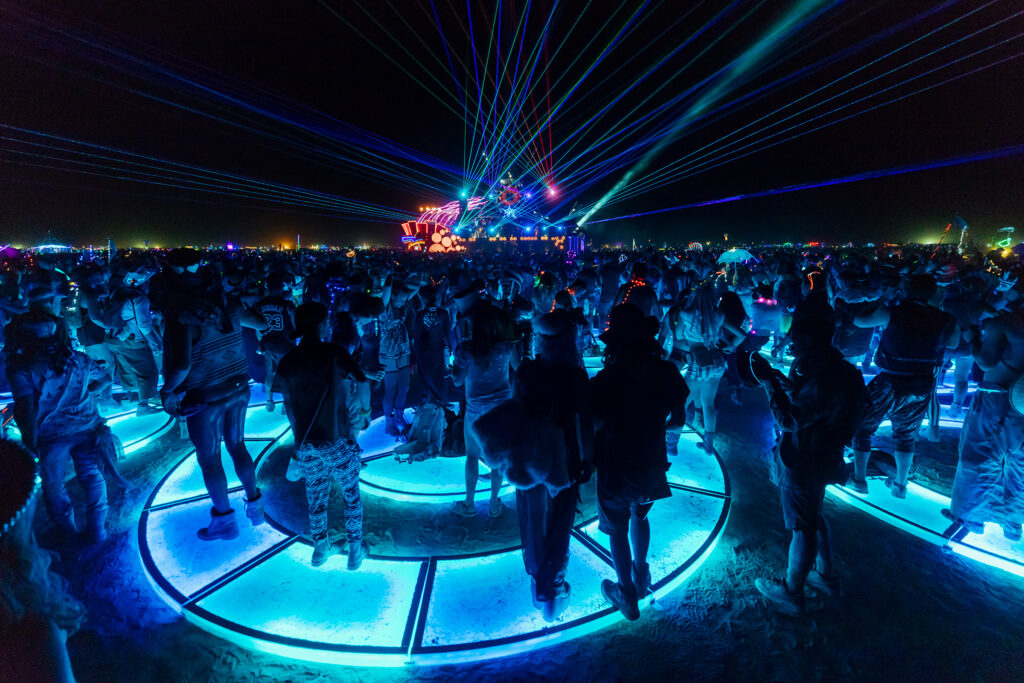
For many artists, a glittering monument with miraculously changeable surfaces would be Jen Lewin’s Aqueous at the 2017 Burning Man event in Black Rock City, Nevada accomplishment enough. But Aqueous’ relationship to sunlight is only half of the artwork. That’s because each panel is also wired with colored lights that transform, pulsate, or harmonize when touched, so when the sun goes down, Aqueous is programmed to become a reciprocal dance between an artwork and its viewers—all thanks to Lewin’s elaborately coded software.
“Making the software is like being a ballerina,” says Lewin, who, like her mother, studied dance before discovering visual art. “There’s a lot behind the scenes and a lot of different steps that need to be mastered, but it looks effortless and simple to an audience.” Once she’s finished with Aqueous’ intricate coding and custom wiring—which she specially redesigns for each new format and location—wonderful things happen. If a viewer taps on a single platform at night lights spiral or slash outward from where they stand. But if they run or walk across Aqueous, a trail of blinking lights follows them. Lewin says there are “Easter eggs in there too,” meaning that some very specific touches can set off colorful explosions across the entire platform.
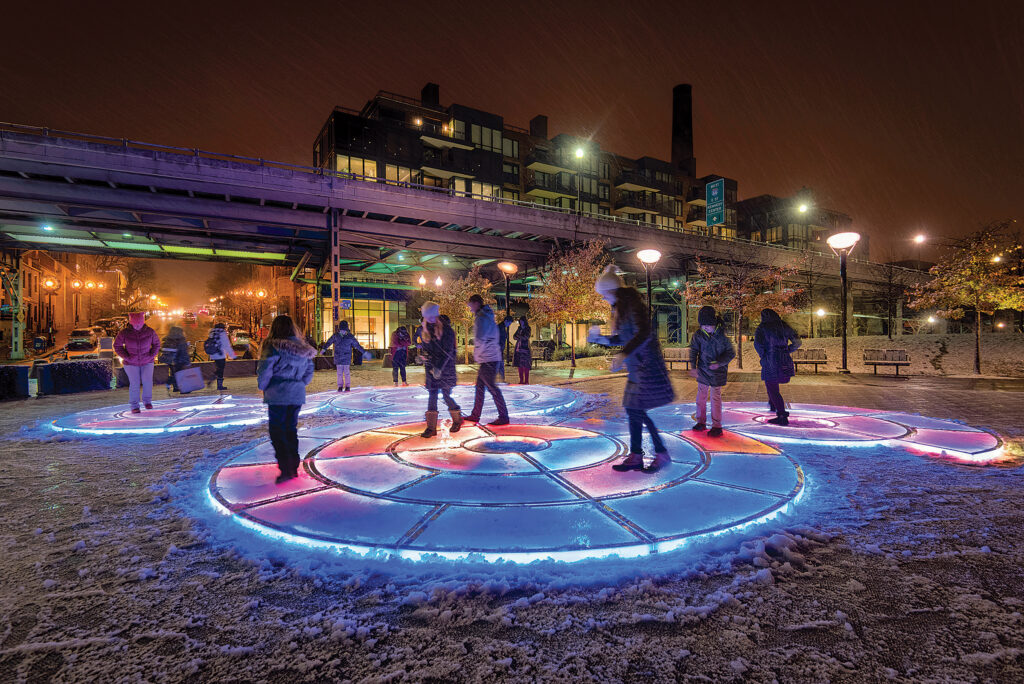
To make these simple, playful interactions, it takes an enormous amount of advanced tech work from Lewin and her team. But that work doesn’t end in her studio. “I am always at the installation, and I tune and change it by watching the people, environments, colors, and vibe of the community,” Lewin says. “[Different] areas produce different types of interactions. There are months or years of guessing, but when you take [Aqueous] into the world, it really comes to life with everyone there. It’s very much a living, breathing sculpture that’s always changing and in a relationship with the community.”
Unsurprisingly, this is the exact type of forward-thinking, egalitarian art experience that Oklahoma City’s newest cultural institution wants to be known for hosting. “We are looking to expand our audience so that everyone feels like Oklahoma Contemporary Arts Center is their arts center,” says Jennifer Scanlan, the curatorial and exhibitions director at Oklahoma Contemporary. She clarified this statement by saying that even though the arts center’s exhibitions are completely free, people without much art experience sometimes hesitate to walk through the doors. But, she adds, artworks like Aqueous are different.
“Offering a unique art experience that’s outdoors in a public space invites the public to experience art without any barriers—real or perceived,” Scanlan says. “Jen Lewin’s Aqueous allows people to engage with the art, participate in it, and have fun with it.” Lewin studied movement, science, engineering, and computer coding as well as fine art, providing the artist with plenty of tools to start thinking differently about the art she was producing.
“After school, I began to feel like there was more room for participation with tech art,” Lewin says, “and I wanted people to move around my art. I also liked the performance aspect, as if [the viewers] were actors, and the show only happens when the audience is there. I loved this relationship I created by Descanso Gardens in Los Angeles, California using tech as a medium.”
A graduate of the University of Colorado Boulder, Lewin has already moved thousands of viewers with her technology in a way that a static painting never could.
“Her art taps into the growing trend of participatory culture, in which people don’t simply want to look at public art; they want to be part of the art, activate it, and make it come to life,” says Jack Becker, the founder of Forecast Public Art in Minnesota. He adds that Lewin’s art “rewards repeated visits, compels people to take selfies, and fosters social cohesion,”—feats nearly as impressive as Lewin’s mastery of light.
Aqueous exhibits at Oklahoma Contemporary in Campbell Art Park April 24–June 14, 2020.
oklahomacontemporary.org
PEOPLE DON’T SIMPLY WANT TO LOOK AT PUBLIC ART; THEY WANT TO BE PART OF THE ART, ACTIVATE IT, AND MAKE IT COME TO LIFE.