Chelsea Morning
This Manhattan neighborhood is the reigning epicenter of the art world, but it’s not resting on its laurels. In fact, it’s a neighborhood that’s constantly in flux
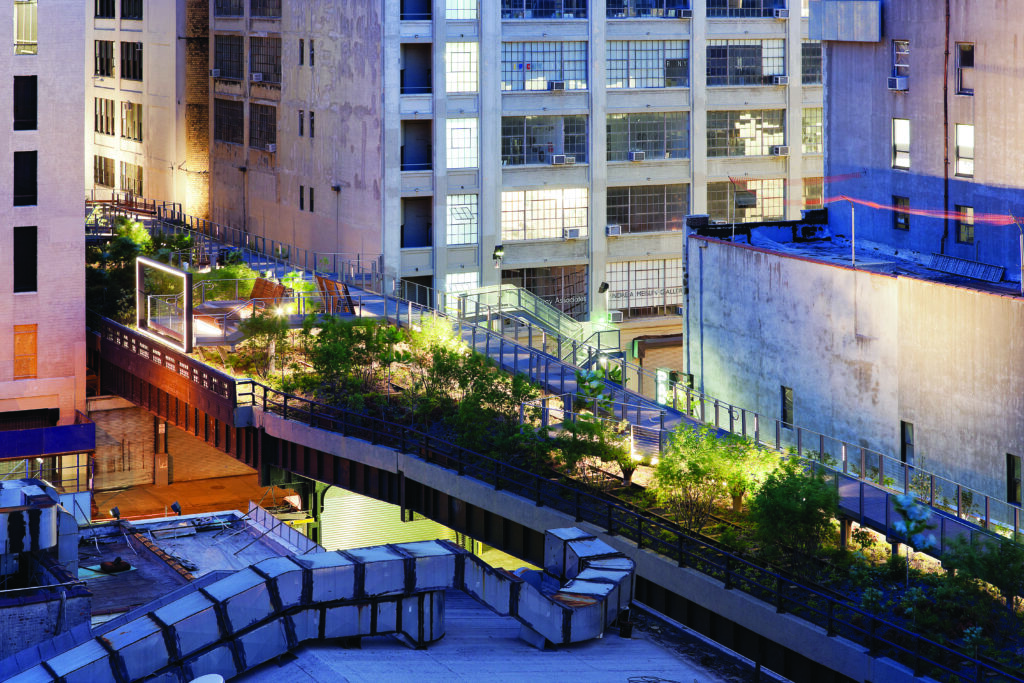
THIS FORMER INDUSTRIAL zone—reborn as an art neighborhood by a handful of pioneering art dealers like Paula Cooper and Matthew Marks—is shape-shifting yet again. Three ambitious projects have redrawn the map of Chelsea and the neighboring Hudson Yards: the already bustling High Line; a group of associated, state-of-the-art galleries dubbed the High Line Nine; and a brand-new, colossal, multimedia center for the arts called the Shed, which opens this spring.
The Manhattan marvel known as the High Line—an old elevated railway that was beautifully transformed into a 1.45 mile-long park that winds from Gansevoort Street up to Thirty-Fourth The Met Breuer Street—opened in phases between 2009 and 2014 and has been nothing short of a runaway success ever since, attracting five million visitors annually (a number that has ballooned to 7.5 million since 2015). The initiative began in 1999 with the Friends of the High Line, a nonprofit organization founded by local residents Joshua David and Robert Hammond. The group hoped to save the structure and put it to good use. Now it is getting far more use than expected, as a park filled with lush vegetation, unique vendors, and, of course, art.
Over the years, the High Line has commissioned artworks for the public by artists ranging from pioneers like Barbara Kruger to hot artists such as Rashid Johnson. In addition, the organization also crafted an outdoor video program that runs every evening on Fourteenth Street and an impressive schedule of avant garde performances that take place throughout the park. This year, the High Line will open its most ambitious art project to date: the Plinth, a permanent viewing space at Thirtieth Street that will present an ongoing series of new, monumental, and contemporary art commissions.
“At the High Line we bring contemporary art and culture to our audiences free of charge, every day of the year,” says Cecilia Alemani, the chief curator of High Line Art, “and the High Line Plinth is a wonderful extension of this long-standing commitment. It will provide artists with an opportunity to work on a larger scale than ever before possible on the High Line, as well as to engage with the breathtaking vistas that open up around this new site.” The first commission—set to open in April 2019—is an arresting structure by multimedia artist Simone Leigh titled Brick House, which will conflate and abstract a black woman’s torso, a skirt, and a clay house into one harmonious form.
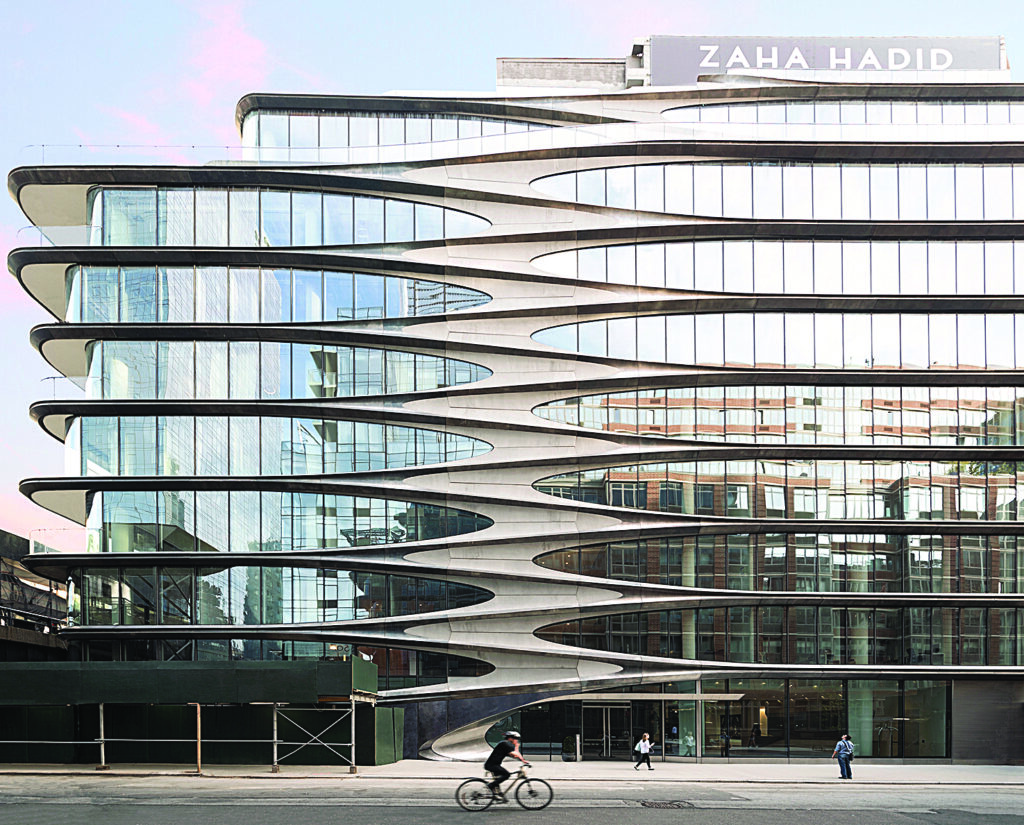
Nearby is a heavily anticipated addition to the neighborhood—a sleek, gleaming luxury residential building that’s one of legendary architect Zaha Hadid’s last designs before her death in Just off the High Line and simply called 520 West 28th, the structure will also house a select group of some of the neighborhood’s best contemporary galleries: Burning in Water, Kasmin, ZieherSmith, Hollis Taggart, Valli Art Gallery, Leila Heller, and Morgan Lehman. These seven galleries—with their nine exhibition spaces in total—are now known as the High Line Nine. Each pristine space comes equipped with natural lighting, and the building even has an on-site café for art viewers who need to refuel.
For Kasmin, a powerhouse gallery that shows world-renowned artists like Walton Ford and Bernar Venet, this will be its fourth space in Chelsea and a jewel in the Kasmin empire’s crown, thanks to a unique feature: an otherworldly sculpture garden on the roof.
“The new Kasmin gallery will be one of the only purpose-built spaces in New York,” says Nick Olney, managing director of Kasmin. “We’re rejecting the dichotomy that pits brick-and-mortar against new methods of programming: the new gallery’s High Line–adjacent rooftop sculpture garden places our roster of artists and exhibitions in conversation with one of the most innovative platforms for art developed in recent years, re-imagining how a commercial gallery can engage with art and the public.”
The new space opens with an indoor show of new paintings by Ford and three bronze sculptures on the rooftop by celebrated post-minimalist sculptor Joel Shapiro. Balancing this outgrowth of commercial galleries is a new undertaking further north: a 200,000-square-foot behemoth nonprofit cultural center, humbly named the Shed. Opening in 2019, and designed by Diller Scofidio + Renfro in collaboration with Rockwell Group, the Shed will offer gallery spaces, a theater, a rehearsal space, a creative lab, and a sky-lit event space, among other developments.
Billed as “a cultural hub that minimizes barriers to entry and takes artistic risks,” the Shed hopes to offer time, space, and money to artists making important work outside of the mainstream market—a tall order from within the Chelsea hotbed of blue chip art profiteering. “It’s important to distinguish the Shed among our commercial neighbors as a nonprofit entity that relies on a mix of earned revenue and fundraising contributions to support the commissioning of new artistic works and to provide access for all audiences,” says Sommer Hixson, director of communications. “The Shed lends a cultural cachet to the neighborhood that is unique among development projects in New York City. It’s a mutually beneficial relationship in that we have access to Hudson Yards’ partners, retailers, and residents as potential members and supporters of our organization.”
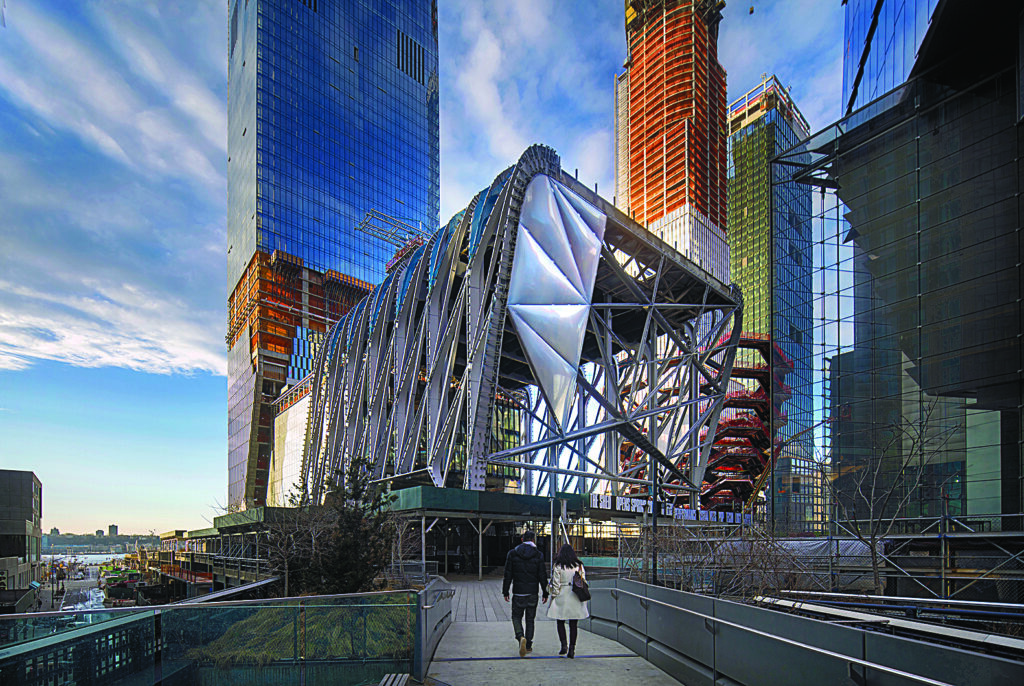
While the Shed seems committed to its mission—with early commissions going to an impressive list of innovative artists that includes Steve McQueen, Steve Reich, Arvo Pärt, Anne Carson, Chen Shi-Zheng, and Agnes Denes, among others—it isn’t devoted only to big-name artists. The arts center is also unveiling its Open Call series: a round of commissions going to New York City–based artists who have yet to receive support from a large cultural institution. The selected artists, who can work in any medium, will each receive a stipend between $7,000 and $15,000 and the Shed’s support in developing the artworks for display. These works will go on view free and open to the public in the Shed’s black-box theater, outdoor plaza, or galleries.
So if you didn’t already have enough on your agenda when visiting the art capital of the world, West Chelsea is now giving you even more top-notch art to ponder, and on a stage that’s larger than ever.
MEANWHILE, UPTOWN…
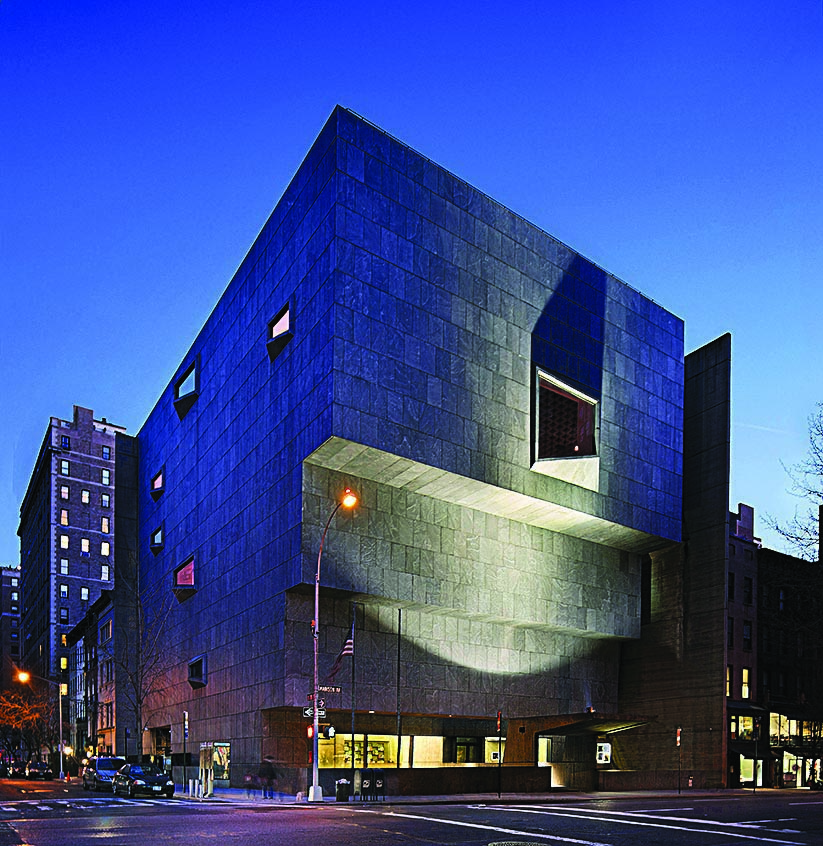
The Frick Collection, which resides in one of New York City’s last Gilded Age mansions, has been in talks to move its holdings up to Madison Avenue’s Breuer building while the collection’s home, the Henry Clay Frick House, undergoes extensive renovations. The Breuer building is the former home of the Whitney Museum of American Art and is the current home of the Met Breuer—a museum that the Metropolitan Museum of Art opened for modern and contemporary art programming shortly after the Whitney moved out in 2015.
In the proposed deal, the Met would essentially sublet the building to the Frick so that the public would be able to access the Frick’s noteworthy art collection and library resources while the museum completes its roughly $160 million renovation plan, designed by Selldorf Architects and unveiled in 2018. The Met would save more than $18 million per year by renting out the last three years of its eight-year lease to the Frick Collection. The Frick’s programming at the Breuer building would commence in late 2020.
“While the Breuer building’s brutalist aesthetic couldn’t be more different from the Frick’s Beaux Arts architecture and residential setting, our move up Madison Avenue is much more than just logistically appealing,” says Heidi Rosenau, associate director of media relations for the Frick Collection. “We anticipate that the Breuer will encourage us to explore different ways to show our works, whether chronologically or by school—which as traditional as it sounds is an approach we don’t tend to do—or through new juxtapositions that might not have occurred to us otherwise.”
After the Whitney moved out of the Breuer and into its new downtown space on Gansevoort Street, the Metropolitan Museum of Art mounted a series of praiseworthy exhibitions there, including Edvard
Munch: Between the Clock and the Bed and diane arbus: in the beginning. With this agreement, the Met brings its focus on modern and contemporary art back inside its original Fifth Avenue building.
The Frick was created by industrialist and financier Henry Clay Frick, born in 1849. Frick was an avid collector of European painting, sculpture, porcelain, furniture, and Oriental rugs. His collection includes paintings by Johannes Vermeer, Jean-Honoré Fragonard, Piero della Francesca, and other European masters from the Renaissance era onward. After Frick died in 1919, his New York home—always intended to become a museum—opened to the public on December 16, 1935.
—RYAN STEADMAN