Basquiat x Warhol: Painting Four Hands
The two heavyweights of modern art collaborate once again for a blockbuster exhibition in Paris.
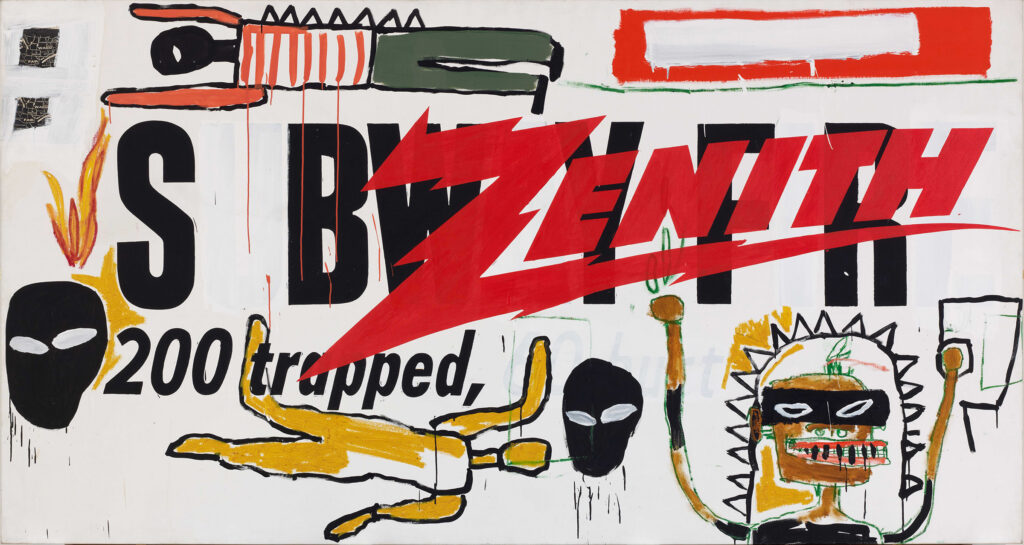
Celestial stars are known to gather velocity before they explode and die. Similarly, two terrestrial stars, Andy Warhol and Jean-Michel Basquiat, had a whirlwind surge of creativity, intense collaboration, and obsessive productivity before they burnt out and expired within a year of one another in 1987 and 1988 respectively. The period of their artistic rapport, in which both artists laid down their visual dialogue on a variety of canvases, ran from 1984 through 1985, and it is work from this short timespan which is currently showing at the Fondation Louis Vuitton in Paris.
When Warhol and Basquiat were introduced by the gallerist Bruno Bischofberger in 1982, there was an immediate spark of attraction and a mutual fascination. Although Warhol was by then middle-aged, and Basquiat a mere twenty-two years old, the latter’s youthful enthusiasm, freedom, and cheekiness was perfectly in sync with the wisdom, experience, and forever-innovative outlook of the older artist.
In an instant they were on the same page, sparring off each other, inspiring new ideas, making bold moves across the painted surface until it was hard to tell which of the two painters had created which parts. The formula seemed to work, and in 1985 a group of four-handed paintings was shown at Tony Shafrazi’s gallery in New York. The reception of these works, however, was predominantly negative. One critic called Basquiat Warhol’s “mascot,” a sobriquet to which the younger artist took great exception and, ultimately, led him to distance himself from his mentor.
How different, then, the highly positive reception that has greeted Basquiat x Warhol: Painting four hands in Paris nearly forty years later, prompting the question of why such a rave response? In an exhibition featuring more than 300 artworks and documents, as well as photographs and archive material, the overriding impression is of exuberance, chutzpah, and vitality, qualities which have found favor with French critics and been lauded by 99 percent of the audience. From the lines around the building to the crowds within, there is a palpable, if somewhat surprising, “buzz français.” It’s the amalgamation of all the genres that appealed to Basquiat and Warhol—music, film, performance, painting, drawing, sculpture, film, and urbanism—mixed anew by the talented duo, together with a nostalgia for the 1980s and the mythology of celebrity which has garnered mass appeal in the twenty-first century.
This body of art, described as a “conversation” or a “choreography,” presents a rare meeting of minds, a relatively short-lived association and a limited number of paintings, but also recalls an overtly American aesthetic and the brutal deaths of the artists. The combination has struck a chord not just with Parisians, who swarmed in at the beginning, but with an increasingly international crowd as the exhibition continues.
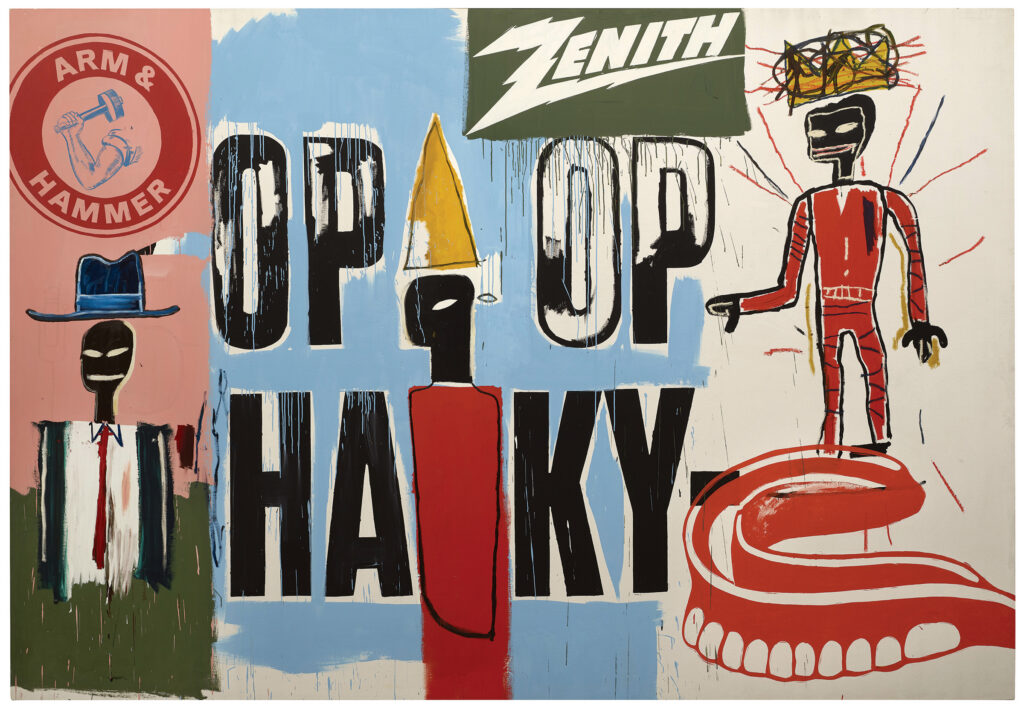
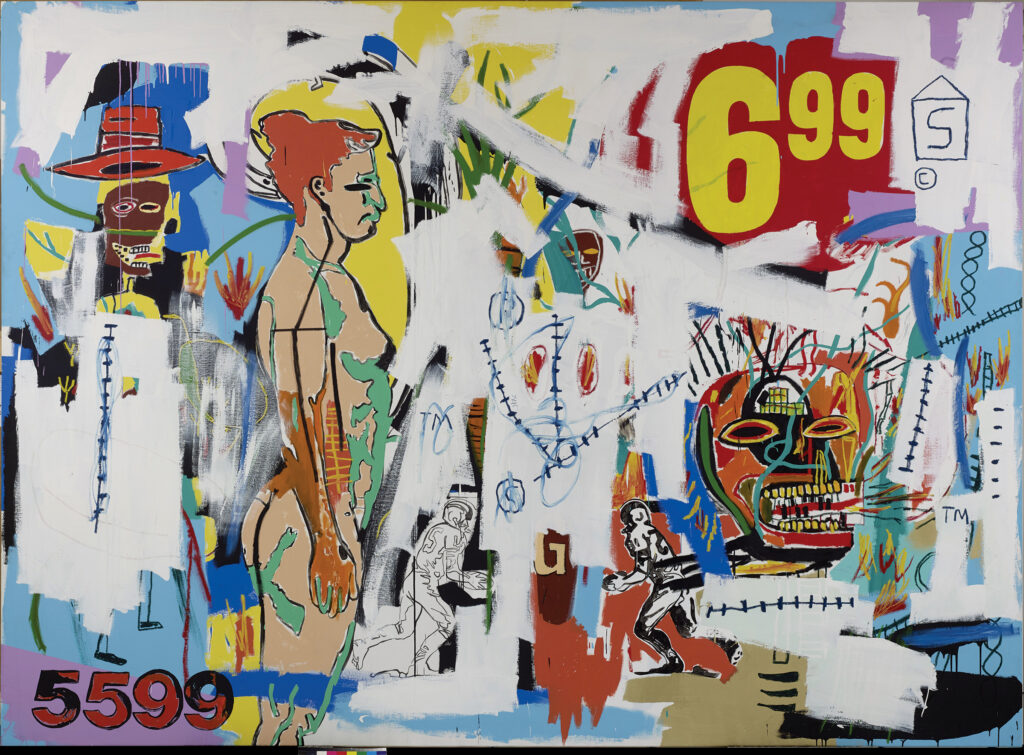
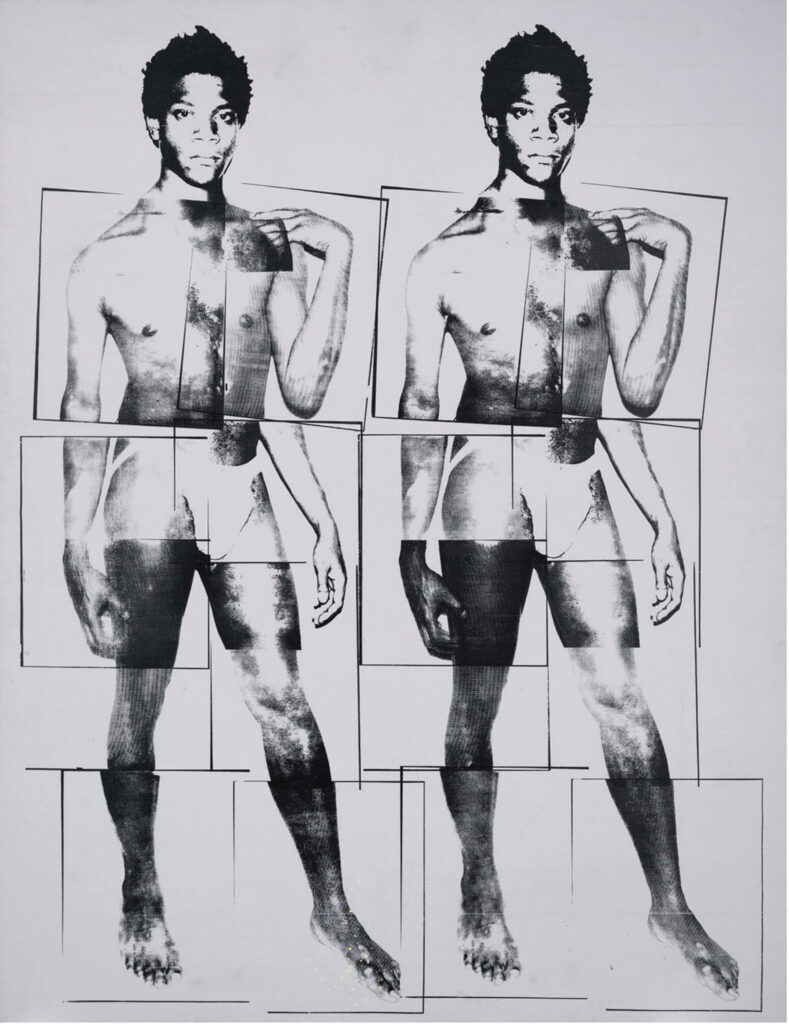
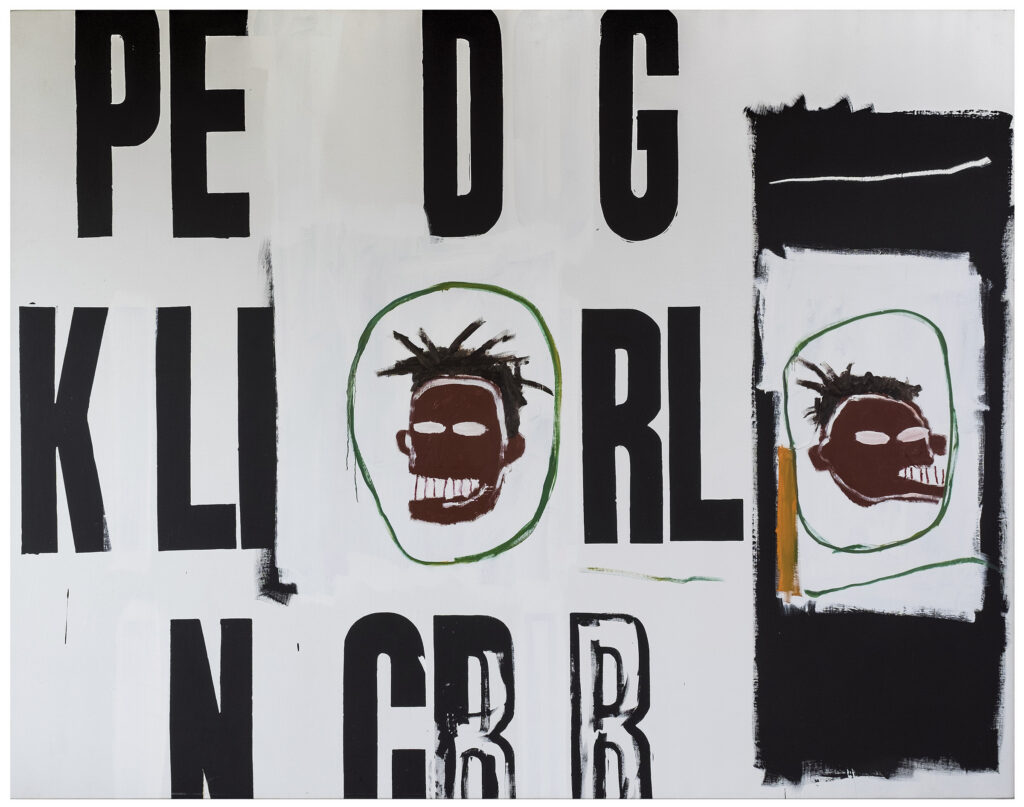
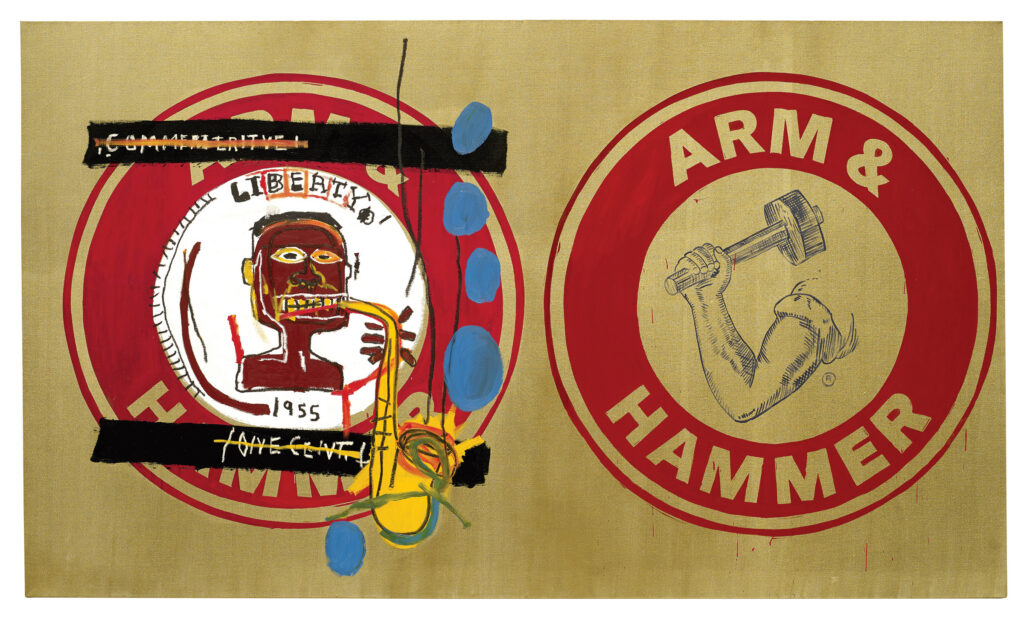
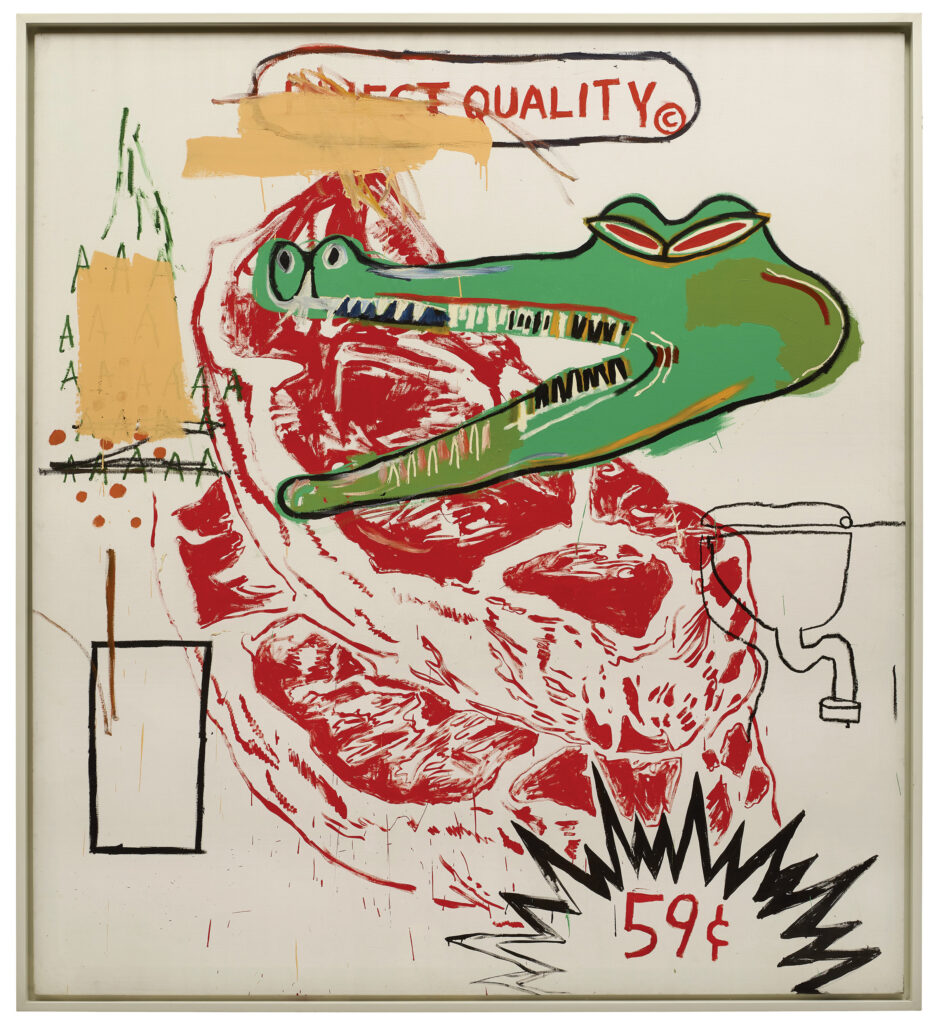
When Warhol and Basquiat met in 1982, it was Basquiat who kick-started the collaboration by painting a double-portrait of himself and Warhol (Dos Cabezas, 1982) from a Polaroid which Warhol had taken in the studio earlier that year. From then on, the floodgates opened and out poured a cornucopia of imagery. Here a crab Crab (1984–85), there a dollar sign with text Dollar Sign, Don’t Tread on Me, (1984–85), and works of enormous size and complexity such as African Masks (c. 1984). There are some works which are loosely akin to still-life paintings and feature, among other things, cuts of meat, vegetables, a banana with a jar of Hellmann’s mayonnaise, urinating dogs, sports shoes, African chairs, and so on. Others are urban landscapes, including scenes of Paris and New York, and a vast number of monumental, semi-graphic works, doubtless deriving from Warhol’s lifelong attraction to everyday life, advertising, and consumerism, which Basquiat transformed by copious and irreverent defacement. Among these are OP OP (1984–85), Socialite (1984), and 6.99 (1985).
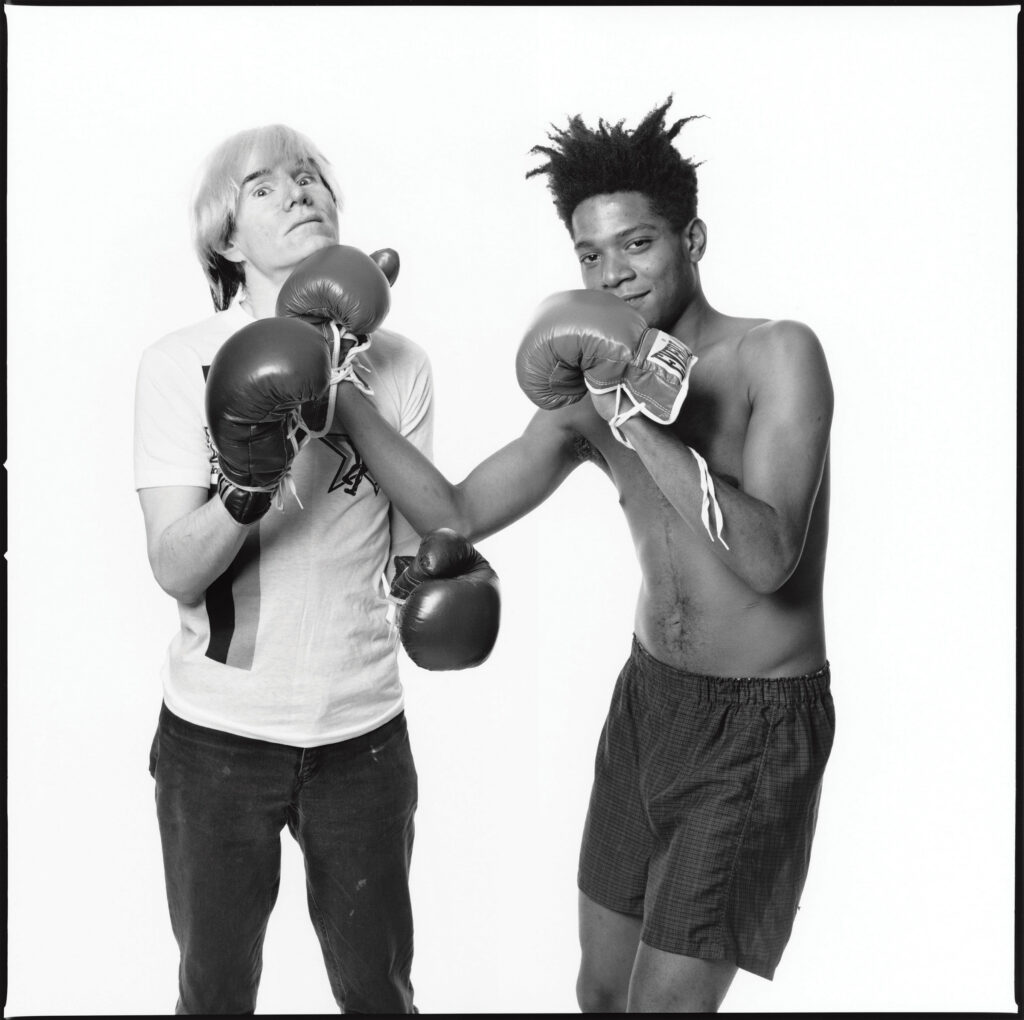
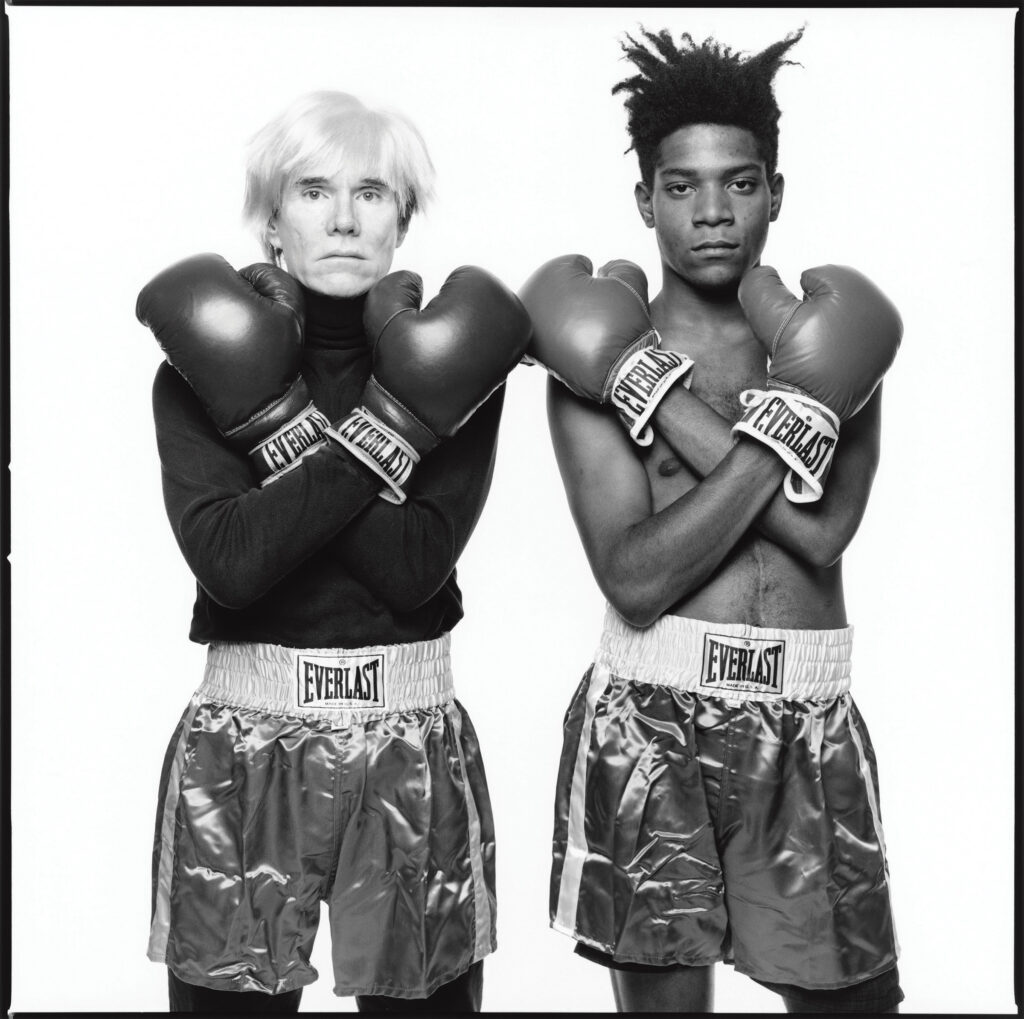
The paintings are very much of their era, a feeling compounded by the amount of supporting material also on display. New York in the 1980s, with its edgy underground scene of night clubs, arty hotspots, and music venues, its grimy SoHo district scrawled with graffiti and peeling posters, so far removed from today’s sanitized and ritzy downtown Manhattan, is powerfully evoked through LP covers, adverts, billboard notices, magazines, and newspapers. But it is the photographs that are the most moving of all the ephemera. Portraits by Michael Halsband reveal the close and warm relationship between Warhol and Basquiat; and the Polaroid photos that each artist took of each other have an immediacy and intimacy which poignantly attest to the transient nature of their brief alliance.
Finally, credit should be given to the legendary collector and art dealer, Bischofberger, not only for his business acumen but for his intuitive grasp of artistic natures and their personal compatibilities. Without him, the work in this exhibition could never have come to fruition.