Back to Modern
The Harlem Renaissance and Transatlantic Modernism exhibition at The Met contrasts works of Black artists with European modernists, showing how Harlem artists influenced modern art.
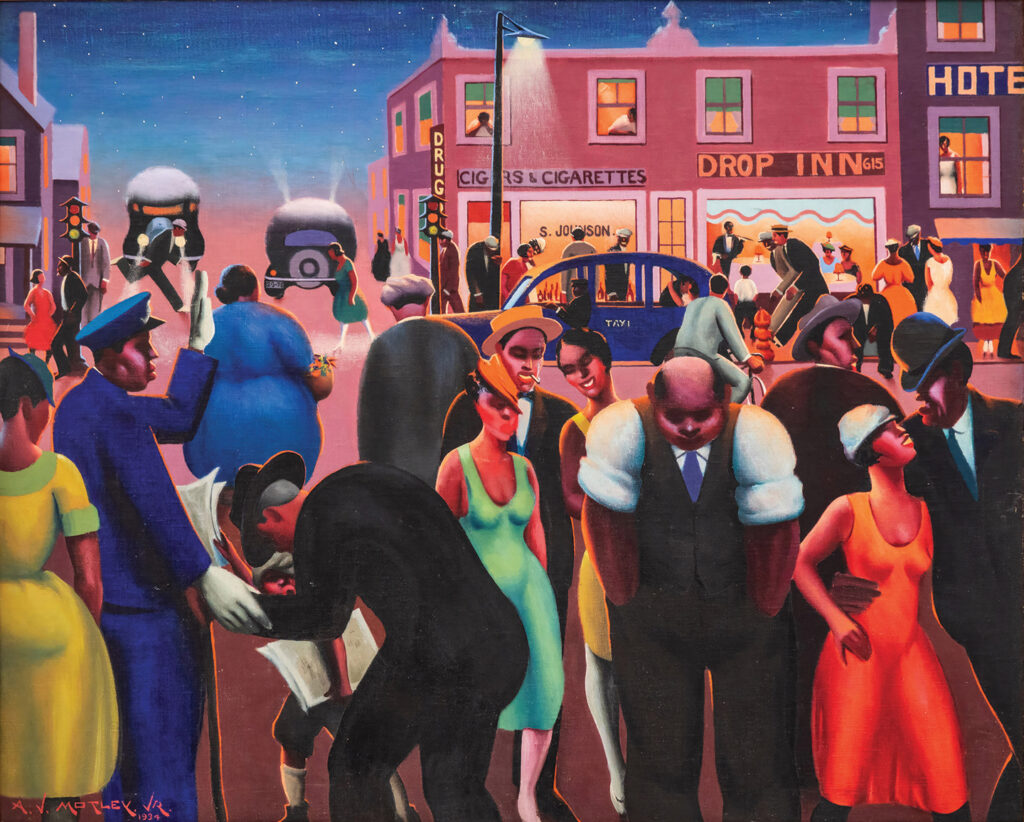
THE HARLEM RENAISSANCE and Transatlantic Modernism, a sweeping exhibition at the Metropolitan Museum of Art, presents 160 historic Black artworks from the 1920s–1940s—specifically Black life in Harlem and during the Great Migration.
The exhibition contrasts the works of Black artists such as Aaron Douglas, Meta Warrick Fuller, William H. Johnson, Winold Reiss, and James Van Der Zee with European artists like Henri Matisse and Pablo Picasso, showing how Harlem artists influenced modern art. Denise Murrell, curator of Harlem Renaissance, says, “In the same way that we talk about Edward Hopper or Georgia O’Keefe, we should be talking about at least some of the artists of the Harlem Renaissance.”
After years of research, Murrell borrowed much of the art for the exhibit from the collections of Historically Black Colleges and Universities (HBCUs) and other private collections—sources often considered off the radar of a major institution like The Met. Although the exhibit does much to show the breadth and importance of Black art from this period, Murrell says, “There’s definitely so much depth here. I do hope we will have an ongoing collaboration with the HBCUs to do more shows and additional research.”
To supplement the exhibition, The Met has produced a podcast Harlem Is Everywhere hosted by writer and critic Jessica Lynne, discussing the cultural legacy of Harlem’s music, fashion, literature, and art, which has shaped Black identity.
The Harlem Renaissance and Transatlantic Modernism is on view at The Metropolitan Museum of Art in New York through July 28, 2024. metmuseum.org