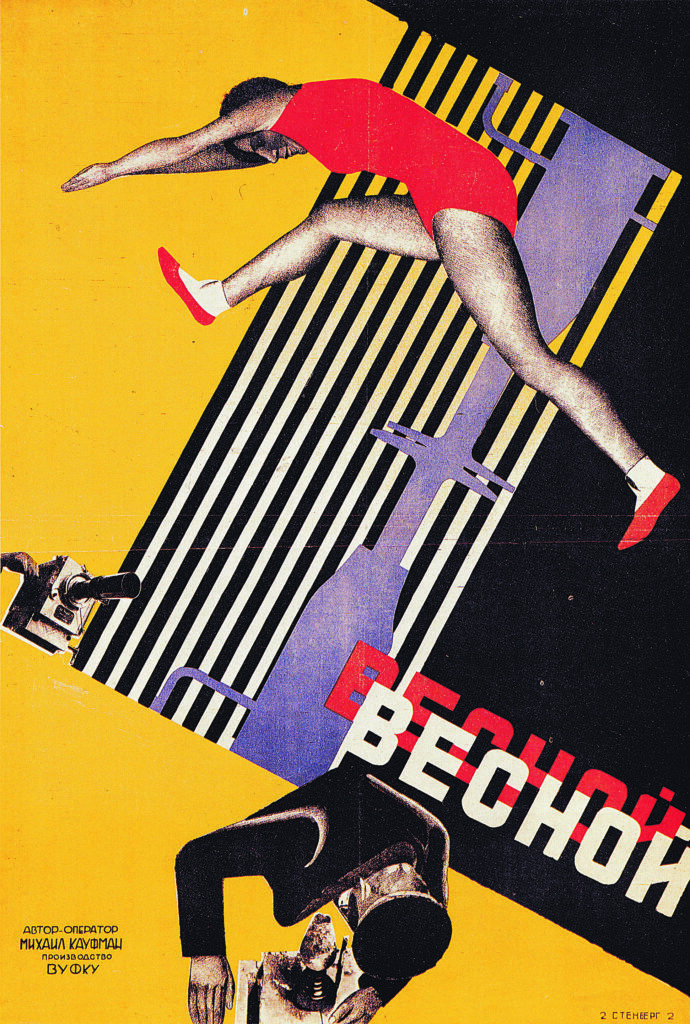
So Russia has been in the news lately. And when not meddling with foreign elections, it’s been bracing for a big birthday, as this year marks the centennial of the Russian Revolution. Not everyone celebrates this (even Vladimir Putin is shy on tooting the USSR horn), but there’s one area where Soviet energy yielded unmistakable, enduring value: its art.
From the get-go, Soviet artists aimed to move art from the easel of the elite to the everyday. Gungho artists literally took to the streets, producing art for the masses with posters, kids books, dishware designs, and—eventually—breakthrough cinema techniques. By the mid-1930s, though, Stalin clamped down on this avant-garde golden age, and socialist realism became the sanctioned aesthetic.
Even if you can’t make the Soviet art shows at Moscow’s State Tretyakov Gallery (opening in September), or London’s Royal Academy of Arts (ending April 17), or missed the retrospective at New York’s MoMA you can still engage online.
MoMA’s digitized collection | The New York museum has the largest collection of Soviet art outside of Russia. Start with Kazimir Malevich, a painter and founder of suprematism who turned to geometric patterns, chiefly a black square (the movement’s symbol), as an outgrowth of futurism and cubism.
One of his disciples, El Lissitzky, furthered the cause with various works known as Proun, meaning “project for the affirmation of the new.” He believed his works like New Man (1923), a hard-lined, mathematical update to Leonardo da Vinci’s Vitruvian Man, sprung from the corpses of traditional painting and God. Serious guy.
Other media can be more casual. Working in a seized imperial porcelain factory, Nikolai Suetin created workers’ versions of china dishware, while Vladimir Lebedev printed colorful zine-like booklets geared to kids (Ice Cream) and the Stenberg brothers made film posters using constructivist graphic design, which changed advertising.
Explore moma.org/collection for more Soviet works.
Dziga Vertov’s Man with a Movie Camera | Lenin said, of all art media, “the cinema is the most important.” Sergei Eisenstein’s Battleship Potemkin (1925) stirred the world with tense use of montage
and the imagined massacre on the Odessa steps that’s been re-created in many films since.
Even better is Vertov’s cinema vérité film, Man with a Movie Camera (1929), which marks the Soviet city at work. With no storyline or main characters, the film is built off revolutionary tricks that Vertov pioneered, like the crossfade, time-lapse, and cuts so fast (2.3 seconds on average) that it confused a New York Times reviewer. The film wants you to witness its creation, as it rushes to a slapstick scene where the unmanned camera, using stop-motion, comes to life. Eventually a freeze-frame stops the action outright to break to the film editor, Vertov’s wife.
Both films are on YouTube.com.
Follow the revolution in real time | London’s Pushkin House is offering a day-by-day retelling of the 1917 revolution from the perspective of poets, revolutionaries, and many others who witnessed this seminal event. Included online are manifestos, photographs, and one sad account when Lenin’s lover in Switzerland stopped writing him. Oh, comrade! It’s all good fun until someone gets hurt.
Visit Project1917.com and @1917intweets on Twitter to relive the tales of the revolution.
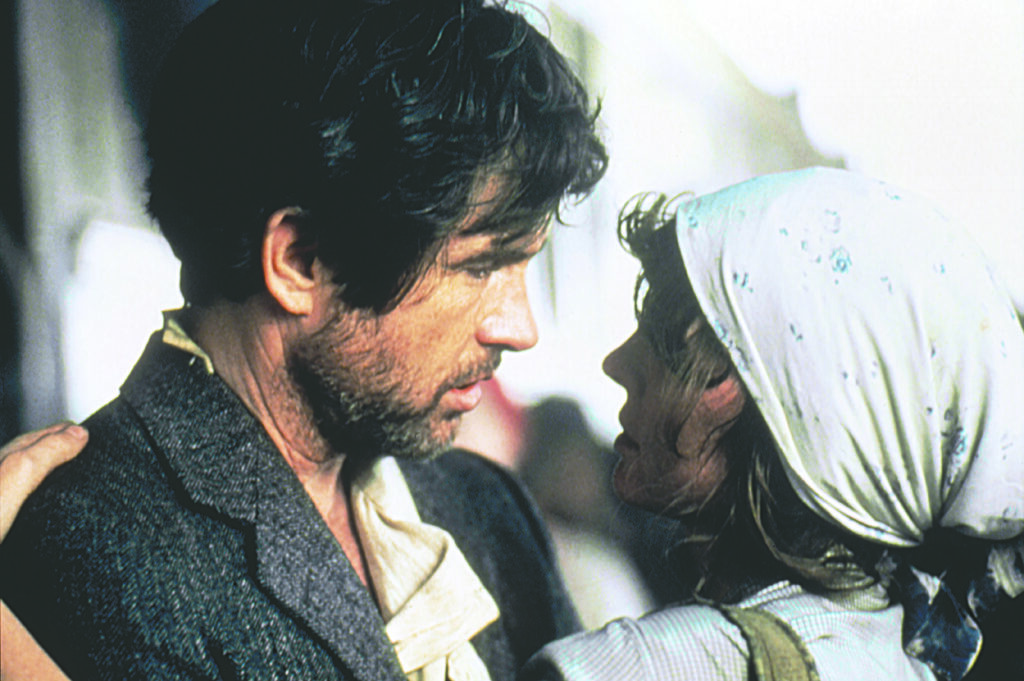
America’s Version
Our best pass at the Russian Revolution came in 1981, at the hands of Hollywood’s leading man, Warren Beatty, who wrote, directed, acted in, and produced the Oscar-winning Reds. Surely, his finest hour. Rent on Amazon Prime Video.