Archival Revival
ANTHOLOGY FILM ARCHIVES WANTS EXPERIMENTAL FILMS TO SEE THE PROJECTION LIGHT OF DAY
Experimental film history reaches back to the beginnings of the European avant-garde. Many daring surrealists like Man Ray and Jean Cocteau began working with film between the world wars, and one of the most famous experimental films to this day was produced in 1929 by Luis Buñuel and Salvador Dalí: the surrealist masterpiece Un Chien Andalou.
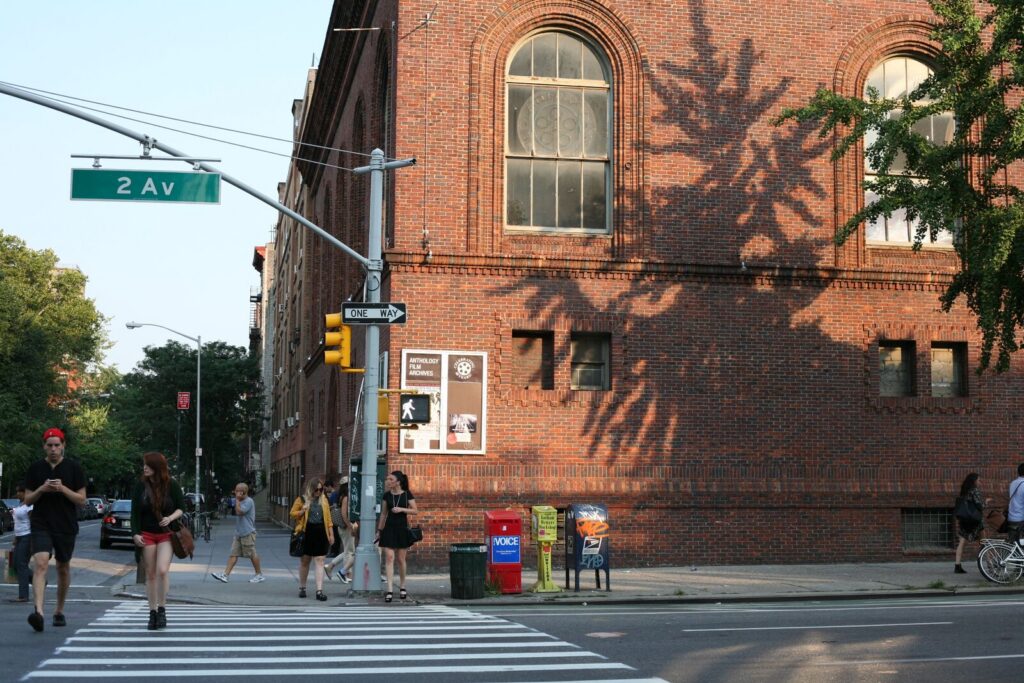
In 1970, avant-garde film found a permanent platform with the creation of the Anthology Film Archives, a New York City nonprofit and the vision of filmmaker and critic Jonas Mekas and his fellow avant-garde filmmakers Jerome Hill, P. Adams Sitney, Peter Kubelka, and Stan Brakhage. The archive has been in its current location, a former courthouse on Second Avenue in the East Village, since 1988.
“When it comes to director retrospectives, we’ve organized numerous series devoted to filmmakers—such as Emile de Antonio, Robert Kramer, Robert Downey Sr., and Shirley Clarke—which have received a great deal of attention and often led to similar retrospectives at other cinemas around North America and the world,” says the organization’s film programmer, Jed Rapfogel.
This October, Anthology Film Archives continues its run of high-quality directorial introductions with a week-long tribute to the pioneering work of Paul Bartel, a first career survey which has been organized by independent film programmer David Savage, a native of Oklahoma City.
“What’s curious about Bartel is that, on one hand, his breakout success [1968’s The Secret Cinema] predates Stonewall and is a very queer film in its sensibility,” says Savage, who attended the University of Oklahoma. “But Bartel himself never ‘came out’ as a gay filmmaker.”
“[Bartel] was well known and liked outside his immediate circle,” adds Savage. The quixotic Brooklyn-born director, who is perhaps best known for Eating Raoul, was an important touchstone for one director in particular, Savage says. “John Waters saw The Secret Cinema as a young man in Baltimore and admired it a great deal.”
Bartel’s filmography, which is chock-full of subtle social satire and dark humor, stands as an interesting foil to the radicals of sixties counterculture filmmaking like Jack Smith and Kenneth Anger. Bartel’s is a collection that Savage hopes to prove is just as powerful as those of his contemporaries.
Whether or not Bartel becomes a household name, one thing is for certain: Anthology Film Archives is the definitive venue for bringing experimental film archives to the public sphere.
The retrospective Paul Bartel: A New York Tribute will run from October 13 through October 19, in conjunction with the exhibition Bob Schulenberg: The Secret Cinema at Patrick Parrish Gallery.
anthologyfilmarchives.org