Anyone Can Dance
John Heginbotham brings a fresh perspective on movement as choreographer for the Broadway revival of "Oklahoma!" In conversation with dance editor Larry Keigwin, Heginbotham describes his process in this new version of a classic.
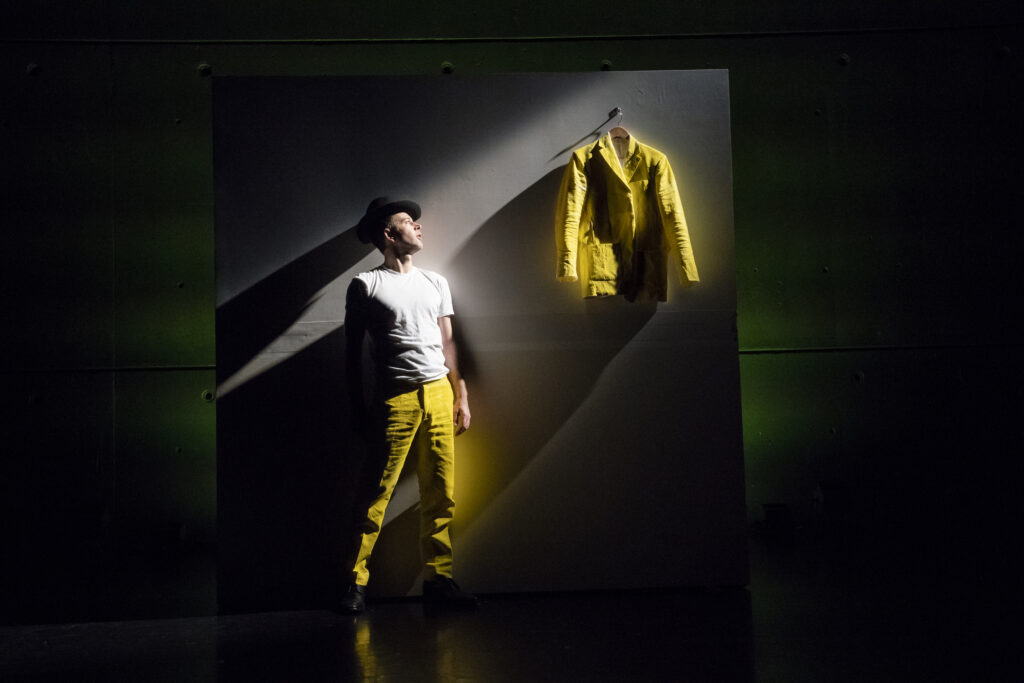
John Heginbotham brings a fresh perspective on movement as choreographer for the Broadway revival of Oklahoma! In conversation with dance editor Larry Keigwin, Heginbotham describes his process in this new version of a classic.
LARRY KEIGWIN: One of the things we have in common and share is this joy of working with—for lack of a better term—non-dancers. Can we make a new term for dancers who aren’t professional dancers? How do you refer to dancers who don’t have specific dance training?
JOHN HEGINBOTHAM: That is a good question. I generally refer to people in a piece I’m making, even when they don’t have formal training, as “the dancers” or “the performers.” When other people are asking me about programs that I’m involved with or these people I’m working with, I say “performers of many levels who love to dance.”
LK:I love that. So often we call them pedestrians or non-dancers or amateurs, but you have a deep appreciation for everybody being a dancer. And that is the choreographer’s role to nurture and bring out the assets of the dancers. It seems you’ve worked a lot with performers who don’t fit that stereotype, and yet have all the attributes of a wonderful performer.
JH: You just said it beautifully, more beautifully than I’ve ever thought about that before. The piece that I just did with my own dance company was a really particular grouping of people, and only one of them was actually a professional dancer. But I would definitely not call these people amateurs, they are total professional performers. The title of that show was called Herz Schmerz, which means “heart pain” in German, and the visual artist [in this collaboration] is Maira Kalman. More than anything, it was a play. It was heavy on text and heavy on physical action—some of which fits into a traditional idea of what dance is, and some of it more sort of task-based, but I loved working with these particular performers. The tension of them not being traditionally trained dancers made them vulnerable in a way that was exciting.
LK: It makes them accessible and therefore it makes the dance accessible, added to the fact that they’re executing it on such a professional level. It was completely charming. I love your mission statement: “to move people through dance.” I’m assuming you mean not just physically move but emotionally move people as well.
JH: I would say the choice of using the word “people” may seem obvious but it’s very conscious. I want the word “people” to include all kinds of individuals rather than a limited scope of what a performer might be, and yes, I do want to move people in an emotional way in addition to a physical way. Why else go watch a performance unless you’re going to be taken with it and have some sort of emotional response to what you’re seeing?
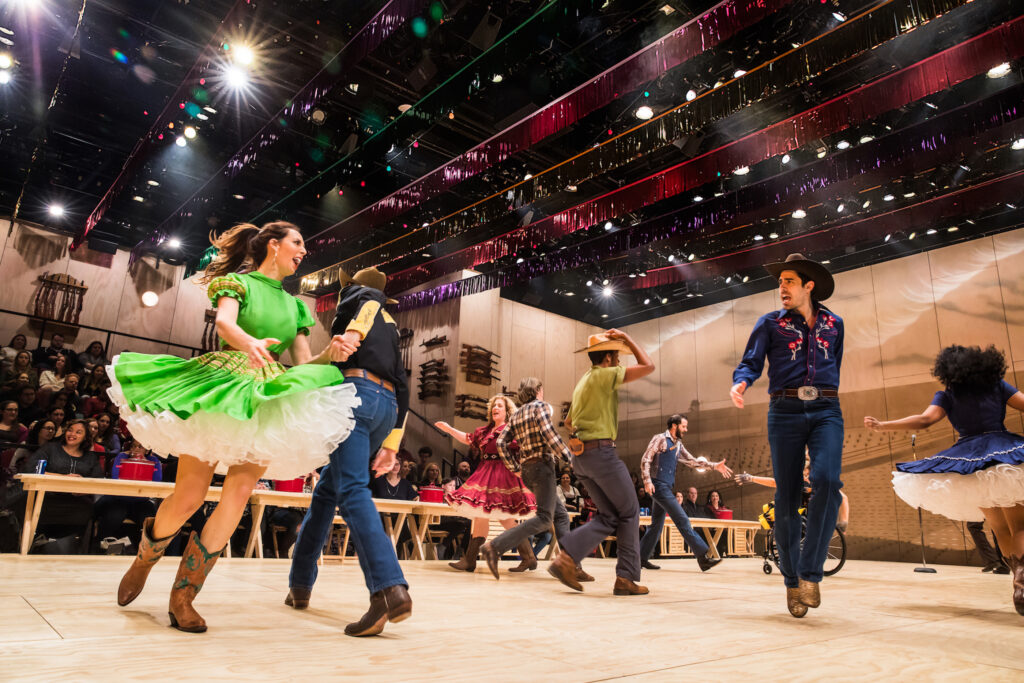
LK: By using the word “people,” you’re creating a great equalizer between audience and performer. The old saying goes, you know, art reflects life, it’s a beautiful mirror. In the revival of Oklahoma! that you choreographed, you’re working with a cast of various abilities. Can you shed some light into that choreographic process?
JH: All of the movement in the show was created collaboratively with the director, Daniel Fish. Even though I created all of the movement sequences, his vision really guided where we went. There is this dream ballet, which is a dance piece by any stretch of the imagination.
LK: Right. A contemporary dance piece.
JH: That is one aspect of the show, and historically that sequence holds a very special place in musical theater. Then in the actual narrative of the show, that segment is very important for the development of the plot. So in creating the dream ballet, one of the goals that the director described frequently to me was that it must put the audience off balance, disrupt their ideas about what is happening in the show to sort of disturb them—not to frighten them, but to take them out of their place of comfort.
LK: In this latest version, the dream ballet opens the second act. Is that always the case?
JH: It usually closes the first act. It’s unusual that we moved it to start the second act—and this is the director’s decision—but I think it makes sense to finish the first act having received the language of how to view the show. We’ve had an hour and fifteen minutes with this cast doing Oklahoma!, and we learn how to live in the world that Daniel Fish has created. And then when we open the second act, we shift the tone in a very severe way. It tells [the audience] immediately, whatever I’ve come to accept about the show as I’ve been watching—those rules don’t necessarily apply anymore.

LK: I’ve worked with dancers of mixed abilities. Do you find that your choreographic process stays the same or do you change it?
JH: When Ali [Stroker] was hired for the St. Ann production, we had a meeting with her in a dance studio to find out her history with dance, what she felt comfortable and uncomfortable doing, and to talk about not just movements that she’s capable of, but also what is emotionally and politically comfortable for her to do. It was a really good conversation. She essentially said I’m up for anything. [Ali] said this really wonderful thing, which seems obvious now, but didn’t occur to me at the time—her chair is her power. It’s really a part of her, and that’s how she is able to powerfully move around. She said, “When some dance directors ask me not to be in my chair, I’m willing to do that, but it then places me in a vulnerable position,” in that she’d have to do [choreography] with her arms—and no chair—or she would have to rely on others to transport her, which is a less powerful position for her. We knew right away most of it would happen with Ali in her chair.
LK: Of course.
JH: We did try an experiment with the number called “All or Nothin’” where Will Parker, her love, is saying “I’m serious about you. You don’t seem to be serious about me, and how are we going to be a couple?” And there was an idea that we wanted maybe to take her out of her chair specifically because that did sort of place her in a vulnerable place—Will is trying to make her vulnerable. So we were playing with that idea, but it wasn’t actually working that well. At one point Ali said, we can go down this path, but I have to tell you, I feel quite powerless not being in my chair for the sequence. So we went back and then suddenly the number just started working a lot better. Ali can do stuff in her chair that none of us can do. It’s not just that she’s doing things that are modified for people who are standing on two legs. She’s able to do extra movement that we cannot do because we’re not in a wheelchair.
LK: Exactly. So you completely embraced it as she encouraged it. And she won the Tony.
JH: Yes, she did, which I was really excited about and happy for her. She’s a genius performer. She’s a great singer, great actress, and a really great person. I so enjoyed working with her. She’s a kind, wonderful person.
JH: I had a few great teachers, Donna Branstrom, Lisa Dworkin-Kerr, and Alice Bassler Sullivan who was a Ballet West dancer. One of the people who I would say was really important to me in terms of my formative years of training was this guy named Steve Primis who was a hardcore, but also very kind, ballet master. Steve was important to me and passed away a number of years ago, but I still have this connection with him through his wonderful kids. Alaska is remote, beautiful, and an extreme environment. It attracts oil people, it attracts the military, and it also attracts artists. It’s an inspiring place to live for sure.
LK: John, it’s Sunday, a day of rest, and you just got out of rehearsal, so I’m going to let you go and rest. Thank you for taking the time with ArtDesk.
WHY ELSE GO WATCH A PERFORMANCE UNLESS YOU’RE GOING TO BE TAKEN WITH IT, AND HAVE SOME SORT OF EMOTIONAL RESPONSE TO WHAT YOU’RE SEEING?