Animalia
Flora and Fauna Flourish in John Newsom’s Nature’s Course
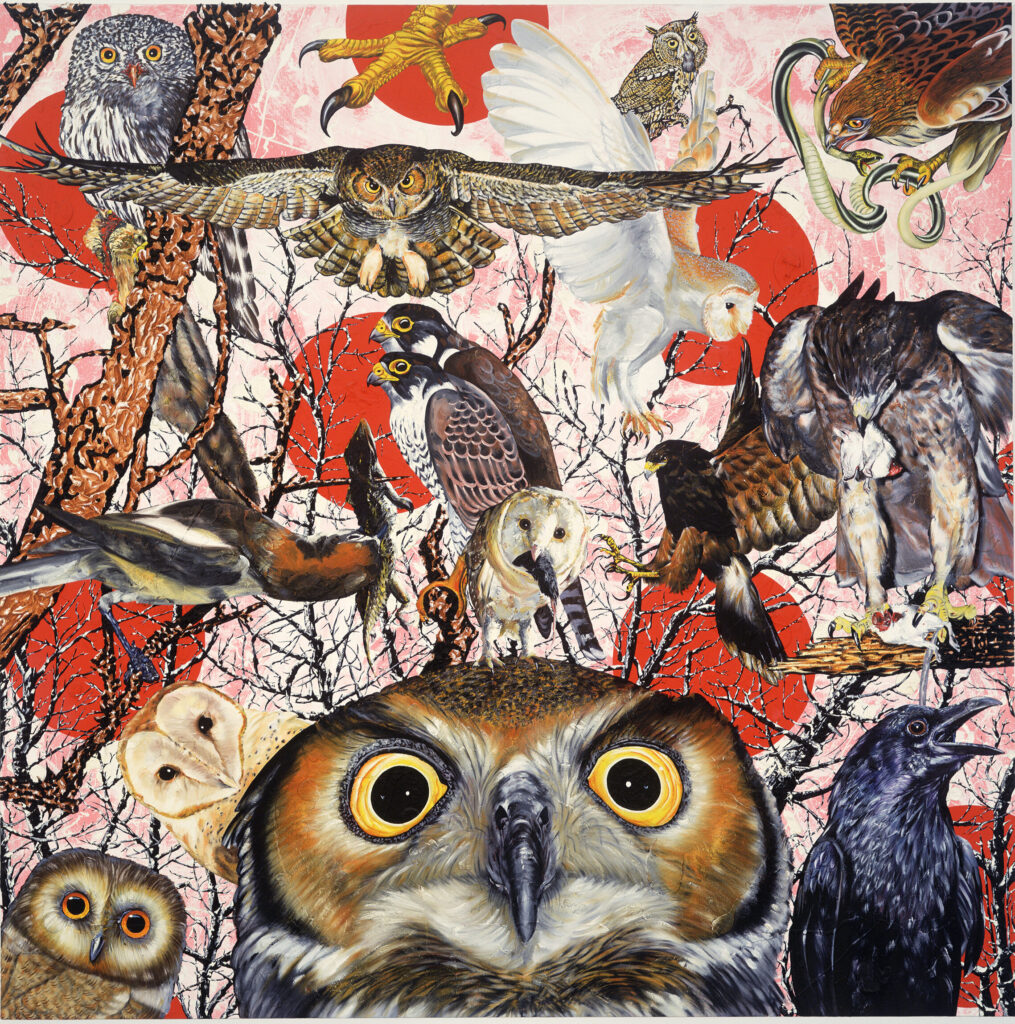
NATURE STUDIES MIGHT not feel like the most modern of interests, but John Newsom says that his sensuous dramas—inhabited with a dizzying array of wild birds, insects, mammals, and foliage—are about more than that. “I think of humanity a lot,” says the Enid, Oklahoma–raised artist from his studio about his bestial visions. “Our struggles and our triumphs.”
Newsom’s inquiry into the human condition, though the painter’s use of animals and insects, takes center stage at Oklahoma Contemporary this spring with a thirty-one painting exhibition called Nature’s Course. His work, at its core, uses allegory to examine human experience.
“It’s hard being human,” says Newsom. “We are very complicated creatures. Nature can be smooth, but it can also be rough, requiring fight mode. That can be a very positive thing, a passionate thing. To fight for a cause, belief, or painting itself is a commendable idea. Those ideals have inspired me and were the basis for Nature’s Course—not just to survive, but to thrive no matter the odds.”
In fact, for this upcoming mid-career retrospective, the painter of lush floral and animal arrangements has been sifting through his personal history, with these Darwinian themes unsurprisingly coming to the fore.
For Newsom, who has lived in Brooklyn for the last thirty years, one senses that now is the perfect time for his homecoming. “My roots are in Oklahoma, but I’m a New Yorker now,” says Newsom. “I have reached a point in my maturity as a painter where I have fully digested New York to the degree that it is in my heart. As such, a certain space now exists that allows me to breathe in areas lain dormant for decades.”
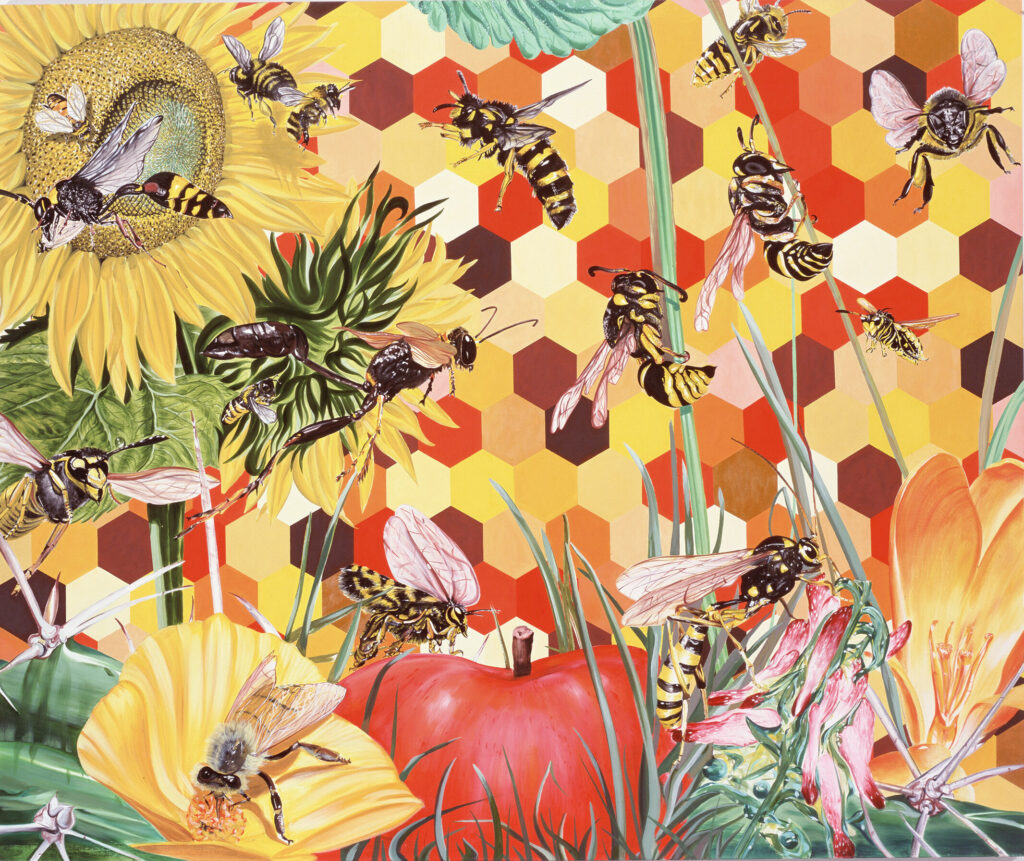
At the center of those “areas” are the vast Western plains of America, specifically the boundless Oklahoma landscape. Since one of Oklahoma Contemporary’s long-term goals has been to reintroduce Oklahomans to their own creatives, Newsom’s work felt like an obvious choice. “We can locate two major elements of John’s work directly within this place: horizontality and the natural world,” says Jeremiah Matthew Davis, the director of Oklahoma Contemporary Arts Center. “In Oklahoma, the sky completely dominates a landscape of horizontal plains that expand for miles. Nature is never far from our front doors, even in our downtown urban areas.”
Newsom confirmed that the wide-open landscapes and wildlife of his hometown, Enid, did, in fact, inspire a lifelong fascination with nature. “We had a magnolia tree in our backyard when I was very young, three or fours years old,” he says. “I would climb this tree and sit for hours just watching the movement of the blossoms in the wind. There was also a garden in our front yard [where] I would watch bugs. One day I picked up a praying mantis… and it bit me. The pain was excruciating. I will never forget it. So I began to form an understanding of the extremes of the natural world and how it could play out in terms of allegory within our larger cultural experience.”
In 2022, in a culture inundated with artificial intelligence, internet memes, and streaming video, old-fashioned oil-paint-on-canvas artworks born from a love of bugs and leaves help us to rewild our natural instincts. Davis, who says that painting never goes out of style, helps explain why Newsom’s work is singularly absorbing, especially in this day and age.
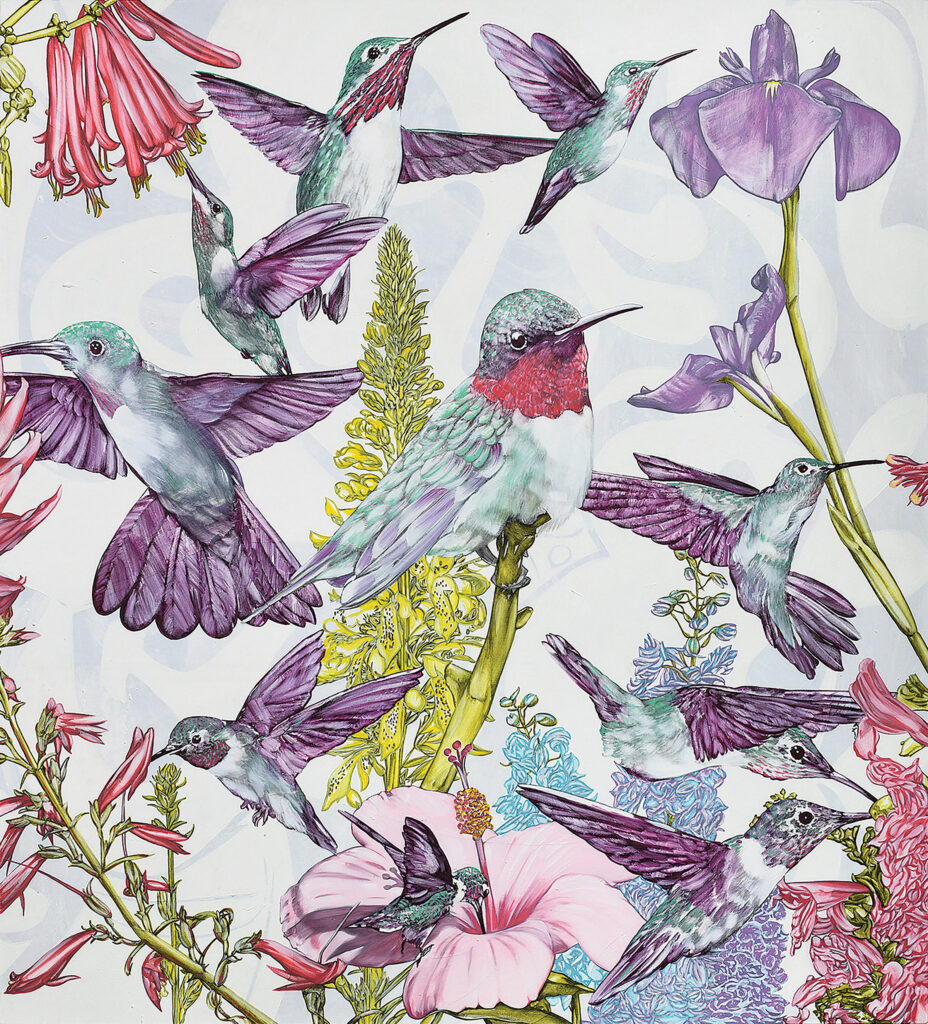
“John has a unique approach to painting that iterates on multiple art-historical styles and techniques to create something new,” Davis says. “The scale of John’s work, its richly textured surfaces, intricate layers of foreground, middle ground, and background, and larger-than-life allegorical depictions of flora and fauna, invites viewers to step into a new world with each painting.”
Nature’s Course is the largest solo exhibition to date for the artist. The effect of seeing so many of these paintings together in one place should have a tremendous impact; Newsom’s artworks will be a feast for the eyes (“full meals,” as the artist describes them) because he mixes so many painting styles from multiple generations within each of his pieces.
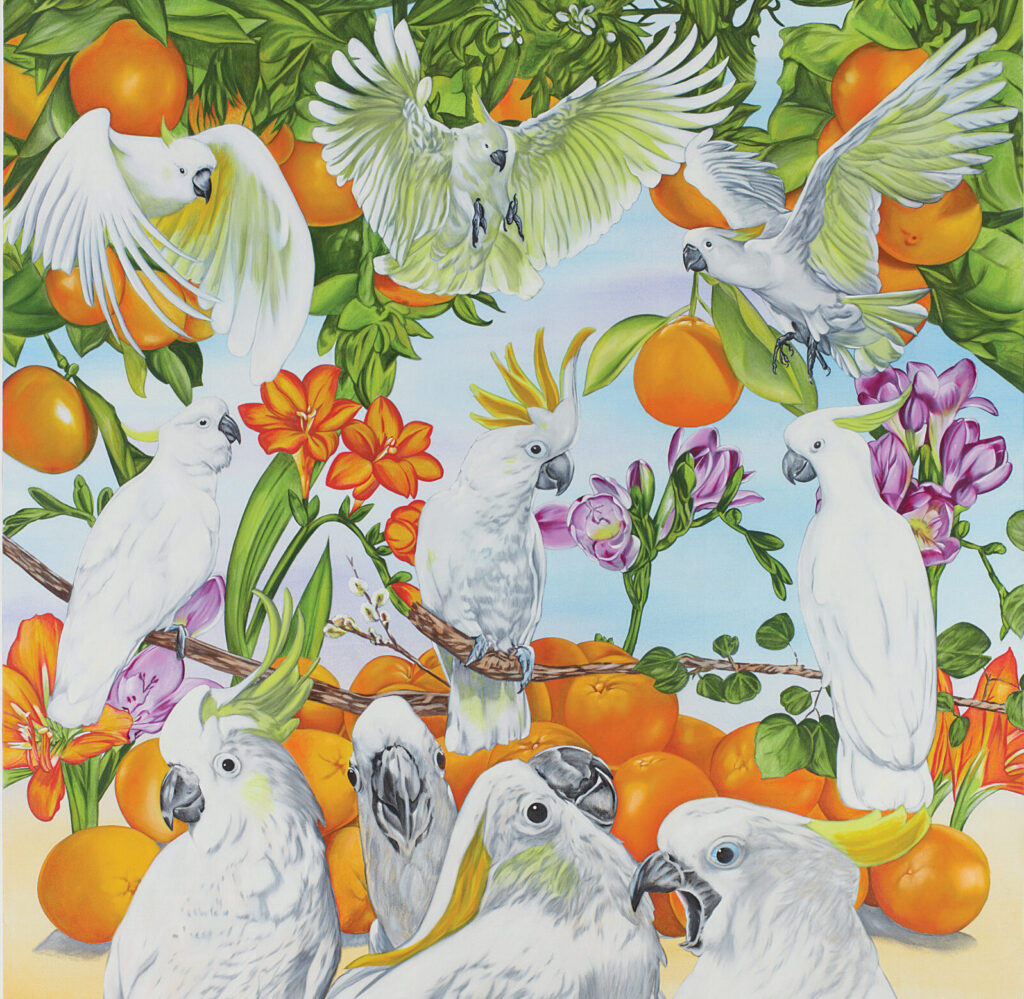
As Newsom tells it, his instinctive process flourished as he wandered the halls of the Met and MoMA during his many years living in New York City. “When I encounter a serious painting of interest to me, I examine it closely, digest it, and whatever I retain from it is readdressed in my own work,” he says. “This is something that occurs very naturally for me.”
When asked if there is an urgency in Newsom’s work that comes out of its focus on survival, his friend and fellow contemporary artist Raymond Pettibon says, “You’ve answered your own question. Alternately, will [Newsom’s] work survive his subjects? Audubon made dead certain that his [art] would. Or will his art outlast life itself? Or are none of these prospects appealing?”
In his cryptic way, Pettibon points out how Newsom’s process presents a whole other allegory: the survival of painting itself. How can painting live, but more so thrive, in our current art world? With his animal allegories of fighting, flight, sustenance, collaboration, and bravery in the face of insurmountable odds, John Newsom’s art is sure to speak clearly to generations of people from every walk of life by materializing important lessons from the march of time and, of course, nature’s influence.
John Newsom: Nature’s Course is on view through August 15, 2022, at Oklahoma Contemporary in the Eleanor Kirkpatrick Main Gallery.