American Graffiti
Tagging Oklahoma Contemporary’s upcoming exhibition "Not for Sale: Graffiti Culture in Oklahoma"
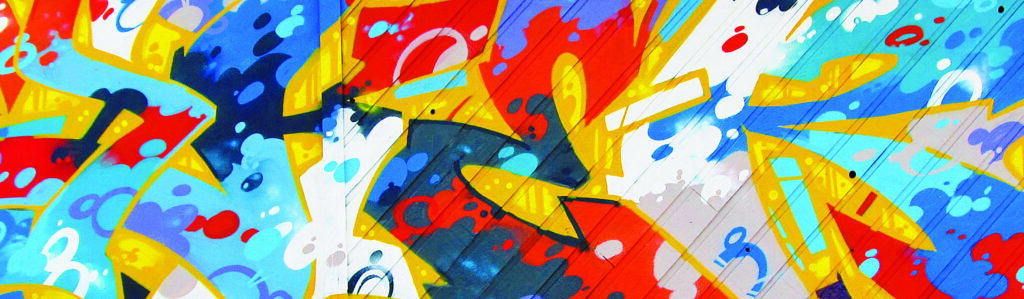
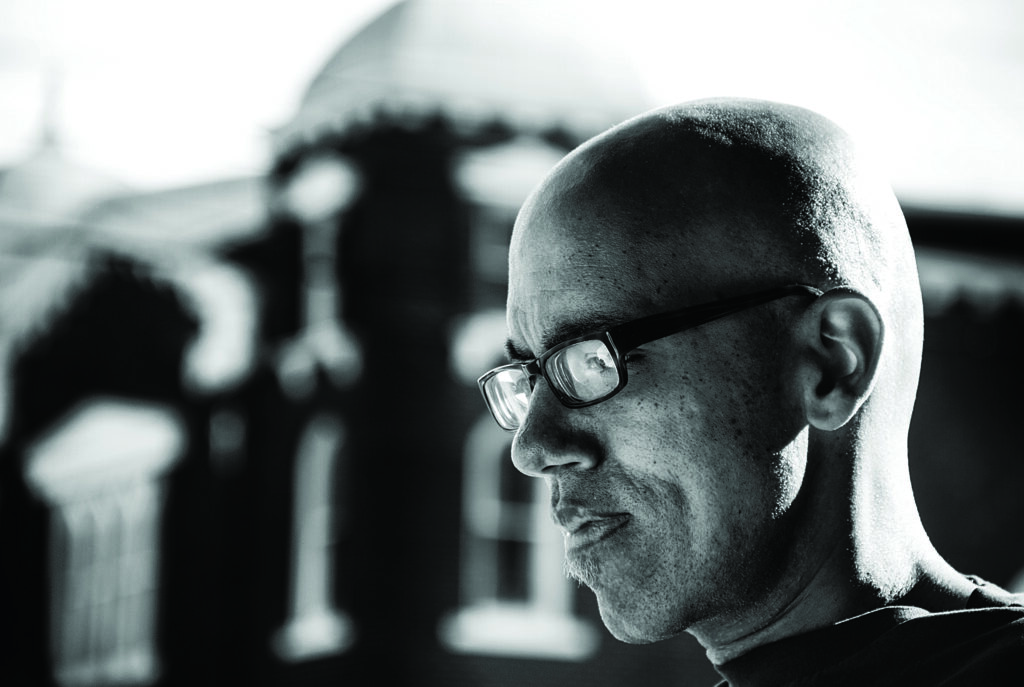
IN HIS YOUTH, Kristopher Kanaly skateboarded the paved drainage ditches around Oklahoma City’s Belle Isle area, where he saw images painted on concrete that changed his life. “It was completely filled with graffiti,” says Kanaly, now forty and a renowned artist, designer, photographer, and art director. “I remember picking up a [spray-paint] can and trying to mimic a Misfits skull that was on one of the ramps. That was my first real time to pick up a can and say, ‘This feels right.’”
Kanaly will be among ten artists featured at an upcoming Oklahoma Contemporary exhibition entitled Not for Sale: Graffiti Culture in Oklahoma. The Oklahoma-born artists, integral to the state’s graffiti scene, will paint their pieces directly on the gallery walls. “We’re looking to educate and inform the people around us of what this artwork is about, what this culture is about, and hopefully inspire others to see it in a different light,” says co-curator Angel Little.
The exhibition’s name references the fact that graffiti artists mostly do their work for personal reasons, not for monetary gain, says co-curator Chris SKER, who is featured along with other Tulsa artists. “Guests will experience the graffiti just as they would if they happened upon a public piece. It’s meant to be seen, not to be purchased.” SKER and his brother David HEK (also to be featured) helped create the Tulsa graffiti scene when they started writing in 1988, influenced by the seminal photography book Subway Art, rap-album covers, comic books, and fantasy and sci-fi art. “There was no graffiti to be seen on the streets of Tulsa. No writers, no crews,” says SKER. “We influenced our own selves. We were self-motivated. That strong inner drive is important to keep doing this work for so long.”
Graffiti has been around as long as man, found on cave walls and the ruins of Pompeii, and left by American soldiers who wrote “Kilroy was here” during World War II. “It’s a basic human need,” says Kanaly. Modern graffiti traces its roots to 1960s Philadelphia, where Darryl McCray tagged walls daily with his nickname, CornBread, and a signature crown; and to 1970s New York, where graffiti writers competed for exposure and notoriety. The acclaimed 1983 documentary Style Wars shined a spotlight on graffiti and hip-hop culture. The tearing down of the Berlin Wall in 1989 further reminded the world of graffiti as a cultural touch point, politically and creatively.
Traditionally text-based, graffiti became an early form of social media as writers tagged billboards, train cars, and subways to spread their message. Early graf writers craved both attention and anonymity. They incorporated assumed names in their pieces, and graf names are an essential part of the culture. Kanaly— who hasn’t done illegal pieces in years—adopted the nickname RHAK, writing the letters in a classic funky, bending style.
Law enforcement has historically equated graffiti with gangs and crime. Local police today seek to stop illegal activity while supporting graffiti culture in legal, regulated environments, says Little, adding that major cities which support hip-hop have seen a decrease in crime.
“Graffiti at its true form is vandalism,” says Roger Gastman, a graffiti historian and urban anthropologist who was a producer and on-camera expert for the Banksy documentary Exit Through the Gift Shop (2010). “Once you bring it inside, it is art inspired and influenced by graffiti. ‘Street art’ has become the safe, de facto go-to word for the general public.”
In 2015, Kanaly and fellow artist Dylan Bradway launched Plaza Walls, a curated, rotating mural project in the revitalized Plaza District of Oklahoma City, managed and produced by the Oklahoma Mural Syndicate with approval by the Oklahoma City Arts Commission and Urban Design Commission. To convince them, Kanaly and Bradway showed city leaders art examples of street art from places like San Francisco, Dallas, and Austin, Texas.
“Street art has exploded,” Kanaly says. “It’s an absolute art renaissance and phenomenon that’s going on in the rest of the world. So we really need to be right there, ready to embrace it.”
Not for Sale: Graffiti Culture in Oklahoma is on view from October 5 through November 30. oklahomacontemporary.org
GET DOWN @ Oklahoma Contemporary
Soul of an Underground | Oct. 19
An evening of performance inspired by the graffiti artworks on display, in partnership with the Ralph Ellison Foundation.
Basic Graffiti | Oct. 28 or Nov. 18, 10am–12pm
This class introduces students to the history of graffiti within hip-hop culture.
Advanced Graffiti | Oct. 28 or Nov. 18, 12pm–2pm
Taking the basics one step further.
Hip-Hop Street Jam | Oct. 3–Oct. 24, 6pm–8pm
Blending several styles of hip-hop and jazz, students learn how to incorporate their own style and personality into the genre.
Hip-Hop Dance Battle | Oct. 21, 12pm–4pm
Conquer the dance floor with the latest street dancing styles, like breaking, majorette, popping, and locking.
Hip-Hop Majorette | Oct. 31–Nov. 21, 6pm–8pm
A variety of styles, including hip-hop, funk, crump, lyrical, African, and free style.
A ONESoul Charity Event Hip-Hop Jam | Nov. 4
Dance battles, graffiti competitions, live music, and food trucks usher in Hip-Hop History Month—a designation made for the month of November by Mayor Mick Cornett in 2016. From noon to 7 pm family-friendly activities and performances will be the focus. After 7 pm, the setting changes to a 21+ drink-friendly evening.
Street Art in OKC: What’s Next? | Nov. 28
Artists and city administrators will discuss how working with graffiti artists can be a form of community beautification.
AGES AND CLASS FEES VARY.
Please visit oklahomacontemporary.org for more information and to sign up for children’s fall break camps.
Four Qs
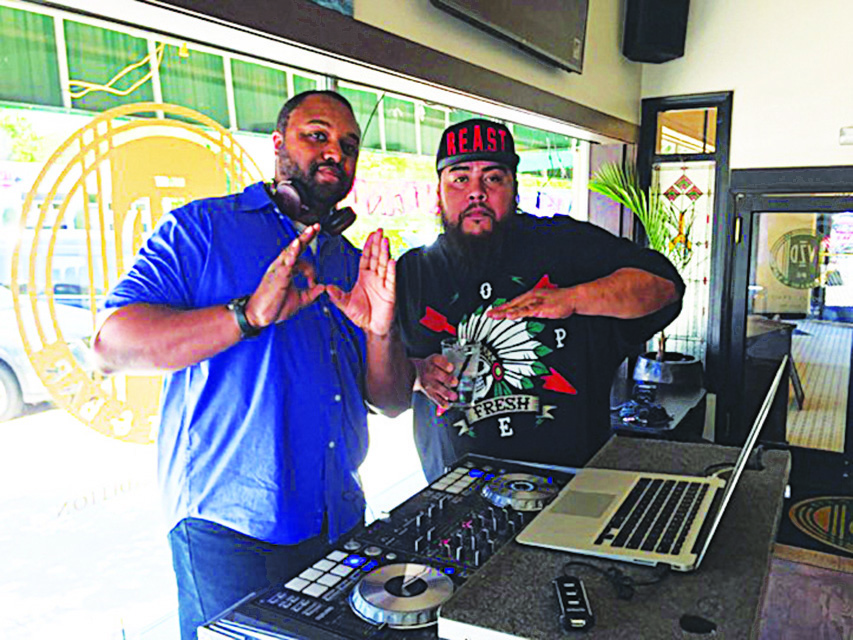
WITH TONY TEE, [ A.K.A. DJ NYMASIS ]
Hip-hop goes hand in hand with American graffiti culture.
Here, DJ Nymasis from Oklahoma City speaks of his hip-hop origin story.
Q: How do Native American themes present in your performances/music?
A: I’m very proud of my native heritage, so it plays a big role in everything I do, including my music. I open my performances with one or two of our ceremonial songs taught to me by my Irari (my spiritual brothers) Quese IMC and Brian Frejo. They were my first hip-hop crew—the legendary Culture Shock Camp with members Duo da sic Prophet and now local celebrity Jabee. We were a nationwide act with DJs, b-boys, and the most reputable (battle) emcees in the country at that time. We did shows at b-boy summits and native reservations all over the country. That’s how I came to know hip-hop culture, so the indigenous side of my craft is second nature to me and everyone in my circle. And I’m happy to say we had a hand in developing what is now its own genre, indigenous hip-hop.
Q: What makes a good emcee?
A: A good emcee is clever, cool, and calm until it’s time to release and put into words the frustrations, triumphs, and swag of who they are and what they’ve experienced.
Q: Describe the Native American rap/hip-hop scene here in Oklahoma and elsewhere.
A: The native or indigenous hip-hop scene is alive and growing around the country, including in Oklahoma. Change is something some elder natives shy away from, when it comes to “non-native” things like hip-hop/rap. But the kids love to dance, they love to paint. They’re intrigued by the turntables, and they hear their older siblings listening to rap. It has evolved into crews like Ha-Style from the Cheyenne Arapaho tribe in El Reno traveling the globe representing natives, hip-hop, and Oklahoma.
Q: What inspires you creatively?
A: I used to draw inspiration from my experience growing up as a half-Mexican, half-Native American in “all white/black schools.” From my faith as a Christian man. From the example set by my incredible mother—a strong, independent, single mom who unknowingly sparked my interest in good music, playing the likes of James Brown while I listened from the back seat. Our past does not define us, but it did make us who we are. So my inspiration comes from the universe, and there it shall return.
Up Word
Tony Tee, AKA DJ Nymasis, breaks down four elements of hip-hop culture.
DJ| The back-bone of hip-hop. The terms “on the wheels of steel” and “on the ones and twos” derive from the godfathers of hip-hop—DJ Kool Herc, Grandmaster Flash, and Grand Wizard Theodore. Perfecting the technique of playing two of the same record, on two different turntables, using the mixer and perfect timing, the DJ would play only the breaks of the records so the breakers could dance and MCs could rap.
MC| The voice of hip-hop. The MC took what was essentially “just” deejaying to the next level, making a gig more of a performance than a party. A common misconception is that all rappers are MCs. The difference is subtle, so don’t feel bad if you still can’t tell. Whoever holds the mic controls the crowd.
B-BOYS | B-boying, or breaking, comes in infinite forms. Top Rocking is an on-your-feet soul boogie that lets the audience see that, before you even get into your Floor Work (the more complex aspects of a ground routine), your flavor is on point. Power Moves consist of crisp, clean, acrobatic maneuvers requiring the highest level of skill and timing to create this rhythmic symphony of gravity-defying self-expression. And you can’t forget the poppers, the lockers, and, of course, crump. B-boy summits around the world have implemented an “all styles” category to keep the evolution of dance alive and ever-changing.
CYPHER | The gathering of the people— this is where it all comes together. The DJ rockin’ it properly, making way for the MCs to give a voice to what’s happening, all while the b-boys and b-girls dance in scenery created by the graffiti writers. All the elements involved create the synergy that is hip-hop.