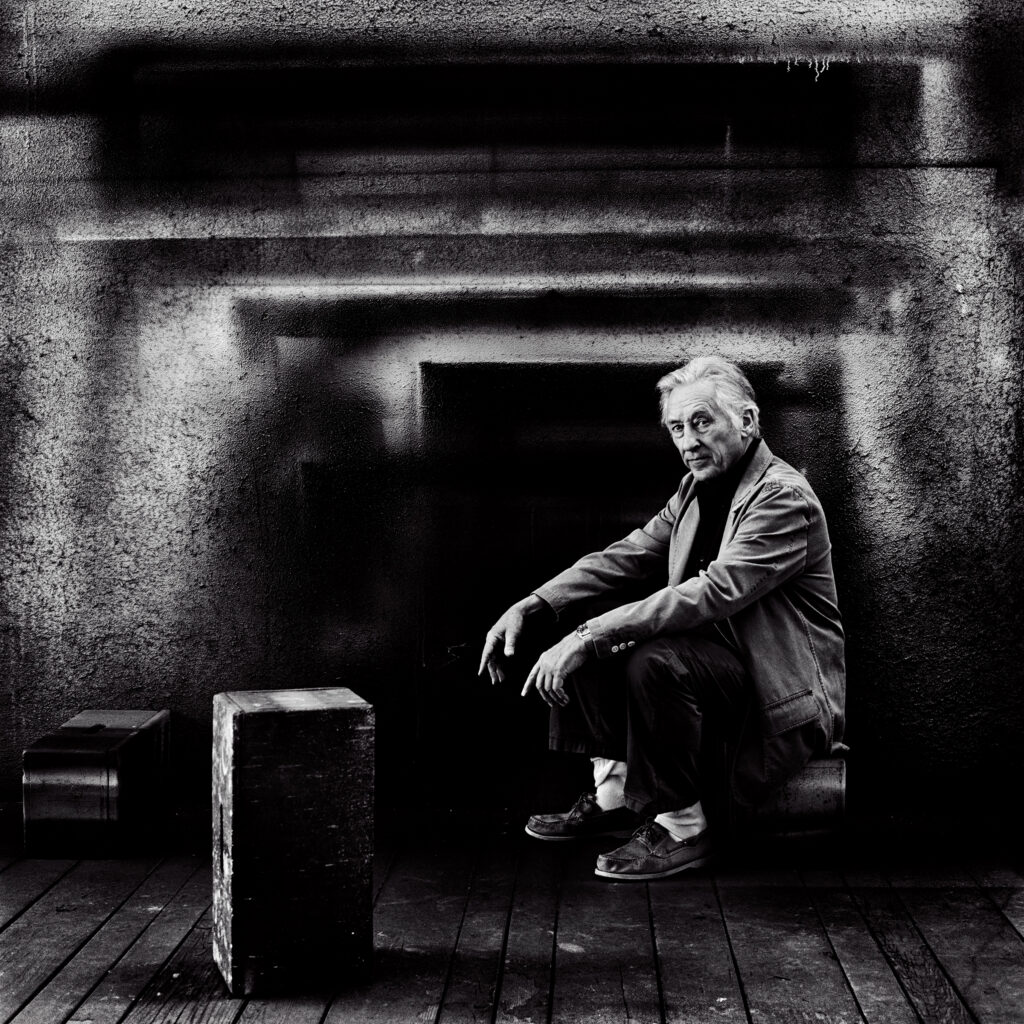
FOR MANY ARTISTS, it is a rite of passage to leave their hometown in search of a greater audience, a bigger footprint, and a broader source of inspiration. Leonardo da Vinci departed his tiny hamlet of Anchiano to seek his fortune in Rome. Pablo Picasso bolted from his Spanish coastal home of Málaga to find fame in Paris.
No matter how far one travels, the mental imprint of an artist’s place of origin, particularly on their creative output, is, in a word, massive. We could call it the muse.
That influence quickly becomes evident when looking at the body of work of one of the world’s greatest art stars, former Oklahoma City resident Edward Joseph Ruscha IV (roo-SHAY), or, as he is known simply in contemporary art circles, Ed.
Ed Ruscha was born in Omaha, Nebraska, but his family soon relocated to Oklahoma’s capital city, where he lived, by most accounts, an idyllic 1950s American childhood. An ambitious young man with an all-consuming itch for art, Ed headed west after graduating high school in 1956 to attend Chouinard Art Institute.
“Ed was part of a group of Oklahoma artist friends, including Jerry McMillan, Joe Goode, Patrick Blackwell, Mason Williams, and Ed’s younger brother Paul, who came to Los Angeles before LA became a main influencer of the global art world,” says Ravi Rajan, president of CalArts. Rajan himself is an Oklahoman, raised in Norman, and is an established academic leader in the contemporary arts.
“Many of these artists studied at the Chouinard Art Institute, the forebear school that turned into CalArts. Even before the turbulent 1960s, and the transition to CalArts, Chouinard was a place that focused on developing an artist’s unique voice. Other schools in L.A. then were much more corporate and conservative and required students to wear suits, prohibited open-toed shoes, and didn’t welcome women. Chouinard was more of a ‘free’ place where none of these restrictions existed. This place for originality attracted innovative voices like Ed, Larry Bell, Terry Allen, and Allen Ruppersberg, who worked together, lived together, and supported each other during school, and after, something Mr. Ruscha has spoken of strongly, and the strong bonds which continue to this day.”
The short version of Ruscha’s story is that he went on to become one of the most revered artists of the twentieth century. It’s not an overestimation to say that anyone who is anyone in the art world loves his sophisticated Okie-ness, his genuine sense of humility, and his work ethic. A prima donna Ed is not. And despite his hundreds of accolades, retrospectives, and career accomplishments, Ruscha has yet to mount a one-man exhibition at an Oklahoma-based art institution. Until now.
“To return to my place of origin, especially while carrying a truckload of art I made while away, is bound to be fulfilling,” Ruscha said in a brief, three-sentence email. It was enough. “I can only look forward to it. This show is a true return to roots.”
Leaders at the new contemporary arts center are thrilled. “Considering the artist’s influence and strong ties to Oklahoma, we were surprised to learn that no institution in the state had previously organized an Ed Ruscha solo exhibition,” says Jeremiah Matthew Davis, artistic director. “He is the perfect artist to serve as the subject of Oklahoma Contemporary’s first solo show in the new building.”
Ruscha’s connection to the territory is much deeper than a simple biographical note. That’s because Ruscha’s artistic output embodies a range of characteristics unique to the state and pivotal in America’s past.
“The show examines Ruscha’s formative years in Oklahoma within the context of his broader observations about American life and culture, particularly during the mid-twentieth century, when he was growing up,” says Alexandra Schwartz, who co-curated Ed Ruscha: OKLA.
The artistic themes echoing Ruscha’s childhood are so prevalent and numerous that the curators decided to structure the exhibition around them. “In addition to works that relate directly to Oklahoma, we are also looking broadly at [Ruscha’s] views of American identity and industry; the popular culture of his youth, including movies, comic strips, slang, and advertising; his Catholic upbringing; and driving, car culture, and the American West,” Schwartz says.
Adds Rajan of CalArts: “Ed took his graphic- and commercial-art study and turned it into his innovative, unique voice as an artist, one that, with his peers from that time at Chouinard, worked together to turn Los Angeles into one of the most important cultural creation centers of the US. It’s another way that Oklahoma has had an outsized influence on the truly original art from this continent.”
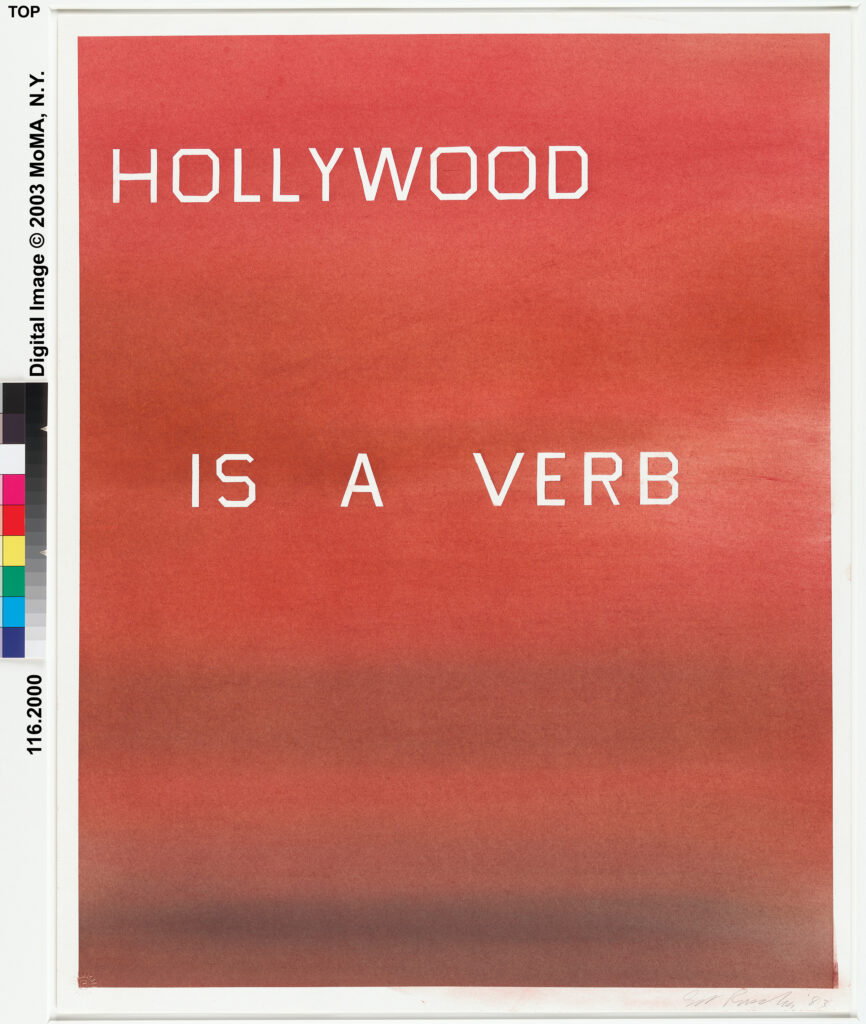
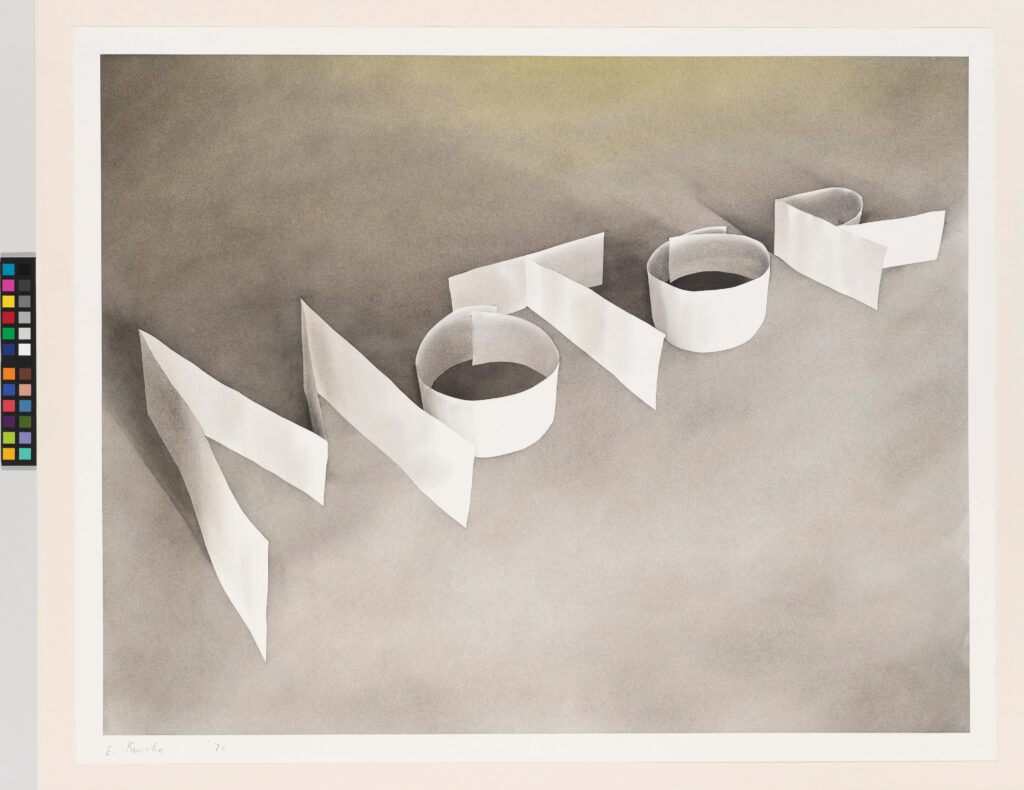
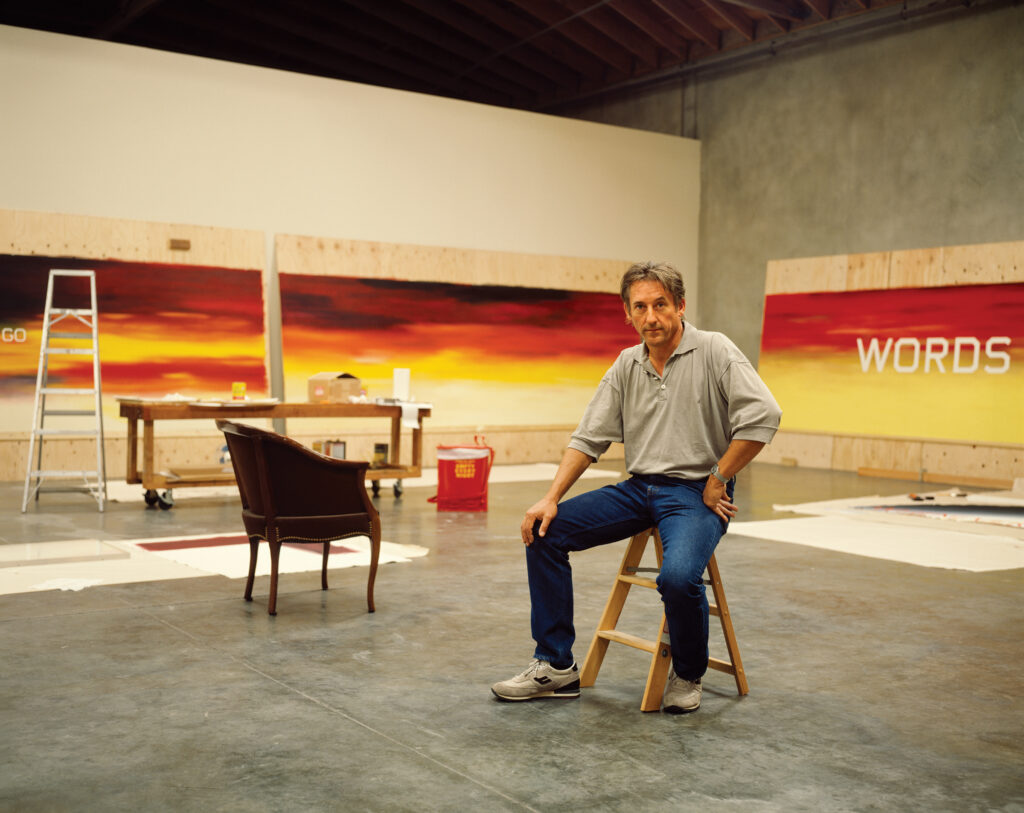
The exhibition will undoubtedly be a treat for hard-core Ruscha fans. Ed Ruscha: OKLA will feature works spanning the artist’s nearly seven-decade career. Iconic pieces such as Twentysix Gasoline Stations and Chocolate Room will be on view, as will recent and rarely seen artworks, including two of the artist’s new Drum Skins paintings. In all, more than seventy artworks, ranging from paintings, drawings, and a large-scale installation to prints, books, photographs, and film, will make up the exhibition at the newly opened arts center, each gallery echoing the Ruscha vision of the American West as seen through the lens of an Oklahoman.
Though Ruscha is one of the state’s most famous products, will his artwork, some of it created more than fifty-five years ago, connect with the youth of an Oklahoma different from the one he had known? Both Schwartz and Davis offer an emphatic yes.
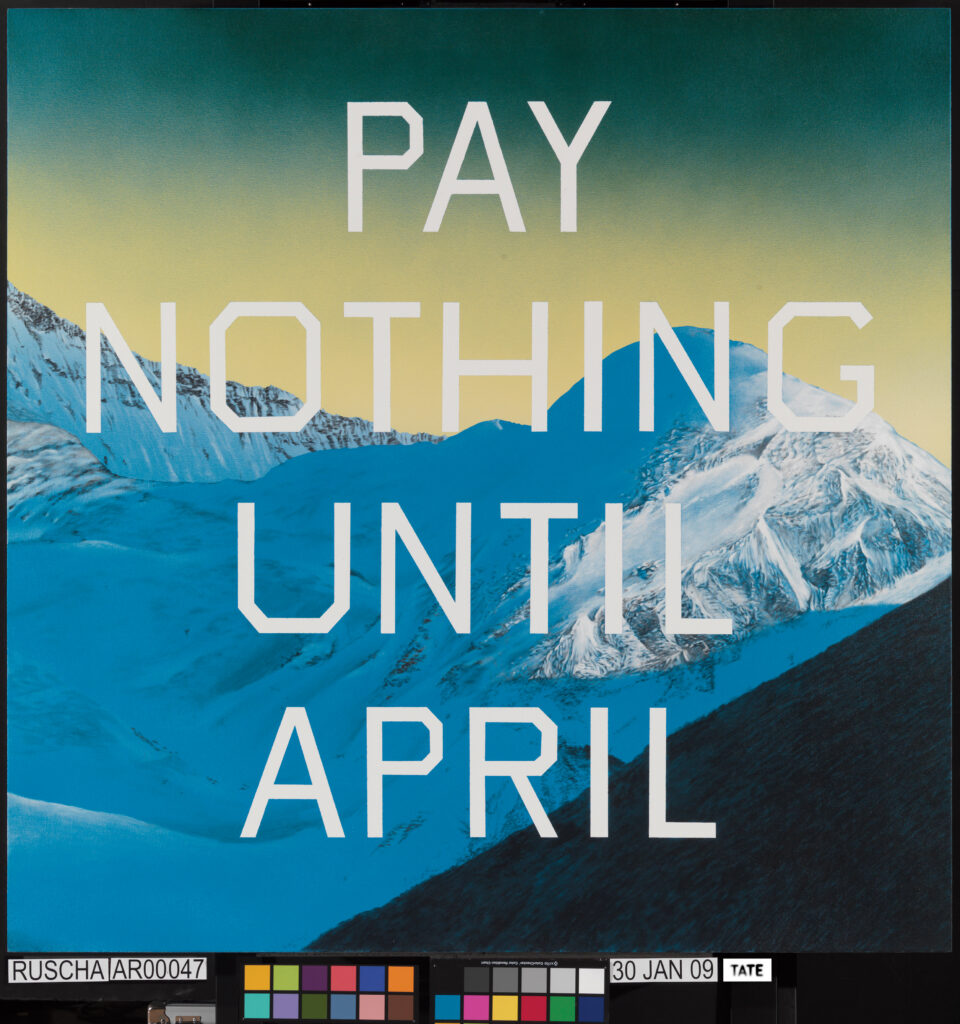
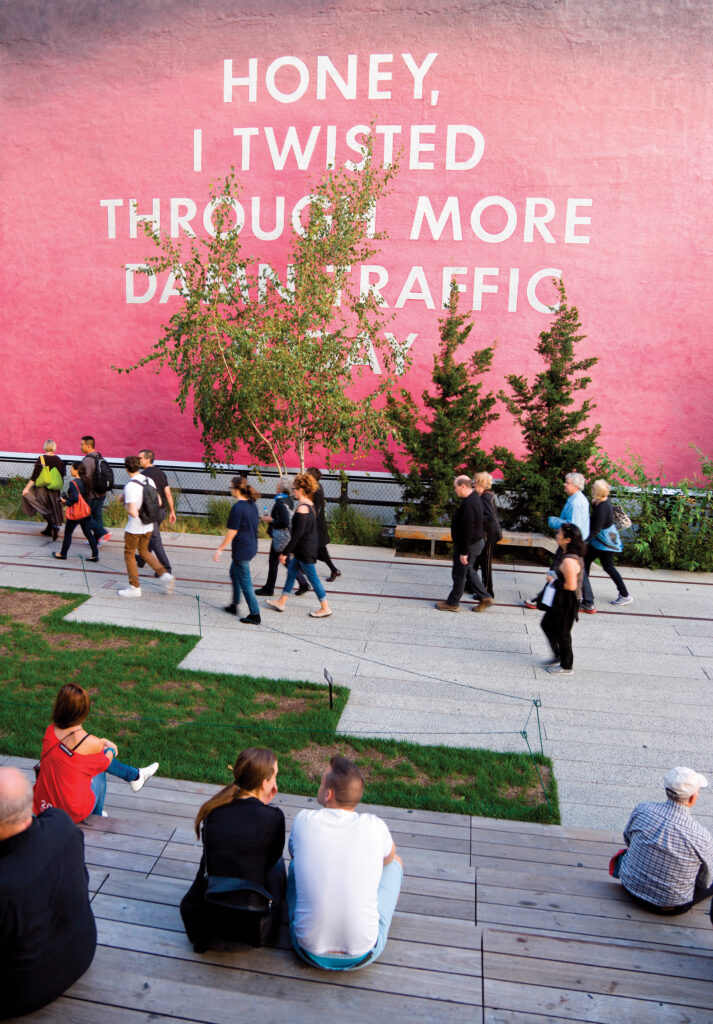
“Immersive installations have gained popularity over the past decade,” Davis says. “Chocolate Room will seem fresh, new, and irrepressibly fun, even though Ed first developed the work in 1970. For younger people, Ed’s use of text as image and text juxtaposed with subject matter may recall their interactions with contemporary memes and internet culture. It’s an approach the artist began exploring in the late 1950s and continues today.”
Ruscha’s work also offers a contemporary feel that’s absent from most older artists’ work. “A lot of it has to do with his humor,” Schwartz says. “While his work does show a great sense of humor, it’s also extremely smart, with a subtle social commentary that feels very relevant today.”
Ed Ruscha: OKLA will be on view at Oklahoma Contemporary Arts Center in Oklahoma City from February 18, 2021, to July 5, 2021. oklahomacontemporary.org