A New Meaning
Betye Saar’s eclectic assemblages gained momentum in the 1960s—a turbulent time for civil rights in America and an important shift in art toward conceptual work. Jill Hoffman spoke with Saar about her upbringing and its influence on her multimedia sculptures, a body of work that also acts as political protest and social activism.
BY Jill Hoffman
Jill Hoffman: I’m so happy we are friends and neighbors, Betye. For our readers, can you tell us about your childhood? Where did you grow up?
Betye Saar: I grew up in Pasadena, California. After my father died, we lived with my Aunt Hattie and Uncle Bob for a while. They bought a house in Pasadena, which was inhabited by my mother and siblings and me, and then my aunt and uncle when they would come home on Thursdays and Sundays. Our life took a whole different framework from the time that we lived with them, which was the time when I was maybe six or seven until twelve. My family was small, my siblings and I were the only children. We were comfortable and loved.
Jill Hoffman: How do your life experiences contribute to your evolution as an artist?
Betye Saar: I was always interested in art. In college at UCLA, I majored in design. After college, I got a job as a social worker. That was my main employment until I got married and had children.
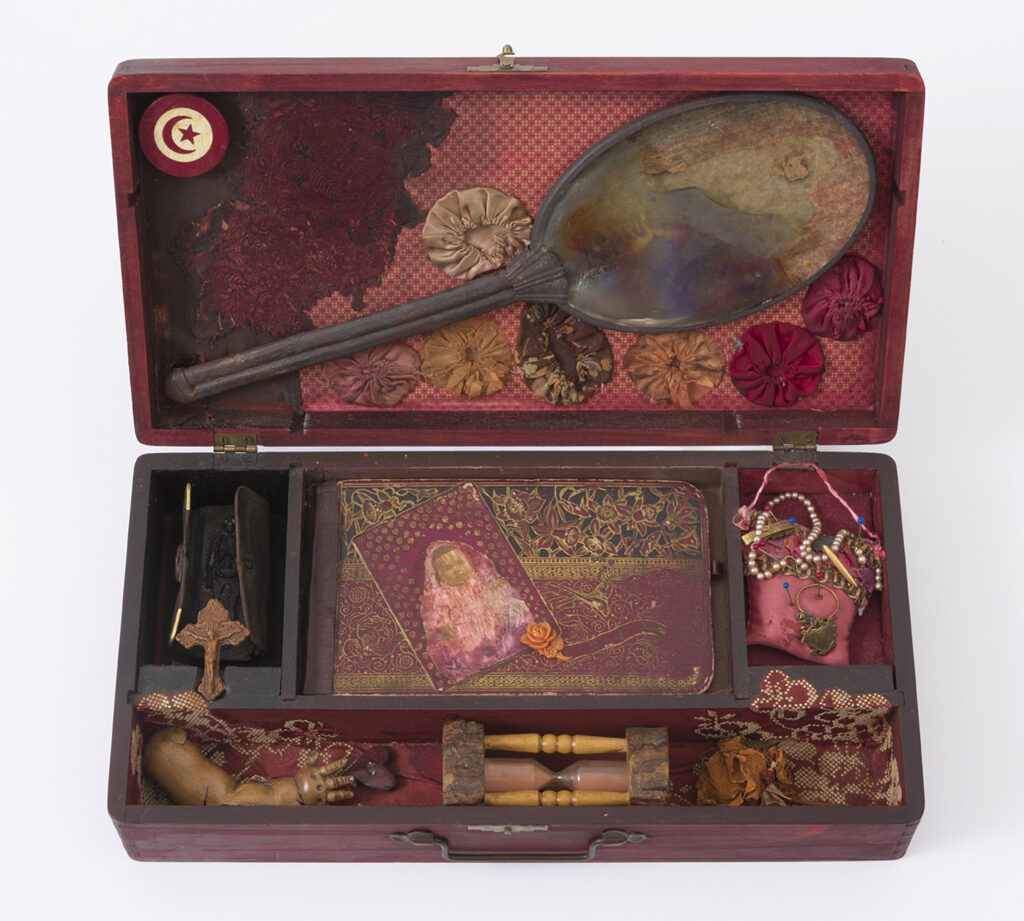
Betye Saar: I participated in the Black art activities in Los Angeles at the Brockman Gallery. On a field trip, David Hammons and I took a midnight flight to Chicago. We went to the Field Museum together. My work changed then. I saw lots and lots of African art, Oceanic art, and Egyptian art. They had rooms of it. I had never seen that much, because our museum of natural history here [in Los Angeles County] just has a small collection of African art. With this new Black awareness and this thing about African art being really prevalent—I mean, I looked at all that work and looked at the materials that they had used in making that art and the feelings that it had. So, upon return, I started a series of works that were sort of ritual pieces—Mojos I called them.
Betye Saar: I’ve always liked to collect old things, and when my Aunt Hattie died in 1975, I just didn’t want to throw out those papers. My biggest influence is materials. I’ve always liked the old photographs, so I got all the stuff from her house. My grandmother lived in Watts, California. I discovered the Watts Towers near her house. Simon Rodia used all sorts of materials in building the towers, including a corncob husk. [An] artist can make art out of anything.
Jill Hoffman: What are some of your most recent pieces and exhibitions?
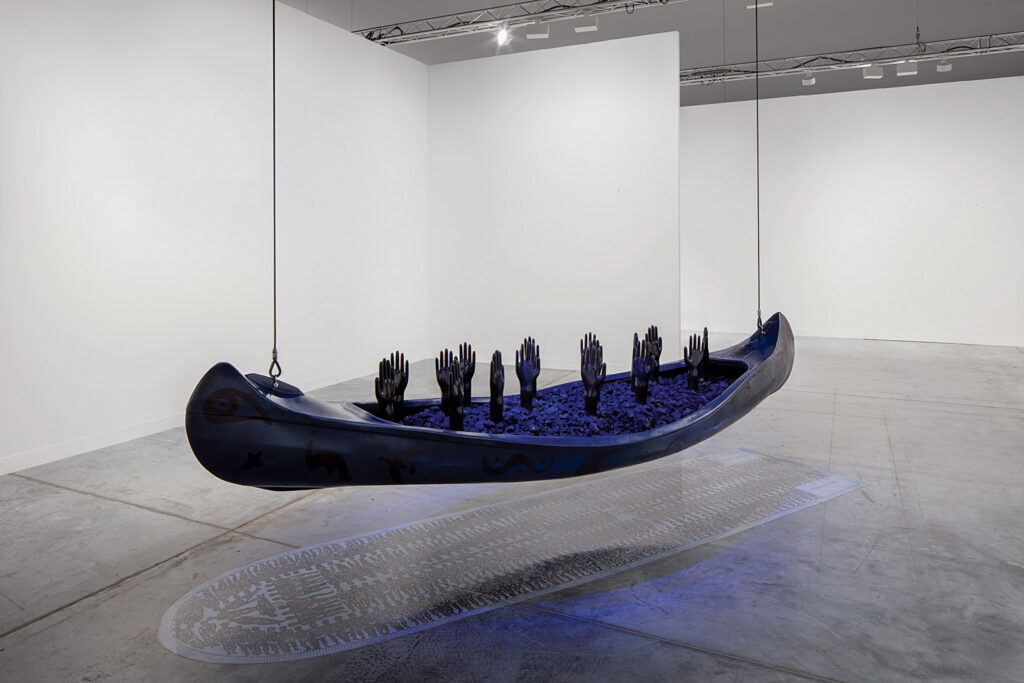
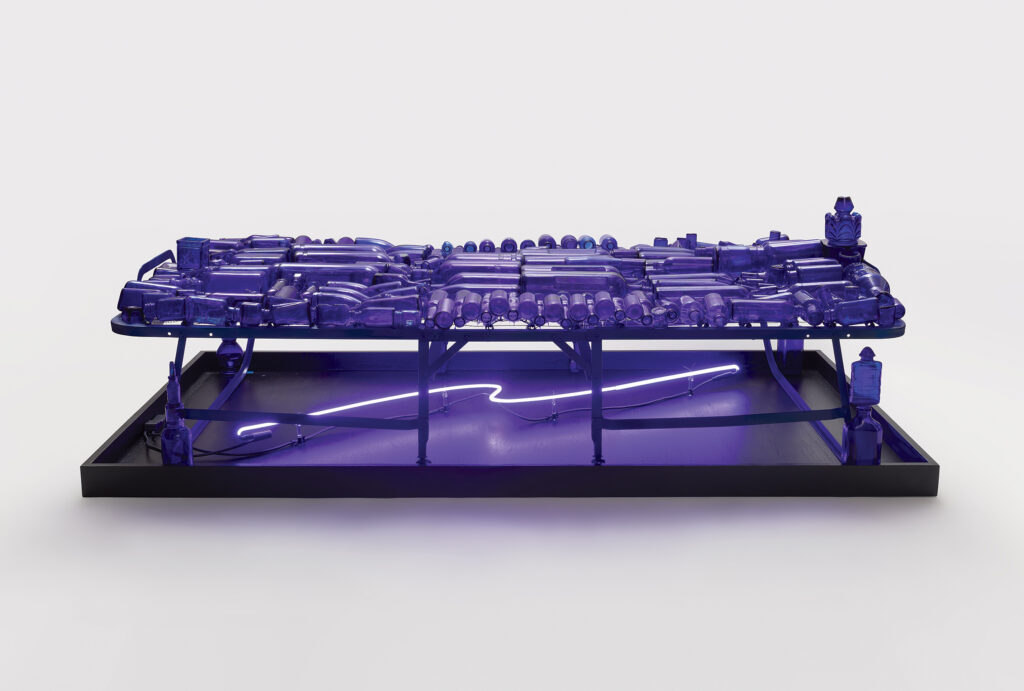
Betye Saar: Some recent pieces are Gliding into Midnight, a site installation with a canoe, and Woke Up This Morning, the Blues Was in My Bed.
Betye Saar: Call and Response was a solo exhibition at Los Angeles County Museum of Art (September 22, 2019–April 5, 2020). It will be traveling to the Morgan Library and Museum in New York. The Legends of Black Girl’s Window, an exhibition focused around my 1969 autobiographical assemblage, was at the Museum of Modern Art, New York (October 2019–January 1, 2020).
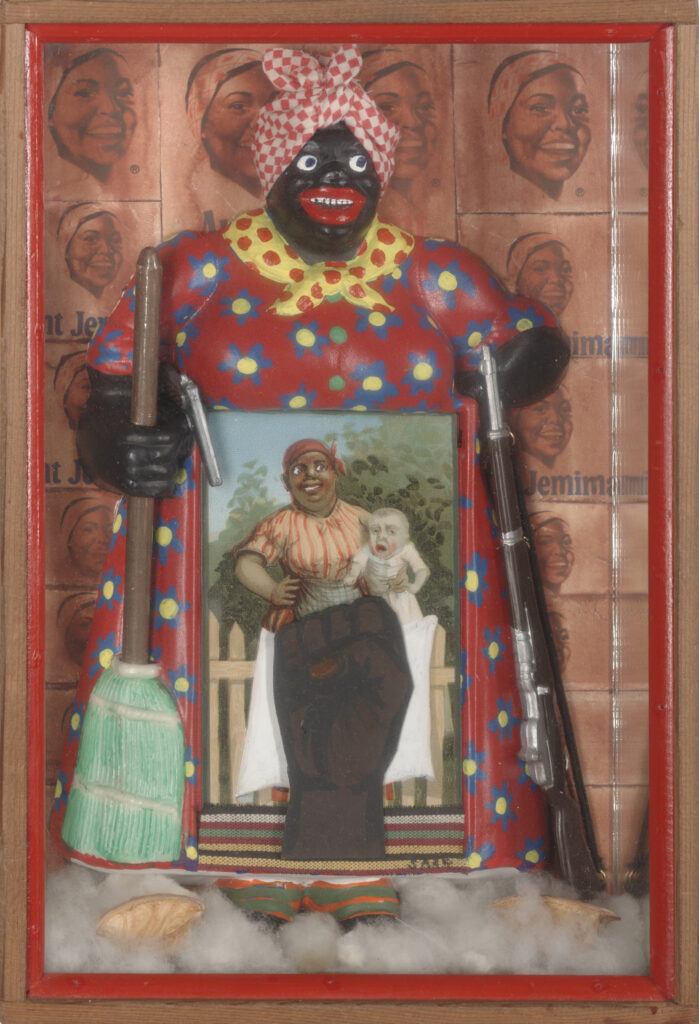
Jill Hoffman: In the Liberation of Aunt Jemima, what are you saying and how was it received? What other works are part of this narrative?
Betye Saar: My artistic practice has always been the lens through which I have seen and moved through the world around me. It continues to be an arena and medium for political protest and social activism. I created The Liberation of Aunt Jemima in 1972 for the exhibition Black Heroes at the Rainbow Sign cultural center in Berkeley. The show was organized around community responses to the 1968 Martin Luther King Jr. assassination. This work allowed me to channel my righteous anger at not only the great loss of MLK Jr., but at the lack of representation of Black artists, especially Black women artists. I transformed the derogatory image of Aunt Jemima into a female warrior figure, fighting for Black liberation and women’s rights. Fifty years later she has finally been liberated herself. And yet, more work still needs to be done.
Saar’s latest exhibition, Call and Response, is on view at the Morgan Library and Museum in New York City through January 31, 2021.