FROM THE ARCHIVE
When It Rains…
In May 1923, Oklahoma City Parks horticulturalist Ed Lycan rowed zoo animals to safety from a flooding North Canadian River. A century of Kirkpatrick family leadership followed.
BY David Hull
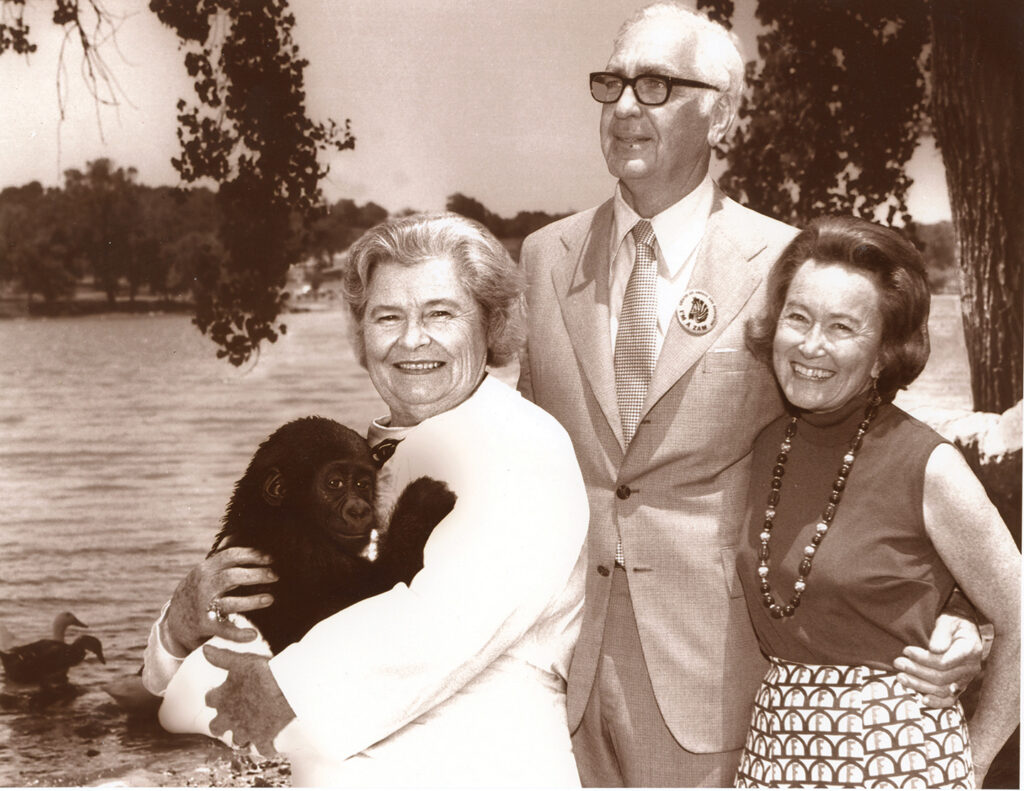
In May 1923, Oklahoma City Parks Department horticulturalist Ed Lycan organized rowboats to move zoo animals and valuable greenhouse plants to safety as the North Canadian River flooded its banks and the adjacent Wheeler Park Zoo by as much as two feet.
Fast-forward forty years: Oklahoma City oilman and philanthropist John E. Kirkpatrick approached funding local arts and culture nonprofits with a businessman’s acuity. The fledgling Oklahoma City Zoo needed long-range planning with a focus on conservation—including animal habitats that mimicked natural environments.
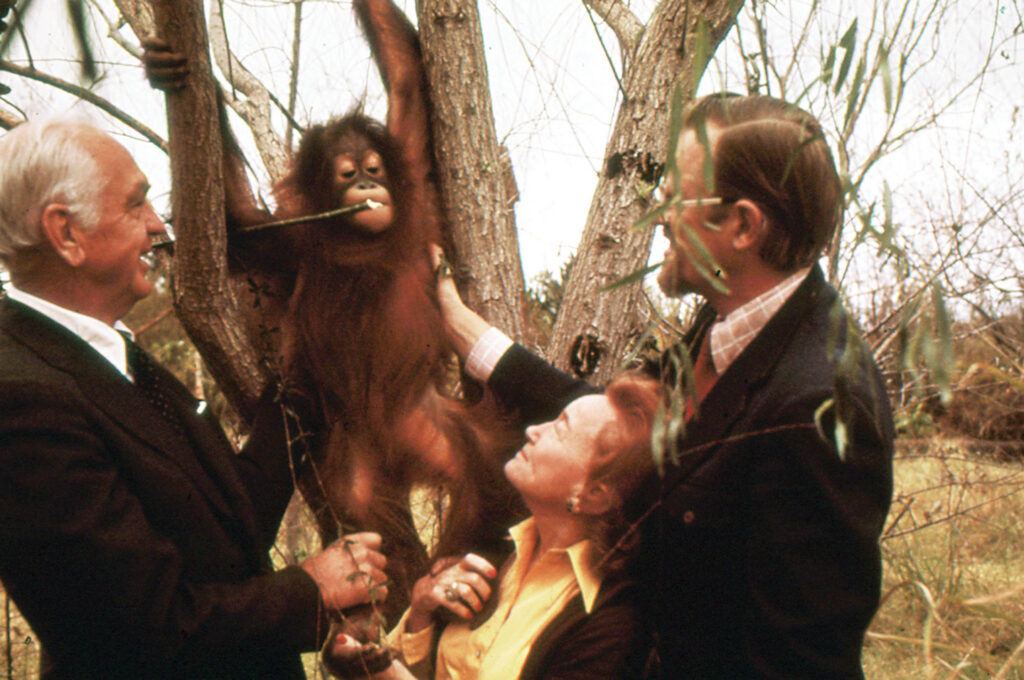
In 1963, while Kirkpatrick was on a business trip, his wife, Eleanor Blake Kirkpatrick, a Friends of the Zoo member, nominated her absent husband to become president of the newly christened Oklahoma Zoological Society. During his first visit, the retired admiral drove by the zoo’s location three times before finding the grounds. Clearly, the facility needed rescuing. More importantly, the Kirkpatricks wanted Oklahoma City to represent the best in animal care and education.
Fast-forward to a new generation: The Kirkpatricks’ daughter, Joan Kirkpatrick, played a key role to help build a premier animal hospital at the zoo.
Finally, in the present day: The Kirkpatricks’ grandson, Christian Keesee, has provided philanthropic support and leadership to advance the zoo’s conservation goals, resulting in a shift from animal welfare to animal wellbeing.
Over the course of a century, through long-term planning and strategy, the Oklahoma City Zoo has become a national leader, meeting the highest standards set forth by the Association of Zoos and Aquariums.