IT SEEMS THERE’S no part of the world free from the threat of whipping wind, a deluge of water, consuming fire, blankets of snow and ice, or even drones and missiles. Atmospheric events and armed conflicts don’t discriminate between life forms—they threaten people and also animals, both domesticated and wild.
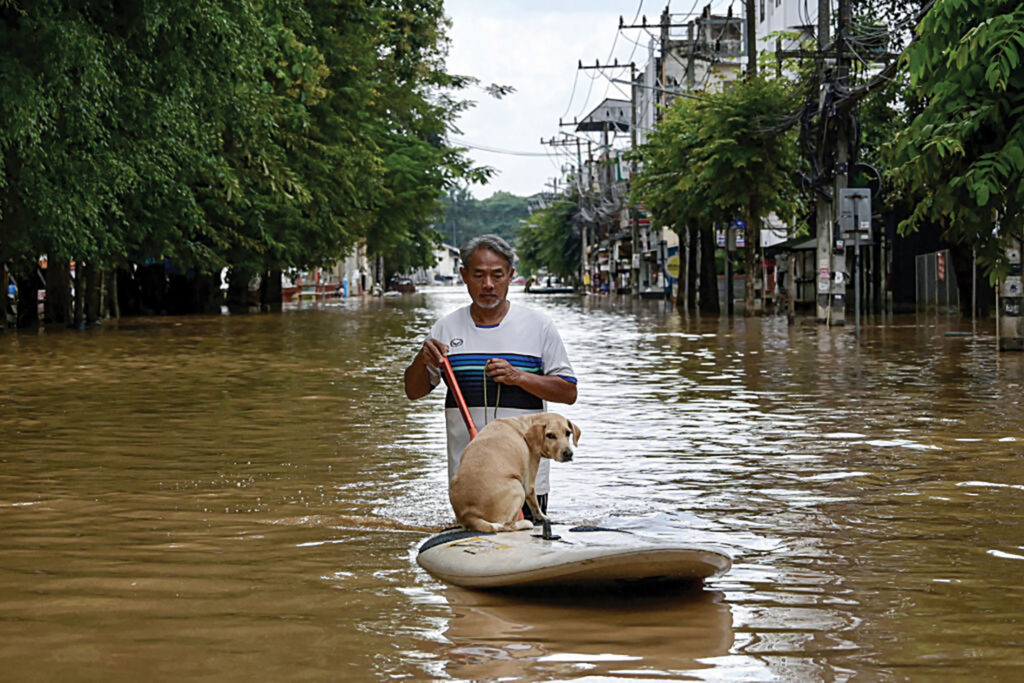
In the fall of 2024, Florida was battered by back-to-back destructive hurricanes Helene and Milton. Last year, wildfire decimated a portion of Maui and the people and animals in the way. For the past year, bombs have rained down on Palestine and Lebanon, and since 2022 the Russian invasion of Ukraine has disrupted life for millions of people and animals.
It’s an axiom in disasters that when people die or are displaced, the risks apply to non-human animals, too. Like us, they need shelter, whether it’s a fabricated home or apartment, a forest canopy, den, burrow, or tree cavity.
According to a 2023 study from the Pew Research Center, 62 percent of American households have pets—making the risks of disaster a shared experience. In fact, the same study found that half of US pet owners consider their animals to be as much a part of the family as any human member, and it is unthinkable, of course, that a family member could be left behind.
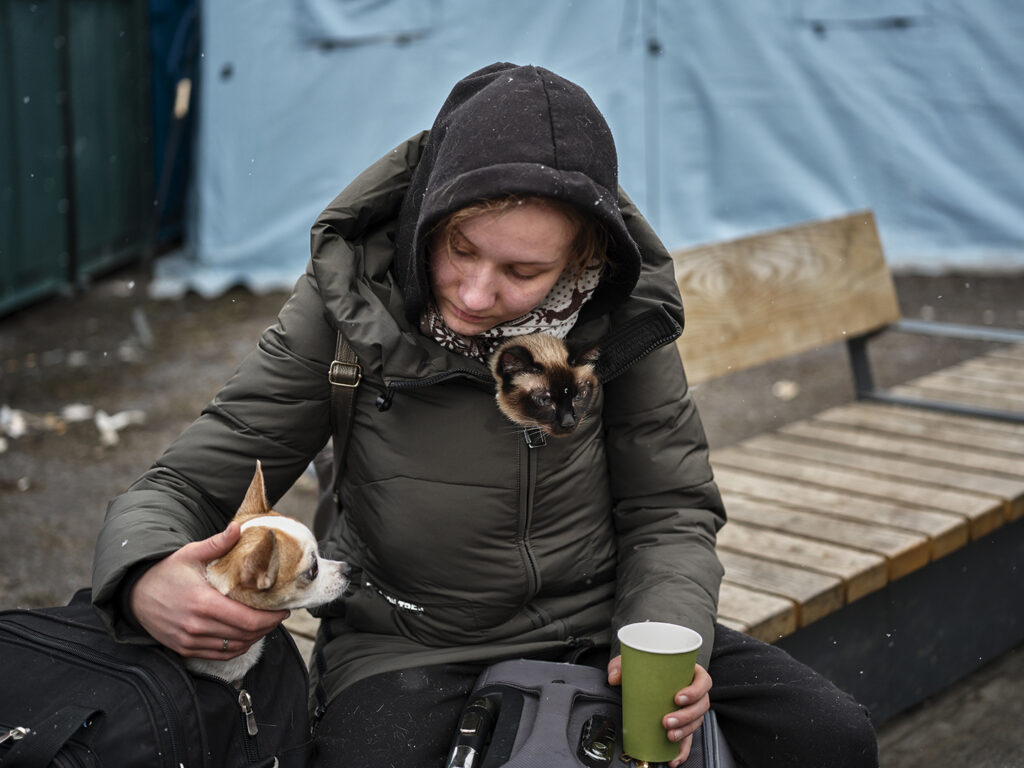
Not only do our pets need rescue and compassion, but they themselves can also give love and help during crises. In Ukraine, dog ownership has increased over the past two years, as many seek comfort and stability in uncertain times.
This ubiquity of animals in our lives is an expression of the age-old bond between humans and animals. As more people leave the farm or rural living—where animals are part of the matrix of those settings—people in cities and suburbs bring animals into the home to remain connected to nature.
Stateside, it was Hurricane Katrina making landfall on the Gulf Coast that forever changed our response to disasters and our collective understanding of the human-animal bond.
With the warnings of a massive, life-threatening storm approaching the Gulf Coast, authorities issued dire-sounding evacuation orders. But the shelters, miles from the coast, had beds for people but not animals. As a consequence, tens of thousands of people disregarded the orders because they would not abandon their best friends during a time of crisis. They decided to face the storm with their pets by their side.
Congress then recognized, as did the nation as a whole, that if we don’t account for the human-animal bond, we’ll undermine efforts to prepare and respond to disasters. Just months after the disaster struck, lawmakers passed, and President George W. Bush signed, the Pet Evacuation and Transportation Standards (PETS) Act. It stipulated that state and local governments must implement emergency procedures for those with household pets or service animals, and it authorized FEMA to provide funds for shelter, care, rescue, and other emergency needs or services.
When disaster occurs, too often the voiceless and dependent fall through the cracks, human and animal alike. Such devastation is often what it takes to bring about changes in policy and attitude, yet despite this unfortunate reality, new efforts in helping the helpless, in protecting the weak, must be celebrated. But we cannot stop—when, and before, crisis comes, humankind must endeavor to be better stewards and friends to the furred, feathered, and finned members of our kingdoms.
For more than thirty-five years Wayne Pacelle has been an advocate for the wellbeing and protection of animals. He is president of Animal Wellness Action and the Center for a Humane Economy.