Turn on the Bright Lights
British artist Anthony McCall sculpts with projected light, and his immersive Solid Light makes its North American debut at Oklahoma Contemporary.
BY Kelly Rogers
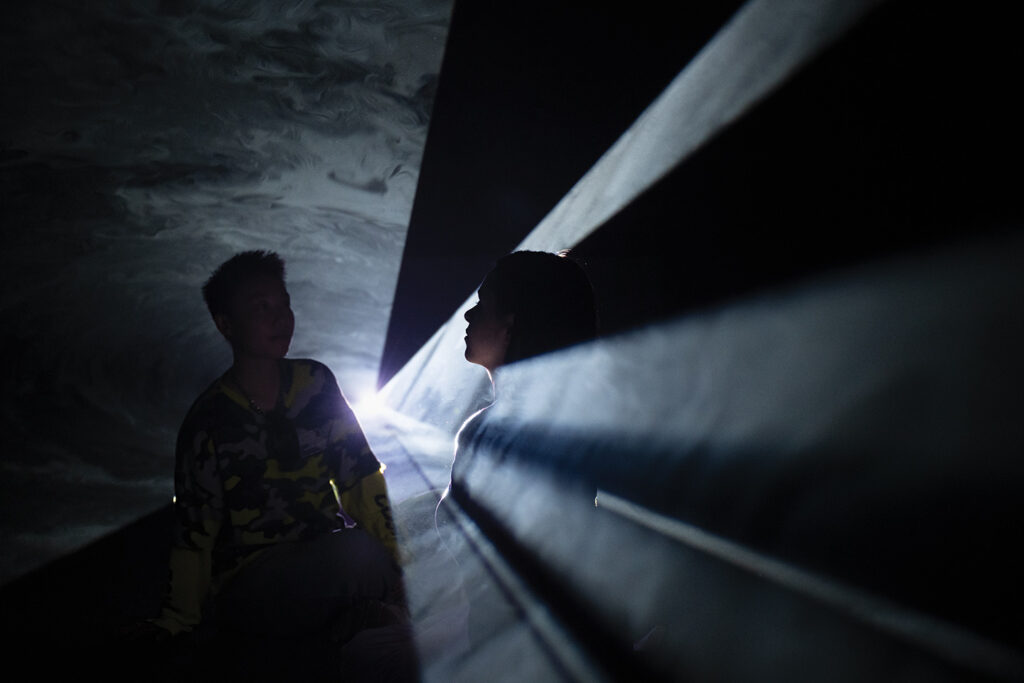
THIS SPRING, A monumental exhibition arrives at Oklahoma Contemporary Arts Center in Oklahoma City. Anthony McCall: Solid Light invites us to challenge our ideas of contemporary sculpture and our ways of looking. British-born artist Anthony McCall is a master of abstraction and creating with the intangible. In his works, light becomes solid, space becomes structural, and time disappears. Solid Light comes to Oklahoma City by way of London in a collaboration with Tate, marking the exhibition’s North American debut.
“It’s quite a special thing to get into a room of the solid light works. They’re relaxing and mystical to be with,” says Gregor Muir, Tate’s director of collection, international art. “There is this moment of realizing you can really interact with them…and this tests you and the parameters of your freedom. What you could do, what you shouldn’t do.”
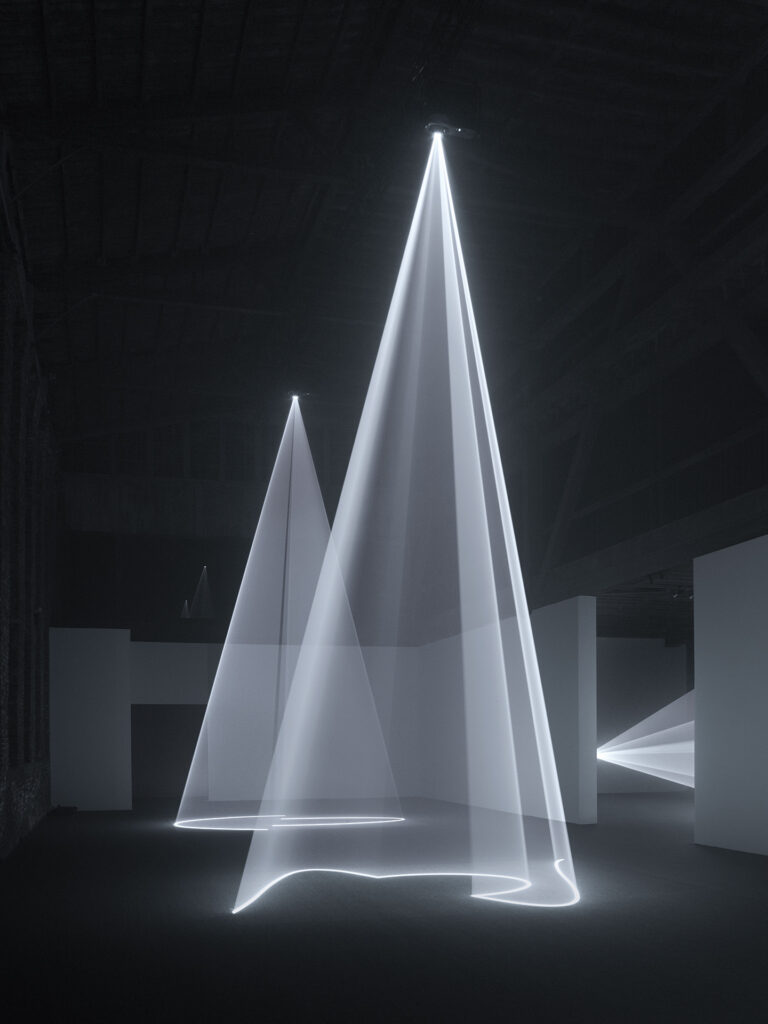
These works require a uniquely specific environment, a darkened room primed with a soft, misty haze for the projected light to travel across. It’s an intriguing departure from your typical museum visit, and one that relies heavily on a curious audience. Follow the beam of light to its end, and you’ll find its “footprint,” or a two-dimensional version of the “solid” work as it appears on a surface. McCall says the sculpture’s footprint is equivalent to the significance of a blueprint for an architect, and he constructs these works in a similar way. Beginning in 2-D with pencil and paper, he creates the line drawing that eventually becomes a 3-D sculpture, made of light.
McCall began creating solid light works in 1973 with Line Describing a Cone, a film that serves as the anchor point for this exhibition and marks a pivotal moment in the artist’s oeuvre. In this film from Tate’s collection, a projected dot of white light gradually draws a circle on the screen over the course of thirty minutes. In the space between the projector and the screen, a giant cone of light begins to take shape out of thin air. Slowly and dramatically, a sculpture is built right in front of our eyes. This work came just a year after McCall’s first film, Landscape for Fire (1972), a documented performance of fires lit according to precise choreography in the dusky light of an old airfield. It was this film that led McCall to the solid light concept.
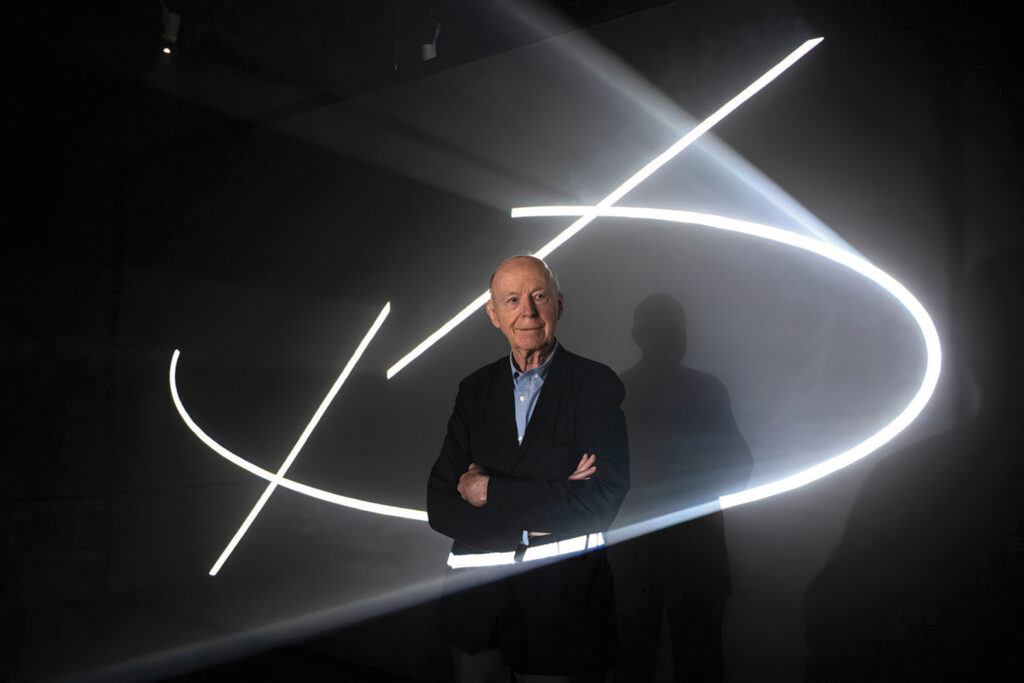
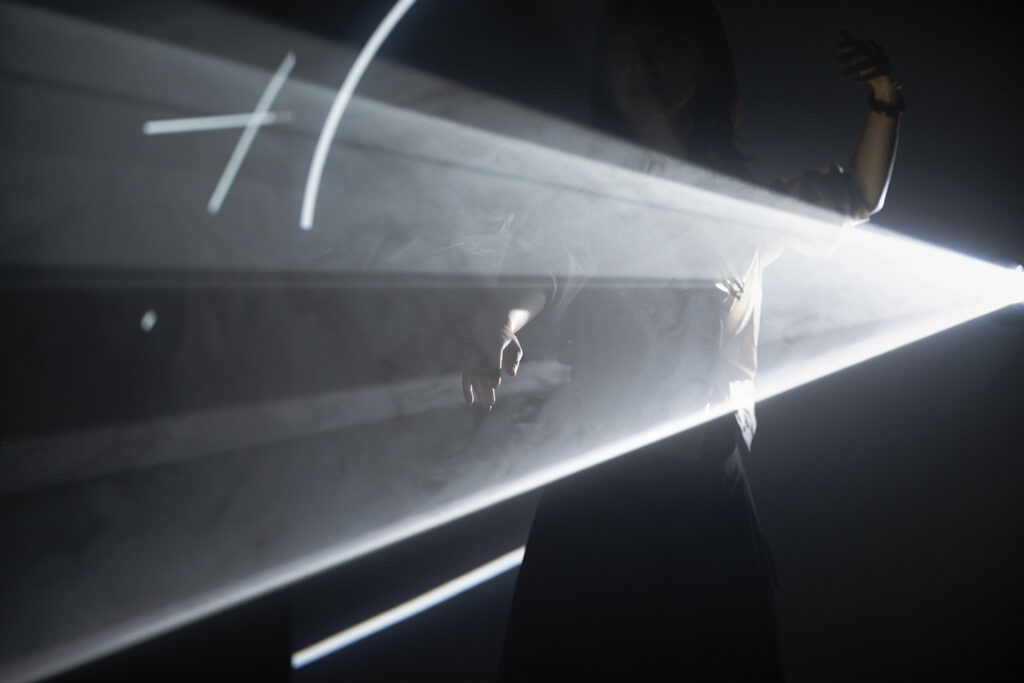
“I had become much more interested in the process of filmmaking, film audiences, and projection than I was with what happened in front of the camera,” McCall says. “I began to think it would be interesting not to make a film of a performance but to somehow make a film as a performance.”
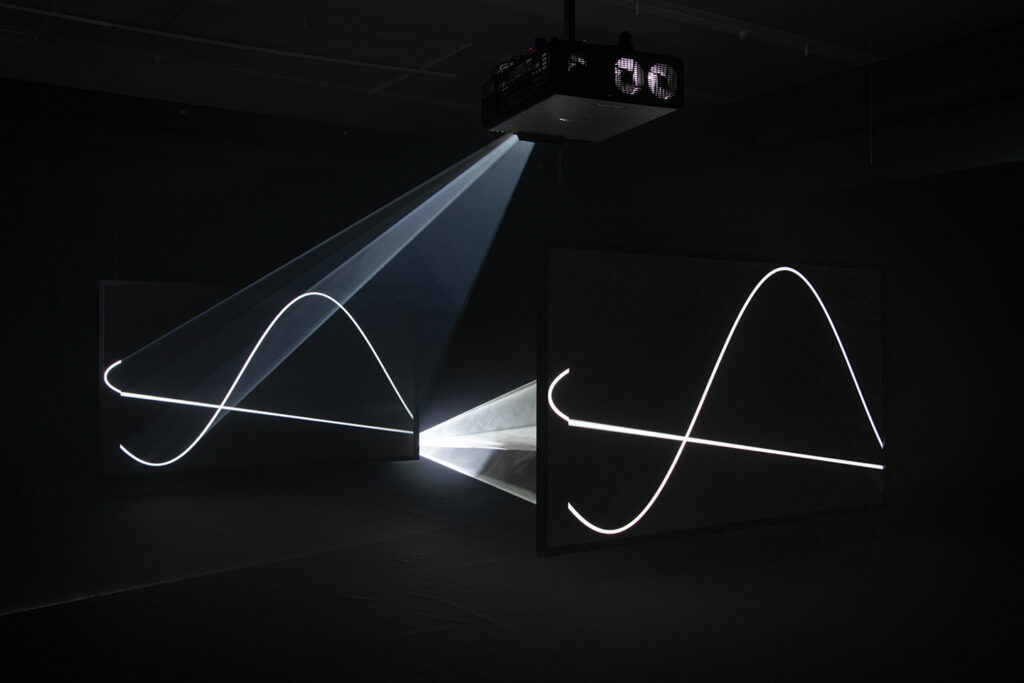
Solid Light features three other projected light installations, including Doubling Back (2003) and Split Second (Mirror) I (2018), showing the evolution of McCall’s solid light concept over time as he began to incorporate other materials, like mirrors, and more projectors into his work. Muir says the focus on the action of projection, as its own medium, reverses our traditional gaze, compelling us to look back into the light itself. In addition to McCall’s formative early ’70s films, archival photographs and sketches from the artist’s notebooks, which he’s kept since the beginning of his practice, will contribute a deeper examination to the exhibition.
These materials provide intimate snapshots of McCall’s work as it evolved over a nearly fifty-year period, revealing the influence of experimental film, performance, and architecture on his creative process. There is a continuity to his developing body of work, McCall says, as each work presents some kind of new problem for the next. Over the past year, Solid Light has exhibited in museums around the world, from La Reggia di Venaria in Italy to Shenzhen Bay Cultural Park in China. Now it’s Oklahoma City’s turn to experience McCall’s atmospheric scenes.
“To fully know any one of these works, you have to explore them, go inside them, around them, under them, and behind them,” McCall says. It becomes a dance with the viewer, as each solid light work slowly changes shape around you, it’s up to you if you choose to let it lead.
Anthony McCall: Solid Light is on view at Oklahoma Contemporary Arts Center in Oklahoma City through July 27, 2026.