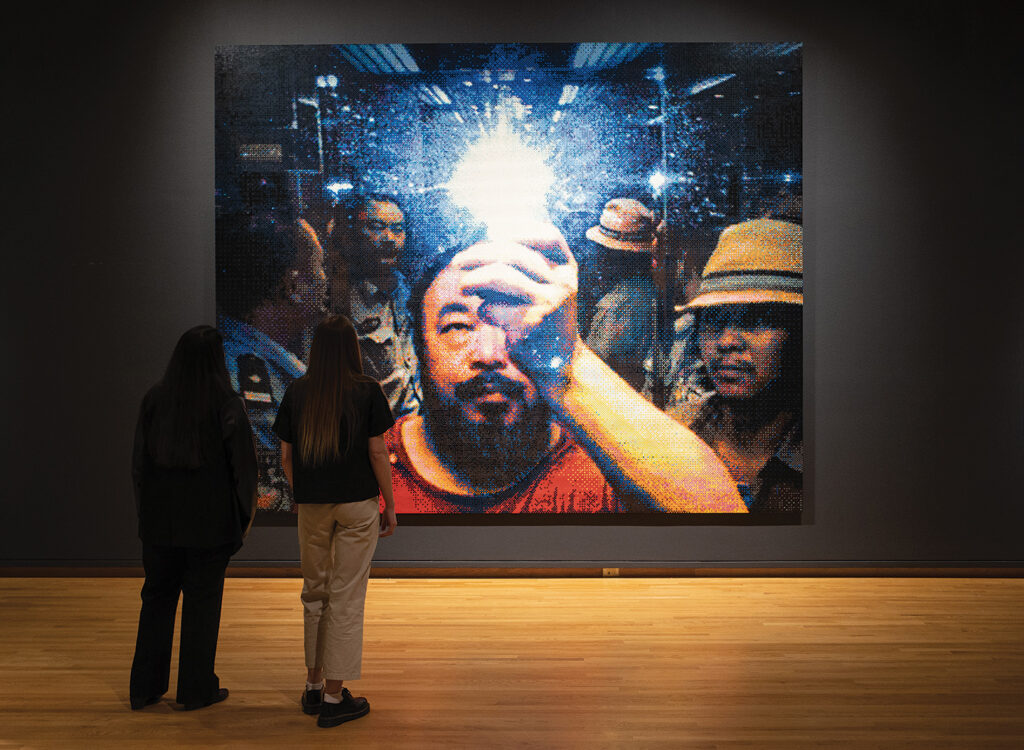
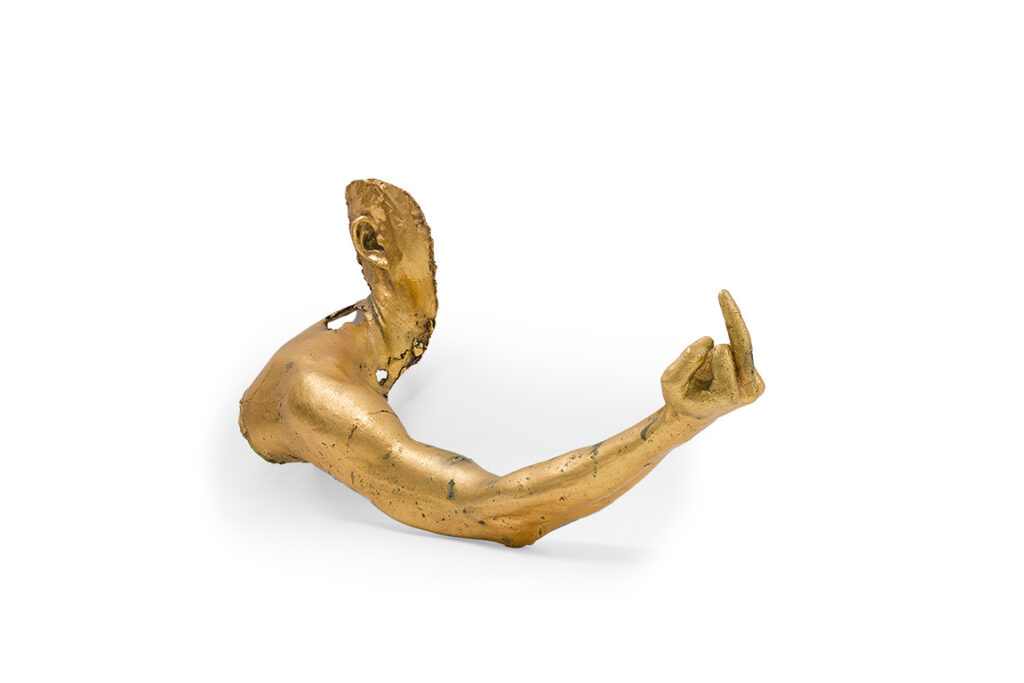
THE CURRENT POLITICAL upheaval in the US might seem like the perfect moment for a sprawling retrospective of today’s most prominent activist artist, Ai Weiwei. Yet, with strife constantly erupting worldwide, one could argue that it’s always a good time to consider the work of China’s most famous contemporary artist.
“There is something universal about human rights and about individuals’ rebellion against autocratic regimes and authoritarianism,” Ai says when discussing his just-opened Seattle Art Museum retrospective, Ai, Rebel: The Art and Activism of Ai Weiwei, his largest and most comprehensive US exhibition ever. “It transcends any specific form of politics, for there is always a struggle between individuals protecting the basic dignity and principles of human life and those in power.”
Considering the United States’ change in leadership, which has unleashed rippling effects around the globe, citizens could use this exhibition as a road map for navigating uncharted political territory. “This could not be a more timely and urgent exhibition, as Ai’s work implores us to consider the role of art and artists to question authority, galvanize change, and stand for free expression,” says Scott Stulen, the Seattle Art Museum’s director and CEO, in a press statement, perhaps referencing the fresh power shift in American politics.
The son of a Chinese poet exiled during the Mao Zedong regime, Ai studied at the Beijing Film Academy in the 1980s and early 1990s before moving to the United States, where he discovered contemporary Western artists and writers. In the 2000s, he had begun a series of documentaries and multimedia artworks criticizing various government policies in China, and by the time he was arrested in 2011 in Beijing for alleged economic crimes, Ai had become a global art star.
Cut to this past March, when the Seattle Art Museum, for the first time, opened an exhibition that dedicated all of its locations—its main building, the Seattle Asian Art Museum in Volunteer Park, and the Olympic Sculpture Park on the Seattle waterfront—to one artist, and it seems clear that Ai has culminated his improbable run to the pinnacle of artistic success.
Although tucked-away Seattle may seem like an unusual location choice for such an important, career-defining show, a closer look reveals how the city is a perfect fit for Ai’s oeuvre. In fact, Seattle feels quite familiar to him. “My father was exiled to [China]’s northwest,” says the artist, who feels a unique kinship with America’s Emerald City. “But what differs is that Seattle, as a relatively young city, embodies openness and a spirit of exploration.”
This kinship, alongside steady stewardship from SAM’s Foster Foundation Curator of Chinese Art, Foong Ping—who has a more thorough understanding of Ai’s career than anyone—has led the artist to proclaim that this exhibition is “his strongest in terms of narrative and expression.”
Foong, who grew up in Malaysia as a Chinese minority before landing in Seattle in 2016, is also enthusiastic about presenting Ai, Rebel to a city that boasts one of the country’s largest Chinese populations. “We created a response room in the galleries that invites visitors to share their thoughts, and I’m eager to get a glimpse of the impact of the exhibition on visitors from the Seattle community and beyond,” Foong says.
Having put together a show that includes many of Ai’s rarest, largest, and most ambitious artworks ever produced, Foong began painstakingly developing this exhibition in January of 2024, hoping to consider more than forty years of Weiwei’s work. Yet, by the time it opened, she realized how much more weight the show would carry than even she expected. “[The exhibition] looks backward in time, reflecting upon the experiences of one important artist working in the US, China, and Europe from the 1980s up to today,” Foong says. “That is the value of history: examining what has come before and discovering what resonates in the present moment. The incredible power of a single individual, in this case—Ai Weiwei—can change the perspective of many.”
Ai, Rebel: The Art and Activism of Ai Weiwei will be on view at the Seattle Art Museum through September 7, 2025.